Macerated Skin: A Complete Medical Overview

Macerated skin develops when moisture stays against the skin for prolonged periods. Common signs include whitening, wrinkling, softness, tenderness, and skin breakdown.
Key Takeaways
- Macerated skin develops when moisture stays against the skin for prolonged periods.
- Common signs include whitening, wrinkling, softness, tenderness, and skin breakdown.
- It often affects areas under dressings, around wounds, in skin folds, or where incontinence or sweating occurs.
- Treatment focuses on keeping the area dry, protecting the skin barrier, and addressing the underlying cause.
- Medical review is important if there is spreading redness, pain, drainage, odor, fever, or slow healing.
Macerated skin is skin that has become overly soft, pale, wrinkled, and fragile after being exposed to too much moisture for too long. It is often manageable with better moisture control, skin protection, and treatment of any underlying wound, rash, or infection.
Overview: what macerated skin means
Macerated skin is skin that has absorbed too much moisture and become overly soft, fragile, and vulnerable to damage. It often looks pale, white, soggy, or wrinkled, and it may feel tender or itchy. This can happen after the skin stays wet under a bandage, in a skin fold, around a wound, or after repeated exposure to sweat, urine, stool, or water.
Although mild skin maceration can improve once the area is dried and protected, persistent moisture can weaken the skin barrier and make breakdown more likely. The skin may crack, peel, sting, or become easier to injure from friction. In some cases, maceration also increases the chance of secondary infection.
Macerated skin is not a disease itself. Instead, it is a skin response to excess moisture. Understanding why the moisture is there is an important part of treatment, especially when maceration occurs around wounds, pressure-prone areas, or chronic skin conditions such as eczema.
How macerated skin looks and feels
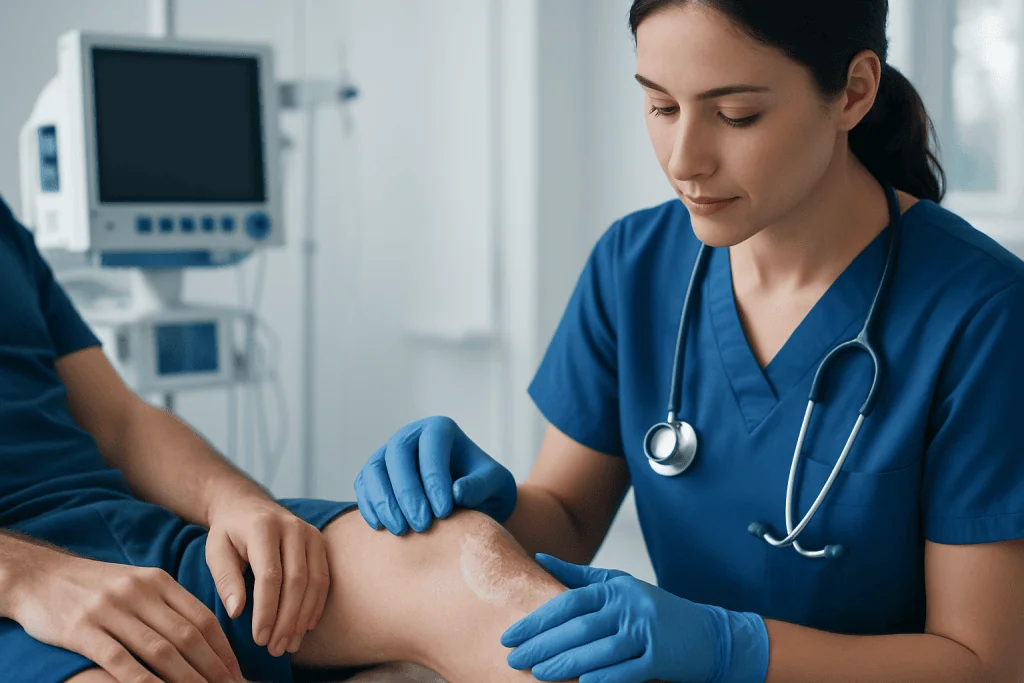
The appearance of macerated skin can vary depending on how long the area has been wet and whether there is rubbing, pressure, or an underlying wound. Early changes may be subtle, but prolonged exposure usually makes the skin look whiter than usual and more wrinkled, almost as if it has been soaked in water. It may also feel unusually soft or spongy.
Many people notice discomfort before they see clear damage. The area can sting, burn, itch, or feel sore when touched. If the skin barrier has started to break down, there may be peeling, weeping, superficial erosions, or small cracks. Around wounds, the skin at the edges may look enlarged, pale, and fragile rather than firm and dry.
- White, grayish, or waterlogged-looking skin
- Wrinkling or a soggy texture
- Softness and increased fragility
- Redness after the moisture is removed
- Itching, tenderness, burning, or pain
- Peeling, cracking, or superficial skin loss
Maceration can affect healthy skin as well as skin already irritated by pressure, friction, or inflammation. On deeper skin tones, the change may appear less white and more as a dull, softened, or ashy-looking area with tenderness and breakdown.
Common causes and where it happens

The main cause of macerated skin is prolonged contact with moisture. This moisture may come from water, sweat, wound drainage, urine, stool, saliva, or fluid trapped under dressings or devices. When moisture cannot evaporate properly, the outer skin layer swells and loses some of its protective strength.
Common sites include between the toes, under the breasts, in the groin, in the armpits, beneath abdominal folds, and around the buttocks. It is also common at the edges of wounds, under ostomy appliances, and beneath casts, splints, compression wraps, or adhesive dressings that trap fluid.
Risk is higher when moisture is combined with friction or pressure. For example, someone who sweats heavily in tight shoes may develop maceration between the toes, while a person with reduced mobility may develop moisture-related skin damage over pressure areas. Incontinence-associated skin damage is another frequent trigger, especially in older adults or people who need long-term care.
Some underlying conditions also make maceration more likely or more complicated. These include obesity with pronounced skin folds, diabetes, poor circulation, chronic wounds, fungal infections, and inflammatory skin disorders. When maceration develops around a sore that is not healing, doctors may also assess for problems such as diabetic foot changes or pressure-related tissue injury.
Why it matters: skin barrier damage and complications
Healthy skin acts as a barrier that helps keep irritants and microbes out while preventing fluid loss. In macerated skin, that barrier becomes weakened. The softened surface is more likely to tear with minor rubbing, wiping, or adhesive removal. This is why a seemingly small area of overhydrated skin can quickly become raw or painful.
Another concern is infection. Moist, damaged skin creates favorable conditions for bacteria and fungi. A person may notice worsening redness, increased pain, odor, drainage, or a new rash. Between the toes, for example, maceration can coexist with fungal overgrowth. In skin folds, yeast may contribute to ongoing irritation.
Maceration can also delay wound healing. When the skin around a wound stays excessively wet, the wound edges may break down instead of closing. In wound care, controlling excess drainage is essential to protect surrounding skin and support healing. This may involve careful dressing selection, reassessment of fit and change frequency, and sometimes advanced wound care support.
How doctors diagnose macerated skin
Diagnosis is usually based on a clinical examination. A doctor or wound-care professional looks at the skin’s color, texture, tenderness, location, and whether there is an associated wound, rash, or source of moisture. They will often ask how long the area has been wet, what products or dressings are being used, and whether there has been incontinence, heavy sweating, or prolonged water exposure.
The next step is identifying the cause. This matters because treatment is not only about drying the skin but also about stopping the source of moisture and protecting the area from further damage. A clinician may check whether a bandage is too occlusive, whether a wound is draining heavily, or whether there is fungal infection, contact irritation, or pressure injury.
Additional testing is not always needed, but it may be considered if infection is suspected or the skin is not healing as expected. Depending on the situation, assessment may include a wound evaluation, circulation review, blood sugar assessment, or skin swab when clinically appropriate. If deeper tissue damage is suspected, evaluation may overlap with the assessment used for pressure sores.
Treatment options and practical care
The main goals of treatment are to remove or reduce excess moisture, protect the skin barrier, and treat any underlying problem. For mild cases, this may be as simple as gently drying the area, allowing more air circulation, changing damp clothing or dressings promptly, and reducing friction. Skin should be patted dry rather than rubbed, because rubbing can worsen fragile tissue.
Barrier products are often useful. These may include creams, ointments, films, or protective pads designed to shield the skin from moisture and irritants. In skin folds, absorbent textiles or moisture-wicking materials can help. Around wounds, clinicians may choose dressings that better manage drainage while still maintaining an appropriate healing environment. If the area is difficult to manage or already breaking down, specialist dermatology or wound-care input can be helpful.
Treatment also depends on the trigger. If a fungal or bacterial infection is present, appropriate medical treatment may be needed. If maceration is related to incontinence, a skin-protection routine and timely cleansing are important. If excessive sweating is a major factor, changing footwear, fabrics, and hygiene routines may help. People with slow-healing wounds or complex medical conditions may need broader evaluation, sometimes including diabetes treatment if blood sugar control is contributing to skin problems.
Dressings and topical products should be chosen carefully. A product that is too occlusive, used too long, or not suited to the amount of drainage can worsen maceration. For this reason, persistent or recurring cases should be reviewed by a qualified clinician rather than managed only by trial and error at home.
Prevention and self-care
Preventing macerated skin is mainly about moisture balance. Skin should not be left persistently wet, but it should also not be over-cleansed or irritated by harsh products. Gentle cleansing, careful drying, breathable clothing, and prompt changing of damp dressings or garments can make a meaningful difference.
People who are more prone to skin maceration may benefit from routine skin checks. This includes looking between the toes, under skin folds, around medical devices, and near any wound. In home care settings, regular inspection helps detect early changes before the skin breaks down. If dressings are being used, they should be applied and changed according to professional guidance.
- Keep skin folds clean and dry
- Change wet socks, clothing, pads, or dressings promptly
- Use breathable footwear and moisture-wicking fabrics when possible
- Apply barrier products when recommended
- Reduce friction from tight clothing, adhesives, or repeated rubbing
- Monitor wounds for increased drainage or skin changes at the edges
For people with limited mobility, chronic wounds, or incontinence, prevention often requires a structured care plan. This may include regular repositioning, moisture management, protective products, and professional follow-up. Near the end of the care pathway, some patients and families choose evaluation at centers such as Acibadem International, where multidisciplinary specialists in JCI-accredited hospitals diagnose and treat skin, wound, and underlying medical conditions for international patients.
When to seek medical care
Medical care is advisable if macerated skin does not improve after basic drying and protection, or if the area is getting larger, more painful, or more fragile. A clinician should also review any skin that is repeatedly macerated without a clear cause, since an underlying wound, infection, circulation issue, or inflammatory skin condition may be contributing.
Prompt assessment is especially important when there are signs of infection or significant skin breakdown. Warning signs include spreading redness, warmth, swelling, pus or increased drainage, foul odor, fever, or increasing pain. People with diabetes, reduced sensation, poor circulation, or weakened immunity should seek care earlier because complications may develop more easily.
Anyone with maceration around a wound, surgical site, ostomy, cast, or medical device should ask for professional advice if the surrounding skin is whitening, peeling, or becoming sore. Early treatment can protect the skin and often prevents more extensive damage.
Frequently asked questions
Is macerated skin the same as an infection?
No. Macerated skin means the skin has become overly softened and damaged from too much moisture. However, because the skin barrier is weaker, infection can sometimes develop on top of maceration.
Can macerated skin heal on its own?
Mild cases often improve once the area is gently dried, protected, and no longer exposed to constant moisture. Healing is less likely if the cause continues, such as ongoing wound drainage, sweating, or incontinence.
What does macerated skin look like?
It often appears white, pale, wrinkled, and soggy, similar to skin that has been in water for too long. It may also feel soft, tender, itchy, or sting, and in more advanced cases it can peel or crack.
Should macerated skin be covered or left open to air?
That depends on the cause and location. Some areas benefit from air flow and moisture reduction, while wounds or irritated skin may need a protective dressing or barrier product chosen to manage moisture correctly.
How is macerated skin different from dry, peeling skin?
Dry skin usually feels rough, flaky, or tight because it lacks moisture. Macerated skin is the opposite problem: it has been exposed to too much moisture, making it overly soft, fragile, and more likely to break down.
When is macerated skin more serious?
It is more concerning when it surrounds a wound, keeps coming back, or is associated with pain, redness, odor, drainage, fever, or skin loss. People with diabetes, poor circulation, or limited mobility should be assessed promptly if skin damage appears.
References
- American Academy of Dermatology
- National Health Service
- Mayo Clinic
- Wound, Ostomy and Continence Nurses Society
- Centers for Disease Control and Prevention
This article is for general information only and is not a substitute for professional medical advice. Please consult a qualified doctor about your individual situation.
Explore treatments in Turkey — costs, top hospitals & a free quote
JCI-accredited · board-certified surgeons · reply within 24h
Add us as a Preferred Source to see more of our trusted health content across Google Search, AI Overviews and Discover.

More from the Health Library

Girl Butt: A Complete Medical Overview

Epithelial Cells in Urine — Explained by Medical Evidence, Not Myths

How to loosen a bowel blockage at home? A Doctor-Reviewed Answer

Ovary pain: Symptoms, Causes, and Treatment — Complete Patient Guide

How much blood are in the human body? The Numbers, Explained by Clinicians