Mastoid Surgery: Why It Is Done and How Recovery Usually Goes

Mastoid surgery is commonly performed for chronic ear infection, cholesteatoma, or complications involving the mastoid bone. The goal is to remove diseased tissue, stop infection, and help preserve hearing and balance structures.
Key Takeaways
- Mastoid surgery is commonly performed for chronic ear infection, cholesteatoma, or complications involving the mastoid bone.
- The goal is to remove diseased tissue, stop infection, and help preserve hearing and balance structures.
- Recovery is usually gradual over several weeks, with follow-up visits important for cleaning, healing checks, and hearing assessment.
- Some patients have mastoid surgery together with eardrum or middle-ear repair procedures.
- Prompt medical review is important if there is severe pain, fever, worsening drainage, dizziness, or facial weakness after surgery.
Mastoid surgery is an ear operation used to remove diseased air cells in the mastoid bone, usually when infection or abnormal tissue has spread beyond the middle ear. It is often done to control disease, protect nearby structures, and support hearing when possible.
Overview of mastoid surgery
Mastoid surgery, also called mastoidectomy, is an operation performed behind the ear to remove diseased or infected air cells within the mastoid bone. The mastoid is part of the skull located just behind the ear, and it is connected to the middle ear. When infection or abnormal tissue spreads into this area, medicines alone may not be enough to solve the problem.
This procedure is most often recommended for long-standing or complicated ear disease. A common reason is cholesteatoma, an abnormal skin growth in the middle ear that can gradually damage nearby bone and important ear structures. Mastoid surgery may also be used when repeated infections do not clear, when drainage continues, or when there is concern about damage to hearing or balance.
There are different types of mastoid surgery. The exact approach depends on how far the disease has spread, whether the eardrum and hearing bones are affected, and whether hearing repair is planned at the same time. In some cases, mastoid surgery is combined with eardrum repair surgery to treat both the mastoid and middle ear in one operation.
Why mastoid surgery may be needed
Doctors usually consider mastoid surgery when ear disease has become persistent, destructive, or difficult to control with medication alone. This may happen in people with repeated middle ear infections, ongoing ear discharge, a perforated eardrum, or tissue growth that traps infection inside the ear. The purpose is not only to treat current symptoms but also to help prevent future complications.
Conditions that may lead to surgery include chronic otitis media, mastoiditis, cholesteatoma, and some forms of hearing loss related to middle-ear damage. Mastoid surgery may also be part of treatment when scans show erosion of bone, when dizziness suggests the inner ear may be affected, or when infection is spreading close to the facial nerve or structures around the brain.
In selected cases, surgery may be recommended to create a safe, dry ear rather than to fully restore hearing. This is especially true when disease is extensive. If hearing is affected, the surgeon may discuss whether reconstruction is possible during the same operation or whether a second-stage procedure may be safer and more effective later.
Symptoms and findings that can lead to evaluation

People who eventually need mastoid surgery often have symptoms that have lasted for some time. Common signs include repeated ear infections, persistent ear drainage, a bad-smelling discharge, hearing changes, ear fullness, or discomfort behind the ear. Some people also notice ringing in the ear, known as tinnitus, or a sense of pressure that does not improve with standard treatment.
More advanced disease may cause dizziness, balance problems, swelling behind the ear, headaches, or worsening hearing. In children, parents may notice repeated ear infections, irritability, speech delay related to hearing problems, or fluid that keeps returning after treatment. While these symptoms do not always mean surgery is needed, they do suggest the ear should be assessed carefully by an ENT specialist.
On examination, the doctor may see a perforated eardrum, retraction pockets, trapped skin debris, persistent inflammation, or signs of infection involving the mastoid. Hearing tests and imaging help clarify whether disease is limited to the middle ear or has spread more widely.
How doctors diagnose the problem and plan surgery
Diagnosis begins with a detailed history and ear examination. An ENT specialist typically uses an otoscope or microscope to look closely at the ear canal and eardrum. This helps identify chronic infection, perforation, trapped skin, or structural changes that suggest cholesteatoma or mastoid involvement.
Hearing tests are usually part of the evaluation. These may show conductive hearing loss caused by fluid, eardrum damage, or changes in the small hearing bones. If symptoms include vertigo or imbalance, the doctor may also consider specialized assessment through services such as neurotology care when inner-ear or balance structures may be involved.
Imaging is often used before surgery, especially a CT scan of the temporal bone. This scan can show the extent of mastoid disease, bone erosion, and the anatomy around the middle and inner ear. In some cases, MRI may be helpful, particularly if there is concern about soft tissue extension or recurrent cholesteatoma after previous surgery. Together, the examination, hearing tests, and scans help the surgeon choose the safest and most effective operation.
What happens during mastoid surgery
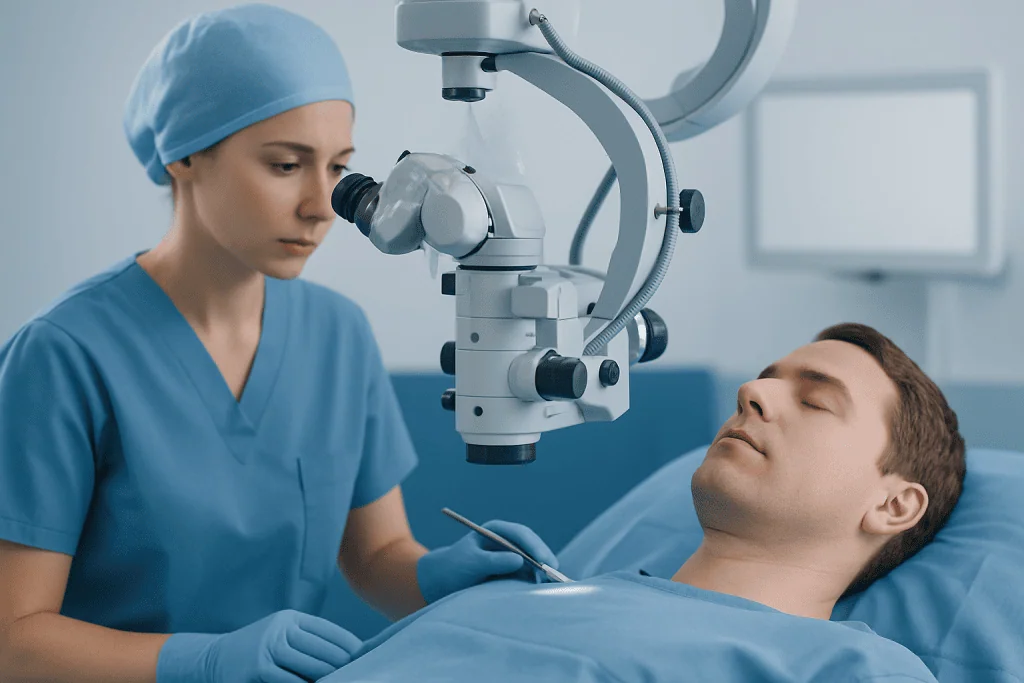
Mastoid surgery is usually performed under general anesthesia. The surgeon makes an incision behind the ear and uses specialized instruments to open the mastoid bone and remove infected tissue, trapped skin, or other abnormal material. The aim is to clear disease while protecting the facial nerve, inner ear, and nearby structures.
There are different surgical techniques. A simple or cortical mastoidectomy removes infected mastoid air cells while preserving as much normal structure as possible. More extensive disease may require a canal wall up or canal wall down mastoidectomy, depending on whether the back wall of the ear canal can be safely preserved. The choice affects both disease control and follow-up care.
If the eardrum is perforated or the hearing bones are damaged, repair may be done during the same operation or at a later stage. This might include tympanoplasty or reconstruction of middle-ear structures. For patients seeking procedure-specific information, doctors may discuss mastoid surgery in the context of their anatomy, hearing goals, and risk of recurrence.
At the end of surgery, the ear may be packed with dressing material to support healing. Many patients go home the same day or after a short stay, although the exact plan depends on the extent of surgery, age, overall health, and whether there were any complications or combined procedures.
Recovery after mastoid surgery
Recovery after mastoid surgery usually happens gradually over several weeks. Mild pain, tenderness behind the ear, a feeling of blockage, and some tiredness are common in the early days. There may also be temporary packing in the ear canal, which can make hearing seem worse at first. This often improves only after the packing is removed and healing progresses.
Some drainage or slight blood-stained fluid from the ear dressing can be normal for a short time. Patients are usually advised to keep the ear dry, avoid heavy lifting and strenuous activity for a period, and follow instructions about bathing, flying, swimming, and returning to work or school. The surgeon may prescribe pain relief, ear drops, or antibiotics depending on the reason for surgery and what was found during the operation.
Follow-up visits are an important part of recovery. During these appointments, the surgeon checks the wound, removes dressings when appropriate, cleans the ear, and monitors for infection or residual disease. If a canal wall down procedure was performed, long-term periodic cleaning may be needed to keep the ear healthy and dry.
Hearing may improve, stay the same, or in some cases remain limited depending on the extent of disease and whether reconstruction was possible. If dizziness, hearing changes, or balance symptoms continue, additional testing may be recommended. Some patients also need later hearing rehabilitation or further procedures, especially when cholesteatoma was extensive or likely to recur.
Risks, benefits, and possible complications
The main benefits of mastoid surgery are disease control, reduced risk of ongoing infection, prevention of serious complications, and the chance to preserve or improve hearing when possible. For many patients, the operation creates a safer ear and improves quality of life by reducing discharge, odor, discomfort, and repeated treatments.
As with any surgery, there are potential risks. These can include bleeding, infection, altered taste, dizziness, persistent ear drainage, ringing in the ear, or hearing that does not improve as hoped. Less common but important risks include facial nerve weakness, worsening hearing, recurrence of cholesteatoma, and problems related to anesthesia. The exact level of risk varies with the extent of disease and the type of operation required.
Doctors discuss these points carefully before surgery so the patient can make an informed decision. In many cases, the risks of leaving advanced ear disease untreated are greater than the risks of surgery itself. A tailored treatment plan helps balance disease control with hearing preservation and long-term ear care.
Self-care, follow-up, and when to seek medical help
Good self-care after mastoid surgery supports smoother healing. Patients should take medicines exactly as advised, protect the ear from water, avoid inserting cotton buds or other objects into the ear, and attend all scheduled follow-up appointments. Rest is helpful in the first few days, and gradual return to daily activity is usually encouraged based on the surgeon’s advice.
It is important to contact a doctor if there is high fever, increasing redness or swelling, severe pain that is getting worse rather than better, heavy bleeding, foul-smelling drainage, new facial weakness, severe dizziness, or sudden hearing changes. These symptoms do not always mean a serious problem, but they should be checked promptly.
Long-term care may include repeat ear examinations, hearing tests, and monitoring for recurrence if cholesteatoma was present. If additional expertise is needed for hearing and balance concerns, assessment through neuro-otology services may be useful. Acibadem International’s multidisciplinary specialists in JCI-accredited hospitals diagnose and treat ear conditions, including those requiring mastoid surgery, for international patients.
Frequently asked questions
Is mastoid surgery a major operation?
Mastoid surgery is a specialized ear operation that is usually performed under general anesthesia. It is considered significant surgery because it is done close to delicate hearing, balance, and facial nerve structures, but it is also a well-established procedure in ENT practice.
How long does recovery from mastoid surgery usually take?
Early recovery often takes one to two weeks, but full healing may take several weeks or longer depending on the type of surgery. Hearing can seem reduced at first because of swelling or ear packing, so improvement is not always immediate.
Will hearing improve after mastoid surgery?
Hearing results vary from person to person. Some patients notice improvement, especially if the eardrum or middle ear is repaired, while others have surgery mainly to remove disease and prevent complications rather than to restore hearing fully.
Why is mastoid surgery often done for cholesteatoma?
Cholesteatoma can keep growing and damage bone, the eardrum, and the small hearing bones. Mastoid surgery helps remove this abnormal tissue and lowers the risk of ongoing infection and more serious complications.
Can mastoid surgery be combined with other ear procedures?
Yes. Surgeons often combine it with eardrum repair or middle-ear reconstruction if this is safe and appropriate. In other cases, a second operation is planned later to check for residual disease or improve hearing.
What should be avoided after mastoid surgery?
Patients are commonly advised to keep the ear dry, avoid heavy straining, and follow instructions about swimming, flying, and strenuous exercise. It is also important not to put anything into the ear unless the surgical team has recommended it.
References
- American Academy of Otolaryngology–Head and Neck Surgery
- National Institute on Deafness and Other Communication Disorders
- NHS
- Merck Manual Professional Edition
This article is for general information only and is not a substitute for professional medical advice. Please consult a qualified doctor about your individual situation.
Mastoid Surgery in Turkey — costs, top hospitals & a free quote
JCI-accredited · board-certified surgeons · reply within 24h
Add us as a Preferred Source to see more of our trusted health content across Google Search, AI Overviews and Discover.

Otorhinolaryngology (ENT)
Care for ear, nose, throat and head-and-neck conditions, including hearing and balance disorders.
126 specialists in this unitRelated Treatments
Related Conditions
More from the Health Library



Related Specialists

Prof. Dr. Nazim Korkut
Otorhinolaryngology
Prof. Dr. Hasan M. Tanyeri
Ear Nose & Throat
Prof. Dr. Güler Berkiten
Otorhinolaryngology
Assoc. Prof. Dr. A. Erdem Kilavuz
Ear Nose & Throat