Mcmurray Test — Explained by Medical Evidence, Not Myths

The mcmurray test is a clinical maneuver used to assess possible meniscus injury in the knee. A positive test may suggest a torn meniscus, especially if it reproduces pain, clicking, or a catching sensation.
Key Takeaways
- The mcmurray test is a clinical maneuver used to assess possible meniscus injury in the knee.
- A positive test may suggest a torn meniscus, especially if it reproduces pain, clicking, or a catching sensation.
- The test is not perfectly accurate and should not be used alone to make or rule out a diagnosis.
- Doctors interpret the result together with symptoms, examination findings, and sometimes MRI or other imaging.
- Persistent pain, swelling, locking, or instability should be evaluated by a qualified clinician.
The mcmurray test is a hands-on knee exam used to look for signs of a meniscus tear. It can support a diagnosis, but medical evidence shows it works best as one part of a full assessment that may also include a physical exam, history, and imaging.
What is the mcmurray test?
The mcmurray test is a physical examination technique used by clinicians to assess whether a person may have a torn meniscus in the knee. The menisci are two crescent-shaped pieces of cartilage that act as shock absorbers between the thigh bone and shin bone. During the test, the doctor gently bends, rotates, and straightens the knee to see whether this movement causes pain, a click, or a catching sensation along the joint line.
In simple terms, the mcmurray test helps answer a focused question: could the symptoms be coming from a meniscus injury? It is not a scan and it does not directly show the cartilage. Instead, it gives the clinician practical information about how the knee behaves during a movement pattern that can stress the meniscus.
Medical evidence does not support treating the mcmurray test as a stand-alone answer. Some people with a true meniscus tear have a normal test, while others may have a positive test from different knee problems. For that reason, the result is most useful when combined with the person’s history, other examination maneuvers, and imaging when needed.
How the test is done and what a positive result means
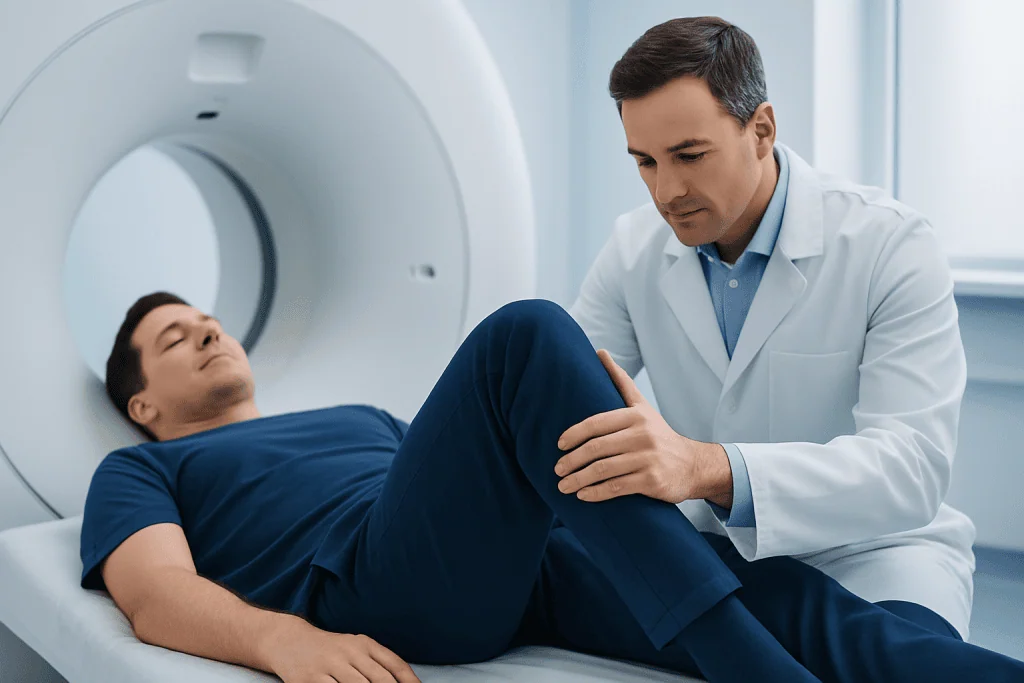
The test is usually performed while the person lies on their back with the knee relaxed. The clinician bends the knee, places one hand along the joint line, and uses the other to guide the lower leg through rotation and extension. Different positions may place more stress on the inner or outer meniscus, helping the examiner localize where a problem may be.
A positive mcmurray test generally means the maneuver reproduces symptoms such as joint-line pain, a palpable or audible click, or a feeling that the knee catches during movement. These findings can raise suspicion for a meniscus tear, especially when the person also reports twisting injury, swelling, or mechanical symptoms.
However, a positive result does not prove the diagnosis with certainty. <a href="https://acibademinternational.com/diseases/knee-osteoarthritis/”>Knee osteoarthritis, ligament injury, cartilage damage, or even guarding from pain can sometimes affect the result. A negative test also does not fully exclude a tear, particularly small tears, chronic injuries, or cases where swelling and muscle tension make the exam less clear.
When doctors use the mcmurray test

Clinicians often use the mcmurray test when a person has knee pain after a twist, squat, pivot, sports injury, or sudden change in direction. It may also be part of the evaluation when someone describes locking, popping, catching, or the sense that the knee cannot move smoothly. In these settings, the test helps narrow the possible causes.
The test is commonly used alongside other knee examination findings rather than in isolation. Doctors usually ask when the pain started, whether there was a sports injury or trauma, where the pain is located, and whether swelling developed quickly or gradually. They also examine range of motion, tenderness, stability, and walking pattern.
If the overall picture suggests meniscal injury, the clinician may also discuss related conditions such as meniscus tear or evaluate whether there could be associated ligament damage, including ACL injury. Meniscus tears sometimes occur on their own, but they can also happen together with other internal knee injuries.
How accurate is the mcmurray test?
Research shows that the mcmurray test has clinical value, but its accuracy varies across studies. This variation happens for several reasons, including differences in examiner experience, the type and location of the tear, how long symptoms have been present, and what reference standard was used for comparison. In practice, that means the test may be helpful without being definitive.
Many specialists view the mcmurray test as more meaningful when it is clearly positive and fits the person’s story. For example, pain or a click along the joint line after a twisting injury may increase suspicion of meniscal damage. But evidence-based care avoids overreliance on a single sign, because a knee is a complex joint and symptoms can overlap.
This is why clinicians often use a cluster approach: history, physical examination, and imaging when appropriate. MRI may be useful if the diagnosis remains uncertain, symptoms are persistent, or surgery is being considered. Even then, imaging results are interpreted carefully, because some meniscal changes seen on MRI can reflect age-related wear rather than the true source of symptoms.
Symptoms and causes that may go with a positive test
A positive mcmurray test is often discussed in the context of meniscus symptoms, but the full symptom pattern matters. People with a meniscus injury may have pain along the inner or outer side of the knee, swelling, stiffness, difficulty squatting, or discomfort when twisting. Some also report locking, catching, or the feeling that the knee gives way.
Meniscus tears can happen in two broad ways. The first is a traumatic tear, often seen after a twist while the foot is planted during sports or sudden movement. The second is a degenerative tear, which can develop over time as cartilage changes with age and repeated wear. In older adults, symptoms may begin with a smaller movement rather than a major injury.
Other knee problems can mimic or accompany meniscus symptoms. These include sprains, cartilage injury, osteoarthritis, tendon irritation, and inflammation around the joint. Because of this overlap, the clinician may consider whether advanced imaging such as MRI is appropriate, especially if the diagnosis remains uncertain after examination.
- Twisting injury during sports or exercise
- Pain along the knee joint line
- Swelling after activity or injury
- Clicking, catching, or locking
- Difficulty fully bending or straightening the knee
Diagnosis beyond the test
Diagnosing a meniscus injury usually begins with a careful history and physical exam. The doctor may ask how the injury happened, whether there was immediate swelling, whether weight-bearing is painful, and whether the knee feels unstable or stuck. Examination often includes joint-line palpation, range-of-motion testing, and maneuvers other than the mcmurray test.
If symptoms are mild and improving, some people may not need imaging right away. In other cases, imaging can clarify the diagnosis or look for associated injuries. MRI is commonly used because it can show the meniscus, ligaments, cartilage, and other soft tissues. Plain X-rays do not show the meniscus itself, but they can help rule out fracture or assess for arthritis.
Sometimes a person has a meniscus tear visible on MRI but symptoms come from another source. At other times, the examination strongly suggests a tear even before imaging is done. This is why diagnosis is a synthesis rather than a single test result. The goal is to identify what is actually causing pain and limited function, then choose the least invasive effective treatment.
Treatment options and recovery
Treatment depends on the type of tear, the severity of symptoms, the person’s age and activity level, and whether there are other knee injuries. Many people improve with conservative care, especially when the tear is small, symptoms are manageable, or the problem is degenerative rather than caused by a major traumatic injury.
Initial treatment may include rest from aggravating activity, ice, compression, elevation, and a guided rehabilitation plan. Physical therapy and rehabilitation can help restore range of motion, strengthen the muscles around the knee, and improve stability. A doctor may also discuss short-term pain-relief strategies that are appropriate for the individual.
If symptoms persist, if the knee repeatedly locks, or if there is a tear pattern less likely to heal well on its own, a surgical opinion may be recommended. In selected cases, minimally invasive knee arthroscopy may be used to repair or trim damaged meniscal tissue. Treatment decisions are individualized, because preserving healthy meniscus tissue is important for long-term knee function.
Near the end of the diagnostic journey, some patients seek coordinated specialty care. Acibadem International’s multidisciplinary specialists and JCI-accredited hospitals evaluate knee injuries for international patients and guide diagnosis and treatment planning when needed.
Self-care and when to seek medical care
If knee symptoms are mild, self-care may help while waiting for medical review. Reducing twisting or high-impact activities, using ice for short periods, elevating the leg, and following a clinician’s advice for exercises may ease discomfort. Returning too quickly to sport can prolong symptoms, so gradual recovery is usually safer than pushing through pain.
Medical care is advisable if knee pain follows a clear injury, if swelling is significant, or if symptoms do not improve over several days to weeks. A person should also seek assessment if the knee catches, locks, repeatedly gives way, or cannot fully straighten. These features can suggest internal knee damage that deserves a structured evaluation.
Urgent assessment is important after major trauma, inability to bear weight, obvious deformity, rapidly increasing swelling, fever, redness, or severe pain. Although the mcmurray test can be useful in the clinic, it is not something people should rely on to self-diagnose at home. A qualified professional can assess the whole knee safely and decide whether further testing or referral is needed.
Frequently asked questions
What does the mcmurray test check for?
The mcmurray test checks for signs that a meniscus in the knee may be torn. It is designed to reproduce pain, clicking, or catching that can happen when damaged cartilage is stressed during movement.
Is a positive mcmurray test enough to diagnose a meniscus tear?
No. A positive result can raise suspicion for a meniscus tear, but it is not enough by itself to confirm the diagnosis. Doctors usually interpret it together with the person’s symptoms, medical history, other examination findings, and sometimes MRI.
Can the mcmurray test be wrong?
Yes. Like many physical exam maneuvers, it can have false-positive and false-negative results. Pain from arthritis, other knee injuries, or limited relaxation during the exam can affect the findings.
Does the mcmurray test hurt?
It may cause temporary discomfort if the knee is inflamed or injured, especially if the movement stresses a torn meniscus. Clinicians generally perform it gently and stop if the pain becomes too intense.
Do all meniscus tears need surgery?
No. Many meniscus tears improve with conservative treatment such as activity modification and rehabilitation. Surgery is usually considered when symptoms persist, the knee locks, or the tear pattern is unlikely to heal without intervention.
Should someone try the mcmurray test at home?
Self-testing is not recommended. It can be difficult to perform correctly and may worsen pain or provide misleading reassurance. A trained clinician can examine the knee more safely and interpret the result in context.
This article is for general information only and is not a substitute for professional medical advice. Please consult a qualified doctor about your individual situation.
Joint and spine care in Turkey — expert assessment & treatment
JCI-accredited · board-certified surgeons · reply within 24h
Add us as a Preferred Source to see more of our trusted health content across Google Search, AI Overviews and Discover.

More from the Health Library
Strength Workout for Weight Loss: A Complete Medical Overview

Female Anatomy: What Patients Need to Know

F Cup: A Complete Medical Overview

Swai Fish — Explained by Medical Evidence, Not Myths

Travelers Diarrhea: A Complete Medical Overview