Measles in Children: Early Symptoms, Rash Stages, and Complications
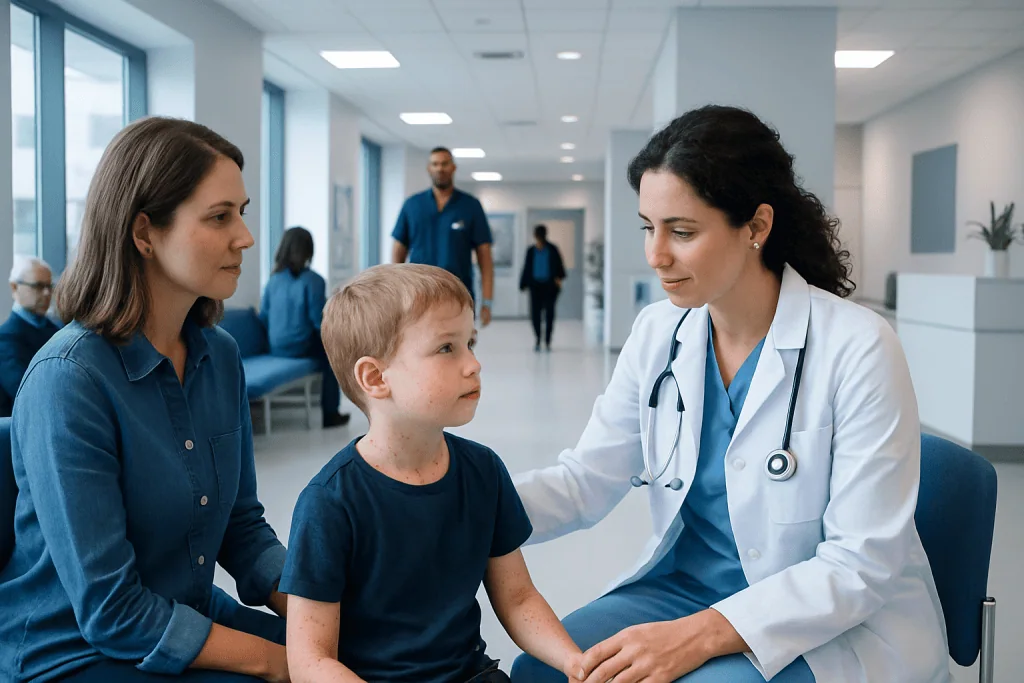
Measles usually starts with fever, cough, runny nose, and red, watery eyes before the rash appears. The rash often begins on the face and spreads downward to the body over several days.
Key Takeaways
- Measles usually starts with fever, cough, runny nose, and red, watery eyes before the rash appears.
- The rash often begins on the face and spreads downward to the body over several days.
- Children can develop complications such as ear infections, pneumonia, dehydration, and, more rarely, brain inflammation.
- There is no specific antiviral treatment for most children; care focuses on fluids, rest, fever control, and monitoring.
- Vaccination with the MMR vaccine is the most effective way to prevent measles.
Measles in children is a highly contagious viral illness that usually begins with fever, cough, runny nose, and red eyes before a characteristic rash appears. Prompt medical assessment, supportive care, and vaccination are central to safe management and prevention.
Overview of Measles in Children
Measles is a viral infection caused by the measles virus. It spreads very easily from person to person through respiratory droplets and tiny airborne particles released when an infected person coughs, sneezes, or breathes. Because it is so contagious, measles can spread quickly in homes, schools, and childcare settings, especially among children who are not fully vaccinated.
In many children, measles begins like a common viral illness, with fever, cough, runny nose, and red, irritated eyes. A few days later, a distinctive rash appears and spreads across the body. Although many children recover fully with supportive care, measles can sometimes lead to serious complications, particularly in infants, malnourished children, and those with weakened immune systems.
Parents and caregivers often ask how measles differs from other childhood rashes. The combination of high fever, cold-like symptoms, eye redness, and a rash that starts on the face and moves downward is an important clue. Because early symptoms can resemble other infections, medical evaluation is helpful if measles is suspected.
Early Symptoms and Rash Stages
The first stage of measles usually starts 7 to 14 days after exposure, though the timing can vary. During this early phase, a child may develop fever, tiredness, poor appetite, cough, runny nose, and red or watery eyes. These symptoms often become more noticeable over a few days, and the child may seem increasingly unwell.
Some children also develop tiny white spots inside the mouth, often on the inner cheeks. These are called Koplik spots and can appear before the skin rash. They are not always easy for parents to see, but they are a classic sign that can help doctors recognize measles.
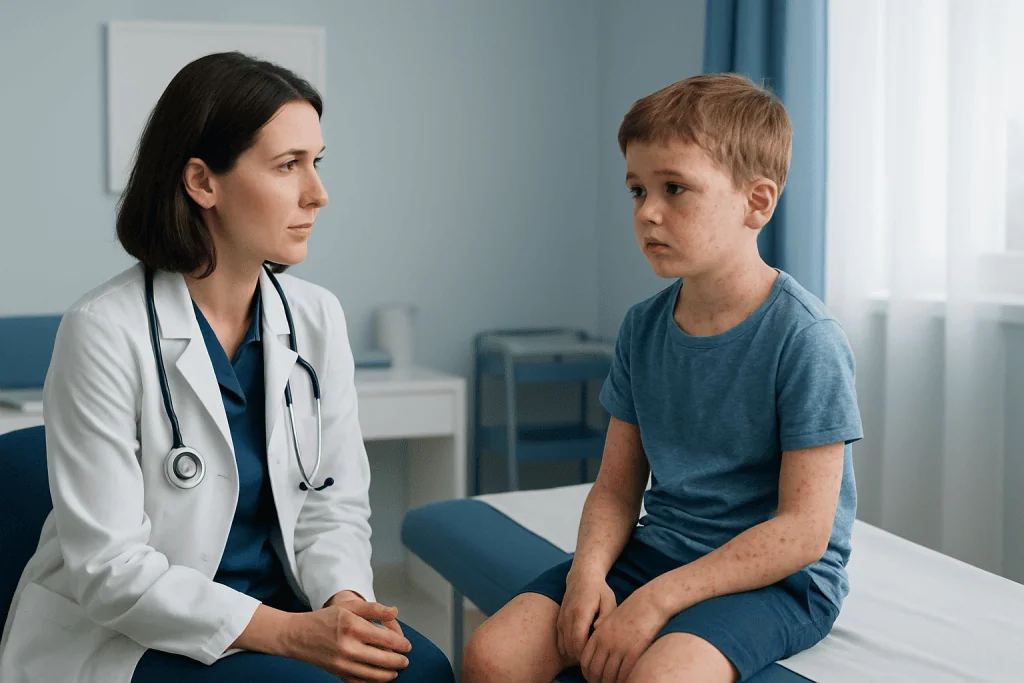
The rash usually appears several days after the fever begins. It commonly starts at the hairline or behind the ears, then spreads to the face, neck, trunk, arms, and legs. At first, the spots may look flat and red, but some can become slightly raised as the rash extends. The rash often merges in places, especially on the face and upper body.
As the illness progresses, the fever may remain high while the rash is spreading. Over the next several days, the rash gradually fades in the same order it appeared, often leaving brownish discoloration or fine skin peeling for a short time. While this stage can look dramatic, the overall pattern helps distinguish measles from some other rashes.
Causes and Risk Factors
Measles is caused by a virus that infects the respiratory tract and then spreads through the body. It can remain in the air or on surfaces for a period of time after an infected person leaves an area, which is one reason it spreads so efficiently. A child can pass the infection to others before the rash appears, which makes early containment difficult.
The main risk factor is not being fully vaccinated against measles. Infants who are too young to receive routine vaccination may also be vulnerable, especially if they are exposed during travel or community outbreaks. Children living in crowded settings or attending school and daycare may have a higher chance of exposure if measles is circulating.
Other factors can increase the risk of severe illness rather than the risk of infection itself. These include poor nutritional status, vitamin A deficiency, immune suppression, and certain chronic medical conditions. In these groups, the illness may be more intense and complications may be more likely.
- Close contact with an infected person
- Lack of measles vaccination or incomplete vaccination
- Travel to areas where measles is more common
- Young age, especially infancy
- Weakened immune system or malnutrition
Possible Complications
Many children recover from measles without lasting problems, but complications can occur and should not be overlooked. Common complications include ear infections, diarrhea, and dehydration, especially if the child has a poor appetite, vomiting, or reduced fluid intake. These problems may be manageable at home or in a clinic, but they can still make the illness more difficult.
More serious complications include pneumonia, which is one of the most important reasons measles can become dangerous in children. Breathing difficulty, persistent high fever, chest discomfort, or unusual sleepiness may suggest a lung infection and need urgent medical care. Some children may require hospital treatment for oxygen support, fluids, or close monitoring.
Rarely, measles can affect the brain and nervous system, causing encephalitis. This can lead to severe headache, confusion, seizures, or reduced alertness. In uncommon cases, measles can also leave the immune system temporarily weakened, making it easier for other infections to develop in the weeks after recovery.
Parents may also hear about other viral illnesses that cause fever and rash, such as rubella or chickenpox. These infections can look similar at first, which is why a doctor may need to assess the pattern of symptoms, vaccination history, and possible exposures.
How Measles Is Diagnosed
Doctors usually begin diagnosis by asking about symptoms, vaccination history, recent travel, and possible contact with someone who has measles. The timing of the fever and the typical spread of the rash are important clues. A physical examination may also reveal red eyes, cough, mouth lesions, and signs of dehydration or breathing problems.
Because several viral illnesses can cause fever and rash in children, laboratory testing is often used to confirm measles. This may include a throat or nasal swab and blood tests. Confirming the diagnosis helps guide infection-control measures and allows public health teams to respond if needed.
If measles is suspected, families are usually advised to call ahead before visiting a clinic or hospital. This helps staff reduce the risk of exposing other children, pregnant people, or individuals with weak immune systems. In some cases, a child may be evaluated in an isolated area or with special precautions in place.
If complications are suspected, further tests may be needed. For example, a child with cough and breathing difficulty might need imaging such as an MRI scan only in very specific neurological situations, while chest imaging or oxygen assessment may be more relevant for suspected pneumonia. The exact tests depend on the child’s symptoms and overall condition.
Treatment Options and Supportive Care
There is no specific routine antiviral cure for most cases of measles in children. Treatment mainly focuses on helping the child stay comfortable and preventing complications. This usually includes rest, adequate fluids, fever management as advised by a doctor, and close observation for worsening symptoms.
Some children may benefit from vitamin A supplementation if recommended by a healthcare professional, especially where deficiency is a concern. If a secondary bacterial infection develops, such as an ear infection or pneumonia, antibiotics may be needed for that complication. Hospital care may be necessary for children with dehydration, breathing problems, seizures, or severe weakness.
Care at home should include offering frequent fluids, monitoring urination, and keeping the child away from school or daycare until a doctor says it is safe to return. Red or light-sensitive eyes may improve with a calm, softly lit room. Parents should avoid giving any medication unless it is appropriate for the child and recommended by a qualified clinician.
When complications involve the lungs or severe respiratory symptoms, children may need assessment by specialists experienced in pediatric pulmonology. In children with repeated infections or concerns about immune function, doctors may also consider broader evaluation through services such as pediatrics or infectious diseases when clinically appropriate.
Prevention and Self-Care
The most effective way to prevent measles is vaccination. The measles, mumps, and rubella vaccine, commonly called the MMR vaccine, is part of routine childhood immunization schedules in many countries. Following the recommended schedule gives strong protection and also helps protect babies and other vulnerable people who cannot yet be vaccinated or may not respond fully to vaccines.
If a child has been exposed to measles, parents should contact a healthcare professional promptly. In some situations, post-exposure measures may reduce the risk of illness or severity, depending on the child’s age, immune status, and vaccination history. Advice is time-sensitive, so early contact matters.
At home, self-care includes keeping the child well hydrated, encouraging rest, and watching for warning signs such as trouble breathing, persistent vomiting, unusual drowsiness, or reduced urine output. It is also important to limit contact with others while the child is contagious. Families should follow local public health advice about isolation and return to school.
Near the end of recovery, parents may still have concerns about lingering cough, poor appetite, or tiredness. A follow-up medical visit can help confirm that the child is improving as expected. For international patients who need specialist assessment, Acibadem International’s multidisciplinary specialists at JCI-accredited hospitals provide diagnosis and treatment for childhood infections and their complications.
When to See a Doctor
A doctor should assess any child who may have measles, especially if there is a known exposure, incomplete vaccination, or a rash accompanied by high fever and red eyes. Early advice is important not only for the child but also to help prevent spread to others. Calling ahead before arriving at a clinic or emergency department is a sensible step.
Urgent medical attention is needed if the child has difficulty breathing, signs of dehydration, seizures, severe sleepiness, confusion, a stiff neck, or a fever that remains very high. These symptoms may indicate a complication and should not be monitored at home without professional guidance.
Infants, children with chronic illnesses, and those with weakened immune systems should be reviewed promptly even if symptoms appear mild at first. Their risk of serious complications can be higher, and early supportive care may make a meaningful difference.
Frequently asked questions
What are the first signs of measles in children?
The first signs are usually fever, cough, runny nose, and red, watery eyes. These symptoms often appear a few days before the rash and may look similar to a common cold at first. A child may also seem tired and less interested in food or play.
How does the measles rash spread?
The rash often starts on the face, near the hairline, or behind the ears. It then spreads downward to the neck, trunk, arms, and legs over the next few days. As it fades, it may leave temporary discoloration or mild peeling.
How long is a child with measles contagious?
A child with measles can spread the virus before the rash appears and remains contagious for several days after it starts. This is why measles can spread quickly before families realize what the illness is. A doctor or public health authority can advise when it is safe to return to school or daycare.
Can vaccinated children still get measles?
Vaccination greatly lowers the chance of getting measles and is the best protection available. In rare cases, a vaccinated person may still become infected, but illness is often milder and complications may be less likely. Keeping vaccinations up to date remains very important.
Is there a cure for measles in children?
There is no specific routine cure that directly eliminates the virus in most children. Treatment is mainly supportive and includes fluids, rest, fever care, and monitoring for complications. If problems such as pneumonia or dehydration develop, additional treatment may be needed.
When should parents worry about measles complications?
Parents should seek urgent medical help if the child has trouble breathing, severe weakness, unusual sleepiness, seizures, signs of dehydration, or worsening fever. These may suggest complications such as pneumonia or encephalitis. Infants and children with weak immune systems should be assessed early.
References
- World Health Organization
- Centers for Disease Control and Prevention
- American Academy of Pediatrics
- UNICEF
- National Health Service
This article is for general information only and is not a substitute for professional medical advice. Please consult a qualified doctor about your individual situation.
Measles in Turkey — costs, top hospitals & a free quote
JCI-accredited · board-certified surgeons · reply within 24h
Add us as a Preferred Source to see more of our trusted health content across Google Search, AI Overviews and Discover.