Megalocornea: A Complete Medical Overview

Megalocornea is usually present from birth and causes an abnormally large, clear cornea. It is different from congenital glaucoma, which may also enlarge the front of the eye but often causes high eye pressure and corneal clouding.
Key Takeaways
- Megalocornea is usually present from birth and causes an abnormally large, clear cornea.
- It is different from congenital glaucoma, which may also enlarge the front of the eye but often causes high eye pressure and corneal clouding.
- Diagnosis relies on an eye examination, corneal measurements, and checks for intraocular pressure and related eye changes.
- Treatment is often focused on monitoring vision, correcting refractive errors, and managing any associated complications.
- Children and adults with megalocornea benefit from regular ophthalmology follow-up even when symptoms are mild.
Megalocornea is a rare congenital eye condition in which the cornea is larger than usual but typically remains clear. Many people have stable vision, but regular eye follow-up is important because megalocornea can be associated with refractive errors, lens problems, glaucoma risk, and other eye findings.
Overview: what megalocornea means
Megalocornea is a condition in which the cornea, the clear front window of the eye, is larger than normal from birth. In classic megalocornea, the cornea is enlarged but remains clear, and the eye pressure is usually normal. It is most often identified in infancy or childhood, although some people are diagnosed later during a routine eye examination.
The condition is uncommon and may affect one or both eyes, though it often occurs in both. Some people have few symptoms and maintain useful vision, while others develop associated eye issues such as astigmatism, nearsightedness, lens instability, early cataracts, or a higher risk of glaucoma over time. Because of this range, megalocornea is best understood not only as a measurement finding but also as a condition that may need long-term follow-up.
Megalocornea is different from conditions that can also make the front of the eye appear enlarged. A key example is congenital glaucoma, in which raised eye pressure can stretch the eye tissues and cause tearing, light sensitivity, and corneal clouding. Distinguishing these conditions is important because the outlook and treatment plan can be very different.
Signs and symptoms
Some people with megalocornea have no obvious symptoms, especially if the enlarged cornea does not significantly affect focusing. In children, the condition may first be noticed because the eyes appear unusually large or because vision screening shows a refractive error. In adults, diagnosis may happen during an examination for blurred vision or while assessing another eye concern.
When symptoms do occur, they may be related more to associated visual changes than to the cornea itself. Common issues can include blurred vision, difficulty focusing, astigmatism, nearsightedness, glare, or reduced visual sharpness. If lens problems develop, vision may fluctuate or become more noticeably impaired.
Symptoms that suggest another condition rather than uncomplicated megalocornea include persistent tearing, marked light sensitivity, eye redness, eye pain, and a cloudy cornea. These findings deserve prompt medical evaluation because they can be signs of childhood glaucoma or other eye disorders.
- Enlarged-looking eyes or large corneal diameter
- Blurred vision or reduced visual clarity
- Astigmatism or myopia
- Glare sensitivity
- Possible lens displacement or early cataract changes
Causes and risk factors

Megalocornea is usually congenital, meaning it is present at birth. In many cases it is linked to inherited developmental differences affecting the front structures of the eye. A well-known pattern is X-linked inheritance, which means the condition may be seen more often in males, though not every case follows the same pattern and sporadic cases can occur.
The exact biological cause involves altered development of the anterior segment of the eye, especially the cornea and surrounding tissues. The cornea becomes larger than average without the clouding or elevated pressure typical of some other disorders. This distinction matters because an enlarged cornea can have different causes, and not all enlarged corneas represent true megalocornea.
Doctors may also consider whether megalocornea is isolated or part of a broader syndrome. In a smaller number of patients, enlarged corneas can occur along with other ocular or systemic findings. If the family history suggests an inherited eye disorder, genetic counseling may be helpful, especially when planning family screening or discussing the chances of recurrence.
How doctors diagnose megalocornea
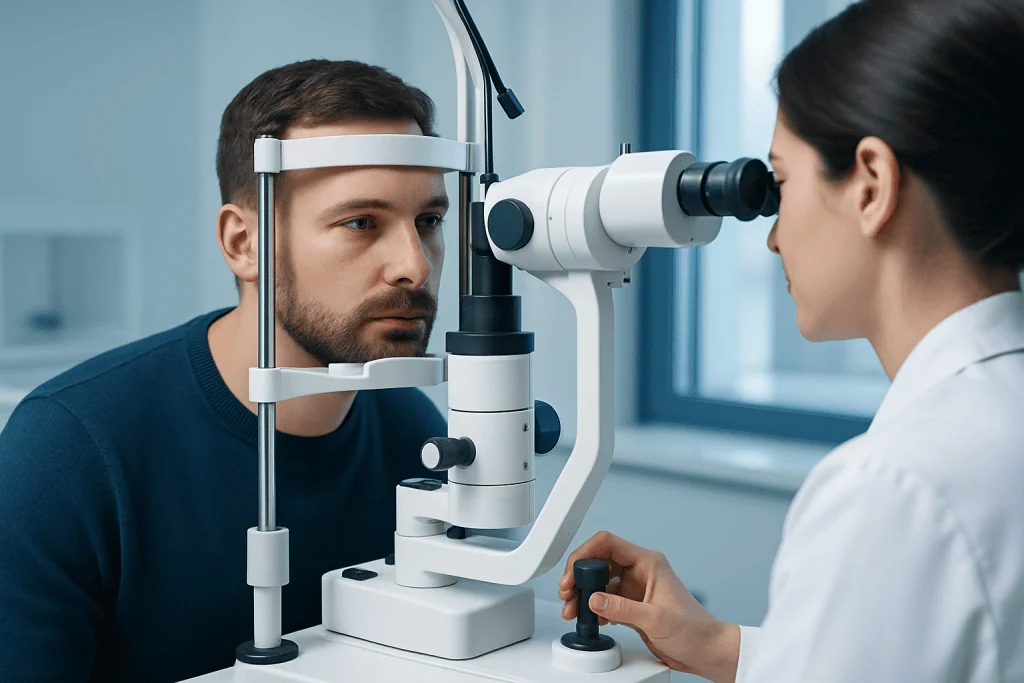
Diagnosis begins with a detailed eye examination. An ophthalmologist measures the corneal diameter, checks the clarity of the cornea, and evaluates the front and back of the eye. Eye pressure testing is especially important because megalocornea needs to be distinguished from congenital or juvenile glaucoma.
Additional testing may include refraction to assess glasses needs, slit-lamp examination, measurement of the eye’s axial length, and imaging or photography when helpful. The doctor also looks for lens changes, iris abnormalities, deep anterior chamber features, and signs of optic nerve damage. In children, an examination under anesthesia may sometimes be needed to obtain accurate measurements.
The diagnostic process often includes ruling out other causes of a large cornea. These include congenital glaucoma, anterior megalophthalmos, and other developmental eye conditions. When there is concern about pressure-related damage, further evaluation for glaucoma may be recommended, since protecting vision depends on identifying the correct underlying problem.
Possible complications and long-term outlook
Megalocornea itself does not always lead to severe vision loss, and many people have a stable course. However, the condition can be associated with several structural or refractive problems that may affect visual quality over time. These can include significant astigmatism, myopia, lens subluxation, early cataract formation, and increased vulnerability to glaucoma or vitreoretinal issues in some patients.
The long-term outlook depends on whether megalocornea occurs on its own or with additional eye findings. Children may need close monitoring as the visual system develops, because untreated refractive errors can interfere with normal visual maturation. Adults may need periodic reassessment to detect lens changes or pressure-related concerns early.
Regular follow-up is valuable even when vision seems normal. Ongoing care helps doctors track changes in eye pressure, refraction, and lens position. If a related complication does arise, early treatment often offers the best chance of preserving comfort and function.
Treatment and management options
There is no single treatment that makes a large congenital cornea return to average size. Management focuses on vision, comfort, and preventing complications. Many patients only need observation and periodic eye examinations, especially if vision is good and eye pressure remains normal.
When refractive errors are present, glasses or contact lenses may help improve sight. If related problems such as cataracts, lens instability, or glaucoma develop, treatment is directed at those specific issues. For example, surgery may be considered for significant lens or cataract problems, while pressure-lowering approaches may be needed if glaucoma is diagnosed. In selected cases, doctors may discuss corneal transplantation or cataract surgery when another coexisting eye problem makes this appropriate, though these are not routine treatments for uncomplicated megalocornea itself.
Care is often individualized and may involve pediatric ophthalmologists, cornea specialists, glaucoma specialists, or retina specialists depending on the findings. At centers experienced in complex eye care, including Acibadem International, multidisciplinary specialists in JCI-accredited hospitals evaluate international patients and tailor treatment plans according to the eye’s structure, vision needs, and any associated conditions.
Living with megalocornea: monitoring and self-care
Day-to-day self-care centers on protecting vision and keeping up with scheduled eye visits. Because symptoms can be subtle, especially early on, regular examinations are one of the most important parts of management. Parents of children with megalocornea should make sure vision screening, glasses checks, and follow-up appointments are not delayed.
If glasses or contact lenses are prescribed, using them consistently can support clearer vision and reduce eye strain. People with visually significant lens or retinal issues may also need activity advice tailored to their condition. Protective eyewear may be sensible during sports or work activities where eye injury is possible.
It is also helpful to know whether there is a family history of enlarged cornea, glaucoma, or inherited eye disease. Relatives may benefit from an eye examination if advised by a specialist. When megalocornea appears alongside other developmental findings, the care team may recommend broader assessment or referral to pediatric, genetic, or neuro-ophthalmology services.
When to seek medical care
Medical review is appropriate whenever a child or adult is thought to have unusually large eyes, persistent blurred vision, or a new change in visual quality. A non-urgent ophthalmology appointment is usually suitable for stable symptoms, especially when the person is otherwise comfortable and the cornea appears clear.
Prompt care is important if there is eye pain, pronounced light sensitivity, excessive tearing, redness, sudden worsening of vision, or a cloudy-looking cornea. These symptoms may point to raised eye pressure, injury, infection, or another problem that needs faster attention. If glaucoma is suspected, assessment may include specialized testing and, when needed, treatments such as glaucoma surgery.
Specialist evaluation is also advisable if megalocornea is accompanied by lens changes, unusual eye movements, or signs of retinal disease. In some situations, the doctor may assess for other inherited eye conditions and related disorders such as cataract that can overlap with the person’s symptoms or long-term care plan.
Frequently asked questions
Is megalocornea the same as glaucoma?
No. Megalocornea refers to a large cornea that is usually clear and often has normal eye pressure, while glaucoma involves damage related to raised eye pressure or impaired optic nerve health. The two can sometimes be confused at first, so an ophthalmologist needs to examine the eye carefully.
Can megalocornea affect vision?
Yes, it can. Some people have little or no visual impact, while others develop nearsightedness, astigmatism, lens problems, or other associated eye changes that reduce visual clarity. Regular eye examinations help identify these issues early.
Is megalocornea present from birth?
In most cases, yes. Megalocornea is generally a congenital condition, meaning the enlarged cornea is present at birth even if it is not recognized until later. It may be noticed during infancy, childhood screening, or a routine eye check in adulthood.
Does megalocornea always need surgery?
No. Many people do not need surgery and are managed with observation, glasses, or contact lenses if needed. Surgery is considered only when a related problem develops, such as cataract, lens instability, or glaucoma.
Is megalocornea inherited?
It can be. Some cases follow an inherited pattern, including X-linked inheritance, while others occur without a clear family history. If several relatives have similar eye findings, a doctor may suggest family screening or genetic counseling.
What tests are used to diagnose megalocornea?
Doctors usually use a full eye examination, corneal diameter measurement, refraction testing, slit-lamp examination, and eye pressure measurement. They may also examine the optic nerve, lens, and retina to rule out other conditions and look for related complications.
This article is for general information only and is not a substitute for professional medical advice. Please consult a qualified doctor about your individual situation.
Explore treatments in Turkey — costs, top hospitals & a free quote
JCI-accredited · board-certified surgeons · reply within 24h
Add us as a Preferred Source to see more of our trusted health content across Google Search, AI Overviews and Discover.

More from the Health Library

Gilovi — Explained by Medical Evidence, Not Myths

Blood clot in neck: Symptoms, Causes, and Treatment — Complete Patient Guide

Skin Peeling on Hands — Explained by Medical Evidence, Not Myths

Eye Exercises for Double Vision: An Evidence-Based Guide for Patients

Cephalosporins: A Complete Medical Overview