Melanoma: Suspicious Moles, Diagnosis, and Modern Treatment

Melanoma may develop in an existing mole or appear as a new, changing spot on the skin. The ABCDE rule helps identify suspicious moles: asymmetry, border irregularity, color variation, diameter, and evolution.
Key Takeaways
- Melanoma may develop in an existing mole or appear as a new, changing spot on the skin.
- The ABCDE rule helps identify suspicious moles: asymmetry, border irregularity, color variation, diameter, and evolution.
- Diagnosis usually requires a skin examination and biopsy, followed by staging tests if melanoma is confirmed.
- Treatment depends on the stage and may include surgery, immunotherapy, targeted therapy, radiation therapy, or a combination.
- Regular skin checks, sun protection, and follow-up visits are important for prevention and early detection.
Melanoma is a serious type of skin cancer that can often be treated successfully when found early. Knowing the warning signs of suspicious moles, seeking timely diagnosis, and understanding modern treatment options can help patients make informed decisions with their healthcare team.
Overview
Melanoma is a type of cancer that begins in melanocytes, the cells that produce melanin, the pigment that gives skin its color. Although melanoma is less common than some other skin cancers, it is important because it has a greater ability to spread to lymph nodes and other organs if it is not detected and treated early.
Melanoma can occur anywhere on the skin, including areas that are not frequently exposed to the sun. It may develop on the back, legs, arms, face, scalp, soles of the feet, under the nails, or in mucosal areas such as the mouth or genital region. In people with darker skin tones, melanoma may be more likely to appear on the palms, soles, or under the nails, where it can be harder to notice.
Early melanoma is often treated with surgery and may have a very good outlook. More advanced melanoma requires a careful, multidisciplinary approach. In recent years, treatment has improved significantly with modern immunotherapy and targeted therapy, which can help some patients by activating the immune system or blocking specific cancer-related changes in melanoma cells.
Symptoms and Suspicious Moles
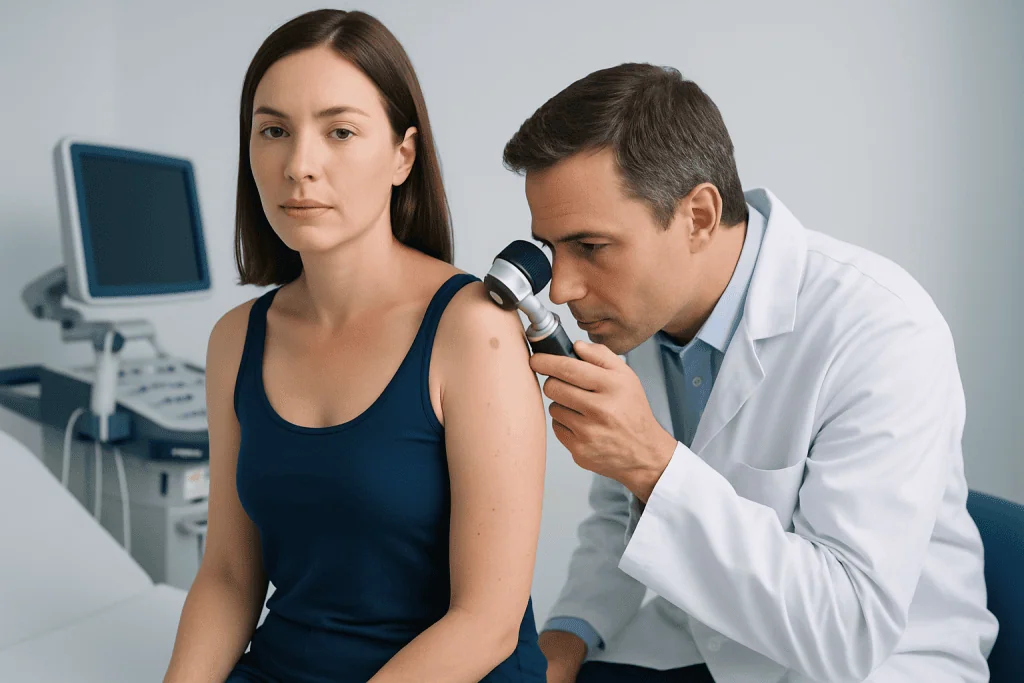
The most important warning sign of melanoma is a new spot on the skin or a change in an existing mole. Not every changing mole is cancerous, but any change in size, shape, color, surface, or sensation should be assessed by a qualified doctor, especially a dermatologist. Melanoma may be flat or raised, brown, black, pink, red, blue, white, or a mixture of colors.
A useful guide is the ABCDE rule. This can help patients recognize features that deserve medical attention:
- A for Asymmetry: one half of the mole does not match the other half.
- B for Border: the edges are irregular, blurred, notched, or uneven.
- C for Color: the spot has multiple colors or uneven shading.
- D for Diameter: the spot is larger than about 6 mm, although melanomas can be smaller.
- E for Evolution: the mole is changing, itching, bleeding, crusting, or becoming painful.
Another helpful concept is the “ugly duckling” sign. This means a mole or spot looks different from the person’s other moles. A lesion that stands out because of its color, shape, or behavior should be checked, even if it does not meet every ABCDE feature.
Causes and Risk Factors
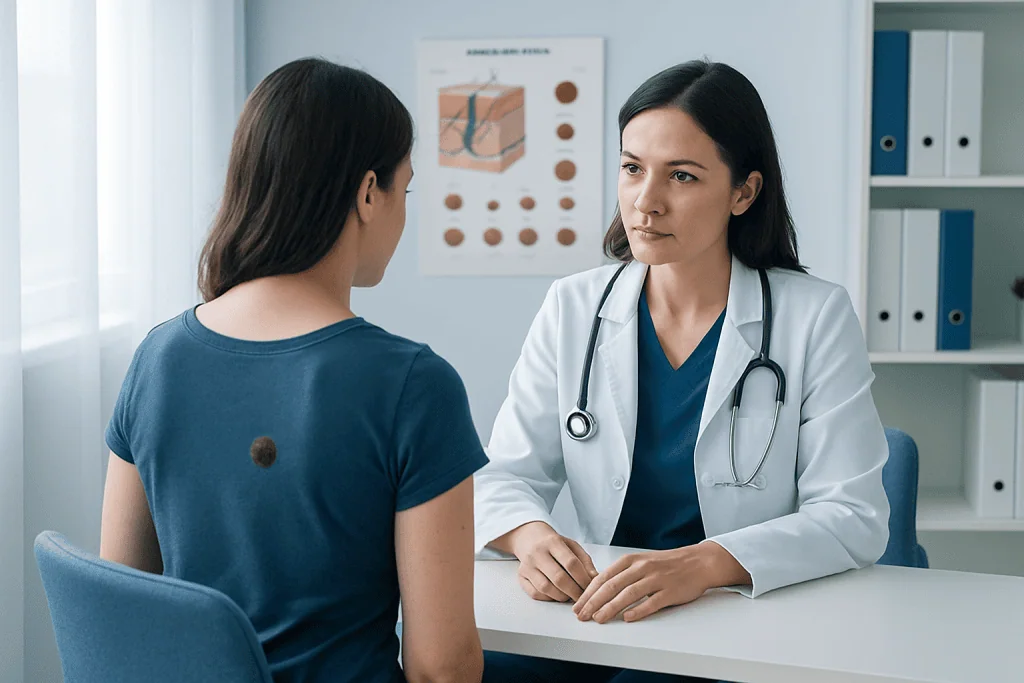
Melanoma develops when DNA damage in melanocytes leads to uncontrolled cell growth. Ultraviolet (UV) radiation from sunlight and tanning beds is a major preventable risk factor. Episodes of intense sun exposure and blistering sunburns, particularly during childhood or adolescence, can increase the risk later in life.
Some people have a higher risk because of personal or family factors. These include having many moles, atypical moles, fair skin that burns easily, red or blond hair, light-colored eyes, a history of melanoma or other skin cancers, or a close relative with melanoma. People with a weakened immune system, such as organ transplant recipients or those taking long-term immune-suppressing medicines, may also have increased risk.
Melanoma can occur in anyone, including people who do not sunburn easily. Genetics, immune function, and environmental exposure all play a role. A person with risk factors should not feel blamed; instead, risk awareness can guide healthier habits, regular skin checks, and timely medical evaluation of suspicious changes.
Diagnosis
Diagnosis begins with a careful skin examination. A dermatologist may use a dermoscope, a handheld device that magnifies and illuminates the skin, to look at patterns that are not visible to the naked eye. The doctor will also ask about changes in the lesion, sun exposure history, previous skin cancers, family history, and any symptoms such as bleeding or itching.
If melanoma is suspected, the next step is usually a biopsy. Whenever possible, the doctor removes the entire suspicious lesion with a small margin of normal skin so a pathologist can examine it under a microscope. The pathology report may describe the melanoma type, thickness, ulceration, mitotic activity, margins, and other features that help guide treatment planning.
If melanoma is confirmed, staging is performed to understand how deep it is and whether it has spread. Thin, early melanomas may need no imaging tests. For thicker or higher-risk melanomas, doctors may recommend sentinel lymph node biopsy, ultrasound, CT, PET/CT, MRI, or blood tests depending on the situation. Staging helps the care team choose the most appropriate treatment and follow-up schedule.
Treatment Options
Treatment depends on the stage of melanoma, the location of the tumor, the patient’s general health, and specific features of the cancer cells. Surgery is the main treatment for early melanoma. The surgeon removes the melanoma along with a safety margin of healthy tissue, and the size of this margin depends on the melanoma thickness and clinical guidelines.
For some patients, a sentinel lymph node biopsy may be recommended to check whether melanoma cells have reached the nearest lymph node basin. If melanoma has spread to lymph nodes or other areas, treatment may involve additional surgery, immunotherapy, targeted therapy, radiation therapy, or a combination. Immunotherapy medicines help the immune system recognize and attack melanoma cells. Targeted therapy may be used when the melanoma has certain gene changes, such as a BRAF mutation.
Radiation therapy is not the main treatment for most early melanomas, but it may help in selected situations, such as controlling symptoms, treating certain metastases, or reducing risk in specific high-risk areas after surgery. Clinical trials may also be discussed for eligible patients, especially when melanoma is advanced or has returned. The best plan is individualized and should be reviewed with an oncology team experienced in melanoma care.
Prevention, Self-Care, and Follow-Up
Sun protection is one of the most important ways to reduce melanoma risk. Patients are encouraged to seek shade, wear protective clothing, use a broad-spectrum sunscreen as directed, and avoid tanning beds. Sunscreen should not be used as a reason to stay in intense sun longer; it works best as part of a broader protection plan.
Regular self-examination can help detect melanoma early. A person can check the entire skin surface once a month, including the scalp, back, buttocks, soles, between the toes, and under the nails. Using a mirror or asking a trusted person for help can make it easier to see hard-to-reach areas. Taking photographs of moles may help track changes over time, especially for people with many moles.
After melanoma treatment, follow-up visits are essential. The schedule depends on the stage and risk of recurrence. Follow-up may include skin examinations, lymph node checks, imaging in selected cases, and education about signs that should prompt earlier review. Patients should also inform their doctor about new lumps, unexplained weight loss, persistent pain, headaches, cough, or neurological symptoms, while remembering that many symptoms have non-cancer causes.
When to See a Doctor
A doctor should evaluate any mole or skin spot that is new, changing, bleeding, crusting, painful, itchy, or different from the person’s other moles. It is also important to seek medical advice for a dark streak under a nail, a non-healing sore, or a pigmented spot on the palm, sole, mouth, or genital area. Early assessment is often straightforward and can provide reassurance or lead to timely treatment.
People at higher risk may benefit from regular dermatologist visits even when they do not notice changes. This includes those with a previous melanoma, many atypical moles, strong family history, or immune suppression. A healthcare professional can advise how often skin examinations are needed and whether total-body photography or digital mole monitoring may be useful.
International patients who need evaluation or treatment can seek care in centers with dermatology, pathology, surgical oncology, medical oncology, radiation oncology, radiology, and nuclear medicine working together. Acibadem International’s multidisciplinary specialists and JCI-accredited hospitals diagnose and treat melanoma for international patients, with care plans guided by the patient’s diagnosis, stage, and overall health.
Frequently asked questions
Is every dark or changing mole melanoma?
No. Many dark or changing moles are benign, and some changes occur because of age, irritation, hormones, or injury. However, melanoma can look like a changing mole, so any suspicious spot should be assessed by a dermatologist rather than monitored indefinitely at home.
Can melanoma appear on skin that is not exposed to the sun?
Yes. Melanoma can develop on areas such as the soles of the feet, under the nails, the scalp, or mucosal surfaces. Sun exposure is an important risk factor, but genetics and other biological factors can also contribute.
Does a biopsy cause melanoma to spread?
A properly performed biopsy does not cause melanoma to spread. Biopsy is the standard way to confirm the diagnosis and obtain information needed for treatment planning. Delaying biopsy when melanoma is suspected can be more harmful than the procedure itself.
What is the difference between immunotherapy and targeted therapy?
Immunotherapy helps the immune system recognize and attack cancer cells. Targeted therapy works against specific molecular changes in melanoma cells, such as certain BRAF mutations. Doctors may recommend testing the tumor to see whether targeted therapy is suitable.
Can melanoma come back after treatment?
Melanoma can recur, especially if it was thicker or had spread before treatment. This is why follow-up visits and self-skin checks are important. The risk varies widely, and the treating doctor can explain the individual follow-up plan.
How often should someone check their skin?
Many adults benefit from checking their skin about once a month, especially if they have many moles or risk factors for skin cancer. People with a history of melanoma or atypical moles should ask their dermatologist how often professional skin examinations are recommended.
References
- World Health Organization
- American Cancer Society
- National Cancer Institute
- European Society for Medical Oncology
- American Academy of Dermatology
This article is for general information only and is not a substitute for professional medical advice. Please consult a qualified doctor about your individual situation.
Melanoma in Turkey — costs, top hospitals & a free quote
JCI-accredited · board-certified surgeons · reply within 24h
Add us as a Preferred Source to see more of our trusted health content across Google Search, AI Overviews and Discover.

Medical Oncology Department
Medical treatment of cancer with chemotherapy, immunotherapy and targeted therapies under a multidisciplinary tumor board.
60 specialists in this unit