Meniscus Tear Surgery: Candidacy, Procedure Steps, and Recovery Timeline

Meniscus tear surgery is not needed for every tear; many people improve with non-surgical treatment first. The two main operations are meniscus repair and partial meniscectomy, chosen based on tear pattern, location, and knee health.
Key Takeaways
- Meniscus tear surgery is not needed for every tear; many people improve with non-surgical treatment first.
- The two main operations are meniscus repair and partial meniscectomy, chosen based on tear pattern, location, and knee health.
- Arthroscopic surgery uses small incisions and a camera to treat the torn meniscus inside the knee.
- Recovery is usually longer after meniscus repair than after partial meniscectomy because the tissue needs time to heal.
- Benefits can include less pain, better knee function, and less locking or catching, but all surgery carries risks.
- Medical review is important if the knee locks, gives way, swells repeatedly, or cannot bear weight.
Meniscus tear surgery is used when a torn knee meniscus causes ongoing pain, catching, or limited movement that does not improve with rest, therapy, and other non-surgical care. The procedure is usually done arthroscopically, and recovery depends largely on whether the meniscus is repaired or a damaged portion is removed.
Overview: What meniscus tear surgery is and when it helps
Meniscus tear surgery is a procedure to treat a tear in the meniscus, the C-shaped cartilage that helps cushion and stabilize the knee joint. Surgery may involve repairing the torn tissue or trimming away the unstable damaged part. In many cases, the goal is to reduce pain, improve movement, and help the knee work more smoothly during daily activities and sports.
Not every torn meniscus needs an operation. Some tears improve with rest, activity changes, physical therapy, ice, and anti-inflammatory treatment. Surgery is more likely to be considered when symptoms continue, when the knee locks or catches, or when the tear is unlikely to heal on its own.
The decision is individualized. A doctor considers the person’s age, activity level, symptoms, the type and location of the tear, and whether there are other knee problems such as ligament injury or osteoarthritis. For a broader look at knee cartilage injury, readers may also find meniscus tear information helpful.
Who may be a candidate for meniscus tear surgery
Candidacy depends on both symptoms and imaging findings. A person may be a good candidate if knee pain persists despite conservative treatment, if the knee repeatedly locks or catches, or if the tear interferes with work, exercise, or normal walking. Surgery may also be recommended when a tear occurs together with another injury, such as an anterior cruciate ligament problem.
Doctors also look closely at the tear itself. Tears near the outer edge of the meniscus often have a better blood supply and may be repairable. Complex, worn, or degenerative tears in less vascular areas are less likely to heal with repair and may be treated differently. The condition of the knee joint as a whole matters too, especially if there is cartilage wear or arthritis.
People are often advised to try non-surgical treatment first unless there are clear mechanical symptoms or an acute sports injury in a knee that is otherwise healthy. Non-surgical care can include physical therapy, temporary activity modification, and other forms of knee pain treatment. If symptoms remain limiting after this period, surgery may become the next step.
Types of meniscus tear surgery
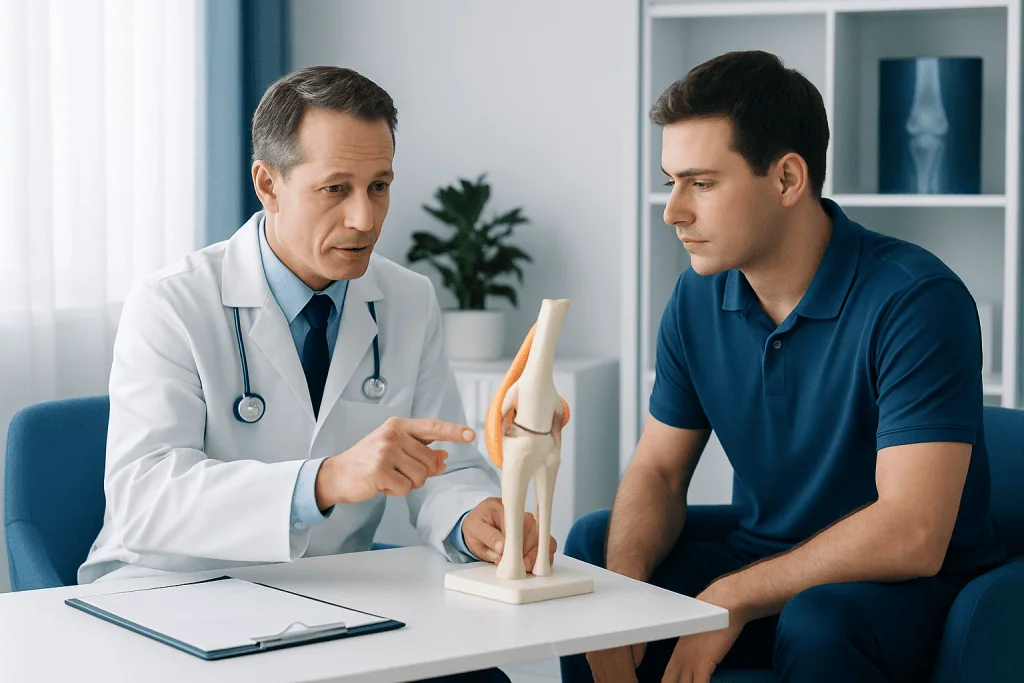
The two most common procedures are meniscus repair and partial meniscectomy. Meniscus repair stitches the torn tissue back together so it can heal. This option preserves more natural cushioning in the knee and is often preferred when the tear pattern and blood supply make healing realistic.
Partial meniscectomy removes only the torn, unstable fragment while leaving as much healthy meniscus as possible. This can relieve catching and pain more quickly, but it does not restore the removed tissue. Because the meniscus helps protect the joint, surgeons generally aim to preserve it whenever safely possible.
In selected cases, another knee problem is treated at the same time. For example, a meniscus tear may be addressed during knee arthroscopy performed for diagnosis or associated injury, or alongside ACL surgery if both structures are injured. The exact plan is based on examination findings, MRI results, and the person’s goals.
How the procedure works: step by step
Most meniscus operations are performed arthroscopically. This means the surgeon makes small incisions around the knee and inserts a thin camera, called an arthroscope, to view the joint on a screen. Small surgical instruments are passed through other incisions to treat the tear with precision while minimizing disruption to surrounding tissue.
Before surgery, the patient is positioned and the knee is cleaned and prepared in a sterile way. Anesthesia may be general, regional, or sometimes a combination, depending on the case and the anesthesiology plan. The surgeon first inspects the knee joint, including cartilage surfaces, ligaments, and both menisci, to confirm the tear pattern and check for additional damage.
If the meniscus is repairable, the surgeon refreshes the tear edges if needed and places specialized sutures or fixation devices to hold the tissue together. If the tear cannot be repaired reliably, the unstable damaged portion is trimmed away while preserving as much healthy meniscus as possible. At the end of the procedure, instruments are removed, the small incisions are closed, and a dressing is applied. Some patients go home the same day with crutches, a brace, or both, depending on the operation performed.
Recovery timeline after meniscus tear surgery
Recovery varies because meniscus repair and partial meniscectomy heal at different speeds. After a partial meniscectomy, walking and daily activities often return sooner because there is no repaired tissue that must biologically heal. After a meniscus repair, recovery is usually slower and more protected, since the stitches need time for the tear to mend.
In the first days after surgery, swelling control, pain management, wound care, and safe movement are the main priorities. A doctor may recommend elevation, ice, and limited weight-bearing for a period of time. Some people can bear weight quickly, while others need crutches and a brace, especially after repair. Physical therapy is commonly started early to help restore motion, activate muscles, and gradually improve strength.
Over the following weeks, rehabilitation progresses step by step. Many people return to desk-based work relatively early, but jobs that involve kneeling, lifting, twisting, or long periods of standing may require more time. Return to running, pivoting sports, or heavy activity usually takes longer after repair than after partial meniscectomy. The timeline is always individualized and depends on healing, strength, swelling, range of motion, and the surgeon’s guidance.
Structured physical therapy and rehabilitation is often a key part of recovery. Following the exercise plan, protecting the knee from sudden twisting, and attending follow-up visits can help support the best possible outcome.
Benefits, limitations, and possible risks
The main potential benefits of meniscus tear surgery are reduced pain, less catching or locking, improved knee function, and a more predictable return to activity when conservative treatment has not worked. Meniscus repair has the added advantage of preserving more of the knee’s natural shock absorber, which may be important for long-term joint health in suitable cases.
However, surgery also has limits. Not all pain comes entirely from the meniscus, especially in older adults with arthritis or wider cartilage wear. Even a technically successful procedure may not fully relieve symptoms if there are other sources of knee pain. In addition, not every tear can be repaired, and repair itself may not heal completely.
Possible risks include infection, bleeding, blood clots, stiffness, swelling, persistent pain, nerve or vessel injury, anesthesia-related complications, and re-tearing or failure of healing. These complications are not common, but they are part of informed decision-making. A careful discussion with an orthopedic specialist helps balance the likely benefits against the risks and the expected recovery demands.
When to seek medical care
Medical evaluation is important if knee pain follows a twist, fall, sports injury, or sudden squat and does not improve, especially when swelling appears within hours or over the next day. Care should also be sought if the knee locks, clicks painfully, gives way, or cannot fully straighten or bend.
Urgent assessment is advisable if a person cannot bear weight, has significant swelling, develops a fever after surgery, notices redness or drainage from the incision, or experiences calf pain, chest pain, or shortness of breath. These symptoms can point to complications that need prompt attention.
An orthopedic assessment typically includes a physical examination and, when appropriate, MRI or other imaging to confirm the diagnosis and rule out associated ligament or cartilage injuries. At centers such as Acibadem International, multidisciplinary specialists in JCI-accredited hospitals evaluate knee injuries and provide individualized treatment plans for international patients.
Frequently asked questions
How do doctors decide between meniscus repair and partial meniscectomy?
The choice depends on the type of tear, where it is located, how healthy the meniscus tissue is, and whether the knee has other problems. Tears with a good blood supply and favorable patterns are more likely to be repaired, while complex or degenerative tears are more often trimmed. The aim is usually to preserve as much meniscus as possible.
Is meniscus tear surgery always necessary?
No. Many meniscus tears improve with rest, physical therapy, activity modification, and symptom control. Surgery is typically considered when symptoms continue, the knee locks or catches, or the tear is unlikely to heal without an operation.
How long does recovery from meniscus tear surgery take?
Recovery can be relatively quick after partial meniscectomy, but it is generally longer after meniscus repair because the tissue needs time to heal. Return to sports or physically demanding work often takes several weeks to months, depending on the procedure and rehabilitation progress. The treating surgeon and physical therapist provide the safest timeline for each person.
Will meniscus tear surgery prevent arthritis?
Surgery does not guarantee that arthritis will be prevented. However, preserving the meniscus when possible may help protect the knee joint better than removing more tissue than necessary. Joint health also depends on factors such as age, alignment, weight, cartilage condition, and previous injuries.
Is meniscus tear surgery done as open surgery or arthroscopy?
Most procedures are done arthroscopically through small incisions using a camera and specialized instruments. Arthroscopy usually allows careful treatment of the tear with less disruption to surrounding tissues. In most cases, it is performed as a minimally invasive procedure.
What happens if a torn meniscus is left untreated?
Some tears cause only mild symptoms and may settle with non-surgical treatment. Others can continue to cause pain, swelling, locking, or reduced knee function. Ongoing symptoms should be assessed by a qualified doctor so the most appropriate treatment plan can be chosen.
References
- American Academy of Orthopaedic Surgeons
- National Institute of Arthritis and Musculoskeletal and Skin Diseases
- American Orthopaedic Society for Sports Medicine
- OrthoInfo
- National Health Service
This article is for general information only and is not a substitute for professional medical advice. Please consult a qualified doctor about your individual situation.
Joint and spine care in Turkey — expert assessment & treatment
JCI-accredited · board-certified surgeons · reply within 24h
Add us as a Preferred Source to see more of our trusted health content across Google Search, AI Overviews and Discover.

More from the Health Library



Related Specialists

Prof. Dr. Canan Ayabakan
Pediatric Cardiology
Assoc. Prof. Dr. Gülfem Başol
Gynecology & Obstetrics
Fzt. Gökçen Erol
Pediatric Rehabilitation
Prof. Dr. Çiğdem Kalaycık Ertuğay
Otorhinolaryngology