Micro Dermabrasion: Procedure, Recovery and Results

Micro dermabrasion mechanically exfoliates the skin’s surface and does not treat deeper scars or wrinkles. Redness, sensitivity and mild dryness are common immediately afterward and usually settle within hours to a few days.
Key Takeaways
- Micro dermabrasion mechanically exfoliates the skin’s surface and does not treat deeper scars or wrinkles.
- Redness, sensitivity and mild dryness are common immediately afterward and usually settle within hours to a few days.
- Sun protection and gentle skin care are essential after treatment because the skin can be more sensitive to ultraviolet light.
- A qualified clinician should assess active acne, rosacea, eczema, infections, pigment concerns and medication use before treatment.
- Several sessions may be needed for gradual results, and outcomes vary with the skin concern, technique and aftercare.
Micro dermabrasion is a non-surgical exfoliation procedure that gently removes part of the outermost layer of skin. It may temporarily improve dullness, uneven texture, fine surface lines and mild discoloration, with little downtime for most people.
Overview: What Is Micro Dermabrasion?
Micro dermabrasion, often written as microdermabrasion, is a minimally invasive cosmetic skin procedure that exfoliates the very outer layer of the skin, known as the stratum corneum. A trained professional uses either a diamond-tipped handpiece or a device that delivers fine crystals, together with suction, to lift away surface cells and debris. The aim is to leave the skin feeling smoother and looking brighter.
The procedure is commonly used for dull or rough-looking skin, mild uneven pigmentation, enlarged-looking pores, superficial acne marks and fine surface lines. It does not remove deep wrinkles, deep scars, significant skin laxity or active inflammatory skin disease. Results are generally subtle and gradual, and maintenance treatments may be chosen depending on a person’s goals.
Micro dermabrasion is sometimes described as a “lunchtime” procedure because it is usually brief and does not normally require anesthetic or a recovery period away from usual activities. However, the skin is temporarily more sensitive after exfoliation, so careful aftercare remains important.
How the Procedure Is Performed
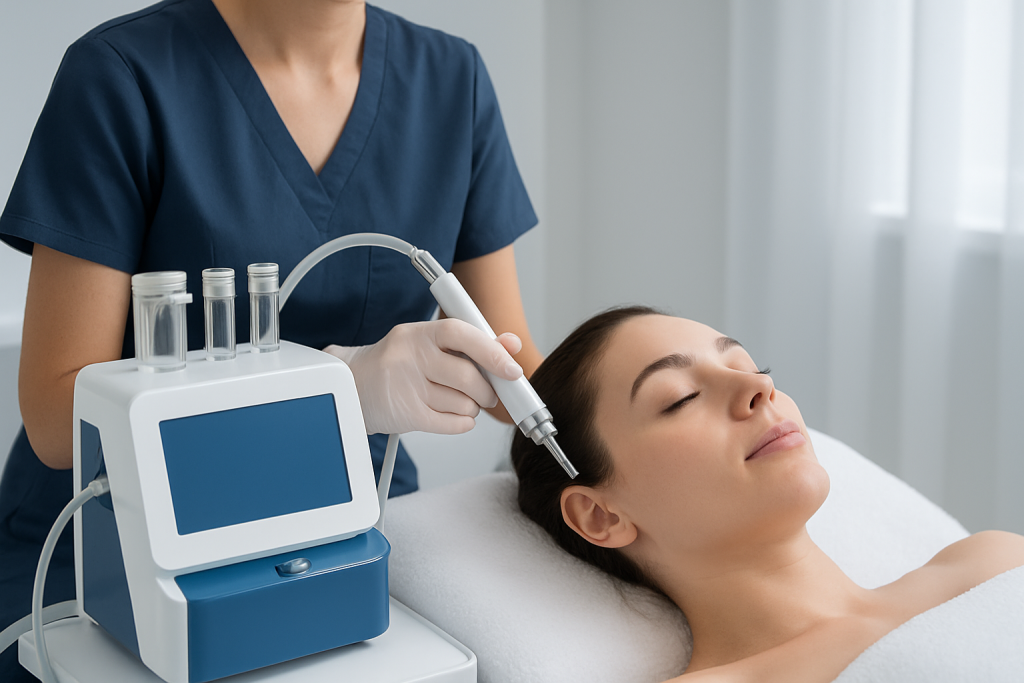
Before treatment, a dermatologist or appropriately trained skin-care professional reviews the person’s goals, skin type, current routine, medical history and medicines. This assessment helps identify whether micro dermabrasion is suitable and whether another option would better address concerns such as pronounced scarring, melasma, rosacea or active acne.
The skin is cleansed, and the device is moved in controlled passes over the treatment area. Diamond-tip systems abrade the skin with a textured tip, while crystal systems use fine particles to exfoliate the surface. Built-in suction removes loosened cells. The procedure often takes about 30 to 60 minutes, depending on the areas treated.
Most people feel a light scratching, polishing or suction sensation rather than pain. There may be temporary warmth, tightness or pinkness afterward. The clinician may apply a bland moisturizer and broad-spectrum sunscreen before the person leaves.
Micro dermabrasion differs from chemical peels, which use a solution to create controlled exfoliation at different possible depths. It is also less intensive than laser resurfacing procedures, which may be considered for selected deeper texture changes or scars after a specialist assessment.
Who May Benefit and Who Should Postpone Treatment

Micro dermabrasion may suit adults who would like a gentle approach to improving surface texture or radiance and understand that the effect is modest. It can be used on many skin types, but the treatment settings, number of passes and aftercare should be individualized. People prone to post-inflammatory hyperpigmentation should discuss their risk with an experienced clinician.
Treatment is usually postponed when there is sunburn, open skin, an active skin infection, cold sores near the treatment area, significant irritation, a flare of eczema or rosacea, or inflamed acne lesions. Working over compromised skin can increase discomfort, irritation and the risk of unwanted changes in pigmentation.
A clinician should also be told about recent facial procedures, topical retinoids, exfoliating acids, skin-lightening products, anticoagulant medicines, a history of keloid scarring, recurrent herpes simplex and any isotretinoin use. Recommendations vary according to the medication, dose, skin condition and planned procedure, so professional guidance is safer than stopping a prescribed medicine independently.
For persistent acne, a clinician may recommend a tailored plan that addresses the underlying condition rather than relying on exfoliation alone. Learn more about acne and the options that may be appropriate for different types and severities.
Recovery, Results and Expected Changes
Immediately after micro dermabrasion, the skin may look pink and feel warm, dry, tight or mildly sensitive. Some people notice slight swelling or pinpoint tenderness, particularly if their skin is sensitive or the treatment was more vigorous. These effects are generally temporary and should improve with gentle care.
The skin may look fresher soon after treatment because surface buildup has been removed, but the most realistic result is a smoother-feeling, more even-looking surface rather than a dramatic change. Improvements in mild texture concerns or superficial discoloration often develop gradually across a planned series of sessions. The number and spacing of treatments should be decided with the treating professional.
Results are influenced by baseline skin health, sun exposure, smoking, skin-care habits and the concern being treated. Daily sunscreen use is especially important because ultraviolet exposure can worsen discoloration and reduce the benefit of cosmetic skin procedures.
Micro dermabrasion cannot reliably erase deep acne scars. For scar-focused care, a dermatologist may discuss approaches such as laser skin resurfacing or other procedures based on scar type, skin tone and recovery preferences.
How Long Does It Take to Heal After Microdermabrasion?
Most people do not need significant healing time after micro dermabrasion. Mild redness and sensitivity often settle within a few hours, although some people have dryness, flaking or pinkness for one to three days. Sensitive skin, stronger treatment settings and use of irritating products can make these effects last longer.
Normal work and everyday activities can usually resume on the same day. It is sensible to avoid heat, friction, intensive exercise and direct sun exposure for the rest of the day or as advised by the clinician. Makeup may be used when the skin feels comfortable and intact, but many people prefer to wait until the following day.
If marked swelling, blistering, worsening pain, crusting or persistent redness occurs, the person should contact the provider or seek medical advice. These reactions are uncommon but should not be ignored, especially if there are signs of infection or an allergic reaction to a product used during aftercare.
Is There a Downside to Microdermabrasion?
The main downside to micro dermabrasion is that its benefits are limited to the surface of the skin. It may not provide enough improvement for deeper wrinkles, acne scars, pronounced pigmentation, sagging skin or other concerns that involve deeper skin layers. Repeated sessions may be needed, and results are not permanent because normal skin-cell turnover continues.
Temporary redness, dryness, tenderness, flaking and increased sun sensitivity are the most common side effects. Less commonly, overly aggressive treatment or unsuitable treatment on irritated skin may lead to bruising, broken tiny blood vessels, acne flares, infection or temporary pigment changes.
People with darker skin tones can safely receive many cosmetic procedures, but any inflammation may potentially trigger uneven pigmentation. This makes a thoughtful assessment, conservative technique and diligent sun protection particularly important. A qualified dermatologist can help determine whether micro dermabrasion, another exfoliating method or no procedure is the safest choice.
Do and Don'ts After Microdermabrasion
After micro dermabrasion, the priority is to support the skin barrier while it settles. Use a gentle cleanser, a fragrance-free moisturizer and broad-spectrum sunscreen with SPF 30 or higher. Apply sunscreen every morning and reapply when spending time outdoors, following the product directions.
- Do: keep the skin hydrated, use lukewarm rather than hot water, protect the face from sun exposure and follow the clinician’s individualized instructions.
- Do: tell the provider promptly if unexpected symptoms develop or if the skin does not settle as expected.
- Don’t: scrub, pick, wax or use exfoliating brushes on the treated area while it is sensitive.
- Don’t: use retinoids, alpha- or beta-hydroxy acids, benzoyl peroxide, strong vitamin C products or other potentially irritating active ingredients until the clinician says it is appropriate.
- Don’t: use tanning beds, have prolonged sun exposure, or use very hot saunas and steam rooms immediately after treatment.
The timing for restarting active products depends on skin sensitivity and the treatment intensity. When in doubt, it is safer to restart one product at a time after the skin feels fully comfortable rather than trying several new products at once.
What Is the Best Age for Microdermabrasion?
There is no single best age for micro dermabrasion. Suitability depends more on a person’s skin concern, skin health, expectations and medical history than on age alone. Adults may choose it at different stages of life for surface dullness, mild texture changes or as part of a professionally guided skin-care plan.
For teenagers, the decision should be made carefully and with a parent or guardian involved where appropriate. Active inflammatory acne, irritated skin or the use of acne medicines may make micro dermabrasion unsuitable at that time. Treating the underlying acne and protecting the skin barrier are often more important than cosmetic exfoliation.
For older adults, micro dermabrasion can improve the feel and appearance of dry, rough surface skin, but it does not reverse deeper age-related changes. A dermatologist can discuss realistic goals and alternatives, including dermatology care for skin conditions that need medical assessment rather than cosmetic treatment alone.
When to Seek Medical Care
Medical advice is appropriate before micro dermabrasion if there is a changing mole, an unexplained rash, persistent redness, painful spots, recurrent cold sores, severe acne, melasma, rosacea or eczema. Cosmetic treatment should not delay evaluation of a skin change that could need diagnosis.
After the procedure, contact a clinician if there is increasing pain, severe swelling, blistering, pus, spreading redness, fever, a widespread rash or symptoms that do not improve over several days. These signs do not necessarily mean a serious problem, but they should be assessed promptly.
Acibadem International’s multidisciplinary specialists and JCI-accredited hospitals can assess skin concerns and provide appropriate dermatologic and aesthetic care for international patients. A consultation can help ensure that the selected procedure matches the person’s skin type, goals and overall health needs.
Frequently asked questions
What does micro dermabrasion do for the skin?
Micro dermabrasion removes a controlled amount of dead cells from the skin’s outermost layer. It can make the skin feel smoother and may improve temporary dullness, mild roughness, superficial discoloration and fine surface lines. It does not treat deeper wrinkles or deep scars as effectively as more intensive procedures may.
How long does it take to heal after microdermabrasion?
Most people have little or no downtime. Mild redness and sensitivity often fade within hours, while dryness or light flaking can last one to three days. People with sensitive skin may need slightly longer for the skin to feel fully settled.
Is there a downside to microdermabrasion?
The procedure has limited effects on deeper scars, wrinkles and significant pigmentation concerns, so expectations should remain realistic. Temporary redness, dryness and sun sensitivity are common, while pigment changes or irritation are less common but possible. It may not be suitable during active skin inflammation or infection.
What should be avoided after microdermabrasion?
Avoid scrubs, exfoliating acids, retinoids, waxing, tanning and harsh skin-care products until the skin has recovered and the treating clinician advises restarting them. Direct sunlight, very hot showers, saunas and vigorous exercise should also be limited immediately after treatment. Gentle moisturizer and daily broad-spectrum sunscreen are recommended.
What is the best age for microdermabrasion?
There is no specific best age because the right time depends on the skin concern and the person’s health rather than age alone. Adults of different ages may consider it for mild surface texture or radiance concerns. Teenagers and anyone with active acne or sensitive skin should first seek individualized advice from a qualified clinician.
How often can micro dermabrasion be done?
The appropriate schedule varies with the skin concern, treatment intensity and how the skin responds. A clinician may recommend a series of sessions spaced apart to allow the skin to recover. More frequent or aggressive treatment does not necessarily produce better results and can increase irritation.
This article is for general information only and is not a substitute for professional medical advice. Please consult a qualified doctor about your individual situation.
Dermabrasion in Turkey — costs, top hospitals & a free quote
JCI-accredited · board-certified surgeons · reply within 24h
Add us as a Preferred Source to see more of our trusted health content across Google Search, AI Overviews and Discover.

More from the Health Library

Non Rebreather Mask: A Complete Medical Overview

Nose Bleed Causes: A Complete Medical Overview

White Mole: An Evidence-Based Guide for Patients

Breathalyzer: A Complete Medical Overview

Cytotec: An Evidence-Based Guide for Patients