Migraine Aura Explained: Visual Changes, Numbness, and When It Is Urgent

Migraine aura commonly causes temporary visual symptoms such as flashing lights, zigzag lines, or blind spots. Some people also experience tingling, numbness, or trouble finding words during an aura.
Key Takeaways
- Migraine aura commonly causes temporary visual symptoms such as flashing lights, zigzag lines, or blind spots.
- Some people also experience tingling, numbness, or trouble finding words during an aura.
- Aura symptoms usually develop gradually over minutes and resolve within an hour, though timing can vary.
- Sudden one-sided weakness, a first-ever severe neurological episode, or symptoms that do not go away require urgent medical evaluation.
- A doctor may recommend migraine treatment, trigger management, and tests when symptoms are new or atypical.
Migraine aura is a set of temporary neurological symptoms that can appear before or during a migraine attack. It often involves visual changes, tingling, numbness, or speech difficulty, and although it is usually short-lived, some symptoms can look similar to a stroke and need urgent assessment.
Overview
Migraine aura is a group of reversible neurological symptoms that may happen before a headache, during a headache, or sometimes without much head pain at all. The symptoms are most often visual, but they can also affect sensation, speech, and less commonly movement or balance. For many people, aura lasts a short time and then fully clears.
The term “aura” describes how the nervous system is briefly affected during a migraine attack. A person may notice shimmering lights, zigzag lines, numbness in the face or hand, or difficulty getting words out. These changes can be unsettling, especially the first time they happen, but in many cases they are a recognized part of migraine.
At the same time, migraine aura can resemble other neurological conditions, especially a transient ischemic attack or stroke. That is why new, unusual, or severe symptoms should not be self-diagnosed. A proper medical assessment helps confirm whether symptoms fit migraine or need urgent investigation for another cause.
What migraine aura feels like
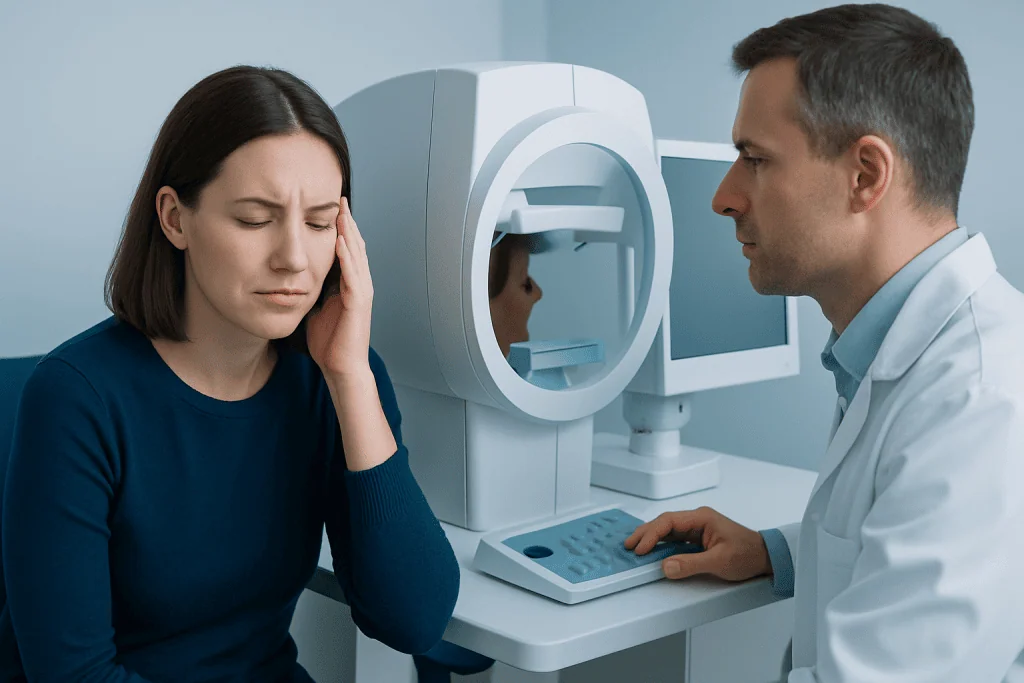
Visual aura is the most common type. People often describe bright flashes, sparkling spots, zigzag or jagged lines, shimmering areas, or a blind spot that slowly expands. Some notice blurred vision or a patch of missing vision in one side of the visual field. These symptoms usually affect both eyes from the brain’s visual pathways, even if they seem stronger on one side.
Sensory aura may begin as tingling or “pins and needles,” often in the hand or around the mouth, and then spread gradually up the arm or across the face. Numbness can follow the tingling. Speech or language aura may cause difficulty finding words, using the wrong word, or feeling briefly unable to speak clearly.
These symptoms usually build up over several minutes rather than arriving all at once. Many people then develop a migraine headache with throbbing pain, nausea, light sensitivity, or sound sensitivity, though some experience aura without a significant headache. People who live with migraine may notice that their aura pattern is similar from one episode to the next.
- Common visual symptoms: flashing lights, zigzag lines, blind spots, shimmering vision
- Common sensory symptoms: tingling, numbness, spreading pins and needles
- Common language symptoms: trouble speaking, word-finding difficulty
- Associated migraine symptoms: headache, nausea, sensitivity to light and sound
Why aura happens and who is more likely to have it

Migraine is a neurological condition with complex mechanisms involving brain signaling, nerves, and blood vessels. Aura is thought to relate to a wave of changing electrical activity that moves across the brain, temporarily altering how certain brain areas function. When this affects the visual cortex, visual aura may occur; when it affects sensory or language areas, tingling or speech symptoms may appear.
Not everyone with migraine has aura. Some people have migraine attacks for years and never experience it, while others have aura only occasionally. A family history of migraine can increase the likelihood, and hormonal changes, stress, poor sleep, dehydration, missed meals, and certain foods or alcohol may contribute to attacks in some people.
Triggers vary from person to person, and not every attack has an obvious cause. Keeping a simple symptom diary can help identify patterns such as sleep disruption, intense stress, bright light exposure, or menstrual changes. If attacks are frequent or hard to manage, a clinician may discuss individualized ways to reduce triggers and consider migraine treatment.
Migraine aura vs stroke: when symptoms are urgent
One of the most important questions is whether symptoms fit a typical migraine aura or whether they could signal a stroke or another urgent neurological problem. Migraine aura often spreads gradually over several minutes and may move from one symptom to another, such as visual changes followed by tingling. Stroke symptoms are more likely to start suddenly and reach maximum intensity right away, but this distinction is not always reliable.
Urgent evaluation is especially important if symptoms are new, very different from past episodes, or include weakness on one side of the body. Sudden vision loss in one eye, confusion, fainting, seizure-like activity, a severe “worst headache,” chest pain, or symptoms after head injury also need prompt medical care. A person should not assume that a first episode is “just migraine.”
Medical professionals may consider other causes such as stroke, transient ischemic attack, seizure, retinal problems, or inflammatory and vascular conditions. If there is any doubt, emergency assessment is the safest step. In centers with neurological expertise, evaluation may involve stroke treatment pathways when needed to rapidly rule out urgent conditions.
- Seek urgent help for sudden one-sided weakness or facial droop
- Get emergency care for new speech difficulty that starts abruptly
- Do not ignore sudden loss of vision, especially in one eye
- Seek immediate attention for a first-ever severe neurological episode
How doctors diagnose migraine aura
Diagnosis starts with a careful history. A doctor will ask what the symptoms were, how they began, how long they lasted, whether they spread gradually, whether headache followed, and whether similar episodes have happened before. They will also ask about family history, medications, cardiovascular risk factors, and any warning signs that point away from migraine.
A neurological examination helps check vision, strength, sensation, balance, language, and reflexes. If the symptoms fit a classic aura pattern and the person has an established migraine history, no extensive testing may be needed. However, tests are often recommended when the symptoms are new, prolonged, unusual, or concerning for another neurological condition.
Depending on the situation, evaluation may include brain imaging such as MRI or CT, blood tests, or an eye examination if symptoms suggest an eye-related problem rather than a brain-based visual aura. In selected cases, doctors may also investigate conditions such as brain tumor or other neurological causes if the pattern is not typical. The goal is to confirm the diagnosis safely and rule out problems that require different treatment.
Treatment options and symptom management
Treatment depends on how often aura happens, how disabling the attacks are, and whether headache follows. For many people, the immediate approach is to stop activity, move to a calm and dim environment, hydrate, and use doctor-recommended medicines for acute migraine symptoms. Resting the eyes can help when visual aura is prominent, but symptoms usually need time to pass on their own.
If attacks are frequent, prolonged, or disruptive, preventive treatment may be considered. This may include prescription medications, lifestyle changes, and trigger management. Preventive care is individualized, especially for people with other medical conditions, pregnancy considerations, or symptoms that overlap with disorders such as epilepsy.
Self-management also matters. Regular sleep, consistent meals, hydration, stress reduction, and avoiding known personal triggers may reduce attacks for some people. Near the end of the care journey, some international patients seek evaluation at centers such as Acibadem International, where multidisciplinary specialists in JCI-accredited hospitals assess migraine-related symptoms and coordinate treatment when needed.
Prevention, self-care, and when to see a doctor
Practical prevention starts with routine. Many people benefit from going to bed and waking up at consistent times, eating regular meals, staying hydrated, limiting excess alcohol, and pacing screen time or bright light exposure if these are personal triggers. Relaxation training, exercise that is tolerated, and stress management can also be helpful as part of overall migraine care.
It is wise to see a doctor if aura symptoms are becoming more frequent, changing in pattern, or interfering with work, driving, reading, or daily activities. Medical review is also important if over-the-counter pain medicine is being used often, because frequent use can contribute to medication-overuse headache. A clinician can help build a treatment plan that is both effective and safe.
Prompt medical advice should be sought for any first aura, prolonged aura, weakness, persistent numbness, or symptoms that do not completely resolve. Children, older adults with new symptoms, and people with vascular risk factors may need especially careful assessment. If symptoms are sudden or severe, emergency evaluation is the safest choice rather than waiting for them to pass.
Frequently asked questions
What is migraine aura?
Migraine aura is a temporary set of neurological symptoms that can happen before or during a migraine attack. It most often affects vision, but it can also cause tingling, numbness, or language difficulty. In most cases, the symptoms fully resolve.
How long does migraine aura usually last?
Aura commonly lasts between about 5 and 60 minutes, although some people may experience shorter or slightly longer episodes. Symptoms often build gradually rather than appearing all at once. If symptoms last unusually long or do not resolve, medical evaluation is important.
Can migraine aura happen without a headache?
Yes. Some people have aura without a strong headache, a pattern sometimes called silent migraine or typical aura without headache. Because this can resemble other neurological conditions, new episodes should still be assessed by a doctor.
Is migraine aura dangerous?
Migraine aura itself is usually temporary and not harmful, but its symptoms can mimic urgent conditions such as stroke. That is why sudden, first-time, or unusual symptoms should not be ignored. A doctor can determine whether the episode fits migraine or needs emergency care.
What visual changes are common in migraine aura?
Common visual symptoms include flashing lights, shimmering areas, zigzag lines, blind spots, or temporary distortion of part of the visual field. These changes often spread gradually over minutes. They usually clear completely after the aura ends.
When should someone go to the emergency department for migraine aura?
Emergency care is appropriate for sudden weakness, facial droop, abrupt speech difficulty, sudden loss of vision, a first-ever severe neurological episode, or symptoms that do not go away. It is also important to seek help for a very severe headache, fainting, confusion, or symptoms after a head injury. When in doubt, urgent assessment is the safest option.
This article is for general information only and is not a substitute for professional medical advice. Please consult a qualified doctor about your individual situation.
Migraine in Turkey — costs, top hospitals & a free quote
JCI-accredited · board-certified surgeons · reply within 24h
Add us as a Preferred Source to see more of our trusted health content across Google Search, AI Overviews and Discover.

More from the Health Library

Does High Blood Pressure Make You Tired? A Doctor-Reviewed Answer

Ambien vs Lunesta: Key Differences and How Doctors Tell Them Apart

Pain Left Ball: Common Causes, Related Conditions, and When to See a Doctor

Can a Human Get Heartworms From a Dog? Causes, Explanations, and Next Steps

Seizure Symptoms: Possible Causes and When to Seek Care