Milia Under Eyes: A Complete Medical Overview

Milia under eyes are tiny superficial cysts made of trapped keratin, not dirt or infection. They often resolve on their own, but persistent or bothersome milia can be removed by a trained clinician.
Key Takeaways
- Milia under eyes are tiny superficial cysts made of trapped keratin, not dirt or infection.
- They often resolve on their own, but persistent or bothersome milia can be removed by a trained clinician.
- The under-eye area is delicate, so squeezing or picking can lead to irritation, scarring, or infection.
- Skincare products, skin injury, and certain skin conditions may contribute to milia in some people.
- A doctor should assess new, changing, painful, inflamed, or uncertain bumps near the eyes.
Milia under eyes are small, white or yellowish bumps caused by trapped keratin just beneath the skin. They are usually harmless and not contagious, but proper diagnosis matters because other eyelid and skin conditions can look similar.
Overview: What milia under eyes are
Milia under eyes are tiny, firm, white or yellowish bumps that form just under the surface of the skin. They develop when keratin, a natural skin protein, becomes trapped instead of shedding normally. In most cases, these bumps are harmless and do not indicate poor hygiene, infection, or a serious disease.
The skin under the eyes is thin and delicate, so milia in this area are often especially noticeable. They may appear as one bump or several clustered together. Unlike acne, milia do not have an inflamed base, are not filled with pus, and usually do not hurt.
Milia can occur in babies, children, and adults. In adults, they may appear spontaneously or after skin irritation, cosmetic procedures, sun damage, or use of heavy products that contribute to blocked skin turnover. Although many people want them removed for cosmetic reasons, they do not always need treatment.
Because other conditions can resemble milia, especially around the eyelids, a proper medical assessment is useful when the diagnosis is uncertain. Some eyelid bumps are related to inflammation, cholesterol deposits, or blocked glands and may need different care.
How to recognize milia under the eyes
Milia are usually easy to recognize by their appearance. They are very small, dome-shaped bumps, often 1 to 2 millimeters in size, with a smooth surface. They tend to look pearly white, cream-colored, or slightly yellow and feel firm rather than soft.
Most people do not have symptoms other than the visible bump itself. Milia typically do not itch, throb, ooze, or cause marked redness. If a bump near the eye is painful, rapidly enlarging, inflamed, or associated with crusting or bleeding, it may be something other than milia and should be examined.
Several conditions can be confused with milia, including acne whiteheads, syringomas, xanthelasma, sebaceous hyperplasia, and small cysts or benign growths on the eyelid. A chalazion, for example, is deeper, larger, and related to a blocked oil gland rather than trapped keratin. If symptoms suggest another cause, a clinician may also consider related eye-area concerns such as chalazion.
People should avoid self-diagnosing any new lump very close to the eyelid margin, especially if it affects the eye itself. Changes in vision, eye pain, swelling of the eyelid, or discharge are not typical of milia and need prompt evaluation.
Why milia develop: causes and risk factors

Milia form when dead skin cells and keratin become trapped beneath the outer layer of the skin. This can happen without a clear reason, which is often called primary milia. Secondary milia develop after the skin has been irritated or injured and normal shedding is disrupted.
Common triggers and risk factors include sun damage, burns, blistering rashes, long-term use of heavy or occlusive skincare products, and healing after skin procedures. The under-eye area may be more vulnerable because the skin is thin and many people use rich creams, concealers, or sunscreens there. Products do not always directly cause milia, but in some individuals they may contribute to a buildup that makes them more likely.
Some skin disorders can also be associated with milia, especially when the skin barrier has been affected. In adults, persistent bumps may be more common in people with chronic sun exposure or a history of skin trauma. Similar lesions can appear alongside inflammatory skin conditions that a dermatologist may assess in the broader context of eczema or other barrier-related disorders.
Milia are not caused by bacteria, and they are not contagious. They also are not a sign that the skin is dirty. That is why harsh scrubbing usually does not help and may worsen irritation, especially near the eyes.
How doctors diagnose milia near the eyes
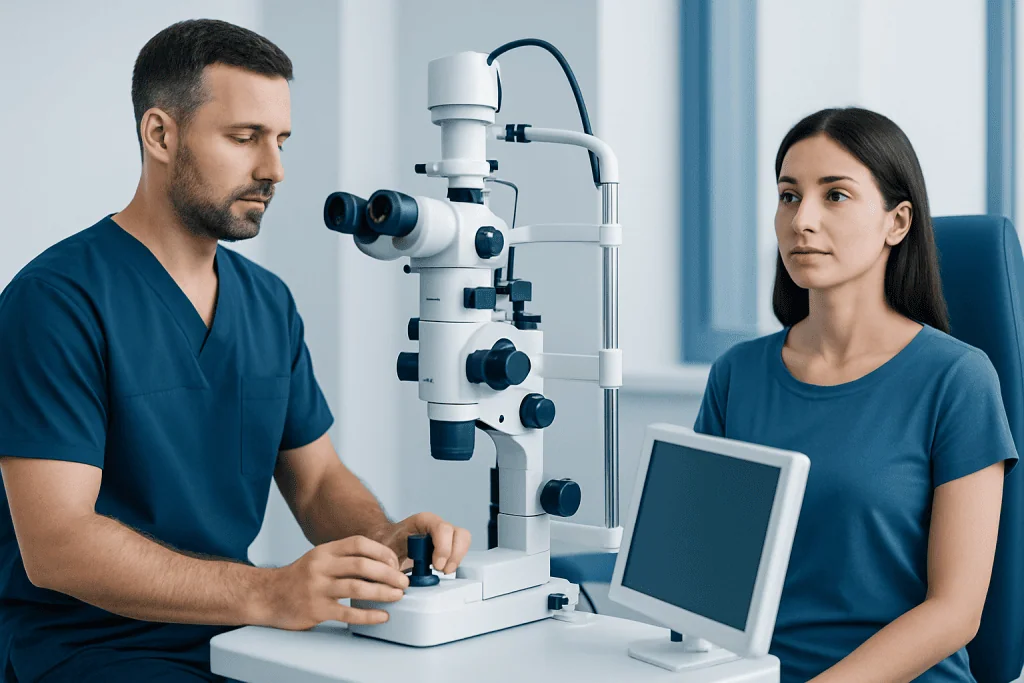
Diagnosis is usually clinical, meaning a doctor identifies milia by examining the skin. A dermatologist, ophthalmologist, or other clinician familiar with eyelid conditions can often tell the difference between milia and other small facial bumps based on appearance, location, and texture.
The doctor may ask when the bumps first appeared, whether they have changed over time, and whether there has been recent skin irritation, cosmetic use, sun exposure, or a procedure in the area. They may also ask about symptoms such as itching, tenderness, drainage, or vision changes, which are not typical of simple milia.
Further testing is rarely needed. If the diagnosis is uncertain, if the bump has unusual features, or if there is concern about a different lesion, the clinician may recommend closer follow-up or, rarely, a small procedure to examine the tissue. This is mainly to rule out other benign or uncommon skin conditions.
When bumps are on or very near the eyelid margin, eye-area expertise may be particularly important. In some cases, doctors may assess whether the person would benefit from evaluation in an eye examination if symptoms involve the eye itself rather than only the surrounding skin.
Treatment options and safe removal
Many milia under eyes do not require treatment. Some gradually disappear on their own, especially if the skin renews normally over time. If the bumps are cosmetically bothersome, persistent, or difficult to distinguish from another condition, professional removal is the safest option.
Doctors may treat milia with careful extraction using a sterile needle or blade to open the top layer of skin, followed by gentle removal of the keratin plug. Because the skin under the eyes is thin, this should only be done by a trained professional. Attempting to squeeze or pierce the bump at home can cause inflammation, infection, or scarring.
Depending on the person’s skin type and the number of lesions, a clinician may sometimes discuss other options such as topical retinoids for selected areas of the face, chemical exfoliation, or laser-based approaches. However, not all treatments are suitable for the under-eye area, and delicate eyelid skin requires special caution. In selected cases, broader dermatology care can help guide treatment if milia are recurrent or part of a wider skin concern.
If bumps are linked to a recent procedure, injury, or irritation, management may also include addressing the underlying trigger and simplifying skincare while the skin heals. Any treatment near the eye should prioritize protection of the eye surface and surrounding structures.
Skin care habits that may help prevent recurrence
Prevention is not always possible, but gentle skin care can reduce the chance of recurrent milia in some people. Products should be chosen for the delicate eye area, and heavy, greasy, or strongly occlusive formulas may be worth reviewing if bumps repeatedly form beneath the eyes. A doctor or pharmacist can help identify products that are less likely to feel overly occlusive on sensitive skin.
Daily sun protection is also helpful because chronic sun exposure can thicken and damage the skin surface, making normal shedding less efficient. Broad-spectrum sunscreen, sunglasses, and shade can all support skin health around the eyes. Sunscreen should be suitable for facial use and tolerated well in the eye area.
People should avoid vigorous scrubbing, abrasive devices, and picking at bumps. These approaches can irritate the skin barrier without removing the trapped keratin. Gentle cleansing and careful makeup removal are usually enough for routine care.
For those who regularly develop milia elsewhere on the face, a clinician may suggest a gradual skincare routine that supports cell turnover, but this must be tailored carefully around the eyes. Strong active ingredients can sting or injure eyelid skin if used incorrectly, so individualized advice is important.
When to seek medical care
Medical attention is a good idea if a bump near the eye is new and the diagnosis is unclear, especially when it does not look like a typical tiny white cyst. A doctor should also assess lesions that grow, change color, bleed, crust, become painful, or return quickly after removal.
Prompt evaluation is important if there is eyelid swelling, marked redness, discharge, fever, eye pain, or any change in vision. These are not expected features of simple milia and may point to infection, inflammation, or another eye condition that needs different treatment.
Professional advice can also help when milia are numerous, recurrent, or associated with a broader skin issue. If cosmetic concerns are significant, specialist care can offer safe removal while protecting the delicate under-eye area. In this context, ophthalmology care or dermatology input may be appropriate depending on the exact location of the bumps.
Acibadem International’s multidisciplinary specialists in JCI-accredited hospitals evaluate and treat skin and eye-area conditions for international patients, including lesions near the eyelids when diagnosis or management needs expert review.
Frequently asked questions
Are milia under eyes dangerous?
Milia under eyes are usually harmless and benign. They are small keratin-filled cysts rather than infections or cancer. Even so, a doctor should check any bump that looks unusual, changes over time, or causes symptoms.
Can milia under eyes go away on their own?
Yes, some milia can resolve without treatment, although this may take time. Others can persist for months or longer, especially in adults. If they are bothersome or do not improve, a clinician can discuss safe removal.
Is it safe to pop milia at home?
No, it is not recommended to pop milia at home, especially under the eyes. The area is delicate, and squeezing or piercing the skin can lead to irritation, infection, or scarring. Professional removal is safer and more accurate.
What is the difference between milia and a stye?
Milia are tiny, firm, superficial cysts that usually do not hurt. A stye is an inflamed or infected gland near the eyelid and is often red, tender, and swollen. Because treatment is different, persistent or painful eyelid bumps should be assessed by a doctor.
Do eye creams cause milia under eyes?
Eye creams do not always cause milia, but very heavy or occlusive products may contribute in some people. This is more likely if the skin tends to trap keratin or if the area is already irritated. A clinician can help review skincare products if milia recur often.
Which doctor treats milia under eyes?
A dermatologist commonly treats milia, and an ophthalmologist may be involved when bumps are very close to the eyelid margin or when eye symptoms are present. The right specialist depends on the exact location and whether the diagnosis is certain. Primary care doctors can also help guide referral when needed.
This article is for general information only and is not a substitute for professional medical advice. Please consult a qualified doctor about your individual situation.
Explore treatments in Turkey — costs, top hospitals & a free quote
JCI-accredited · board-certified surgeons · reply within 24h
Add us as a Preferred Source to see more of our trusted health content across Google Search, AI Overviews and Discover.
Check your numbers in seconds
BMI, calories, due date, blood pressure and 30+ more clinical calculators — free, instant, doctor-reviewed ranges.

More from the Health Library

Theisha: An Evidence-Based Guide for Patients

Cool Sculpting: Procedure, Recovery and Results

Honeybush Tea — Explained by Medical Evidence, Not Myths

Heart attack types: A Complete Medical Guide for Patients

Lad Artery: What Patients Need to Know