Movement Disorders: Tremor, Dystonia, and Neurology Evaluation

Movement disorders can cause extra movements, reduced movement, abnormal postures, or changes in coordination and balance. Tremor is rhythmic shaking, while dystonia causes involuntary muscle contractions, twisting, or sustained postures.
Key Takeaways
- Movement disorders can cause extra movements, reduced movement, abnormal postures, or changes in coordination and balance.
- Tremor is rhythmic shaking, while dystonia causes involuntary muscle contractions, twisting, or sustained postures.
- Diagnosis usually begins with a detailed medical history and neurological examination, followed by selective tests when needed.
- Treatment may include lifestyle strategies, rehabilitation, medication, botulinum toxin injections, or advanced therapies for selected patients.
- Sudden onset, rapid worsening, weakness, severe headache, confusion, or new speech or vision problems should be assessed urgently.
Movement disorders are neurological conditions that affect the speed, smoothness, rhythm, or control of movement. Tremor and dystonia are common examples, and a structured neurology evaluation helps identify the cause and guide safe, personalized care.
Overview
Movement disorders are a group of neurological conditions that affect how the body starts, stops, coordinates, or controls movement. Some movement disorders cause excessive or unwanted movements, such as shaking, jerking, twisting, or repetitive motions. Others cause slowed movement, stiffness, loss of automatic movements, or difficulty maintaining posture and balance.
Tremor and dystonia are among the movement problems most often evaluated by neurologists. A tremor is a rhythmic shaking movement that may appear in the hands, head, voice, legs, or other body parts. Dystonia involves involuntary muscle contractions that may lead to twisting, pulling, cramps, abnormal postures, or repetitive movements. These symptoms can be mild and intermittent, or they may interfere with writing, eating, walking, speaking, working, or social confidence.
Although movement disorders can be concerning, many are manageable once the type and cause are understood. A neurology evaluation is important because similar-looking symptoms may have different explanations. For example, hand shaking may be related to essential tremor, Parkinson’s disease, medication effects, thyroid disease, anxiety, or other causes. Identifying the pattern helps the doctor recommend the most appropriate treatment and follow-up plan.
Common Symptoms and Movement Patterns
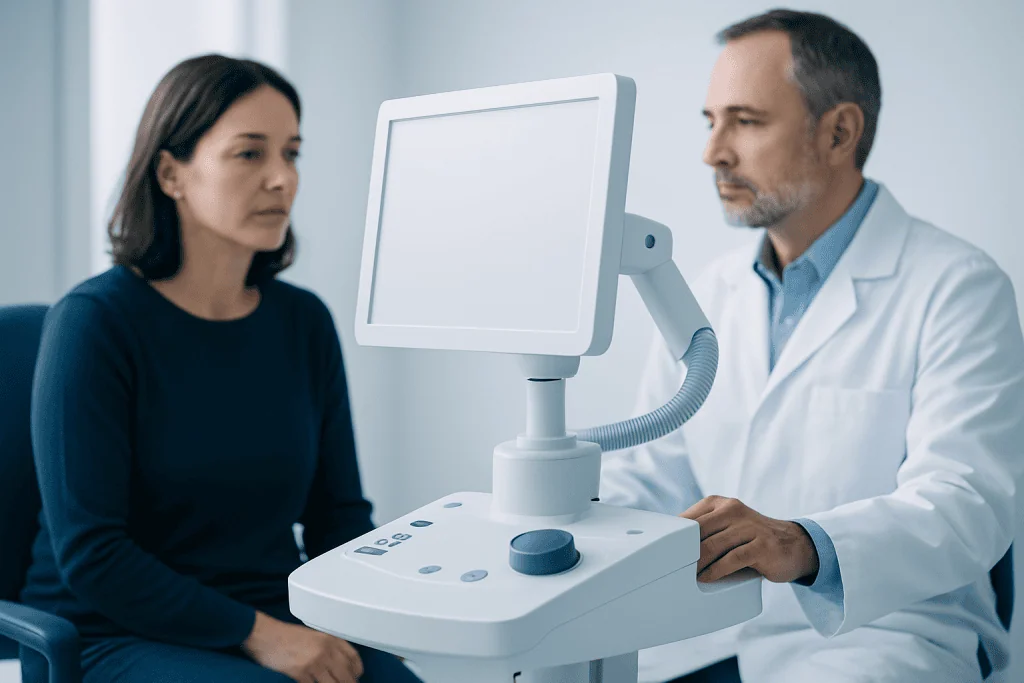
Movement disorders vary widely from person to person. Symptoms may appear at rest, during action, while holding a posture, or only during a specific task such as writing or playing an instrument. The timing, body part involved, triggers, and whether the movement improves with distraction or rest all provide useful diagnostic clues.
Common symptoms include rhythmic shaking, muscle pulling, cramping, twisting postures, jerky movements, tics, stiffness, slowed movement, unsteady walking, or abnormal facial and eye movements. Some people notice changes in handwriting, difficulty using utensils, trouble buttoning clothing, voice changes, head turning, eyelid spasms, or foot inversion while walking. Symptoms may fluctuate with fatigue, stress, caffeine intake, certain medications, sleep quality, or physical activity.
- Tremor: Rhythmic shaking that may occur at rest, when maintaining a posture, or during purposeful movement.
- Dystonia: Sustained or intermittent muscle contractions causing twisting, pulling, or abnormal postures.
- Parkinsonism: Slowness, stiffness, rest tremor, reduced arm swing, or changes in walking.
- Myoclonus: Sudden, brief jerks that may affect one body part or the whole body.
- Tics: Repeated movements or sounds that can sometimes be briefly suppressed.
Symptoms can also affect emotional well-being. People may avoid social situations because of visible shaking or abnormal posture, or they may feel frustrated when everyday tasks take longer. A supportive clinical approach recognizes both the physical and practical effects of the condition.
Tremor: What It May Mean

Tremor is not a diagnosis by itself; it is a sign that can have several possible causes. Essential tremor is one of the most common tremor disorders and often appears during action, such as holding a cup, using a spoon, or writing. It may affect both hands and can also involve the head or voice. Some people have a family history, although this is not always present.
Parkinsonian tremor often has a different pattern. It may be more noticeable when the hand is relaxed at rest and may improve during purposeful movement. Parkinson’s disease can also cause slowness, stiffness, smaller handwriting, reduced facial expression, softer speech, constipation, sleep disturbances, or changes in walking. However, not every person with tremor has Parkinson’s disease, and not every person with Parkinson’s disease has prominent tremor.
Other tremor causes include medication side effects, excessive caffeine or stimulant use, alcohol withdrawal, overactive thyroid, low blood sugar, anxiety, nerve problems, and certain metabolic or neurological conditions. Because these causes differ, the doctor may review all prescription medicines, supplements, caffeine use, alcohol intake, and recent health changes. When a reversible factor is found, addressing it may reduce the tremor.
The impact of tremor matters as much as its appearance. A mild tremor that does not interfere with daily activities may only require monitoring and practical strategies. A tremor that affects eating, writing, work, or independence may benefit from treatment tailored to the tremor type and the person’s health profile.
Dystonia: Muscle Pulling, Twisting, and Posture Changes
Dystonia occurs when muscles contract involuntarily and produce twisting movements, repetitive motions, or abnormal postures. It may affect one body region, such as the neck, eyelids, hand, jaw, or foot, or it may involve several areas. Cervical dystonia affects the neck and can cause head turning, tilting, pulling, tremor, or pain. Blepharospasm affects the eyelids and may cause excessive blinking or eye closure.
Some dystonias are task-specific. For example, writer’s cramp may appear mainly during writing, while musician’s dystonia may occur when playing an instrument. Others may be related to genetic factors, brain injury, certain medications, or other neurological conditions. In many adults with focal dystonia, no single clear cause is found, but effective symptom management is often possible.
Dystonia can be misunderstood because symptoms may vary throughout the day and can worsen with stress, fatigue, or specific movements. Some people discover sensory tricks, such as lightly touching the chin or face, that temporarily improve posture. This feature can be an important clue for the neurologist and does not mean the symptoms are imagined.
Pain and muscle fatigue are common in dystonia, especially when the neck, back, jaw, or limbs are involved. Treatment focuses on reducing involuntary contractions, improving function, easing discomfort, and supporting daily activities. The plan depends on the body region affected, severity, cause, and the person’s goals.
Causes and Risk Factors
Movement disorders can arise from changes in brain circuits that coordinate movement, especially networks involving the basal ganglia, cerebellum, thalamus, and motor cortex. These areas help regulate timing, smoothness, muscle tone, and automatic movement patterns. When the communication between these circuits is disrupted, movements may become excessive, reduced, poorly timed, or difficult to control.
Risk factors and causes vary by disorder. Some conditions have a genetic component, while others are associated with age, previous stroke, head injury, infections, autoimmune disease, liver or kidney disease, thyroid disease, or exposure to certain medications or toxins. Medicines used for nausea, dizziness, psychiatric conditions, seizures, or other illnesses can sometimes cause tremor, parkinsonism, dystonia, or other involuntary movements. Patients should not stop prescribed medicines on their own, but they should bring a complete medication list to the appointment.
Children and younger adults with movement symptoms may need evaluation for inherited, metabolic, autoimmune, or medication-related causes. In older adults, essential tremor, Parkinson’s disease, medication effects, and vascular changes may be considered, among other possibilities. The neurologist interprets symptoms in the context of age, family history, medical history, and examination findings.
Stress and anxiety can make many movement disorders more noticeable, but they are not always the root cause. Similarly, symptoms that fluctuate or improve with distraction still deserve careful assessment. A respectful and thorough evaluation helps distinguish neurological movement disorders from other conditions and ensures that treatable factors are not missed.
Neurology Evaluation and Diagnosis
A neurology evaluation usually begins with a detailed conversation. The doctor asks when the movement started, whether it came on suddenly or gradually, which body parts are affected, what makes it better or worse, and how it affects daily life. The medical history includes previous illnesses, family history, medications, supplements, caffeine and alcohol use, sleep, mood, and possible exposures.
The neurological examination is central to diagnosis. The neurologist observes movement at rest, while holding posture, during tasks, and while walking. The exam may include assessment of strength, reflexes, sensation, coordination, eye movements, speech, facial expression, muscle tone, balance, handwriting, spiral drawing, and fine finger movements. Sometimes the pattern is clear from the history and examination alone.
Additional tests are chosen selectively. Blood tests may check thyroid function, vitamin levels, liver or kidney function, inflammation, or other metabolic causes. Brain MRI may be recommended if symptoms are one-sided, sudden, unusual, progressive, or associated with other neurological signs. In selected cases, specialized imaging, genetic testing, electrophysiology, or medication response assessment may help clarify the diagnosis.
Patients can prepare for the appointment by recording a short video of the movement, especially if it comes and goes. Bringing previous test results, a list of medicines and supplements, and notes about symptom triggers can make the visit more productive. The goal is not only to name the disorder, but also to understand the person’s priorities and choose a practical care plan.
Treatment Options and Daily Management
Treatment depends on the diagnosis, severity, body parts involved, medical history, and personal goals. Some mild movement disorders may only require reassurance, monitoring, and avoidance of triggers. Others may benefit from medication, targeted injections, rehabilitation, assistive strategies, or advanced therapies. The best plan is individualized and may be adjusted over time.
For tremor, management may include reducing triggers such as excess caffeine, reviewing medications that can worsen shaking, and using adaptive tools such as weighted utensils or pens. Depending on the tremor type, doctors may consider medicines that reduce tremor amplitude. For dystonia, botulinum toxin injections are commonly used for focal dystonias such as cervical dystonia or eyelid spasms; they work by relaxing overactive muscles for a period of time. Oral medications may be helpful for some patients, although benefits and side effects need regular review.
Physical therapy, occupational therapy, speech therapy, and rehabilitation can support function and confidence. Therapy may address posture, stretching, strengthening, gait safety, hand function, voice and swallowing concerns, pain management, and strategies for daily tasks. For selected people with severe symptoms that do not respond adequately to standard treatments, advanced options such as deep brain stimulation may be discussed by a specialized movement disorders team.
Self-care is also important. Regular sleep, balanced meals, safe physical activity, hydration, stress management, and planning breaks during demanding tasks may reduce symptom burden. People with movement disorders should avoid changing or stopping neurological or psychiatric medications without medical guidance, because abrupt changes may worsen symptoms or cause withdrawal effects.
When to See a Doctor
A person should consider seeing a neurologist if shaking, twisting, stiffness, jerking, balance problems, or abnormal postures are new, persistent, worsening, or affecting daily life. Evaluation is also useful when symptoms interfere with writing, eating, walking, speaking, work, driving, sleep, or social activities. Early assessment can identify treatable causes and help patients learn what to expect.
Urgent medical care is needed if movement symptoms start suddenly or occur with weakness, facial drooping, trouble speaking, confusion, severe headache, vision loss, chest pain, fainting, fever with neck stiffness, or a new seizure. These symptoms can have causes that require immediate evaluation. A sudden change after starting or increasing a medication should also be reported promptly.
Follow-up is important because movement disorders can change over time. A treatment that works well at first may need adjustment, and new symptoms may provide additional diagnostic information. Patients should tell their doctor about side effects, falls, swallowing difficulty, mood changes, sleep problems, or functional decline.
Acibadem International’s multidisciplinary neurology teams and JCI-accredited hospitals evaluate and treat movement disorders for international patients, including tremor and dystonia, using individualized diagnostic and treatment planning. Patients are encouraged to seek care from qualified medical professionals who can assess their specific symptoms and health background.
Frequently asked questions
What is the difference between tremor and dystonia?
Tremor is a rhythmic shaking movement that may occur at rest, with posture, or during action. Dystonia is caused by involuntary muscle contractions that produce twisting, pulling, cramps, or abnormal postures. Some people can have both, which is why a neurological examination is important.
Does having a tremor mean a person has Parkinson's disease?
No. Tremor has many possible causes, including essential tremor, medication effects, thyroid problems, anxiety, and other neurological conditions. Parkinson's disease has a specific pattern that often includes slowness, stiffness, and changes in walking in addition to possible tremor.
Can movement disorders be cured?
Some movement symptoms improve when a reversible cause is treated, such as a medication side effect or metabolic problem. Many chronic movement disorders are managed rather than cured. Treatment can often reduce symptoms, improve function, and support quality of life.
What should someone bring to a neurology appointment for involuntary movements?
It is helpful to bring a complete list of medications and supplements, previous test results, and notes about when symptoms occur. A short video can be very useful if the movement is intermittent or triggered by a specific activity. Family history and examples of daily tasks affected by symptoms also help the doctor.
Are botulinum toxin injections used for dystonia?
Yes, botulinum toxin injections are commonly used for certain focal dystonias, such as cervical dystonia and eyelid spasms. The treatment is targeted to overactive muscles and is usually repeated at intervals determined by the treating physician. Suitability depends on the type and location of dystonia.
When are tests such as MRI or blood tests needed?
Tests are chosen based on the history and neurological examination. Blood tests may look for thyroid, vitamin, metabolic, or medication-related causes, while MRI may be recommended for unusual, one-sided, sudden, or progressive symptoms. Not every patient needs every test.
Can stress cause movement disorders?
Stress can make tremor, dystonia, tics, and other movement symptoms more noticeable, but it is not always the underlying cause. Symptoms that worsen during stress still deserve a careful medical evaluation. Stress management may be part of care, alongside diagnosis-specific treatment.
References
- World Health Organization
- National Institute of Neurological Disorders and Stroke
- International Parkinson and Movement Disorder Society
- American Academy of Neurology
- European Academy of Neurology
This article is for general information only and is not a substitute for professional medical advice. Please consult a qualified doctor about your individual situation.
Movement Disorders in Turkey — costs, top hospitals & a free quote
JCI-accredited · board-certified surgeons · reply within 24h
Add us as a Preferred Source to see more of our trusted health content across Google Search, AI Overviews and Discover.