Mrsa Pimple: A Complete Medical Overview

An MRSA pimple can resemble acne, an insect bite, a boil, or an ingrown hair. Pain, warmth, spreading redness, drainage, and rapid growth can suggest a bacterial skin infection rather than routine acne.
Key Takeaways
- An MRSA pimple can resemble acne, an insect bite, a boil, or an ingrown hair.
- Pain, warmth, spreading redness, drainage, and rapid growth can suggest a bacterial skin infection rather than routine acne.
- Squeezing, popping, or sharing personal items can spread MRSA to other body areas or other people.
- Some infections need drainage, a bacterial culture, and antibiotics selected for the specific strain.
- Prompt medical care is important for fever, spreading redness, severe pain, facial infections, or symptoms in higher-risk people.
An MRSA pimple is a skin infection caused by methicillin-resistant Staphylococcus aureus (MRSA), a type of staph bacteria resistant to several commonly used antibiotics. It may look like an ordinary pimple at first, but it can become painful, warm, swollen, or pus-filled and should not be squeezed or treated as acne without medical advice.
What Is an MRSA Pimple?
An MRSA pimple is a common, informal term for a small skin infection caused by methicillin-resistant Staphylococcus aureus (MRSA). MRSA is a type of staph bacterium that is resistant to some antibiotics that would usually treat staph infections. It often affects the skin and may begin as a red bump that resembles a pimple, ingrown hair, spider bite, or early boil.
Not every pimple-like bump is MRSA. Typical acne develops when pores become blocked with oil, dead skin cells, and bacteria, while an MRSA infection occurs when bacteria enter through a break in the skin, such as a cut, shaving nick, eczema patch, or irritated hair follicle. A clinician may need to examine the area, especially if it is worsening or producing pus.
MRSA can be acquired in healthcare settings or in the community. Community-associated MRSA can affect otherwise healthy people, so an infection does not necessarily mean that someone has been in a hospital. Early recognition, good wound care, and appropriate treatment usually help prevent complications and reduce spread.
How an MRSA Pimple May Look and Feel
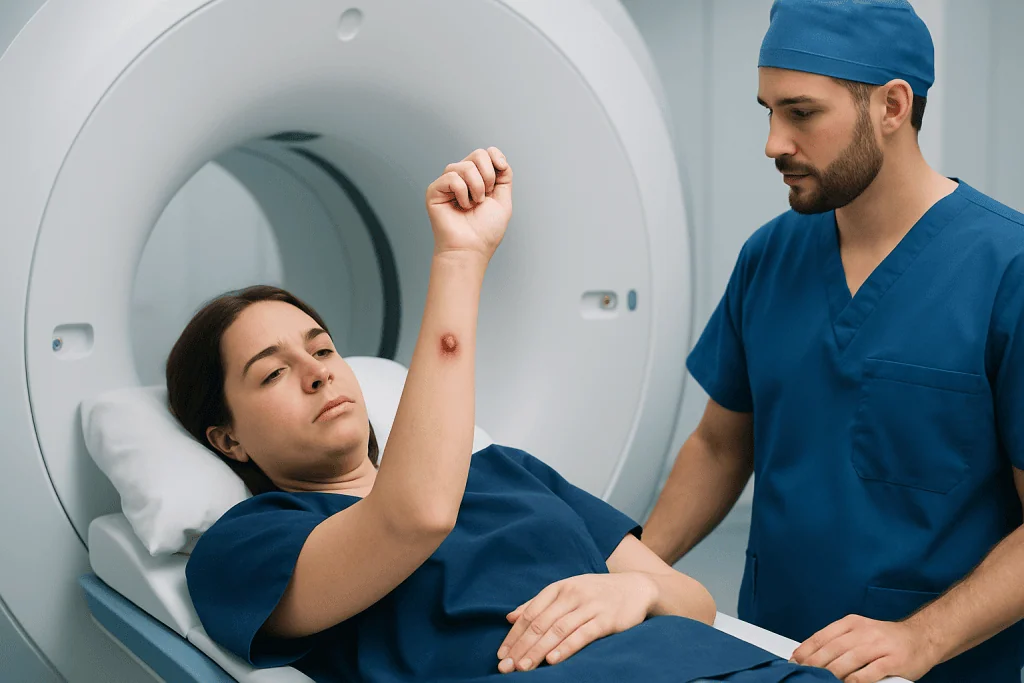
An MRSA pimple may start as a tender red bump and become larger over hours or days. The surrounding skin can feel warm, firm, swollen, or painful. Some lesions develop a white or yellow center, drain pus, or form a deeper pocket of infection called an abscess.
Compared with ordinary acne, a possible MRSA lesion is more likely to be notably painful, increasingly swollen, and warm to the touch. It may also appear as a cluster of boils or recur in the same area. However, appearance alone cannot reliably confirm MRSA, because other bacterial infections and inflammatory skin conditions can look similar.
- Redness that expands around the bump
- Increasing tenderness or throbbing pain
- Pus, cloudy fluid, or a crusted opening
- A firm lump or soft, fluid-filled center
- Fever, chills, fatigue, or feeling generally unwell in more significant infections
Lesions may occur anywhere on the body, but they are often seen where there is friction, sweat, shaving, or close skin contact, such as the armpits, groin, buttocks, thighs, hands, and beard area. A pimple-like lesion near the eye, nose, or mouth deserves particular attention because infections in these areas may require prompt assessment.
Why MRSA Skin Infections Develop

Many people carry staph bacteria on their skin or in their nose without becoming ill. Infection can occur when bacteria enter through damaged skin and multiply. MRSA may then cause a localized infection, especially if the body’s natural skin barrier has been disrupted.
Risk can increase with close skin-to-skin contact, crowded living conditions, shared equipment, poor access to handwashing facilities, or sharing items that touch the skin. Athletes, people living in group settings, military personnel, and families with repeated infections can be exposed more easily, although anyone can develop an MRSA skin infection.
Other factors that can raise the likelihood of infection or complications include recent surgery, wounds, indwelling medical devices, recent antibiotic use, diabetes, chronic skin conditions, and a weakened immune system. These factors do not mean an infection will occur, but they support seeking medical guidance early if a suspicious skin lesion develops.
It is important to avoid assuming that an insect bite caused a worsening sore. Some MRSA lesions are initially mistaken for bites because they can begin as a small red bump. A clinician can help distinguish between infection, acne, folliculitis, cysts, allergic reactions, and other skin concerns.
How Doctors Diagnose an MRSA Pimple
A healthcare professional usually begins by asking about the lesion’s timing, changes, pain, drainage, previous skin infections, recent antibiotic use, and possible exposures. They will examine the skin and may check for surrounding cellulitis, which is a spreading infection of deeper skin layers.
If pus or drainage is present, the clinician may collect a sample for culture and antibiotic susceptibility testing. The laboratory result can identify the bacteria and show which antibiotics are likely to work. A culture is particularly helpful for recurrent infections, severe infections, infections that do not improve, or cases involving higher-risk patients.
Small, uncomplicated bumps do not always require laboratory testing. In contrast, blood tests, imaging, or hospital evaluation may be needed if there are signs that infection has spread beyond the skin, if an abscess is deep, or if the person is significantly unwell. Diagnosis is individualized, and antibiotic resistance patterns can vary by location.
Treatment Options for an MRSA Pimple
Treatment depends on the size, depth, location, symptoms, and whether an abscess has formed. A small infection may be managed with careful cleansing, a clean dry dressing if it is draining, and close follow-up. Warm, moist compresses may support natural drainage for a minor superficial lesion, but they should not replace medical assessment when pain, swelling, or redness is increasing.
When a collection of pus is present, the most effective treatment may be incision and drainage by a trained clinician. This procedure releases trapped material and can be more important than antibiotics for many uncomplicated abscesses. People should not attempt to lance, squeeze, or pop a suspected MRSA pimple at home, as this can push infection deeper and spread bacteria.
Antibiotics may be prescribed when infection is extensive, associated with fever or cellulitis, located in a sensitive area, recurrent, or present in someone at increased risk of complications. The choice should be based on clinical evaluation and, when available, culture results. Antibiotics should be taken exactly as prescribed, and a person should contact the prescriber if symptoms worsen or do not begin to improve as expected.
Some skin infections may require specialist care, particularly when they are recurrent, complex, or severe. Dermatology assessment can help clarify whether a lesion is due to infection, acne, an inflammatory condition, or another cause and guide appropriate treatment.
Preventing Spread and Supporting Healing at Home
Good hygiene and wound care help protect both the affected person and those around them. Hands should be washed with soap and water after touching the affected area or changing a dressing. If soap and water are not available, an alcohol-based hand sanitizer may be useful when hands are not visibly dirty.
Any draining area should be covered with a clean, dry bandage. Used dressings should be discarded safely, and linens, towels, and clothing that contact the lesion should be washed according to their care instructions. Personal items such as towels, razors, clothing, washcloths, cosmetics, and sports equipment should not be shared.
People can also reduce risk by keeping cuts clean and covered, showering after sports or close-contact activities, cleaning frequently touched surfaces, and avoiding contact sports or shared water facilities while an open wound cannot be securely covered. Routine household cleaning is usually sufficient; extreme disinfection measures are not generally needed unless advised by a healthcare professional.
For repeated MRSA infections, a clinician may discuss whether a decolonization plan is appropriate. This may involve targeted hygiene measures or prescribed products for a limited period. Decolonization should not be started without medical advice, because it is not necessary or effective for every person and household.
When to Seek Medical Care
Medical assessment is advisable for a painful, enlarging, warm, pus-filled, or repeatedly recurring pimple-like lesion. A clinician should also assess a sore that does not improve with basic wound care, develops spreading redness, or is accompanied by swollen lymph nodes.
Urgent medical care is needed for fever, chills, confusion, severe or rapidly worsening pain, red streaks extending from the area, a rapidly expanding rash, or signs of significant illness. Prompt evaluation is also important for infections near the eye or face, after a bite or injury, or in infants and young children.
People with diabetes, poor circulation, immune suppression, kidney disease, or a history of serious skin infections should seek advice early. If a prescribed treatment is not helping or a wound is worsening, they should contact their healthcare professional rather than changing or adding antibiotics on their own.
Acibadem International’s multidisciplinary specialists and JCI-accredited hospitals diagnose and treat skin and soft-tissue infections for international patients when specialist evaluation is needed.
Frequently asked questions
Can an MRSA pimple go away on its own?
Some small, localized skin infections may improve with appropriate hygiene, wound coverage, and medical guidance. However, an MRSA pimple can worsen or form an abscess, so a painful, enlarging, draining, or persistent lesion should be assessed by a healthcare professional.
How can someone tell the difference between acne and an MRSA pimple?
Acne often includes blackheads, whiteheads, and multiple spots in acne-prone areas, while an MRSA infection may be more painful, warm, swollen, and pus-filled. There is overlap in appearance, so only a medical assessment and, when needed, a culture can confirm whether MRSA is involved.
Should an MRSA pimple be popped?
No. Popping, squeezing, or trying to drain a suspected MRSA lesion can spread bacteria, worsen inflammation, and push infection into deeper tissue. A clinician can safely drain an abscess when drainage is needed.
Is an MRSA pimple contagious?
MRSA can spread through direct contact with an infected wound or through contaminated personal items such as towels, razors, and clothing. Keeping the wound covered, washing hands carefully, and not sharing personal items lowers the risk of spread.
Do all MRSA pimples need antibiotics?
Not always. For a small abscess, professional drainage may be the main treatment, while antibiotics may be needed for larger, spreading, recurrent, or more serious infections. The decision depends on the examination, medical history, and sometimes culture results.
Can MRSA come back after treatment?
Yes, MRSA skin infections can recur in some people. Follow-up care, correct wound hygiene, avoiding shared personal items, and discussing recurrent infections with a clinician can help identify contributing factors and reduce future risk.
References
- Centers for Disease Control and Prevention
- American Academy of Dermatology Association
- Mayo Clinic
- National Health Service
- World Health Organization
This article is for general information only and is not a substitute for professional medical advice. Please consult a qualified doctor about your individual situation.
Hair transplant in Turkey — costs, graft counts & a free assessment
JCI-accredited · board-certified surgeons · reply within 24h
Add us as a Preferred Source to see more of our trusted health content across Google Search, AI Overviews and Discover.