MS Symptoms: Common Causes, Related Conditions, and When to See a Doctor

MS symptoms may come and go, develop gradually, or appear in episodes lasting days to weeks. Common symptoms include vision problems, numbness or tingling, weakness, balance difficulties, fatigue, and bladder changes.
Key Takeaways
- MS symptoms may come and go, develop gradually, or appear in episodes lasting days to weeks.
- Common symptoms include vision problems, numbness or tingling, weakness, balance difficulties, fatigue, and bladder changes.
- Many other conditions can mimic MS, so diagnosis relies on a neurological exam and tests such as MRI.
- New neurological symptoms, worsening weakness, trouble walking, or vision loss should be assessed by a doctor promptly.
- Early evaluation can help identify the cause and support appropriate treatment and long-term care.
MS symptoms often affect vision, sensation, strength, balance, bladder function, and energy levels, but they do not look the same in every person. Because these symptoms can also happen with other neurological or medical conditions, a careful medical evaluation is important rather than assuming the cause is multiple sclerosis.
Overview: what MS symptoms usually mean
MS symptoms are the body’s signals that the brain, spinal cord, or optic nerves may not be sending messages normally. Multiple sclerosis is a long-term condition in which the immune system mistakenly damages myelin, the protective covering around nerve fibers. When this happens, nerve signals can slow down or become disrupted, leading to symptoms that vary widely from person to person.
One of the most important things to know is that there is no single “classic” MS presentation that applies to everyone. Some people first notice blurred vision or pain with eye movement, while others experience numbness, leg weakness, balance problems, unusual fatigue, or bladder urgency. Symptoms may come in episodes, sometimes called relapses or attacks, or they may change more gradually over time.
MS symptoms are not unique to multiple sclerosis. Vitamin deficiencies, migraines, infections, stroke, autoimmune disorders, and compression of the nerves or spinal cord can sometimes cause similar complaints. For that reason, symptoms should be evaluated in context by a qualified clinician rather than self-diagnosed from a list alone.
Common MS symptoms and how they can feel
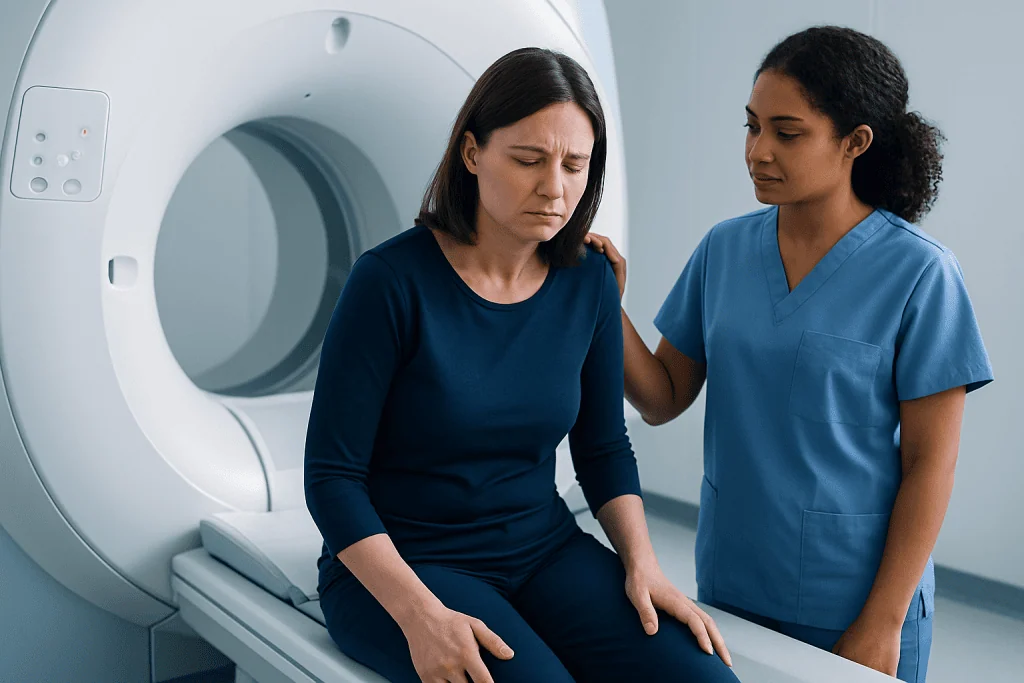
The symptoms of MS depend on which part of the central nervous system is affected. Vision symptoms are common and may include blurred vision, dim vision, double vision, loss of color brightness, or eye pain, especially with movement. Sensory symptoms can include numbness, tingling, a pins-and-needles feeling, burning discomfort, or an electric-shock sensation that runs down the back or limbs with neck movement.
Muscle and movement symptoms are also frequent. A person may notice weakness in one arm or leg, heaviness in the limbs, stiffness, muscle spasms, clumsiness, tremor, or difficulty with walking and coordination. Balance problems and dizziness can occur, sometimes making routine activities feel less steady or more tiring than usual.
Fatigue is one of the most common and sometimes most disruptive symptoms. This is not simply feeling sleepy after a busy day; it can be a deep, disproportionate exhaustion that affects concentration, work, and physical activity. Cognitive changes may also happen, such as slowed thinking, trouble finding words, or difficulty with attention and memory.
Other symptoms may involve bladder or bowel function, sexual function, mood, or pain. Some people develop urinary urgency, frequency, or difficulty emptying the bladder. Symptoms can remain mild, be intermittent, or become more limiting, which is why documenting what happens, when it occurs, and how long it lasts can be helpful during a medical visit.
Patterns that can raise suspicion for MS

Doctors do not diagnose MS based on one symptom alone. Instead, they look for a pattern suggesting that inflammation or damage has affected different areas of the central nervous system at different points in time. For example, a person might have an episode of optic neuritis in the past and later develop numbness, weakness, or imbalance lasting more than 24 hours without another clear explanation.
Symptoms of MS often worsen with heat, fever, infection, or significant exertion, even when there is no new inflammatory attack. Some people notice temporary blurring of vision, more leg weakness, or increased fatigue after a hot shower or exercise. This does not necessarily mean permanent worsening, but it is a recognized feature in some people with MS.
The timing also matters. MS symptoms often develop over hours to days rather than seconds. Sudden symptoms such as facial drooping, abrupt one-sided weakness, or trouble speaking may suggest a different problem and need urgent assessment. Likewise, symptoms that are very brief, shifting constantly, or clearly tied to a single compressed nerve may point away from MS and toward another cause.
Even when a symptom pattern seems suggestive, diagnosis still requires proper testing. Conditions such as Parkinson’s disease, peripheral neuropathy, inner ear disorders, and spinal conditions can overlap in some features, but they have different underlying causes and treatments.
Related conditions and other possible causes
Because the nervous system controls so many body functions, many conditions can mimic MS symptoms. Migraine can cause visual changes, numbness, dizziness, and even temporary weakness in some cases. Vitamin B12 deficiency may lead to numbness, gait difficulty, and cognitive changes. Thyroid disease, diabetes, infections, autoimmune diseases such as lupus, and medication side effects can also affect nerves or energy levels.
Problems in the spine are another important consideration. A herniated disc, cervical spinal cord compression, or inflammation of the spinal cord can cause weakness, sensory changes, or walking problems. In the brain, small-vessel disease, stroke, and other inflammatory conditions may create symptoms or MRI findings that need to be distinguished from MS.
Some symptoms overlap with other neurological disorders but arise for different reasons. Tremor, slowness, and stiffness can occur in multiple conditions; balance trouble may relate to the cerebellum, the inner ear, peripheral nerves, or muscles. People with persistent headaches and neurological symptoms may also need evaluation for migraine or another headache-related disorder when clinically appropriate.
This is why a broad and careful work-up matters. The goal is not only to confirm or rule out MS, but also to identify other treatable causes so that care can begin without delay.
How doctors diagnose the cause of MS-like symptoms
Evaluation usually starts with a detailed medical history and neurological examination. A clinician will ask when symptoms began, how long they lasted, whether they came and went, and whether there were triggers such as infection or heat. The examination may assess eye movements, strength, reflexes, sensation, coordination, walking, and balance to look for signs of central nervous system involvement.
MRI of the brain and often the spinal cord is a key test when MS is suspected. It can show lesions in characteristic areas that suggest demyelination. Depending on the situation, doctors may also request blood tests to look for vitamin deficiencies, autoimmune markers, infections, or other medical explanations for the symptoms.
Additional tests can be helpful in selected cases. A lumbar puncture may look for oligoclonal bands in the cerebrospinal fluid, which can support the diagnosis of MS in the right clinical setting. Evoked potential tests may assess how well visual or sensory signals travel along nerve pathways. Imaging and lab findings are always interpreted together with the clinical picture rather than in isolation.
When symptoms include weakness, imbalance, or complex neurological findings, specialist assessment may be appropriate. Diagnostic evaluation may involve neurology evaluation and, if there is concern about structural problems affecting the brain or spine, neurosurgical assessment as part of a multidisciplinary approach.
Treatment options and symptom management
Treatment depends on whether the person has been diagnosed with MS and on which symptoms are present. During an MS relapse, doctors may prescribe treatment to reduce active inflammation. Long-term disease-modifying therapies are used in many patients with confirmed MS to reduce the frequency of relapses and slow new disease activity. The most suitable option depends on the disease pattern, MRI findings, general health, and patient preferences.
Symptom management is equally important. Physical therapy can help with gait, strength, mobility, and spasticity. Occupational therapy may support daily activities and energy conservation. Vision symptoms, bladder issues, pain, sleep problems, and mood changes can often be improved with targeted therapies and rehabilitation strategies.
Fatigue is often best approached with a combination of measures rather than one solution. This may include reviewing sleep quality, treating depression or pain if present, adjusting activity levels, cooling strategies in hot environments, and discussing whether medications or therapy are appropriate. When there are persistent movement or mobility concerns, physical therapy and rehabilitation can play an important role in preserving function and confidence.
For international patients who need comprehensive assessment, Acibadem International’s multidisciplinary specialists in JCI-accredited hospitals diagnose and treat neurological conditions including suspected or confirmed MS, coordinating imaging, specialist review, and rehabilitation when needed.
Self-care, monitoring, and living with uncertainty
When symptoms are new or still being investigated, practical self-care can make medical visits more productive. Keeping a simple symptom diary may help track when symptoms began, how long they lasted, what body areas were involved, and whether factors such as infection, heat, poor sleep, or stress made them worse. Bringing this information to an appointment can help the clinician see patterns that may not be obvious in hindsight.
General health habits also support neurological wellbeing, even though they do not replace medical treatment. Adequate sleep, regular but paced physical activity, balanced nutrition, hydration, and smoking avoidance are sensible steps. If heat seems to worsen symptoms, cooling strategies such as lighter clothing, cooler showers, and rest breaks may be useful.
It is also important to avoid assuming that every symptom is due to MS, especially in someone already diagnosed with the condition. Infection, medication effects, low mood, pain, deconditioning, and other unrelated illnesses can all worsen day-to-day functioning. A fresh or unexplained symptom deserves appropriate medical review rather than guesswork.
When to seek medical care
Medical care should be sought promptly for new or persistent neurological symptoms, especially blurred or lost vision, numbness affecting a large area, weakness in an arm or leg, new balance problems, or bladder difficulties that are not improving. Symptoms that last more than 24 hours, recur in episodes, or interfere with walking, working, or daily activities should be assessed by a doctor.
Urgent evaluation is needed for sudden severe symptoms such as abrupt one-sided weakness, facial drooping, chest pain, confusion, seizure, loss of consciousness, or difficulty speaking, as these may point to an emergency other than MS. New symptoms during pregnancy, after childbirth, or alongside fever or infection also deserve timely medical attention.
If there is already a diagnosis of MS, a clinician should be contacted for symptoms that are clearly worse than baseline, new symptoms after a period of stability, falls, rapidly increasing weakness, or signs of urinary retention or infection. Early review can help determine whether this is a relapse, a temporary worsening, or a different medical problem that needs treatment.
Frequently asked questions
What are the first signs of MS?
Early signs of MS often include vision changes, numbness or tingling, unusual fatigue, weakness, or balance problems. The first symptom is not the same for everyone, and these symptoms can also happen in other conditions. That is why a medical assessment is needed before concluding that MS is the cause.
Do MS symptoms come and go?
Yes, MS symptoms can come and go, especially in relapsing forms of the disease. Some people have episodes that last days to weeks and then partly or fully improve, while others develop symptoms more gradually. Temporary worsening can also happen with heat, infection, or fatigue.
Can fatigue alone mean MS?
Fatigue by itself does not usually confirm or strongly suggest MS because it is a very common symptom with many causes. Sleep problems, stress, anemia, thyroid disease, depression, infections, and many medications can also lead to fatigue. MS becomes more likely when fatigue appears alongside other neurological symptoms or exam findings.
How are MS symptoms different from a stroke?
MS symptoms often develop over hours to days and may involve previous episodes affecting different parts of the nervous system. Stroke symptoms usually begin suddenly and can include abrupt weakness, facial drooping, vision loss, or speech difficulty. Because the distinction matters urgently, sudden neurological symptoms should be treated as a medical emergency.
Can an MRI show whether symptoms are due to MS?
MRI is one of the most useful tools for evaluating suspected MS because it can show lesions in the brain or spinal cord that fit a demyelinating pattern. However, MRI findings are not interpreted alone. Doctors combine MRI results with the history, neurological examination, and sometimes blood tests or lumbar puncture results.
When should someone see a doctor for possible MS symptoms?
A doctor should be consulted for new or unexplained neurological symptoms such as persistent numbness, weakness, vision changes, balance problems, or bladder changes. Prompt assessment is especially important if symptoms last more than 24 hours, are getting worse, or affect daily activities. Sudden severe symptoms require urgent emergency evaluation.
References
- National Institute of Neurological Disorders and Stroke
- National Multiple Sclerosis Society
- Mayo Clinic
- MS International Federation
- American Academy of Neurology
This article is for general information only and is not a substitute for professional medical advice. Please consult a qualified doctor about your individual situation.
Joint and spine care in Turkey — expert assessment & treatment
JCI-accredited · board-certified surgeons · reply within 24h
Add us as a Preferred Source to see more of our trusted health content across Google Search, AI Overviews and Discover.

More from the Health Library



Related Specialists

Prof. Dr. Alp Yentür
Anesthesiology
Dr. Çiğdem Benlice
General Surgery
Prof. Dr. Mehmet Ufuk Abacıoğlu
Radiation Oncology
Cüneyt Karoğlu
Physical Medicine & Rehabilitation