Nebulizer and Infants: An Evidence-Based Guide for Patients
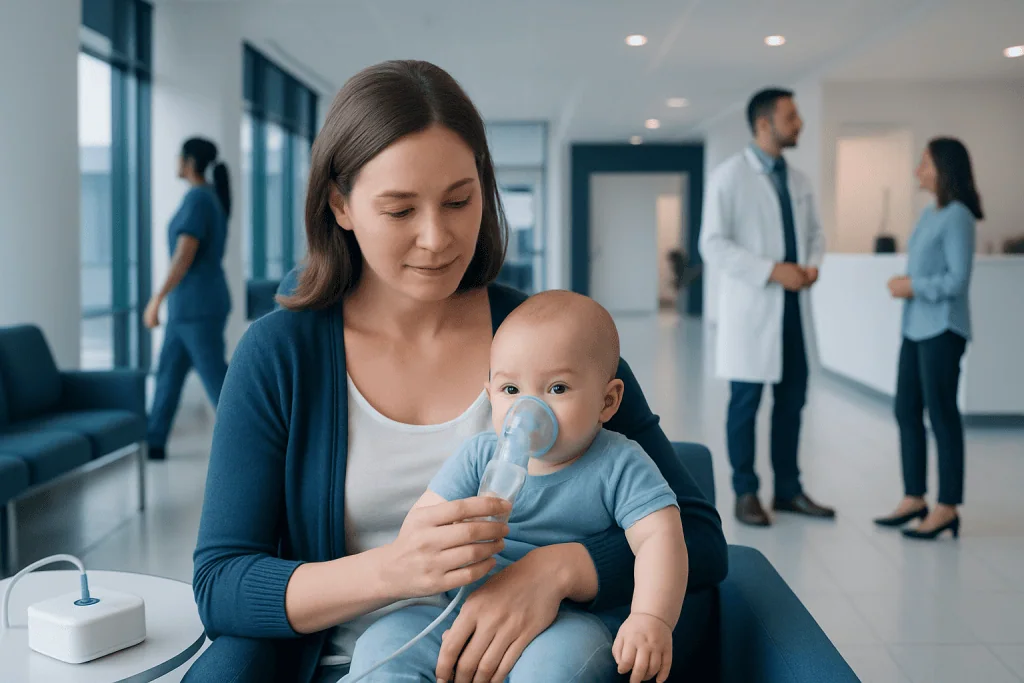
A nebulizer turns liquid medicine into a mist that an infant breathes through a face mask. It should be used only with medicines and instructions provided by a qualified doctor.
Key Takeaways
- A nebulizer turns liquid medicine into a mist that an infant breathes through a face mask.
- It should be used only with medicines and instructions provided by a qualified doctor.
- Correct positioning, a well-fitted mask, and regular cleaning help treatments work better and reduce infection risk.
- Nebulizers do not treat every cough or cold, and they are not a substitute for urgent care when breathing is difficult.
- Parents should seek medical advice promptly if an infant has fast breathing, chest retractions, poor feeding, blue lips, or unusual sleepiness.
Nebulizer and infants are often discussed together because some babies need inhaled medicine for wheezing or other breathing problems. A nebulizer can be safe and helpful when it is prescribed by a doctor, used with the correct mask and medicine, and cleaned carefully after each treatment.
Overview: Can infants use a nebulizer?
Yes. A nebulizer can be used for infants when a doctor prescribes inhaled medicine and a caregiver gives it correctly. The device changes liquid medicine into a fine mist, allowing the baby to breathe it in through a small face mask over several minutes.
For many families, the key question is not simply whether a nebulizer is safe, but when it is truly useful. Nebulizers are usually recommended for specific conditions such as wheezing, bronchiolitis in selected cases, or asthma-like symptoms under medical supervision. They are not routinely needed for every cold, cough, or noisy breathing episode.
Because infants cannot coordinate deep breaths or use handheld inhalers on their own, a nebulizer may be chosen when a clinician believes inhaled medicine is appropriate. In some situations, however, a metered-dose inhaler with a spacer and mask may work just as well or better. The right approach depends on the infant’s age, symptoms, diagnosis, and the medicine being prescribed.
How a nebulizer works and when it may be prescribed
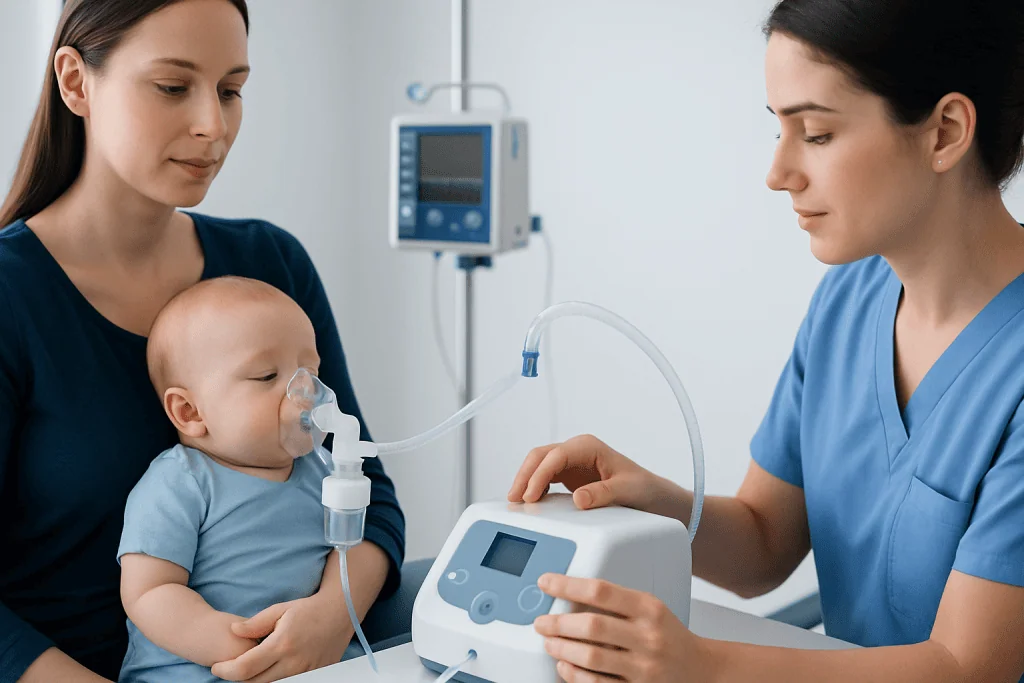
A nebulizer has a cup for liquid medicine, tubing, and either a compressor machine or another device that creates the mist. The infant usually wears a soft mask that covers the nose and mouth so the medication can be inhaled naturally during quiet breathing. This can be helpful for babies who are too young to follow instructions.
Doctors may prescribe nebulized medicines for infants with recurrent wheezing, certain asthma-related symptoms, or other respiratory conditions that need inhaled treatment. Sometimes the medicine opens the airways; in other cases it may reduce inflammation. Whether it is useful depends on the cause of the symptoms, not just the sound of the cough.
Not all noisy breathing is the same. Wheezing usually comes from the lower airways, while congestion from a cold is often in the nose and upper airway. A nebulizer does not “clear mucus” from an ordinary cold in the way many people assume, so a medical diagnosis matters before treatment begins.
If an infant has repeated episodes of wheeze or difficult breathing, doctors may also assess for related conditions such as asthma or lower respiratory infections. In some children, evaluation by specialists in pediatric pulmonology may help clarify the cause and the best treatment plan.
Common reasons infants receive nebulizer treatments
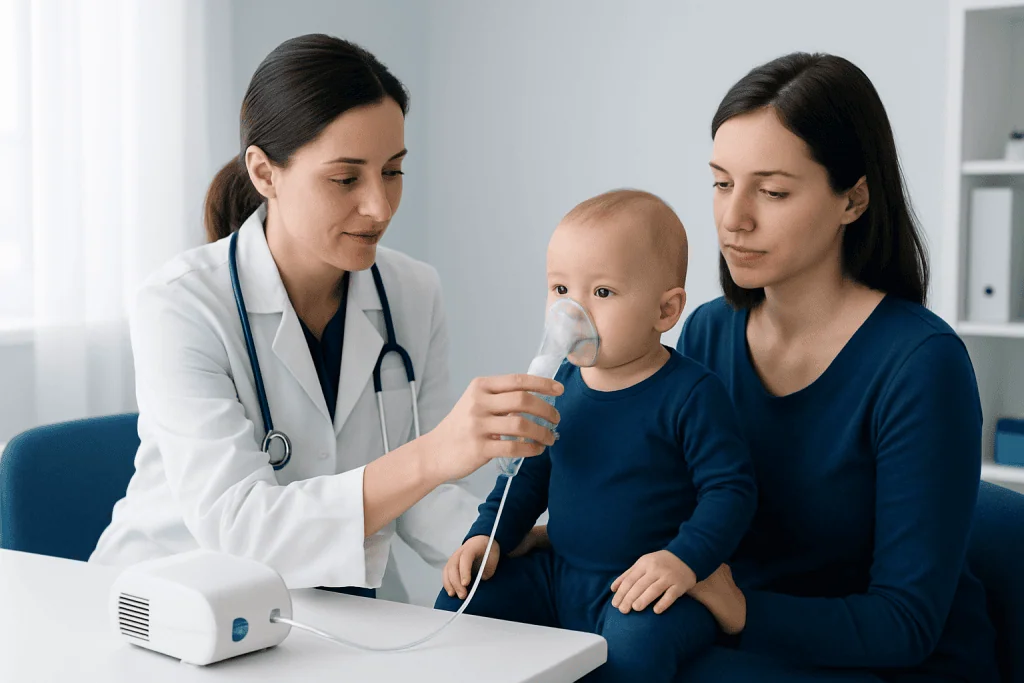
One common reason is wheezing, especially when a clinician suspects airway narrowing. Wheezing may happen with viral infections, early childhood asthma patterns, or reactive airways. In these cases, a prescribed inhaled bronchodilator or another medication may reduce symptoms.
Some infants are evaluated during a chest infection when breathing becomes fast or labored. Conditions such as bronchitis or bronchiolitis can cause cough, noisy breathing, and feeding difficulty. However, treatment varies, and nebulized medicine is not automatically recommended for every infant with a viral illness.
Doctors may also use nebulized saline in selected situations, though parents should not assume it is always beneficial. What matters most is whether the treatment has a clear purpose based on the examination findings. If the main problem is a blocked nose, measures such as saline nose drops and gentle suctioning may be more useful than nebulization.
- Wheezing with a doctor’s diagnosis
- Asthma or asthma-like symptoms in infants under close follow-up
- Selected lower airway conditions where inhaled medication is indicated
- Hospital-based treatment when an infant needs monitored respiratory care
How to use a nebulizer for an infant safely
Before starting, caregivers should wash their hands and set up the machine exactly as instructed. Only the prescribed medicine should go into the medication cup, and it should be measured as directed. Home remedies, essential oils, or non-prescribed liquids should never be placed in the nebulizer.
The infant should be upright or semi-upright, ideally calm and awake. The mask should fit snugly over the nose and mouth, because a loose mask lets medicine escape into the air instead of reaching the airways. Treatment often takes several minutes, and keeping the baby comfortable with gentle holding can help.
After the session, the caregiver should turn off the machine, remove the mask, and clean the parts according to the manufacturer’s instructions. Some medicines may leave residue on the skin, so wiping the baby’s face afterward is sensible. If a steroid medicine is used, the doctor may advise extra mouth and face cleaning to reduce irritation.
Technique can strongly affect how much medicine reaches the lungs. If caregivers are uncertain, a nurse, pediatrician, or respiratory specialist can demonstrate the process. In some cases, teams involved in pediatric pulmonology or pediatric care can help families practice proper use at home.
Safety, side effects, and cleaning the device
Nebulizers are generally safe when used as prescribed, but the medicine itself can cause side effects. Depending on the drug, an infant may become temporarily jittery, fussy, or have a faster heartbeat. These effects should be discussed with the prescribing doctor, especially if they seem strong or persistent.
One of the most important safety issues is hygiene. Nebulizer parts that stay damp can collect germs if they are not washed and dried properly. Caregivers should follow the device instructions for cleaning after each use and for regular disinfection of the cup, mask, and other reusable parts.
It is also important not to share masks or medicine cups between children unless the equipment is specifically intended and cleaned for that purpose. Tubing and filters may need replacement over time, depending on the device. Using worn or dirty equipment can reduce performance and may raise infection risk.
Parents should keep medicines out of reach and check labels carefully before every treatment. If the wrong medicine is used, the dose is uncertain, or the infant seems worse during a treatment, the session should be stopped and medical advice should be sought promptly.
When a nebulizer may not be the right answer
Many infant coughs are caused by simple viral upper respiratory infections, where the main problem is nasal congestion rather than lower-airway narrowing. In these cases, a nebulizer may offer little benefit. Gentle supportive care, especially feeding support, fluids, saline nose drops, and suctioning when needed, is often more helpful.
It is also a common misconception that every episode of wheeze must be treated at home with repeated nebulizer treatments. Frequent symptoms, repeated nighttime cough, or poor response to treatment need medical review rather than more unsupervised doses. Overuse can delay diagnosis of the real problem.
Some infants need a broader evaluation if breathing symptoms keep returning. Doctors may consider allergy, reflux, infection, structural airway issues, or other causes. If there is concern about persistent or complex breathing problems, a child may be referred for further assessment, including pediatric allergy or pediatric respiratory care.
When to seek medical care
Medical care should be sought promptly if an infant has signs of breathing distress. These include very fast breathing, visible pulling in of the skin between the ribs or at the neck, grunting, flaring nostrils, or lips that look blue or gray. A baby who cannot feed well because of breathing trouble also needs urgent assessment.
Parents should also contact a doctor if the infant has fever in early infancy, fewer wet diapers, unusual sleepiness, repeated vomiting, or symptoms that are getting worse instead of better. If a nebulizer treatment does not seem to help, or the baby appears more distressed during or after it, the care plan should be reviewed without delay.
For recurring episodes, a clinician may recommend diagnostic testing or specialist follow-up. Depending on the child’s symptoms, this may include assessment in pediatrics and, when appropriate, care pathways related to pneumonia or other respiratory illnesses. Acibadem International’s multidisciplinary specialists and JCI-accredited hospitals also diagnose and treat respiratory conditions in international patients when further evaluation is needed.
Frequently asked questions
Is a nebulizer safe for a newborn or young infant?
A nebulizer can be safe for a young infant when a doctor has prescribed the medication and the caregiver uses the device correctly. Safety depends on the right medicine, the right mask fit, and proper cleaning. Parents should not start nebulizer treatments on their own without medical advice.
Can a nebulizer help with a baby’s cough?
Sometimes, but only if the cough is linked to a condition that responds to inhaled medicine, such as wheezing from narrowed airways. A nebulizer does not treat every type of cough and is often not helpful for a simple cold with nasal congestion. A doctor can determine whether it is likely to benefit the infant.
How long should an infant wear the nebulizer mask?
The treatment usually continues until the prescribed medication has been fully nebulized, which often takes several minutes depending on the device. The mask should stay in place over the nose and mouth during the session so the infant can inhale the mist properly. Caregivers should follow the instructions given with the prescription and device.
What if the baby cries during the nebulizer treatment?
Crying can make treatment more difficult, but it does not always mean the session must stop. Holding the infant upright, staying calm, and ensuring the mask is comfortable may help. If the baby repeatedly cannot tolerate the mask, a clinician should review the technique and whether another delivery method would work better.
How often should the nebulizer parts be cleaned?
The medication cup and mask usually need cleaning after each use, and the device should be disinfected on the schedule recommended by the manufacturer or healthcare team. Proper drying is important because moisture can allow germs to grow. Caregivers should also replace filters or parts as instructed.
Does an infant with wheezing always need a nebulizer?
No. Wheezing has different causes, and treatment depends on the diagnosis, severity, and the infant’s age. Some babies need other forms of care, observation, or a different inhaled device instead of a nebulizer.
This article is for general information only and is not a substitute for professional medical advice. Please consult a qualified doctor about your individual situation.
Explore treatments in Turkey — costs, top hospitals & a free quote
JCI-accredited · board-certified surgeons · reply within 24h
Add us as a Preferred Source to see more of our trusted health content across Google Search, AI Overviews and Discover.

More from the Health Library

Low Carb Alcoholic Drinks: An Evidence-Based Guide for Patients

Dmt Drug: A Complete Medical Overview

Flower Passion Tea: What Patients Need to Know

Bent Over Rows: What Patients Need to Know

Squint disease: A Complete Medical Guide for Patients