Neck Muscles: What Patients Need to Know
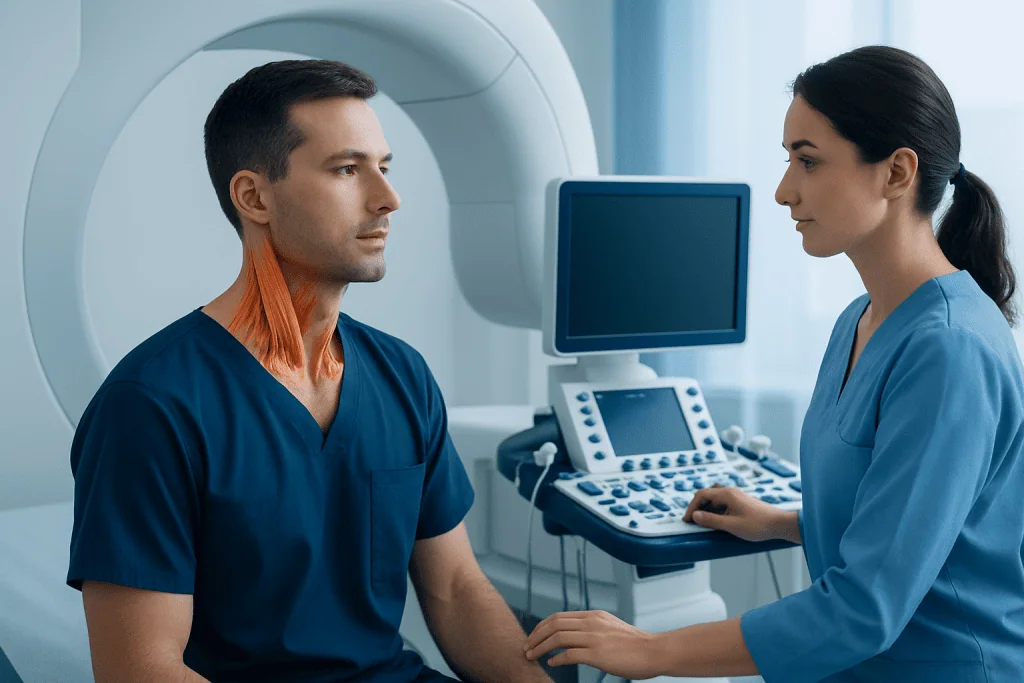
Neck muscles support head movement, posture, swallowing, and breathing support. Pain and stiffness often come from strain, poor ergonomics, stress, or sleep position.
Key Takeaways
- Neck muscles support head movement, posture, swallowing, and breathing support.
- Pain and stiffness often come from strain, poor ergonomics, stress, or sleep position.
- Warning signs such as numbness, arm weakness, fever, or trauma need prompt medical assessment.
- Evaluation may include a physical exam and, when needed, imaging or nerve testing.
- Treatment usually combines activity modification, exercise, posture changes, and pain relief.
Neck muscles are the soft tissues that hold up the head, allow turning and bending, and help stabilize the spine. Most neck muscle problems are related to strain, posture, or overuse, but persistent pain, weakness, or nerve symptoms should be checked by a doctor.
Overview: what neck muscles do
Neck muscles are a group of muscles that support the head, move it in different directions, and help keep the cervical spine stable. They work continuously during everyday activities such as reading, driving, sleeping, speaking, and using a phone or computer. Because the head is relatively heavy and the neck is highly mobile, these muscles can become tense or painful when they are overused or strained.
From a patient perspective, neck muscle problems are usually felt as stiffness, soreness, tight bands, or pain when turning the head. In many cases, symptoms improve with time, posture correction, and simple self-care. However, neck symptoms can sometimes be linked to joint, disc, or nerve problems in the cervical spine, so a careful medical evaluation may be needed if symptoms are severe, persistent, or associated with neurological changes.
The neck contains several layers of muscles. Some large surface muscles help with major movements of the head and shoulders, while deeper muscles provide fine control and stabilization around the vertebrae. These muscles also work together with ligaments, intervertebral discs, and nerves, which is why neck pain may feel complex and may spread into the shoulders, upper back, or arms.
Key neck muscle groups and how they work
Different neck muscles have different roles. The sternocleidomastoid muscles, one on each side of the neck, help rotate and bend the head. The trapezius, which extends from the neck into the upper back and shoulders, helps support posture and shoulder movement. Deeper muscles, including the scalene muscles and the small stabilizers near the cervical vertebrae, help with precise head position and spinal support.
These muscles do not work in isolation. When a person looks down at a screen, turns while reversing a car, or lifts an object, the neck muscles coordinate with the shoulder girdle, upper back, and jaw muscles. This is one reason why neck tension may be accompanied by headaches, shoulder tightness, or discomfort between the shoulder blades.
Neck muscles also contribute to functions beyond movement. Some assist with swallowing and breathing mechanics, particularly during exertion or respiratory distress. Their constant low-level activity is important for balance and visual orientation, helping a person keep the head steady while walking or changing position.
- Flexion: bending the head forward
- Extension: looking upward
- Rotation: turning the head side to side
- Lateral bending: tilting the ear toward the shoulder
- Stabilization: holding the head upright and supporting posture
Common symptoms of neck muscle problems

Neck muscle irritation can cause a range of symptoms. The most common are pain, stiffness, tenderness, and reduced range of motion. Some people feel a pulling sensation when turning the head, while others notice pain after waking up, after long desk work, or during periods of stress.
Muscle-related discomfort may feel dull, tight, or aching. In some cases, muscle spasm develops, creating a sudden cramp-like pain or a visibly tense area. Tension in the neck muscles can also contribute to headaches, especially at the back of the head or around the temples, and may be associated with shoulder or upper back soreness.
Symptoms are more concerning when they are accompanied by tingling, numbness, weakness, hand clumsiness, severe trauma, fever, or unexplained weight loss. Those features suggest that the problem may not be limited to muscle strain alone. Conditions affecting the discs or nerves, such as a herniated disc, may need more focused assessment.
- Stiff neck or trouble turning the head
- Muscle tenderness or tight bands
- Pain that worsens with posture or activity
- Headaches linked to neck tension
- Shoulder or upper back discomfort
Why neck muscles become painful or tight
The most common reason for neck muscle pain is strain. This can happen after prolonged computer use, frequent phone use with the head bent forward, carrying heavy bags, sleeping in an awkward position, or sudden movements such as a rapid twist. Emotional stress can also increase muscle tension, especially in the neck and shoulders.
Posture plays a major role. When the head is repeatedly held forward, the muscles at the back of the neck must work harder to support it. Over time, this may lead to fatigue, tightness, and soreness. Workstation setup, driving posture, and lack of movement breaks can all contribute. Athletes and manual workers may develop strain through repetitive lifting or overuse.
Less commonly, neck muscle symptoms may reflect another underlying issue. Arthritis in the cervical spine, whiplash injury, inflammatory conditions, or nerve compression can all produce pain and protective muscle spasm. If neck pain is severe or radiates down the arm, a doctor may evaluate for spinal causes and discuss whether further testing or treatments such as spine surgery are relevant in selected cases.
- Poor posture and prolonged screen time
- Repetitive strain or overuse
- Stress-related muscle tension
- Sports injuries or whiplash
- Cervical spine disorders, including disc or joint problems
How doctors diagnose neck muscle conditions
Diagnosis starts with the medical history. A doctor will usually ask when the pain started, whether there was an injury, where the pain travels, and what makes it better or worse. Questions about headaches, numbness, weakness, fever, balance changes, or sleep disturbance help identify whether the problem is likely muscular or whether another cause should be considered.
The physical examination often includes checking posture, muscle tenderness, range of motion, strength, sensation, and reflexes. Doctors may look for signs of muscle spasm, shoulder imbalance, or pain triggered by specific movements. This bedside assessment is often enough to diagnose a simple muscle strain.
Imaging is not always needed right away. However, X-rays, MRI, or CT may be recommended when symptoms persist, follow trauma, or suggest a structural problem in the cervical spine. In some situations, nerve studies or specialist review may be useful, especially when arm symptoms or significant weakness are present. For persistent or complex spinal complaints, an evaluation in orthopedics and traumatology may be appropriate.
Treatment options for neck muscle pain and stiffness
Treatment depends on the cause, duration, and severity of symptoms. For simple strains, doctors often recommend relative rest, gentle activity, heat or cold, posture correction, and short-term pain relief measures. Complete bed rest is usually not advised, because prolonged immobility can worsen stiffness and delay recovery.
Exercise and rehabilitation are often central to recovery. Stretching tight muscles, strengthening deep neck stabilizers, and improving shoulder blade control can reduce strain on the cervical area. A clinician may recommend physical therapy and rehabilitation to improve flexibility, posture, and movement habits. Recovery is usually gradual, and regular exercises often matter more than forceful stretching.
When symptoms are more persistent, treatment may address contributing factors such as work ergonomics, stress, jaw clenching, or sleep position. If pain is linked to disc disease, nerve compression, or advanced degeneration, doctors may discuss additional options after careful assessment. At the end of the diagnostic and treatment pathway, some international patients choose care at Acibadem International, where multidisciplinary specialists in JCI-accredited hospitals evaluate and treat neck and spine-related conditions.
Prevention and self-care for healthier neck muscles
Many neck muscle problems can be reduced through simple daily habits. Keeping screens at eye level, sitting with the shoulders relaxed, and taking regular movement breaks are among the most effective steps. Small posture changes repeated consistently through the day often help more than occasional intense stretching.
Sleep position matters as well. A pillow that supports the natural curve of the neck without forcing the head too high or too low may reduce morning stiffness. During the day, alternating tasks, avoiding prolonged static positions, and staying physically active can help the neck muscles tolerate routine demands more comfortably.
Stress management is also important because emotional tension commonly settles into the neck and shoulders. Relaxed breathing, pacing work, and general exercise can help reduce muscle guarding. If symptoms keep returning, a clinician can assess whether there is an underlying issue such as cervical alignment problems, shoulder dysfunction, or a chronic pain pattern that would benefit from rehabilitation or specialist review.
- Raise phones and laptops to reduce forward-head posture
- Take short standing or stretching breaks every 30 to 60 minutes
- Use good lifting technique and avoid sudden twisting
- Choose a supportive sleep setup
- Maintain regular exercise and stress-reduction habits
When to seek medical care
Most mild neck muscle pain improves with self-care over several days to a few weeks. Medical advice is recommended if pain is severe, keeps returning, interferes with daily activities, or does not improve. A doctor should also assess symptoms that seem out of proportion to a simple strain.
Urgent evaluation is important after a fall, car accident, sports injury, or any significant trauma to the head or neck. Immediate medical attention is also needed if neck pain occurs with fever, severe headache, difficulty walking, loss of bladder or bowel control, arm or hand weakness, or numbness that is spreading.
Neck pain can sometimes reflect nerve compression or a spine problem rather than muscle strain alone. When symptoms include pain traveling into the arm, tingling, reduced grip strength, or persistent neurological signs, more detailed assessment may be needed through services such as neurosurgery or other spine specialists.
Frequently asked questions
What are the main neck muscles?
The neck contains both larger surface muscles and smaller deep stabilizing muscles. Important examples include the sternocleidomastoid, trapezius, scalene muscles, and deep muscles that support the cervical spine and control fine movement.
Why do neck muscles become tight so easily?
Neck muscles work almost constantly to support the head and maintain posture. Long periods of screen use, poor ergonomics, stress, awkward sleep position, or sudden movement can make them fatigue and tighten.
Can neck muscle pain cause headaches?
Yes. Tight or irritated neck muscles can contribute to tension-type headaches or pain felt at the back of the head. Headaches with fever, neurological symptoms, or unusual severity should be evaluated promptly.
How can someone tell if neck pain is muscular or nerve-related?
Muscle pain is often felt as stiffness, tenderness, or aching that worsens with posture or movement. Nerve-related symptoms are more likely to include tingling, numbness, burning pain, or weakness traveling into the shoulder, arm, or hand.
Is exercise good for neck muscles when they hurt?
Gentle movement is often helpful, especially after the first acute phase of strain. However, forceful stretching or continuing painful activities may worsen symptoms, so exercises should be gradual and ideally guided by a clinician if pain persists.
When should a person worry about neck muscle symptoms?
Medical care is important if symptoms follow trauma, are severe, keep returning, or do not improve with self-care. Urgent assessment is needed for weakness, numbness, fever, severe headache, balance problems, or changes in bladder or bowel control.
References
- American Academy of Orthopaedic Surgeons
- National Institute of Neurological Disorders and Stroke
- MedlinePlus
- National Health Service
- Mayo Clinic
This article is for general information only and is not a substitute for professional medical advice. Please consult a qualified doctor about your individual situation.
Joint and spine care in Turkey — expert assessment & treatment
JCI-accredited · board-certified surgeons · reply within 24h
Add us as a Preferred Source to see more of our trusted health content across Google Search, AI Overviews and Discover.