Nerves in Knee With Pain: Signs of Irritation

Nerve-related knee pain often includes tingling, burning, numbness, sensitivity to touch, or electric-shock sensations. The saphenous, peroneal, tibial, and femoral nerves can contribute to symptoms around the knee and lower leg.
Key Takeaways
- Nerve-related knee pain often includes tingling, burning, numbness, sensitivity to touch, or electric-shock sensations.
- The saphenous, peroneal, tibial, and femoral nerves can contribute to symptoms around the knee and lower leg.
- Knee swelling, injury, repetitive pressure, arthritis, and lower-back nerve compression may irritate nearby nerves.
- New weakness, inability to lift the foot, rapidly increasing swelling, fever, or a cold or pale foot needs prompt medical assessment.
- A clinical examination is usually the first step; imaging or nerve tests may be used when symptoms are persistent, severe, or unclear.
Nerves in knee with pain may feel sharp, burning, electric, tingling, or numb rather than like typical aching joint pain. The cause can be local nerve irritation, a knee injury or swelling, pressure from the lower back, or less commonly a condition affecting circulation or nerves more broadly.
What does nerve pain in the knee feel like?
Nerves in knee with pain usually means that a nerve is irritated, compressed, stretched, or affected by inflammation somewhere along its pathway. Nerve-related pain often feels different from pain arising mainly from the joint, tendon, or muscle. It may be burning, shooting, stabbing, prickling, electric, or associated with numbness and unusual sensitivity of the skin.
The knee receives sensation and movement signals through several nerves. Some pass close to the skin at the inner or outer knee, while others travel behind the knee and into the lower leg and foot. Symptoms may therefore be felt in the knee but extend to the shin, calf, ankle, foot, or thigh.
Not all knee pain with tingling is caused by a serious nerve disorder. Temporary pressure on a nerve, swelling after an injury, or prolonged kneeling can produce short-lived symptoms. However, persistent numbness, weakness, or worsening pain should be assessed by a qualified clinician to identify the source and guide treatment.
Nerves around the knee and symptom patterns
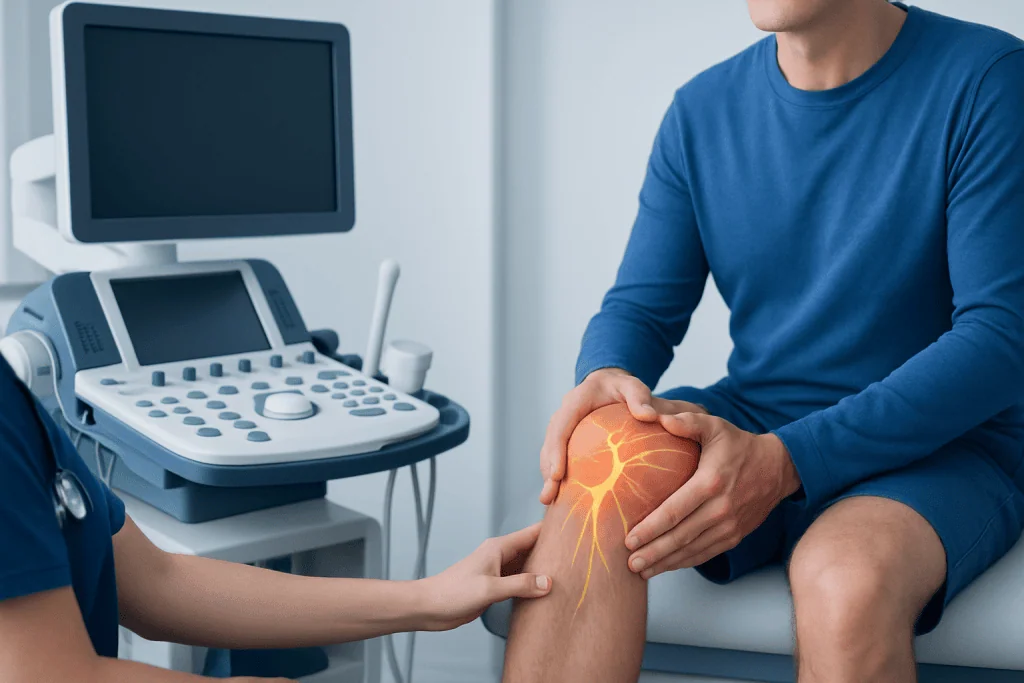
Several nerves may be involved in discomfort around the knee. The saphenous nerve supplies sensation along the inner knee, inner shin, and sometimes the area just below the kneecap. Irritation may cause burning or tenderness on the inner side of the knee, particularly after surgery, injury, repetitive bending, or direct pressure.
The common peroneal nerve runs around the outside of the knee near the head of the fibula, the smaller lower-leg bone. It is relatively exposed in this location. Pressure from crossing the legs, a tight brace or cast, significant swelling, or trauma may lead to pain or tingling on the outer knee and upper foot. More significant involvement can cause weakness when lifting the foot or toes, sometimes called foot drop.
The tibial nerve passes behind the knee and continues into the calf and foot. Symptoms from this area may include pain behind the knee, altered sensation in the sole of the foot, or calf discomfort. The femoral nerve and nerve roots in the lower back can also refer pain, tingling, or weakness to the front of the thigh and knee.
- Inner knee or shin: saphenous nerve irritation may be considered.
- Outer knee with foot tingling: peroneal nerve involvement may be possible.
- Back of knee, calf, or sole: tibial nerve or another lower-leg cause may be relevant.
- Knee symptoms with back pain: a pinched nerve in the spine may need evaluation.
Common triggers and underlying causes
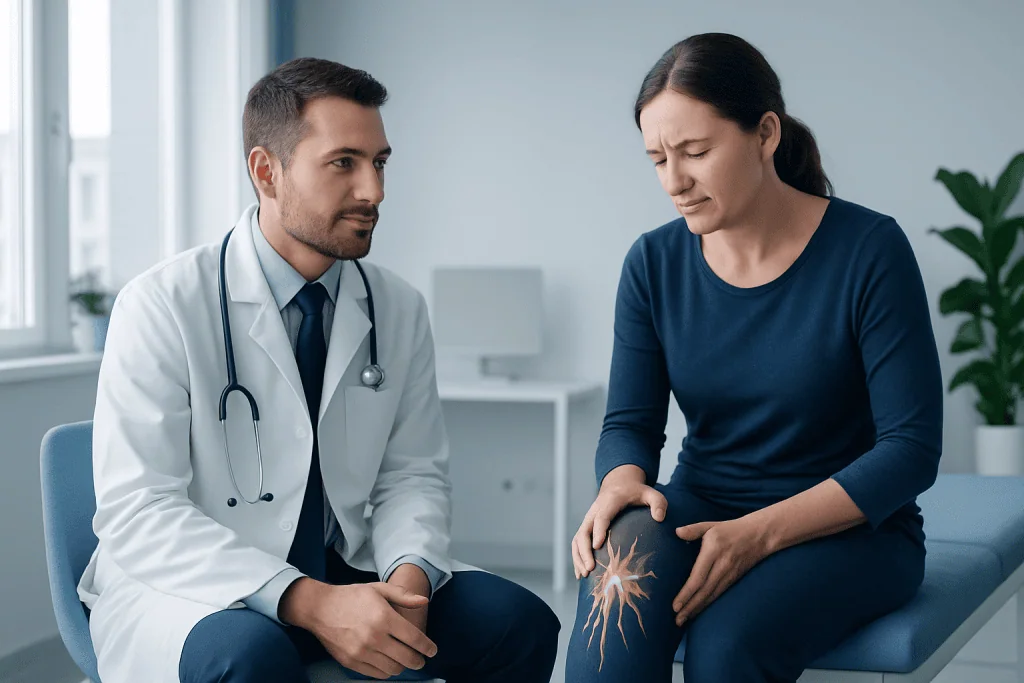
Local swelling and inflammation are common reasons nerves become sensitive around the knee. A sprain, fracture, dislocation, meniscus injury, or severe bruise can stretch tissues or cause swelling that presses on nearby nerves. <a href="https://acibademinternational.com/diseases/knee-osteoarthritis/”>Knee osteoarthritis may also contribute through chronic joint changes, inflammation, altered movement, or swelling. People with ongoing joint symptoms may benefit from assessment for knee osteoarthritis and other structural knee problems.
Repeated pressure is another possible trigger. Frequent kneeling, prolonged squatting, sitting with crossed legs, and poorly fitted braces, compression garments, casts, or boots can irritate a nerve, especially the peroneal nerve on the outside of the knee. Symptoms can also develop after an operation around the knee because small sensory nerve branches may be affected by the incision, swelling, scar tissue, or postoperative positioning.
Sometimes the source is not in the knee itself. Lumbar spine conditions, including disc problems or narrowing around spinal nerves, can cause pain, tingling, or numbness that travels into the thigh, knee, leg, or foot. Diabetes, vitamin deficiencies, alcohol-related nerve damage, and other causes of peripheral neuropathy can create symptoms in both legs or feet, often with a gradual onset.
Less commonly, pain behind the knee or in the calf may relate to a vascular problem, a cyst, infection, or another condition that needs timely evaluation. A clinician considers the full symptom pattern, recent injury, medical history, medications, and circulation when determining the likely cause.
How doctors assess knee nerve symptoms
Assessment begins with a discussion of when the symptoms started, what they feel like, whether there was an injury, and which positions or activities make them better or worse. It is helpful to mention back pain, changes in walking, recent surgery, diabetes, use of braces or casts, and whether numbness extends into the foot.
During an examination, the clinician may check knee movement, swelling, tenderness, skin sensation, muscle strength, reflexes, balance, and pulses in the foot. They may gently tap or press along nerve pathways and assess the lower back and hip, since these areas can contribute to knee symptoms.
Tests are selected based on the suspected cause. X-rays may help identify bone or joint changes, while ultrasound or magnetic resonance imaging can assess soft tissues, fluid collections, or structures that may affect a nerve. Nerve conduction studies and electromyography may be considered when there is ongoing numbness or weakness, or when the location of nerve involvement is uncertain. Blood tests may be useful when a systemic cause of nerve symptoms is possible.
Treatment options and recovery
Treatment depends on the cause, severity, and effect on everyday activities. When symptoms are related to short-term pressure or mild irritation, reducing pressure on the area, avoiding leg crossing or prolonged kneeling, adjusting equipment, and allowing time for swelling to settle may be enough. Rest does not necessarily mean complete inactivity; gentle movement may help maintain knee mobility when it is safe to do so.
If an injury, arthritis, or movement pattern is contributing, a clinician may recommend physiotherapy. Rehabilitation can focus on knee and hip strength, flexibility, balance, walking mechanics, and gradual return to activity. A brace, splint, or assistive device may sometimes be used, but it should fit correctly and should not worsen tingling, numbness, or pressure.
Clinicians may recommend pain-relief approaches or medicines appropriate to the individual’s health history. If a nerve is significantly compressed by a structural problem, treatment may target that problem directly. In selected cases, this can include image-guided procedures or surgery such as knee replacement surgery when advanced joint disease is the underlying cause, or a procedure to relieve nerve compression when clearly indicated.
Recovery varies. A mildly irritated nerve may improve over days to weeks once pressure and inflammation are addressed. Nerves generally recover slowly, so symptoms after more substantial injury can take longer and require follow-up. New or progressing weakness should not be managed with self-care alone.
Practical self-care while arranging assessment
For mild symptoms without red flags, practical measures can reduce avoidable nerve pressure. Avoid tight straps around the knee, prolonged kneeling, and sitting in positions that press on the outer knee. Change position regularly during work, travel, or rest, and use cushioning if kneeling cannot be avoided.
After a recent minor injury, relative rest and appropriate cold or heat may provide comfort, depending on what feels better and on medical advice. Keep activity within a tolerable range rather than pushing through increasing pain, tingling, or weakness. Comfortable, supportive footwear may also help reduce strain through the knee and lower leg.
People should not attempt forceful stretching, deep massage, or manipulation over a painful or numb area if symptoms are severe, unexplained, or worsening. Those who have diabetes, circulation problems, reduced sensation, or a recent operation should seek individualized guidance before using heat, compression, or new exercise routines.
When to seek medical care
Medical assessment is appropriate for knee pain with tingling, numbness, or burning that lasts more than a few days, recurs, interferes with sleep or walking, or follows a significant injury. It is also sensible to seek advice if symptoms spread into the calf, foot, or thigh, or if they occur alongside low-back pain.
Urgent medical care is needed for sudden or increasing weakness in the leg or foot, inability to lift the foot or toes, loss of bladder or bowel control, numbness in the groin or saddle area, or severe pain after major trauma. These symptoms can indicate significant nerve involvement and should be evaluated without delay.
Prompt assessment is also important if the knee or calf becomes markedly swollen, red, hot, or tender; if fever occurs; or if the foot becomes cold, pale, blue, or difficult to move. These signs may have causes beyond nerve irritation and require timely medical attention.
Acibadem International’s multidisciplinary specialists and JCI-accredited hospitals assess and treat knee and nerve-related conditions for international patients, with care plans based on the individual’s symptoms and diagnosis.
Frequently asked questions
Can nerves in the knee cause pain without an injury?
Yes. Nerve pain around the knee can occur without a clear injury because of repeated pressure, swelling, arthritis, a problem in the lower back, or a wider nerve condition such as peripheral neuropathy. A clinician can help distinguish nerve-related symptoms from joint, tendon, or circulation problems.
What does a pinched nerve in the knee feel like?
A pinched or irritated nerve may cause burning, tingling, numbness, sharp shooting pain, or skin sensitivity. The symptoms may travel from the knee into the shin, calf, ankle, or foot, depending on the nerve involved.
Can knee swelling press on a nerve?
Yes. Swelling after injury, inflammation, surgery, or a joint condition can increase pressure in tissues around the knee and irritate nearby nerves. Noticeable swelling with worsening numbness, weakness, severe pain, redness, or fever should be assessed promptly.
Is outer knee pain with foot tingling a nerve problem?
It can be. The common peroneal nerve passes close to the outer knee and may cause tingling on the top of the foot when irritated. Similar symptoms can also come from the lower back, so an examination is important if symptoms persist or include weakness.
Can a pinched nerve in the back cause knee pain?
Yes. Nerves that begin in the lower spine supply the thigh, knee, lower leg, and foot, so irritation in the back can sometimes be felt as knee pain, tingling, or numbness. Back pain is not always present, which is why clinicians assess both the knee and the spine when appropriate.
When is knee nerve pain an emergency?
Seek urgent care for sudden leg weakness, foot drop, loss of bladder or bowel control, numbness around the groin, or major trauma. Rapid swelling, fever, a red and hot joint or calf, or a cold, pale, or blue foot also needs prompt medical evaluation.
References
- American Academy of Orthopaedic Surgeons
- National Institute of Neurological Disorders and Stroke
- National Institute of Arthritis and Musculoskeletal and Skin Diseases
- Mayo Clinic
- NHS
This article is for general information only and is not a substitute for professional medical advice. Please consult a qualified doctor about your individual situation.
Joint and spine care in Turkey — expert assessment & treatment
JCI-accredited · board-certified surgeons · reply within 24h
Add us as a Preferred Source to see more of our trusted health content across Google Search, AI Overviews and Discover.