Nervous System Disorders That Affect Movement: When Symptoms Point to Neuromuscular Disease

Neuromuscular disease can affect the muscles, peripheral nerves, motor neurons, or the junction between nerves and muscles. Common symptoms include muscle weakness, fatigue, cramps, muscle wasting, numbness, and difficulty walking or climbing stairs.
Key Takeaways
- Neuromuscular disease can affect the muscles, peripheral nerves, motor neurons, or the junction between nerves and muscles.
- Common symptoms include muscle weakness, fatigue, cramps, muscle wasting, numbness, and difficulty walking or climbing stairs.
- Diagnosis often involves a neurological exam, blood tests, imaging, and nerve or muscle function tests such as EMG.
- Treatment depends on the specific condition and may include medication, rehabilitation, respiratory support, and lifestyle adjustments.
- New or worsening weakness, trouble swallowing, or breathing difficulty should be assessed promptly by a doctor.
Neuromuscular disease is a group of conditions that affect the nerves controlling muscles, the muscles themselves, or the connection between them. These disorders can lead to weakness, fatigue, cramps, and changes in movement, but careful evaluation can help identify the cause and guide treatment.
Overview
Neuromuscular disease refers to a broad group of disorders that interfere with how the nervous system controls movement. These conditions may affect motor neurons, peripheral nerves, the neuromuscular junction, or the muscles themselves. Because normal movement depends on all of these parts working together, a problem in any one of them can lead to weakness or changes in coordination.
People often notice symptoms gradually. A person may feel unusually tired when climbing stairs, lifting objects, or rising from a chair. Others may develop muscle cramps, twitching, numbness, or imbalance. In some conditions, symptoms mainly affect the arms and legs, while in others they can involve the face, swallowing muscles, or breathing muscles.
Neuromuscular disease is not a single diagnosis. It includes many different conditions, such as muscular dystrophies, peripheral neuropathies, myasthenia gravis, inflammatory muscle disease, and motor neuron disorders. The outlook varies widely depending on the cause, how quickly it progresses, and how early supportive care begins.
Although movement symptoms can be worrying, many causes can be evaluated in a structured way. A neurologist usually looks at the pattern of weakness, the presence of sensory symptoms, family history, and test results to understand which part of the nerve-muscle pathway is affected.
Symptoms That May Suggest a Neuromuscular Disorder
The most common symptom is muscle weakness. This may appear as difficulty walking, frequent tripping, trouble lifting the arms, reduced grip strength, or needing support to stand up. Some people notice that tasks they once did easily now require more effort, especially later in the day or after repeated use of the same muscles.
Fatigue is also common, but it is important to distinguish general tiredness from true muscle fatigability. In some neuromuscular conditions, strength decreases during activity and improves with rest. This pattern can point to disorders affecting the communication between nerves and muscles.
Other symptoms can include:
- Muscle cramps or spasms
- Muscle twitching or fasciculations
- Muscle wasting or thinning
- Numbness, tingling, or burning pain
- Poor balance or unsteady walking
- Drooping eyelids or double vision
- Difficulty swallowing or slurred speech
- Shortness of breath, especially when lying flat or during exertion
The exact symptom pattern can help narrow the possible cause. For example, numbness and tingling may suggest nerve involvement, while fluctuating weakness with eye symptoms may suggest a neuromuscular junction problem. Progressive weakness without sensory loss may point to a muscle or motor neuron disorder.
Causes and Risk Factors

Neuromuscular disorders can be inherited, autoimmune, inflammatory, metabolic, toxic, infectious, or degenerative. In inherited conditions, changes in certain genes affect the structure or function of nerves or muscles. These conditions may begin in childhood or adulthood, and family history can offer useful clues, although not every affected person has an obvious family pattern.
Autoimmune conditions happen when the body’s immune system mistakenly attacks the nerves, muscles, or neuromuscular junction. Examples include myasthenia gravis and inflammatory muscle diseases. In these disorders, symptoms may improve with treatments that reduce abnormal immune activity.
Other causes include diabetes, vitamin deficiencies, thyroid disorders, kidney disease, exposure to alcohol or certain medications, and infections. Some people develop peripheral nerve damage over time, while others experience a more sudden change linked to inflammation or an immune reaction. A person may also be evaluated for peripheral neuropathy when numbness, burning pain, or loss of sensation accompanies weakness.
Risk factors vary by disorder but may include family history, older age for some degenerative conditions, autoimmune disease, diabetes, nutritional deficiencies, and exposure to toxins. Sometimes no single trigger is found, and diagnosis depends on recognizing a pattern through careful clinical assessment.
How Doctors Diagnose Neuromuscular Disease
Diagnosis begins with a detailed medical history and neurological examination. The doctor asks when symptoms started, whether they are stable or worsening, and which muscles are affected. They also look for sensory changes, fatigue patterns, reflex changes, muscle wasting, and signs involving speech, swallowing, or breathing.
Blood tests may be used to check for muscle injury, inflammation, vitamin deficiency, thyroid disease, autoimmune markers, or metabolic causes. In some situations, genetic testing can help confirm an inherited disorder. Imaging studies may be ordered if the doctor needs to rule out other neurological problems that can mimic weakness.
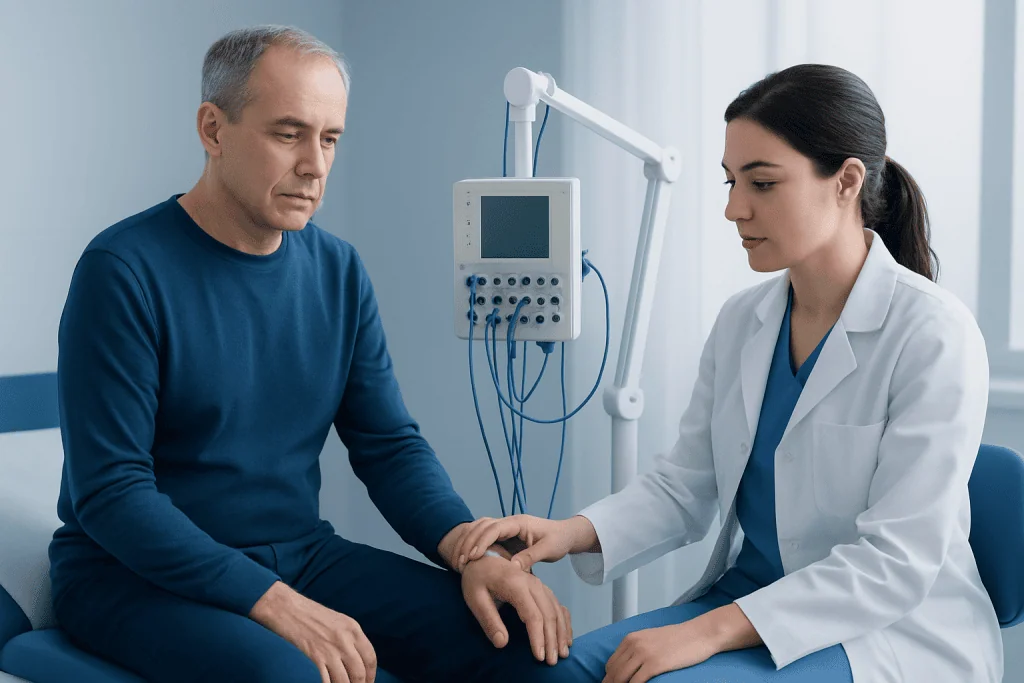
Electrodiagnostic testing is often a key part of the workup. Tests such as nerve conduction studies and electromyography can help determine whether the problem lies in the nerves, muscles, or neuromuscular junction. Depending on the findings, a person may also need a muscle biopsy, nerve biopsy, respiratory function testing, or swallowing evaluation.
Because these disorders can overlap, diagnosis sometimes takes time. A structured assessment by specialists in neurology care can help distinguish between conditions such as muscle disease, neuropathy, and amyotrophic lateral sclerosis (ALS), allowing treatment plans to be tailored more precisely.
Treatment Options
Treatment depends on the specific diagnosis, severity of symptoms, and which body systems are involved. Some conditions can be managed with medications that reduce immune activity, improve nerve-muscle communication, control inflammation, or relieve symptoms such as pain, cramps, or stiffness. In inherited or degenerative disorders, treatment often focuses on preserving function, preventing complications, and supporting quality of life.
Rehabilitation is an important part of care for many people with neuromuscular disease. A personalized program may include physical therapy and rehabilitation to maintain mobility, improve safety, and reduce strain on weakened muscles. Occupational therapy may help with hand function, daily tasks, and adaptive equipment.
When swallowing, speech, or breathing muscles are affected, additional support may be needed. This can include speech and swallowing therapy, nutrition planning, and respiratory assessment. In selected cases, doctors may recommend respiratory therapy or devices that help support breathing during sleep or illness.
Surgery is not a routine treatment for most neuromuscular disorders, but some people may need procedures for related problems such as contractures, severe scoliosis, or feeding access. Long-term care is usually multidisciplinary, involving neurologists, rehabilitation specialists, respiratory experts, nutrition professionals, and sometimes genetic counselors. Near the end of the care journey discussion, some international patients may choose evaluation at Acibadem International, where multidisciplinary specialists in JCI-accredited hospitals diagnose and treat neuromuscular conditions.
Prevention and Self-care
Not all neuromuscular diseases can be prevented, especially inherited conditions. However, self-care can still make an important difference in comfort, safety, and day-to-day function. People often benefit from balancing activity with rest, using energy wisely, and avoiding overexertion that can worsen fatigue or lead to falls.
General health measures support the nervous system and muscles. These include eating a balanced diet, staying hydrated, managing blood sugar if diabetes is present, correcting vitamin deficiencies when advised by a doctor, and limiting alcohol if it contributes to nerve damage. It is also helpful to review medications regularly, since some drugs can affect muscles or nerves in susceptible individuals.
Practical strategies may include:
- Using handrails, supportive footwear, or mobility aids to reduce fall risk
- Following prescribed exercises rather than intense unsupervised workouts
- Maintaining vaccinations and infection prevention measures when appropriate
- Monitoring swallowing changes, weight loss, or nighttime breathing symptoms
- Seeking emotional support for stress, adjustment, or chronic illness management
People with established neuromuscular disease should keep regular follow-up appointments. Even when symptoms are stable, ongoing care helps track changes in strength, breathing, and daily function, allowing treatment to be adjusted early if needed.
When to See a Doctor
A doctor should evaluate unexplained weakness that lasts more than a short time, especially if it is getting worse or affecting walking, hand use, swallowing, or speech. New muscle wasting, repeated falls, persistent numbness, or drooping eyelids with fatigue also deserve medical attention. Early evaluation can help rule out reversible causes and identify conditions that benefit from prompt treatment.
Urgent care is important if weakness comes on quickly, spreads rapidly, or is accompanied by breathing difficulty. Trouble swallowing, choking, sudden inability to lift the arms or legs, or severe shortness of breath should not be ignored. These symptoms may signal a serious neurological problem that needs immediate assessment.
It is also wise to seek medical advice when symptoms interfere with work, exercise, sleep, or personal care. Even if a condition is chronic rather than emergency-related, timely support can reduce complications and improve function. A careful neurological workup often provides clarity and practical next steps.
Families may also benefit from medical review if there is a known inherited neuromuscular condition in close relatives. Genetic counseling and specialist input can help people understand symptoms, screening options, and what monitoring may be useful over time.
Frequently asked questions
What is the difference between a neuromuscular disease and a movement disorder?
Neuromuscular disease affects the nerves, muscles, or the connection between them, often causing weakness, fatigue, or muscle wasting. Movement disorders usually involve abnormal control of movement by the brain, such as tremor, slowness, or involuntary movements. Some symptoms can overlap, so a neurological evaluation is important.
Does muscle weakness always mean neuromuscular disease?
No. Muscle weakness can have many causes, including deconditioning, medication effects, hormonal problems, vitamin deficiencies, or joint pain that limits effort. However, persistent or progressive weakness should be assessed by a doctor, especially if it affects daily activities.
Can neuromuscular diseases be cured?
Some underlying causes are treatable, and a few may improve significantly with the right therapy. Others are long-term conditions that cannot be cured but can often be managed with medication, rehabilitation, and supportive care. The best approach depends on the exact diagnosis.
What tests are commonly used to diagnose neuromuscular disease?
Doctors often use a neurological examination, blood tests, and electrodiagnostic studies such as nerve conduction tests and electromyography. Depending on the suspected condition, imaging, genetic testing, muscle biopsy, or breathing tests may also be recommended.
When are breathing problems related to neuromuscular disease?
Breathing problems can happen when the muscles that support breathing become weak. A person may notice shortness of breath with activity, poor sleep, morning headaches, or discomfort when lying flat. These symptoms should be discussed promptly with a doctor.
Can exercise help if someone has a neuromuscular disorder?
Appropriate exercise can be helpful, but it should usually be tailored to the individual condition and strength level. Gentle, supervised programs may improve mobility, endurance, and safety without overstraining weakened muscles. A rehabilitation specialist can guide the safest plan.
This article is for general information only and is not a substitute for professional medical advice. Please consult a qualified doctor about your individual situation.
Explore treatments in Turkey — costs, top hospitals & a free quote
JCI-accredited · board-certified surgeons · reply within 24h
Add us as a Preferred Source to see more of our trusted health content across Google Search, AI Overviews and Discover.

More from the Health Library

Numbness and Tingling: When Symptoms Suggest a Neuromuscular Disorder

Is DMD a Neuromuscular Disease? Understanding Duchenne Muscular Dystrophy

Muscular Dystrophy and the Muscles: How Weakness Progresses Over Time

Parkinson’s vs Neuromuscular Disease: What Is the Difference?

Muscle Wasting and Foot Drop: Causes That Need a Neuromuscular Workup