Neurobiology — Explained by Medical Evidence, Not Myths

Neurobiology studies the brain, spinal cord, nerves, and the cells and signals that allow the body to think, feel, move, and respond. It is grounded in medical evidence, including brain imaging, laboratory research, genetics, and neurological examination.
Key Takeaways
- Neurobiology studies the brain, spinal cord, nerves, and the cells and signals that allow the body to think, feel, move, and respond.
- It is grounded in medical evidence, including brain imaging, laboratory research, genetics, and neurological examination.
- Common myths—such as people using only 10% of the brain—are not supported by science.
- Neurobiology helps doctors understand symptoms like memory change, seizures, weakness, numbness, and movement problems.
- Brain function can change over time through development, learning, injury, aging, and disease.
Neurobiology is the branch of science and medicine that explains how the nervous system is built, how it functions, and what changes in disease. It uses evidence from anatomy, physiology, imaging, genetics, and clinical care to understand the brain, spinal cord, and nerves rather than relying on popular myths about how the brain works.
What neurobiology means
Neurobiology is the scientific and medical study of the nervous system. In simple terms, it explains how the brain, spinal cord, and nerves are structured, how they communicate, and how they influence movement, memory, emotions, sleep, sensation, and behavior. It also helps explain what happens when these systems are affected by illness or injury.
Rather than focusing on myths about “left brain versus right brain” or hidden brain potential, neurobiology relies on measurable evidence. Researchers and clinicians study nerve cells, chemical messengers, electrical signaling, brain networks, genetics, development, and the effects of disease. This evidence-based approach helps connect everyday experiences—such as learning a new skill or reacting to pain—with the biology behind them.
Neurobiology overlaps with neurology, psychiatry, psychology, neuroscience, and rehabilitation medicine, but it is not exactly the same as any one of them. Neurology focuses on diagnosing and treating disorders of the nervous system, while neurobiology provides a broader biological framework for understanding how the system works in both health and disease.
How the nervous system works
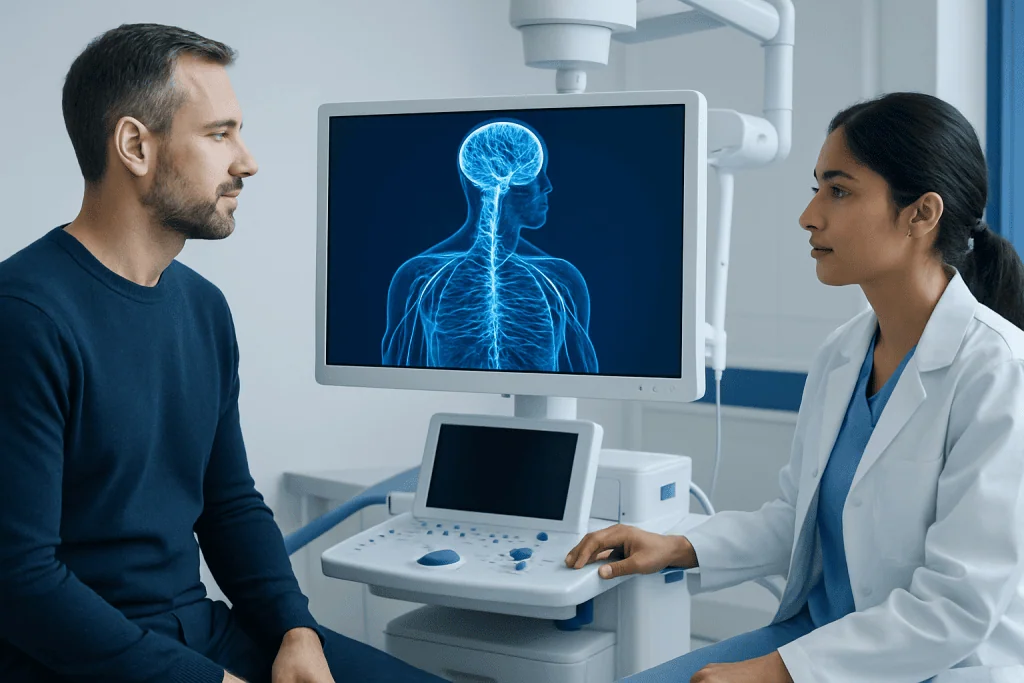
The nervous system has two main parts: the central nervous system, which includes the brain and spinal cord, and the peripheral nervous system, which includes the nerves that extend throughout the body. Together, these systems collect information, process it, and produce responses. That is how a person can see a traffic light, decide what it means, and move a foot to the brake pedal in a fraction of a second.
The basic working cells of the nervous system are neurons. Neurons send electrical signals and communicate with each other through connections called synapses. At these synapses, chemical messengers known as neurotransmitters help pass information from one cell to another. Supporting cells, called glial cells, also play essential roles in nourishment, insulation, repair, and immune defense within the nervous system.
Different regions of the brain have specialized functions, but they do not work in isolation. Networks link areas involved in language, movement, vision, memory, planning, balance, and emotion. Neurobiology shows that many abilities depend on cooperation among multiple regions, which is why symptoms can sometimes be complex and why modern diagnosis often uses imaging and functional testing to understand the full picture.
What neurobiology explains in everyday life and medicine

Neurobiology helps explain normal human experiences such as attention, learning, sleep, pain, stress responses, and habit formation. For example, repeated practice can strengthen communication within certain neural circuits, which is one reason why skills often improve over time. This capacity for change is known as neuroplasticity, and it is one of the most important concepts in modern brain science.
It also helps doctors understand symptoms and diseases. Problems in nerve signaling, inflammation, blood flow, immune function, degeneration, or development can affect the brain and nerves in different ways. Symptoms may include headache, tremor, seizures, weakness, numbness, balance problems, memory changes, or altered mood and behavior. Neurobiology provides the scientific basis for evaluating these changes.
Many medical conditions are better understood through this lens, including Parkinson’s disease, epilepsy, stroke, dementia, neuropathy, and multiple sclerosis. In each case, doctors look at which part of the nervous system is involved, what biological processes may be affected, and how those changes match the patient’s symptoms and test results.
Common myths about neurobiology
Several popular ideas about the brain are widespread but inaccurate. One common myth is that people use only 10% of their brain. In reality, brain imaging and clinical observations show that many brain regions are active across daily tasks, even during rest and sleep. Different tasks use different networks, but the brain as a whole is highly active and metabolically demanding.
Another myth is that people are strictly “left-brained” or “right-brained.” Although certain functions can be more dominant in one hemisphere than the other, most thinking and behavior depend on communication between both sides of the brain. Creativity, reasoning, language, and emotion are not confined to a single half in the simple way popular culture suggests.
A third myth is that the adult brain cannot change. Neurobiology shows that the brain remains adaptable throughout life, although the degree and speed of change vary with age and health. Learning, rehabilitation, sleep, exercise, and treatment of underlying disease can all influence how neural circuits function over time.
- Myth: Brain function is fixed early in life. Fact: The nervous system continues to adapt.
- Myth: Memory works like a perfect recording. Fact: Memory is reconstructive and can be influenced by attention and context.
- Myth: Neurological symptoms are always obvious. Fact: Some changes are subtle and need careful medical evaluation.
How doctors study neurobiology in patients
In clinical medicine, neurobiology is applied through a detailed medical history and neurological examination. Doctors assess strength, reflexes, sensation, coordination, speech, memory, eye movements, and gait. These findings often help localize whether a problem is in the brain, spinal cord, peripheral nerves, muscles, or the junctions between them.
Additional tests may be used when needed. Brain and spine imaging, including MRI scans, can show structural changes such as inflammation, stroke, tumors, degeneration, or injury. Electrical studies may assess nerve and muscle function. Blood tests can look for infections, autoimmune conditions, vitamin deficiencies, metabolic disorders, or genetic clues that affect the nervous system.
In some situations, specialists may recommend advanced assessments such as electroencephalography for seizures, neuropsychological testing for memory and attention, or brain check-up evaluations for broader neurological review. When surgery is being considered for selected conditions, a neurosurgical evaluation may become part of the care pathway. Testing is individualized, and not every symptom requires every test.
What affects brain and nerve health
Neurobiology shows that nervous system health is influenced by both biology and environment. Genetics can shape development and disease risk, but age, sleep quality, exercise, nutrition, blood pressure, blood sugar, smoking, alcohol, infections, injuries, and stress also matter. Brain and nerve function do not depend on a single factor; they reflect the interaction of many systems over time.
Some conditions develop suddenly, such as stroke or head injury, while others progress gradually, such as neurodegenerative disorders or some peripheral nerve problems. Chronic inflammation, reduced blood flow, repeated trauma, toxin exposure, and certain metabolic disorders can all affect neurons and their supporting cells. Neurobiology helps explain why symptoms may appear slowly in one person and more abruptly in another.
Because the nervous system is linked to the whole body, general health is important for neurological health. Managing cardiovascular risk factors, staying physically active, getting adequate sleep, and treating hearing, vision, or mood problems can support daily brain function. For some patients, coordinated care is helpful, particularly when symptoms overlap with movement, balance, cognition, or mental health concerns.
Prevention, self-care, and when to seek medical care
There is no single way to “boost” neurobiology, but there are practical habits that support brain and nerve health. Regular physical activity, balanced nutrition, enough sleep, social engagement, mental stimulation, and control of blood pressure, cholesterol, and diabetes are all evidence-based measures linked with healthier nervous system function. Avoiding smoking, limiting alcohol, and protecting the head from injury are also sensible steps.
It is also helpful to seek appropriate care for persistent symptoms rather than assuming they are simply stress or aging. Ongoing headaches, tremor, numbness, burning pain, memory concerns, repeated falls, dizziness, or weakness deserve medical attention if they are new, worsening, or affecting daily life. Early assessment can help identify treatable causes and clarify whether specialist care is needed.
Urgent medical care is important for sudden weakness on one side, trouble speaking, severe confusion, seizure, loss of consciousness, sudden vision loss, or a sudden severe headache unlike usual headaches. These symptoms can signal serious neurological problems and should not be ignored. For international patients who need further assessment, Acibadem International’s multidisciplinary specialists in JCI-accredited hospitals diagnose and treat neurological conditions, including complex disorders such as epilepsy.
Frequently asked questions
Is neurobiology the same as neuroscience?
They are closely related, but neurobiology usually refers more specifically to the biology of the nervous system. Neuroscience is a broader field that can also include psychology, computation, engineering, and behavior.
Why is neurobiology important in medicine?
Neurobiology helps explain how symptoms arise when the brain, spinal cord, or nerves are affected. It guides diagnosis, supports treatment decisions, and improves understanding of recovery, adaptation, and long-term care.
Can neurobiology explain memory and emotions?
Yes. Memory and emotions involve networks of brain regions, chemical messengers, and past experience. Neurobiology does not reduce human experience to a single brain area, but it helps explain the biological processes involved.
Does neuroplasticity mean the brain can always fully recover?
Not always. Neuroplasticity means the brain can adapt and reorganize to some degree, but recovery depends on the type of injury or disease, its severity, age, overall health, and treatment. Rehabilitation can support function even when full recovery is not possible.
What types of symptoms suggest a neurological evaluation may be needed?
Symptoms such as persistent numbness, weakness, tremor, seizures, major memory changes, repeated falls, or unexplained balance problems may need assessment. Sudden speech trouble, facial droop, or one-sided weakness require urgent medical attention.
Can lifestyle choices affect neurobiology?
Yes. Sleep, exercise, nutrition, stress, smoking, alcohol, and management of medical conditions such as high blood pressure or diabetes can all influence brain and nerve health. Lifestyle habits do not prevent every disorder, but they can support healthier nervous system function.
References
- National Institute of Neurological Disorders and Stroke
- National Institute of Mental Health
- MedlinePlus
- World Health Organization
- American Academy of Neurology
This article is for general information only and is not a substitute for professional medical advice. Please consult a qualified doctor about your individual situation.
Joint and spine care in Turkey — expert assessment & treatment
JCI-accredited · board-certified surgeons · reply within 24h
Add us as a Preferred Source to see more of our trusted health content across Google Search, AI Overviews and Discover.