

Neurological Sleep Evaluation in Turkey: How International Patients Can Prepare

A neurological sleep evaluation reviews symptoms, medical history, medications, and sleep habits in detail. Testing may include a neurological exam, sleep diary, questionnaires, blood tests, imaging, or an overnight sleep study.
Key Takeaways
- A neurological sleep evaluation reviews symptoms, medical history, medications, and sleep habits in detail.
- Testing may include a neurological exam, sleep diary, questionnaires, blood tests, imaging, or an overnight sleep study.
- Bringing prior reports, a medication list, and a symptom timeline can improve diagnostic accuracy.
- International patients should plan for travel timing, translation needs, and follow-up discussions after testing.
- Treatment depends on the cause and may include lifestyle changes, devices, medication adjustments, or further neurological care.
A neurological sleep evaluation in Turkey helps specialists understand sleep symptoms that may be linked to the brain, nerves, breathing, movement, or behavior during sleep. For international patients, good preparation can make the visit smoother and help the care team reach a clear diagnosis and treatment plan.
Overview
A neurological sleep evaluation is a specialist assessment for sleep symptoms that may involve the brain, spinal cord, nerves, or the body systems that regulate sleep and wakefulness. It is different from a general sleep check because it looks closely at conditions such as unusual movements during sleep, excessive daytime sleepiness, dream-enactment behaviors, narcolepsy, restless legs syndrome, seizures during sleep, and some breathing-related sleep disorders with neurological features.
International patients may travel for this evaluation when symptoms are persistent, complex, or not fully explained by routine care. Turkey is a destination many patients consider because larger centers can offer coordinated assessment by neurologists, sleep medicine physicians, neurophysiology teams, and imaging specialists in one setting. The purpose is to identify the cause of symptoms and guide the safest, most effective next steps.
In many cases, the evaluation starts with a detailed conversation rather than a test. The care team often needs to understand when symptoms began, how often they happen, what a bed partner has noticed, and whether there are related problems such as headaches, memory changes, fainting, tremor, weakness, or mood symptoms. This broader view helps distinguish a primary sleep disorder from a neurological condition that affects sleep.
Who May Need a Neurological Sleep Evaluation
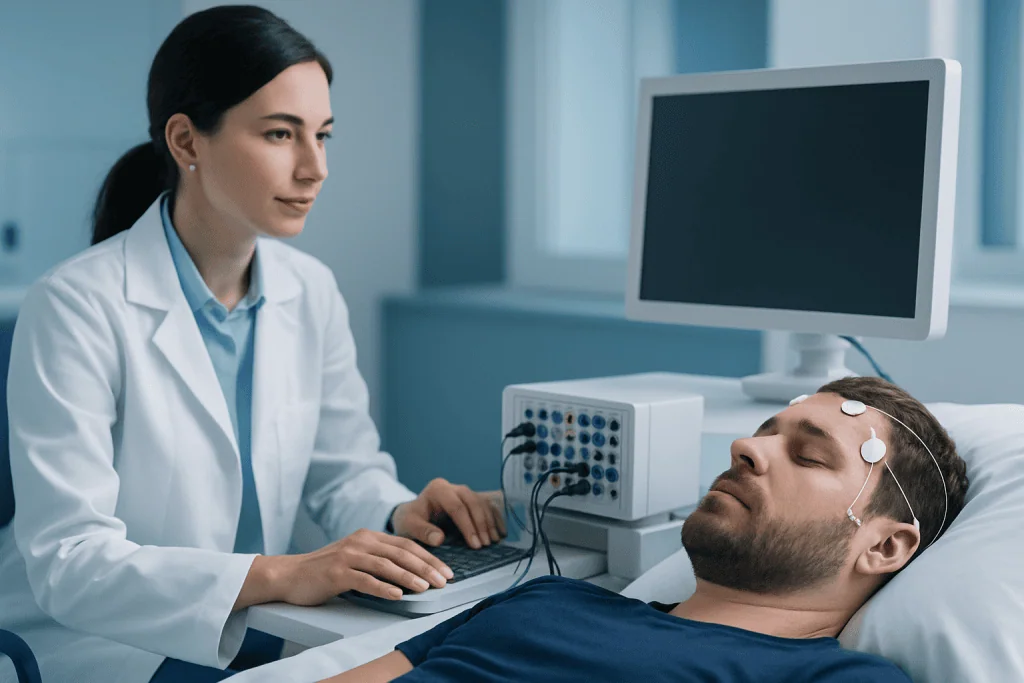
A patient may be referred for neurological sleep assessment when sleep symptoms are unusual, severe, or accompanied by neurological signs. Examples include sudden daytime sleep attacks, confusion after sleep, vivid hallucinations around sleep, paralysis on waking, violent movements during dreams, repeated jerking, unexplained nighttime events, or persistent insomnia with concerning neurological symptoms.
People with known neurological conditions may also benefit from evaluation if sleep problems are affecting quality of life or disease control. Poor sleep can worsen attention, mood, headache burden, movement symptoms, and seizure thresholds in some patients. In others, the sleep problem may be the first clue to an underlying disorder that has not yet been diagnosed.
Common reasons for referral include:
- Suspected narcolepsy or hypersomnia
- Possible REM sleep behavior disorder
- Restless legs syndrome or periodic limb movements
- Nighttime events that may be seizures or parasomnias
- Sleep-related breathing concerns with neurological features
- Sleep problems linked to Parkinsonism, dementia, neuropathy, or stroke
Some patients may already have been evaluated for related concerns such as epilepsy or Parkinson’s disease, and the sleep assessment becomes part of a broader neurological workup.
What the Evaluation Usually Includes

The first step is a careful review of symptoms, sleep schedule, and medical history. Specialists typically ask about bedtime routines, snoring, breathing pauses, leg discomfort, dream enactment, medications, alcohol or caffeine use, shift work, and daytime functioning. A family member or bed partner can be very helpful because they may have seen events the patient does not remember.
A neurological examination is often part of the visit. This may include checks of strength, sensation, reflexes, eye movements, coordination, balance, and cognition. Depending on the symptoms, the doctor may also recommend questionnaires, a sleep diary, or actigraphy, which tracks sleep-wake patterns over time.
Further testing depends on the suspected diagnosis. An overnight sleep study can assess breathing, oxygen levels, heart rhythm, brain waves, limb movements, and sleep stages. In some cases, a daytime nap test may be added to evaluate excessive sleepiness. If there is concern about seizures, specialists may consider EEG testing or combined video-EEG monitoring. If symptoms suggest a structural neurological cause, imaging such as brain MRI may be appropriate.
Blood tests may be ordered to look for contributing factors such as iron deficiency, thyroid problems, metabolic issues, or medication effects. The aim is not to perform every possible test, but to choose the right ones based on the history and examination.
How International Patients Can Prepare Before Travel
Preparation begins with collecting medical information. Patients should bring previous clinic notes, sleep study reports, brain imaging reports, laboratory results, discharge summaries, and a current medication list that includes supplements. If records are in another language, translated summaries can be especially useful. It also helps to prepare a timeline showing when symptoms started, whether they are getting worse, and what triggers or relieves them.
A sleep diary for one to two weeks before the appointment can provide valuable details. Patients can record bedtime, wake time, naps, awakenings, medications taken, caffeine use, and unusual events during the night. Videos recorded by a bed partner may help document movements or behaviors, as long as they are shared respectfully and securely with the clinical team.
Travel planning matters too. Patients should confirm whether an overnight study is likely, how many days they may need to stay, and whether they need an interpreter. They should ask about fasting rules, medication instructions, and whether to avoid caffeine, alcohol, or sedatives before testing. If daytime sleepiness is significant, it is wise to arrange assistance with transportation rather than driving alone.
For patients already using devices such as CPAP, bringing the machine, mask type, and recent usage data may be helpful. Some centers may also coordinate related tests such as polysomnography during the same visit when clinically indicated.
What to Expect During the Visit and Sleep Testing
At the first appointment, the specialist usually reviews the patient’s records and asks detailed questions. This can take longer than a standard consultation because sleep symptoms often overlap with neurological, psychiatric, respiratory, and medication-related issues. The doctor may adjust the testing plan based on new information from the interview and examination.
If an overnight sleep study is arranged, the patient generally spends the night in a sleep laboratory or designated sleep unit. Sensors are placed on the scalp, face, chest, limbs, and finger to monitor sleep stages, breathing, movements, oxygen levels, and heart activity. The setup is not usually painful, though it may feel unfamiliar at first. Patients are typically encouraged to follow as normal a sleep routine as possible.
In selected cases, the evaluation may continue the next day with a multiple sleep latency test, which measures how quickly a person falls asleep during scheduled naps. This can be helpful when narcolepsy or another hypersomnia disorder is suspected. Some patients may also need follow-up review after specialists examine the recordings in detail.
Results are often not final on the same day because sleep recordings require expert interpretation. The final report brings together the history, examination, and test findings so the team can decide whether the issue is a sleep disorder, a neurological disorder affecting sleep, or a combination of both.
Possible Diagnoses and Treatment Options
Neurological sleep evaluation may identify a wide range of conditions. These include narcolepsy, idiopathic hypersomnia, REM sleep behavior disorder, restless legs syndrome, periodic limb movement disorder, parasomnias, sleep-related epilepsy, and sleep-disordered breathing. In some patients, the main issue may be sleep disturbance caused by migraine, neurodegenerative disease, medication side effects, or mood-related conditions rather than a primary sleep disorder alone.
Treatment depends on the diagnosis and the patient’s overall health. It may involve improving sleep habits, adjusting medications, treating iron deficiency, using positive airway pressure for breathing-related sleep problems, managing seizures, or prescribing medicines that reduce sleep-related movements or improve daytime alertness when appropriate. Safety measures may also be important, especially for patients with dream enactment or nighttime confusion.
When another neurological condition is contributing, treatment may be coordinated with broader specialist care. For example, a patient with sleep-related breathing concerns, headaches, or nerve symptoms may need combined follow-up in neurology, respiratory medicine, or neurophysiology. In some cases, additional testing such as EMG or repeat imaging is recommended if symptoms point to a neuromuscular or peripheral nerve problem.
Near the end of the care journey, international patients may appreciate a written summary that explains the diagnosis, test findings, and follow-up recommendations clearly for their home doctors. Acibadem International’s multidisciplinary specialists and JCI-accredited hospitals provide diagnosis and treatment planning for international patients with neurological sleep concerns.
After the Evaluation: Follow-up, Self-care, and When to Seek Help
After testing, follow-up is an important part of care. Some patients will need medication review, device fitting, behavioral strategies, or repeat consultation once all test results are available. Because sleep disorders can affect concentration, mood, and safety, patients should ask for guidance about driving, work schedules, and travel if daytime sleepiness or nighttime events remain uncontrolled.
Helpful self-care steps often include keeping a regular sleep schedule, limiting alcohol close to bedtime, reducing excess caffeine, avoiding sleep deprivation, and taking medications exactly as prescribed. A safe bedroom environment may be advised if there are nighttime movements, falls, or dream-enactment behaviors. Bed partners should also know what signs to observe and report.
Patients should seek prompt medical attention if they develop sudden neurological symptoms such as new weakness, severe confusion, a first seizure, chest pain, breathing difficulty during sleep or waking, repeated injuries during nighttime episodes, or extreme daytime sleepiness that creates a risk while driving or working. Ongoing or worsening symptoms deserve review by a qualified doctor, even if an earlier sleep test appeared normal.
For international patients, it is helpful to confirm how results will be shared after returning home and whether telemedicine follow-up is available. Clear communication between the evaluating team and the patient’s local physicians can support continuity of care and reduce delays in treatment.
Frequently asked questions
What is a neurological sleep evaluation?
It is a specialist assessment for sleep symptoms that may be related to the brain, nerves, or other neurological functions. It usually combines a detailed medical history, sleep history, examination, and selected tests such as an overnight sleep study or EEG.
How is this different from a regular sleep study?
A regular sleep study is one test, while a neurological sleep evaluation is a broader clinical process. The evaluation looks at symptoms, neurological findings, medications, and related conditions to decide which tests are needed and how to interpret them.
What should international patients bring to the appointment?
They should bring prior test results, imaging reports, clinic notes, a medication list, and a summary of symptoms over time. A sleep diary and any bed partner observations can also be very helpful, especially for nighttime behaviors or unusual movements.
Will the patient always need to stay overnight?
Not always. Some patients can be assessed mainly through consultation and focused testing, while others may need overnight monitoring to clarify the diagnosis. The need for a sleep laboratory stay depends on the symptoms and the doctor’s clinical judgment.
Can medications affect the test results?
Yes, some medicines can change sleep structure, alertness, movements, or breathing during sleep. Patients should never stop prescription drugs on their own, but they should tell the doctor about every medication and follow the center’s instructions before testing.
How long does it take to get results?
Basic impressions may be discussed early, but final interpretation often takes more time because recordings need expert review. The full diagnosis is usually based on the combined findings from the interview, examination, and test reports.
What conditions can be diagnosed through neurological sleep evaluation?
It can help diagnose conditions such as narcolepsy, REM sleep behavior disorder, restless legs syndrome, parasomnias, sleep-related epilepsy, and some breathing-related sleep disorders. It may also reveal sleep problems linked to neurological diseases, medications, or other medical conditions.
References
- American Academy of Sleep Medicine
- National Institute of Neurological Disorders and Stroke
- National Heart, Lung, and Blood Institute
- American Academy of Neurology
- Mayo Clinic
This article is for general information only and is not a substitute for professional medical advice. Please consult a qualified doctor about your individual situation.
Joint and spine care in Turkey — expert assessment & treatment
JCI-accredited · board-certified surgeons · reply within 24h
Add us as a Preferred Source to see more of our trusted health content across Google Search, AI Overviews and Discover.






