Neurological Sleep Problems: Treatment Options and Self-Care That May Help

Neurological sleep problems can affect falling asleep, staying asleep, breathing, movement, behavior, or alertness during the day. Common examples include insomnia related to neurological disease, restless legs syndrome, REM sleep behavior disorder, narcolepsy, and sleep apnea with neurological features.
Key Takeaways
- Neurological sleep problems can affect falling asleep, staying asleep, breathing, movement, behavior, or alertness during the day.
- Common examples include insomnia related to neurological disease, restless legs syndrome, REM sleep behavior disorder, narcolepsy, and sleep apnea with neurological features.
- Diagnosis may involve a detailed medical history, sleep diary, neurological examination, and sleep testing such as polysomnography.
- Treatment depends on the cause and may include lifestyle measures, medicines, devices, behavioral therapy, or treatment of an underlying neurological condition.
- Persistent sleep symptoms, daytime sleepiness, unusual movements, or unsafe nighttime behaviors should be discussed with a qualified doctor.
Neurological sleep problems are sleep disturbances linked to the brain, nerves, or the body systems that regulate sleep and wakefulness. Many can be managed effectively with the right evaluation, targeted treatment, and supportive daily habits.
Overview
Neurological sleep problems are disorders in which the brain, nerves, or related body systems interfere with normal sleep. Sleep is controlled by complex networks that regulate alertness, body movement, breathing, dreaming, and the daily sleep-wake rhythm. When these systems are affected, sleep may become fragmented, unrefreshing, or unsafe.
This term does not describe a single disease. Instead, it includes a range of conditions such as narcolepsy, restless legs syndrome, REM sleep behavior disorder, circadian rhythm disorders, sleep-related movement disorders, and some forms of sleep-disordered breathing. Sleep difficulties are also common in people living with neurological conditions such as Parkinson’s disease, epilepsy, stroke, dementia, multiple sclerosis, or neuropathy.
Symptoms can vary widely. Some people struggle to fall asleep, while others feel excessively sleepy during the day despite spending enough time in bed. Others may have vivid dream enactment, leg discomfort at night, repeated awakenings, snoring, pauses in breathing, or involuntary movements during sleep.
Although these symptoms can be frustrating, many neurological sleep problems can be improved. A careful diagnosis is important because treatment should be tailored to the specific cause, the person’s general health, and any underlying neurological disorder.
Symptoms and How They May Feel
Neurological sleep problems can appear in different ways. One person may mainly notice insomnia, while another may experience overwhelming daytime sleepiness or unusual nighttime behaviors. Symptoms may come on gradually or become noticeable after an illness, medication change, or new neurological diagnosis.
Common symptoms include difficulty falling asleep, frequent awakenings, waking too early, poor sleep quality, excessive daytime sleepiness, sudden sleep attacks, morning headaches, snoring, or waking up gasping. Some people have sensations in the legs that improve with movement, repeated jerking of the limbs, or episodes of acting out dreams.
Changes in attention, mood, and memory are also common. Poor sleep can lead to irritability, reduced concentration, low energy, slower thinking, and decreased performance at work or school. In older adults, disturbed sleep may also worsen confusion or increase the risk of falls.
- Nighttime movements or unusual behaviors during sleep
- Difficulty staying awake during quiet activities
- Pins-and-needles, crawling, or uncomfortable leg sensations in the evening
- Loud snoring or witnessed pauses in breathing
- Sleep paralysis, vivid dreams, or hallucinations around sleep onset or waking
Causes and Risk Factors

Neurological sleep problems may develop when the brain circuits that regulate sleep and wakefulness are disrupted. This can happen because of neurochemical imbalance, nerve dysfunction, changes in movement control, breathing control abnormalities, or degeneration in specific brain regions. In some cases, the sleep problem is the main diagnosis. In others, it is a symptom of another neurological or medical condition.
Examples include narcolepsy, in which sleep-wake regulation is impaired; restless legs syndrome and periodic limb movement disorder, which can disturb sleep through uncomfortable sensations or repeated movements; and REM sleep behavior disorder, in which the usual muscle paralysis of dreaming sleep is reduced or absent. Sleep problems may also occur in association with Parkinson’s disease, epilepsy, headache disorders, neuropathy, brain injury, or neurodegenerative disease.
Risk factors depend on the specific disorder but often include increasing age, family history, iron deficiency, chronic stress, irregular sleep schedules, alcohol use, certain medications, obesity, and chronic medical illnesses. Some medicines used for mood, pain, allergies, or neurological symptoms may worsen sleepiness, insomnia, or abnormal nighttime behaviors.
Because sleep and neurological health affect each other in both directions, poor sleep can also worsen existing neurological symptoms. For example, untreated sleep apnea may increase daytime fatigue and concentration problems, while chronic insomnia may intensify pain, anxiety, and headache burden. This is one reason why a broad evaluation is useful.
How Doctors Diagnose Neurological Sleep Problems
Diagnosis usually begins with a detailed conversation about symptoms, sleep schedule, medications, and overall health. The doctor may ask about snoring, dream enactment, leg discomfort, sudden muscle weakness, daytime sleepiness, or events noticed by a bed partner. A neurological examination may be helpful when there are concerns about movement, memory, seizures, nerve problems, or other nervous system symptoms.
Keeping a sleep diary for one to two weeks can help reveal patterns. Some people may also complete questionnaires about sleepiness, insomnia severity, or sleep behaviors. In selected cases, blood tests may be used to look for contributing problems such as iron deficiency, thyroid disorders, or metabolic conditions.
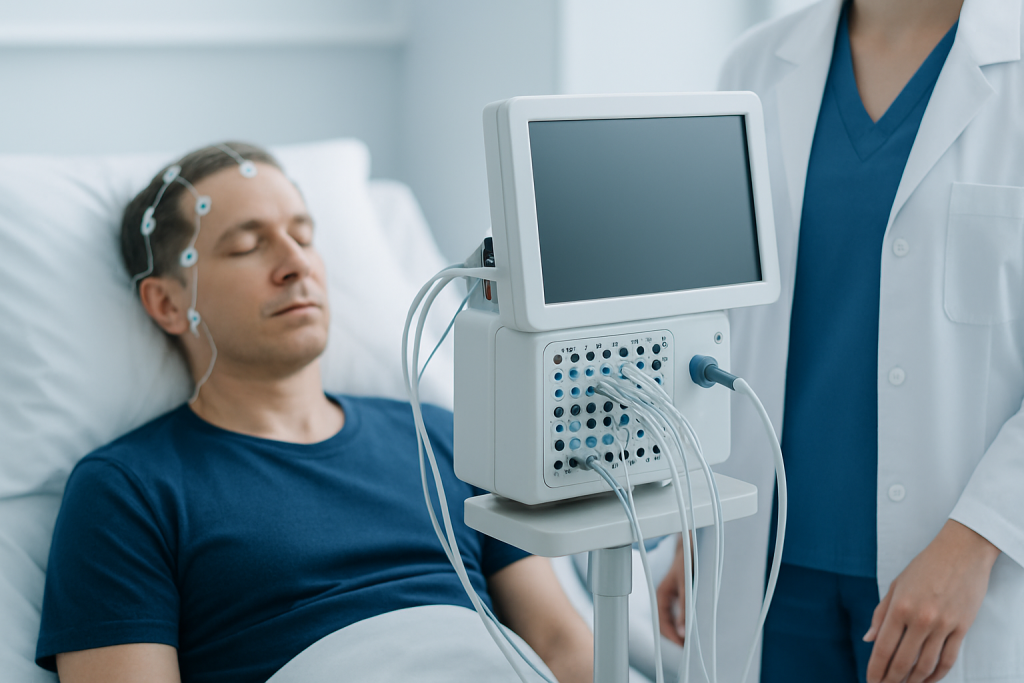
Sleep testing is often central to diagnosis. Overnight polysomnography records breathing, oxygen levels, heart rhythm, brain waves, muscle activity, and limb movements while the person sleeps. This can help detect sleep apnea, REM sleep behavior disorder, periodic limb movements, and other abnormalities. Depending on the symptoms, doctors may also recommend actigraphy, a multiple sleep latency test, EEG testing, or imaging studies.
Because diagnosis can be complex, a multidisciplinary approach may be useful. Sleep medicine, neurology, pulmonology, psychiatry, and rehabilitation specialists may work together to identify the cause and build an effective treatment plan.
Treatment Options
Treatment depends on the exact disorder and whether an underlying neurological condition is contributing. The main goals are to improve sleep quality, reduce daytime symptoms, protect safety, and address any root cause. Some people improve mainly with changes in routine and sleep habits, while others need medication, medical devices, or specialist care.
For insomnia-related symptoms, doctors may recommend structured behavioral approaches such as cognitive behavioral therapy for insomnia, along with regular sleep-wake timing and careful review of stimulants, alcohol, and medications. Restless legs syndrome may improve when triggers are reduced and iron deficiency is corrected when present. Narcolepsy and other hypersomnia disorders may require medicines aimed at wakefulness and symptom control. Sleep apnea may be treated with weight management, positional strategies, oral devices, or sleep apnea treatment such as positive airway pressure therapy.
Some conditions need more specialized neurological treatment. For example, dream enactment behaviors may require bedroom safety measures and targeted medication after medical evaluation. Sleep symptoms linked to seizures may improve when the underlying epilepsy is treated. People with movement-related sleep symptoms may benefit from evaluation in a movement disorders treatment program, especially if tremor, stiffness, or gait changes are also present.
If a sleep problem is connected to a broader neurological disease, treatment of that condition is important as well. In selected patients, care may involve neurology treatment and follow-up for associated disorders such as epilepsy or other sleep-related neurological conditions. Near the end of the care pathway, some international patients may choose centers such as Acibadem International, where multidisciplinary specialists in JCI-accredited hospitals evaluate and treat neurological sleep disorders.
Self-Care and Daily Habits That May Help
Self-care does not replace medical diagnosis, but it can make a meaningful difference. A steady routine helps support the brain’s internal clock. Going to bed and waking up at consistent times, including weekends, can improve sleep quality and reduce daytime fatigue in many people.
It often helps to create a sleep-friendly environment: a dark, quiet, cool bedroom; limited screen use before bed; and a wind-down routine that signals the body to rest. Caffeine, nicotine, and alcohol can interfere with sleep or make certain disorders worse, especially when used later in the day. Heavy meals close to bedtime may also disrupt sleep.
Physical activity during the day supports better sleep, although intense exercise too close to bedtime may not suit everyone. For people with restless legs symptoms, gentle stretching, leg massage, and reviewing medicines with a doctor may help. Those with dream enactment or nighttime confusion should focus on safety, such as removing sharp objects, padding nearby furniture, and considering separate sleeping arrangements if injury is a concern.
- Keep the same sleep and wake times most days
- Limit caffeine late in the day
- Use the bed mainly for sleep and intimacy rather than work or screen time
- Seek medical advice before using over-the-counter sleep aids regularly
- Ask a doctor whether current medicines may be affecting sleep
When to See a Doctor
A medical review is important when sleep symptoms are persistent, worsening, or affecting daily life. This includes difficulty staying awake during the day, repeated unsafe nighttime behaviors, loud snoring with pauses in breathing, sudden sleep episodes, or sleep problems linked to falls, memory changes, or reduced work performance.
People should also seek medical advice if they suspect restless legs syndrome, frequent limb movements, dream enactment, or unusual events during sleep that could represent seizures or another neurological problem. A bed partner’s observations can be very helpful, especially if the person is unaware of what happens overnight.
Urgent assessment is needed if there is severe daytime sleepiness while driving, injuries during sleep, new confusion, sudden neurological symptoms, or breathing difficulties at night. In children, pregnant individuals, and older adults, sleep symptoms may need especially careful evaluation because the causes and treatment considerations can differ.
Early diagnosis can improve quality of life and sometimes reveal an underlying condition that deserves attention. A qualified doctor can help determine whether symptoms are due to a sleep disorder, a neurological illness, medication effects, or another medical issue.
Frequently asked questions
What are neurological sleep problems?
Neurological sleep problems are sleep disorders related to the brain, nerves, or the systems that control sleep and wakefulness. They can affect sleep quality, breathing, movement, behavior during sleep, or daytime alertness.
Can a neurological condition cause insomnia?
Yes. Neurological conditions such as Parkinson’s disease, stroke, chronic pain syndromes, neuropathy, and some seizure disorders can contribute to insomnia or fragmented sleep. Treatment usually works best when both the sleep symptoms and the underlying condition are addressed.
Are neurological sleep problems treatable?
Many are treatable or manageable. Treatment may include behavioral strategies, sleep hygiene changes, medicines, devices such as positive airway pressure, and care for an underlying neurological or medical disorder.
How is a neurological sleep disorder diagnosed?
Doctors usually start with a detailed history, medication review, and sleep pattern assessment. Depending on the symptoms, they may recommend a sleep study, neurological examination, blood tests, or other targeted investigations.
When should daytime sleepiness be taken seriously?
Daytime sleepiness should be evaluated if it happens often, affects work or driving, or comes with sudden sleep episodes, snoring, or unusual nighttime behavior. Significant sleepiness can increase accident risk and may signal a treatable sleep or neurological disorder.
Can self-care alone solve neurological sleep problems?
Self-care can help support better sleep, but it may not be enough when symptoms are caused by a medical or neurological condition. Persistent symptoms, unsafe nighttime behaviors, or breathing-related concerns should always be assessed by a doctor.
References
- American Academy of Sleep Medicine
- National Institute of Neurological Disorders and Stroke
- National Heart, Lung, and Blood Institute
- National Institute on Aging
- Mayo Clinic
This article is for general information only and is not a substitute for professional medical advice. Please consult a qualified doctor about your individual situation.
Explore treatments in Turkey — costs, top hospitals & a free quote
JCI-accredited · board-certified surgeons · reply within 24h
Add us as a Preferred Source to see more of our trusted health content across Google Search, AI Overviews and Discover.