Neurophysiology Testing: When Doctors Order EEG, EMG, or Nerve Studies
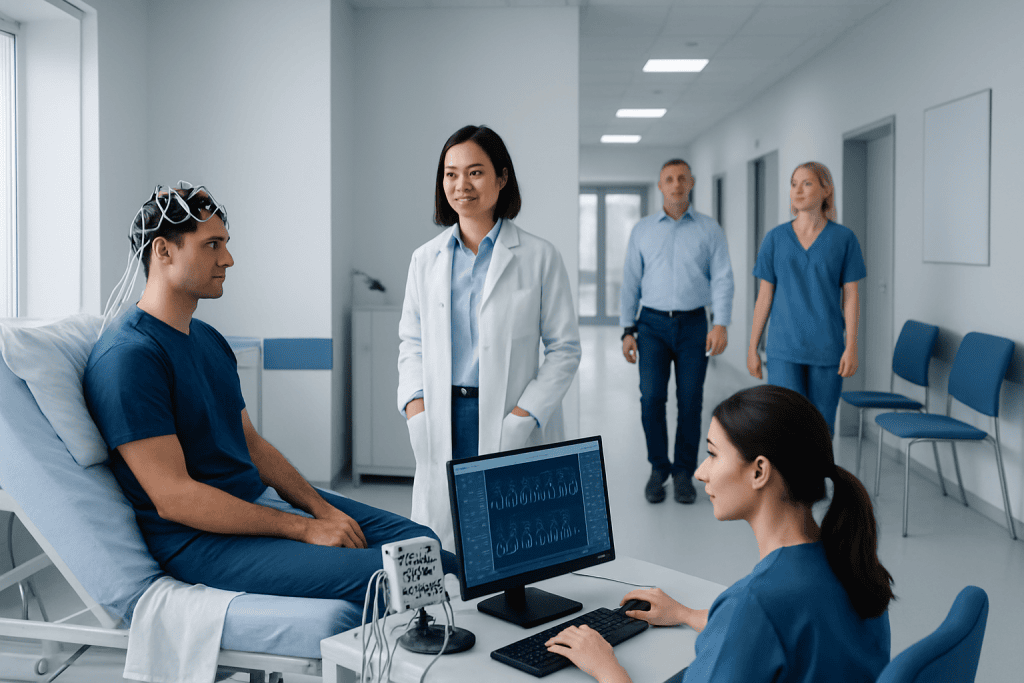
Neurophysiology testing helps evaluate how the brain, nerves, and muscles are working. EEG is mainly used to assess brain electrical activity, including seizure-related concerns.
Key Takeaways
- Neurophysiology testing helps evaluate how the brain, nerves, and muscles are working.
- EEG is mainly used to assess brain electrical activity, including seizure-related concerns.
- EMG and nerve conduction studies help investigate nerve injury, neuropathy, muscle disease, and nerve compression.
- These tests are usually outpatient procedures and are generally safe and well tolerated.
- Preparation is often simple, but instructions vary depending on the test and the reason it is being done.
Neurophysiology testing includes EEG, EMG, and nerve conduction studies that measure electrical activity in the brain, nerves, and muscles. Doctors order these tests to help explain symptoms such as seizures, numbness, weakness, tingling, tremor, or unexplained muscle problems.
Overview of neurophysiology testing
Neurophysiology testing is a group of diagnostic tests that measure electrical signals in the nervous system. These tests can show how the brain, spinal pathways, peripheral nerves, and muscles are functioning. Rather than looking mainly at anatomy, as scans do, neurophysiology focuses on function. This makes it especially useful when symptoms suggest a problem with signaling between the brain, nerves, and muscles.
The most commonly ordered tests are electroencephalography, or EEG, electromyography, or EMG, and nerve conduction studies. An EEG records brain wave activity through small sensors placed on the scalp. EMG measures electrical activity in muscles, and nerve conduction studies assess how quickly and strongly nerves carry signals. Depending on the symptoms, doctors may order one test alone or combine them.
These tests can help evaluate a wide range of concerns, including seizures, episodes of altered awareness, numbness, tingling, burning pain, weakness, muscle twitching, balance problems, or suspected nerve compression. They are often part of a broader assessment that may also include a neurologic examination, blood tests, and imaging such as MRI or CT.
In many cases, neurophysiology testing helps clarify whether symptoms are more likely to come from the brain, a peripheral nerve, the nerve root, the neuromuscular junction, or the muscle itself. This information can guide diagnosis, treatment planning, and follow-up care.
When doctors may order EEG, EMG, or nerve studies
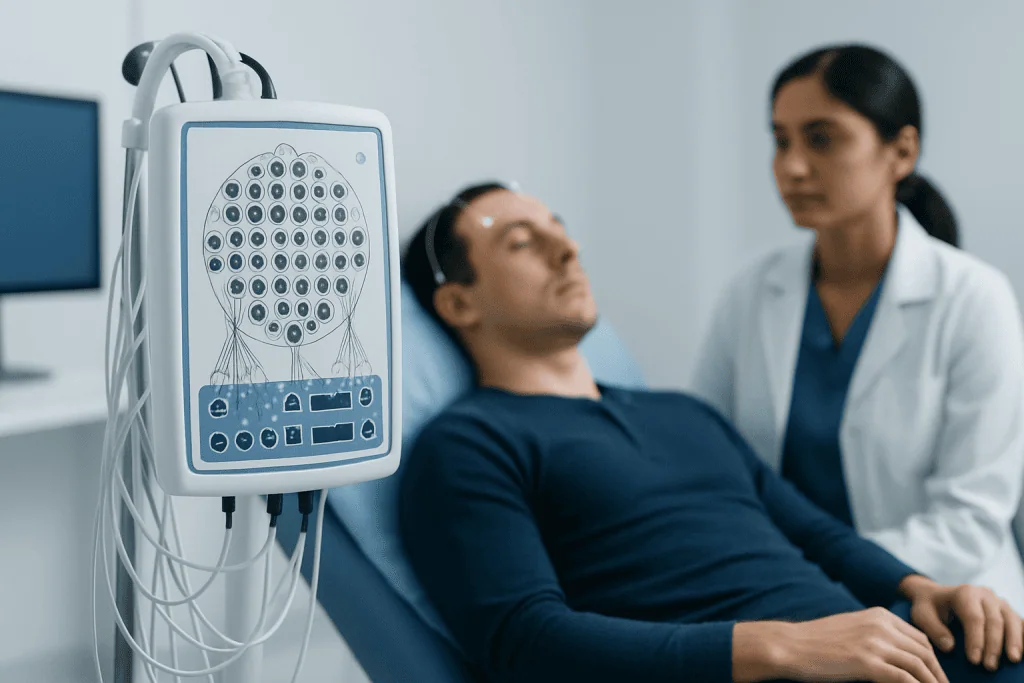
Doctors usually recommend neurophysiology testing when symptoms suggest a disturbance in brain, nerve, or muscle function but the cause is not yet clear. The choice of test depends on the symptom pattern. For example, episodes involving staring, shaking, or loss of awareness may lead to an EEG, while numbness in the hands or weakness in the legs may lead to EMG and nerve conduction studies.
An EEG is commonly ordered when there is concern about seizures, fainting-like episodes, unusual spells, sleep-related events, or unexplained confusion. It may also be used in the assessment of some types of encephalopathy or to help characterize known seizure disorders. In certain situations, longer recordings, sleep-deprived EEGs, or video EEG monitoring may be recommended for more detailed evaluation.
EMG and nerve conduction studies are often used for symptoms such as tingling, electric-shock sensations, burning discomfort, limb weakness, muscle cramps, or visible muscle wasting. They can help assess conditions such as carpal tunnel syndrome, pinched nerves in the neck or lower back, generalized peripheral neuropathy, and some muscle disorders. They may also be considered when there is concern about disorders that affect the communication between nerve and muscle.
These tests do not replace a doctor’s clinical judgment. Instead, they add objective information that can support or narrow down a diagnosis. In some cases, results are normal, which can still be helpful because it may steer the evaluation toward other explanations for symptoms.
What each test involves
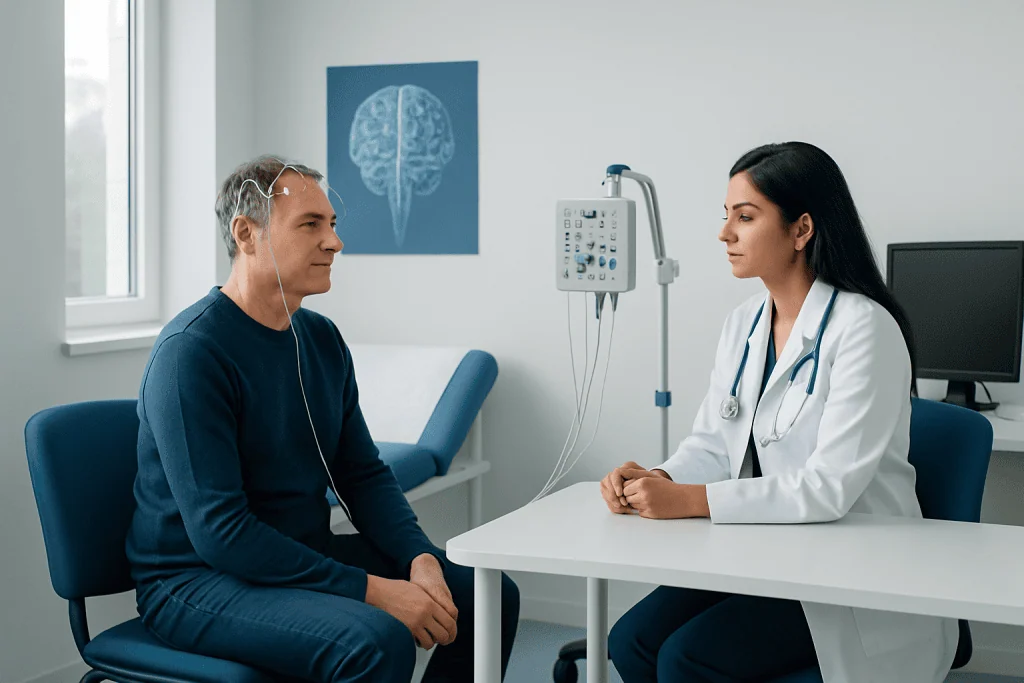
During an EEG, a technologist places small electrodes on the scalp using a conductive paste or adhesive. The test records the brain’s natural electrical activity while the person rests quietly. Depending on the reason for testing, the technologist may ask the person to breathe deeply for a few minutes, look at flashing lights, or try to fall asleep. A routine EEG is painless and usually takes less than an hour, though setup time is included.
Nerve conduction studies are usually performed by placing recording electrodes on the skin and then delivering brief, small electrical impulses to a nerve. This allows the clinician to measure how fast the signal travels and how strong the response is. The sensation can feel like a quick tapping or shock. It can be uncomfortable for some people, but it is generally brief and safe.
EMG is often done during the same visit as nerve conduction studies. In EMG, a very fine needle electrode is inserted into selected muscles to record their electrical activity at rest and during gentle contraction. This part can cause temporary discomfort, similar to a small injection or muscle ache, but it provides important information about whether weakness or abnormal symptoms are coming from the nerve supply, the muscle, or both.
Other neurophysiology tests may be recommended in specific situations, such as evoked potentials, repetitive nerve stimulation, or autonomic testing. These are used when doctors need more targeted information about visual, sensory, motor, or autonomic nerve pathways.
What the results can show
An EEG may reveal abnormal electrical patterns that support a diagnosis of epilepsy or help classify seizure type. It can also show slowing or other changes that suggest diffuse brain dysfunction. However, a normal EEG does not completely rule out seizures. Brain electrical activity can be normal between events, which is why doctors interpret the result together with the person’s symptoms and medical history.
Nerve conduction studies can show whether a nerve is conducting signals too slowly, too weakly, or not at all. This may suggest nerve compression, nerve injury, demyelination, or loss of nerve fibers. EMG can detect signs of muscle disease, nerve root irritation, ongoing nerve damage, or chronic reinnervation after an older nerve injury. Together, these tests can often identify the pattern and location of the problem.
For example, testing may help distinguish a local entrapment neuropathy from a more generalized peripheral neuropathy. It may also help separate muscle disease from a disorder affecting motor nerves or the spinal nerve roots. This distinction matters because treatment and prognosis can differ significantly.
Test results are not interpreted in isolation. A specialist reviews the findings along with the physical examination, symptom timeline, medicines, blood test results, and any imaging studies. When needed, further evaluation may include MRI imaging or a tailored neurologic workup.
How to prepare and what to expect afterward
Preparation depends on the type of neurophysiology test. Before an EEG, patients are often advised to wash their hair and avoid hair sprays, oils, or styling products so the electrodes can stick well. In some cases, the doctor may ask the person to sleep less than usual before the test if sleep-deprived EEG is needed. They should also ask whether they should take their usual medicines, since instructions can vary.
Before EMG or nerve conduction studies, it is usually best to avoid lotions or creams on the skin on the day of testing. Patients should tell the care team about blood thinners, implanted cardiac devices, bleeding disorders, pacemakers, or skin infections near the test area. These details help the team plan the safest and most useful examination.
After an EEG, most people can return to normal activities right away unless they were specifically told otherwise. After EMG, there may be mild temporary soreness or bruising in the muscles that were tested. This usually settles within a short time. Significant pain or ongoing symptoms after the test are uncommon and should be discussed with a doctor.
Results may be available the same day or after specialist review, depending on the center and the complexity of the test. It is helpful for patients to ask when they can expect results and whether a follow-up appointment is needed to discuss what the findings mean for diagnosis and next steps.
Benefits, limitations, and safety
One of the main benefits of neurophysiology testing is that it can detect functional problems that may not appear clearly on structural imaging. This is particularly important when symptoms are intermittent or when there is uncertainty about whether the source is the brain, nerve, or muscle. The information can help reduce guesswork and support more precise treatment decisions.
These tests are generally very safe. EEG uses scalp electrodes to record activity and does not send electricity into the brain. Nerve conduction studies use low-level electrical stimulation on the skin, and EMG uses sterile fine needles in selected muscles. Side effects are usually limited to temporary discomfort, skin irritation, or mild muscle soreness.
At the same time, there are limitations. Results can be normal even when symptoms are real, particularly if the problem is intermittent, very early, or outside the pathways being tested. The tests also require expert interpretation, and findings must be matched carefully to the clinical picture. For this reason, neurophysiology is one part of diagnosis rather than a stand-alone answer.
When symptoms involve the brain or nerves, doctors may combine testing with other evaluations such as EEG testing review, imaging, or specialist consultation. In suitable cases, additional assessments such as EMG can provide a fuller picture of nerve and muscle function.
When to seek medical advice
People should speak with a doctor if they have repeated fainting-like episodes, unexplained shaking, blackouts, sudden confusion, persistent numbness, burning pain, muscle weakness, muscle wasting, or ongoing tingling in the hands or feet. These symptoms can have many causes, and timely assessment helps identify whether neurophysiology testing is appropriate.
Urgent medical attention is especially important for sudden weakness on one side, trouble speaking, a first seizure, severe new confusion, or rapidly worsening symptoms. These may signal conditions that need immediate evaluation rather than routine outpatient testing. Emergency care is also important after head injury, prolonged loss of consciousness, or breathing difficulty.
Patients often feel anxious about what these tests may find, but neurophysiology studies are designed to provide useful information and guide next steps. Asking questions beforehand can help people feel more prepared and comfortable during the process.
At centers with multidisciplinary neurology services, testing can be coordinated with imaging, rehabilitation, and specialist care when needed. Acibadem International’s multidisciplinary specialists and JCI-accredited hospitals diagnose and treat neurologic conditions for international patients, with testing tailored to each person’s symptoms and medical history.
Frequently asked questions
What is neurophysiology testing used for?
Neurophysiology testing is used to assess how well the brain, nerves, and muscles are working. It helps doctors investigate symptoms such as seizures, numbness, tingling, weakness, muscle twitching, and unexplained episodes of altered awareness.
Is an EEG the same as an EMG?
No. An EEG records electrical activity from the brain using electrodes placed on the scalp, while an EMG records electrical activity in muscles using a fine needle electrode. They answer different clinical questions and may be ordered for different symptoms.
Are nerve conduction studies painful?
Nerve conduction studies can be uncomfortable because they involve brief electrical impulses delivered to the skin over a nerve. Most people tolerate them well, and the sensation lasts only a short time. If EMG is done too, there may be mild temporary soreness afterward.
Can neurophysiology tests diagnose all nerve problems?
Not always. These tests are very helpful, but they do not detect every possible disorder and may be normal if a problem is early, intermittent, or outside the pathways being tested. Doctors interpret the results together with symptoms, examination findings, and other investigations.
How should someone prepare for EEG or EMG testing?
For an EEG, patients are often asked to arrive with clean hair and no styling products. For EMG or nerve studies, it is usually best to avoid lotions on the skin and to tell the doctor about medicines, pacemakers, bleeding problems, or implanted devices. The testing center will give specific instructions.
How long does it take to get results?
This depends on the type of test and the facility. Some preliminary information may be available quickly, but the final report often requires review by a specialist. Patients should ask when to expect the full interpretation and whether a follow-up visit is needed.
This article is for general information only and is not a substitute for professional medical advice. Please consult a qualified doctor about your individual situation.
Neurophysiology in Turkey — costs, top hospitals & a free quote
JCI-accredited · board-certified surgeons · reply within 24h
Add us as a Preferred Source to see more of our trusted health content across Google Search, AI Overviews and Discover.

More from the Health Library

Ultrasound Imaging: Abdomen, Pelvis, Thyroid, and Pregnancy Uses

Biopsy vs Imaging: When a Scan Is Enough and When Tissue Testing Is Needed
How to Prepare for a Diagnostic Mammogram: Clothing, Timing, and Questions to Ask

Neuropsychological Testing: Memory, Attention, and Brain Function Assessment
MRI Scan: How It Works, Safety, and What Results Can Show