

Neuropsychological Disorders and Neuropsychiatric Disorders: What Is the Difference?

Neuropsychological disorders mainly affect cognition, memory, attention, language, and executive function. Neuropsychiatric disorders involve both brain-based and psychiatric symptoms, such as depression, anxiety, psychosis, agitation, or personality change.
Key Takeaways
- Neuropsychological disorders mainly affect cognition, memory, attention, language, and executive function.
- Neuropsychiatric disorders involve both brain-based and psychiatric symptoms, such as depression, anxiety, psychosis, agitation, or personality change.
- The two categories often overlap, especially after stroke, traumatic brain injury, dementia, epilepsy, or Parkinson’s disease.
- Diagnosis usually combines medical history, neurological exam, mental health assessment, and cognitive testing.
- Treatment often requires a multidisciplinary team, including neurology, psychiatry, neuropsychology, and rehabilitation specialists.
Neuropsychological disorders and neuropsychiatric disorders both involve the brain, behavior, and daily functioning, but they are not the same. In general, neuropsychological disorders are understood through changes in thinking and cognition linked to brain function, while neuropsychiatric disorders involve a closer overlap between neurological disease and psychiatric symptoms such as mood, perception, or behavior changes.
Overview
The terms neuropsychological disorders and neuropsychiatric disorders are sometimes used interchangeably in everyday conversation, but they describe different clinical perspectives. Both involve the relationship between the brain and behavior. The difference is mainly in which symptoms are most prominent and which specialists are most involved in assessment and care.
Neuropsychological disorders usually refer to conditions in which brain dysfunction affects cognitive abilities. These may include memory, attention, planning, language, problem-solving, processing speed, or visual-spatial skills. A person may struggle to organize tasks, remember appointments, learn new information, or control impulses, even if they do not have a primary psychiatric illness.
Neuropsychiatric disorders, by contrast, emphasize psychiatric or behavioral symptoms that occur in the context of brain disease or brain dysfunction. These symptoms can include depression, anxiety, apathy, irritability, hallucinations, delusions, agitation, sleep disruption, or marked personality change. Neuropsychiatry often sits at the intersection of neurology and psychiatry.
In practice, there is often overlap. For example, a person with dementia may have memory loss and impaired judgment, which are neuropsychological features, as well as depression, agitation, or psychosis, which are neuropsychiatric features. This is why careful evaluation is important: the same underlying condition can affect thinking, emotions, and behavior at the same time.
What Is the Main Difference?
The simplest way to understand the difference is this: neuropsychological disorders are often defined by problems in cognitive function, while neuropsychiatric disorders are often defined by psychiatric and behavioral symptoms related to brain dysfunction. The distinction is useful, but it is not always strict or absolute.
Neuropsychology focuses on how the brain supports thinking and everyday mental skills. When these skills are affected by injury, disease, or abnormal brain development, the person may show measurable changes on cognitive testing. Examples can include difficulty concentrating after a concussion, memory decline in Alzheimer’s disease, or executive dysfunction after a stroke.
Neuropsychiatry focuses on emotional, behavioral, and psychiatric symptoms that are linked to neurological conditions. For example, a person with epilepsy may develop anxiety or mood symptoms, a person with Parkinson’s disease may experience depression or hallucinations, and someone with a brain tumor may have personality or behavior changes.
Another way to think about it is through the questions each field asks. Neuropsychology often asks, “How is the person thinking, learning, remembering, and solving problems?” Neuropsychiatry often asks, “How is the person feeling, behaving, perceiving, and functioning emotionally?” Because these questions are closely connected, many patients benefit from evaluation in both areas.
Symptoms and How They May Present
Symptoms of neuropsychological disorders usually involve cognitive performance. Common signs include forgetfulness, poor concentration, slowed thinking, language problems, trouble planning or multitasking, reduced problem-solving ability, and difficulty understanding spatial relationships. These changes may be subtle at first and may become more noticeable at work, at school, or during daily routines.
Neuropsychiatric symptoms can be emotional, behavioral, or perceptual. A person may experience persistent sadness, anxiety, panic, irritability, emotional instability, apathy, sleep problems, suspiciousness, hallucinations, or disinhibited behavior. Family members are often the first to notice changes in personality or social behavior.
Some people have symptoms from both groups. For example, after a traumatic brain injury, a person might have poor attention and memory along with mood swings, impulsivity, or depression. Likewise, in Parkinson’s disease, movement symptoms may exist alongside slower thinking, anxiety, hallucinations, or apathy.
Because symptoms can overlap with primary psychiatric conditions, stress, medication side effects, or normal aging, it is important not to self-diagnose. A structured assessment helps clarify whether symptoms are due to a neurological condition, a psychiatric condition, or a combination of both.
Causes and Risk Factors
Many different medical conditions can lead to neuropsychological or neuropsychiatric symptoms. These include dementia, stroke, traumatic brain injury, epilepsy, brain tumors, multiple sclerosis, Parkinson’s disease, infections affecting the brain, autoimmune disorders, and some developmental or genetic conditions. In older adults, neurodegenerative disease is a common cause, while in younger adults, injury or epilepsy may play a larger role.
Symptoms may also appear because of metabolic problems, hormonal disorders, substance use, sleep disorders, severe nutritional deficiency, or medication effects. For this reason, evaluation often looks beyond the brain itself. A reversible medical issue may sometimes mimic or worsen a neurocognitive or psychiatric presentation.
Risk factors depend on the underlying condition but may include advanced age, vascular risk factors such as high blood pressure or diabetes, family history of neurological or psychiatric illness, prior head injury, chronic alcohol or drug misuse, and untreated sleep apnea. Social isolation, chronic stress, and poor overall health can also worsen symptoms and reduce resilience.
Importantly, having a neurological disorder does not mean a person will definitely develop neuropsychiatric symptoms, and having psychiatric symptoms does not automatically mean there is a serious brain disease. The goal of assessment is to understand the full clinical picture and identify the most likely cause.
How Diagnosis Is Made
Diagnosis begins with a detailed clinical history. The doctor will ask when symptoms started, whether they appeared suddenly or gradually, how they affect daily life, and whether there have been changes in mood, sleep, memory, personality, movement, or language. Information from a family member or caregiver can be especially helpful, because the affected person may not notice all changes clearly.
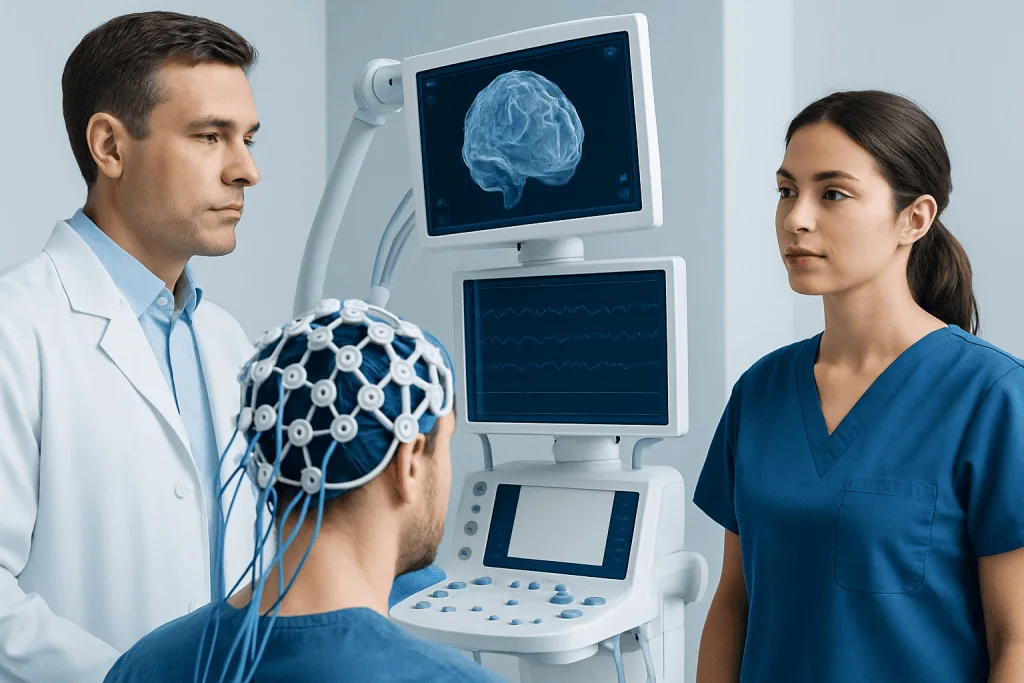
A neurological examination and mental status assessment are usually part of the evaluation. Depending on symptoms, the doctor may recommend blood tests, brain imaging such as MRI or CT, or other investigations to look for structural, metabolic, infectious, or inflammatory causes. In some cases, an EEG may be used if seizures are suspected.
Neuropsychological testing is often one of the most useful tools when cognitive symptoms are prominent. These structured tests assess memory, attention, language, executive function, processing speed, and other mental abilities in detail. They can help distinguish patterns seen in conditions such as dementia, traumatic brain injury, ADHD, or depression-related cognitive difficulties.
Psychiatric assessment is equally important when emotional or behavioral changes are significant. A clinician may evaluate depression, anxiety, psychosis, substance use, trauma-related symptoms, and safety concerns. When needed, advanced assessment can be coordinated through neurological examination, brain MRI, or EEG testing as part of a broader diagnostic plan.
Treatment Options
Treatment depends on the underlying cause, the symptom pattern, and the person’s overall health. There is rarely a one-size-fits-all approach. Care often combines medical treatment for the neurological condition with psychiatric care, cognitive rehabilitation, psychotherapy, social support, and practical strategies for daily functioning.
For neuropsychological symptoms, treatment may include cognitive rehabilitation, occupational therapy, speech and language therapy, memory strategies, and structured routines. If symptoms are related to a condition such as stroke or traumatic brain injury, rehabilitation can help improve function and independence over time. For neuropsychiatric symptoms, treatment may involve psychotherapy, behavioral interventions, sleep management, and carefully chosen medications when appropriate.
Addressing the underlying disorder is essential. For example, controlling seizures, treating inflammation, correcting a metabolic abnormality, or improving vascular risk factors may reduce both cognitive and psychiatric symptoms. When dementia or another progressive condition is present, treatment focuses on symptom relief, safety, quality of life, and caregiver support rather than cure.
Many patients do best with coordinated care from neurology, psychiatry, neuropsychology, rehabilitation, and primary care. In more complex cases, referral for psychiatric care and specialized rehabilitation may be helpful. Near the end of the care pathway, some international patients may choose centers such as Acibadem International, where multidisciplinary specialists in JCI-accredited hospitals evaluate and treat brain-behavior conditions using a team-based approach.
Prevention and Self-care
Not all neuropsychological or neuropsychiatric disorders can be prevented, but healthy habits can support brain health and lower risk in some cases. Managing blood pressure, cholesterol, diabetes, and sleep problems may reduce the likelihood of vascular brain injury and cognitive decline. Using seat belts, helmets, and fall-prevention strategies can also help prevent traumatic brain injury.
Regular physical activity, balanced nutrition, social engagement, and mentally stimulating activities may help maintain cognitive resilience. Good sleep is especially important, because poor sleep can worsen memory, mood, concentration, and irritability. Limiting alcohol misuse and avoiding non-medical drug use can also protect brain and mental health.
For people already living with these conditions, self-care often means creating routines and supports. Helpful strategies may include keeping a written schedule, setting medication reminders, reducing distractions, breaking tasks into steps, and involving trusted family members when needed. Emotional support, counseling, and caregiver education can make a meaningful difference.
It is also important to review medications regularly with a doctor. Some medicines can contribute to confusion, drowsiness, mood changes, or balance problems, especially in older adults. A medication review can sometimes identify treatable contributors to symptoms.
When to See a Doctor
A doctor should be consulted when changes in memory, attention, mood, or behavior begin to interfere with work, school, relationships, or independent living. Evaluation is also important if symptoms are new, progressive, or clearly different from the person’s usual pattern. Early assessment can help identify treatable causes and guide supportive care.
Urgent medical attention is needed if symptoms start suddenly, such as abrupt confusion, trouble speaking, weakness, severe headache, new seizures, or a major change in consciousness. These may be signs of a medical emergency, including stroke, infection, or another acute neurological problem.
Psychiatric warning signs also deserve prompt attention. Severe agitation, hallucinations, paranoid thinking, suicidal thoughts, or an inability to care for basic needs should never be ignored. Family members and caregivers should seek professional help if safety is a concern.
Even when symptoms seem mild, it is reasonable to ask for assessment if there is uncertainty. A careful evaluation can provide reassurance, identify next steps, and help the person and family understand what support may be most useful over time.
Frequently asked questions
Are neuropsychological disorders and neuropsychiatric disorders the same thing?
No. They are related but not identical. Neuropsychological disorders mainly emphasize changes in cognition and thinking, while neuropsychiatric disorders emphasize psychiatric or behavioral symptoms linked to brain dysfunction.
Can one person have both neuropsychological and neuropsychiatric symptoms?
Yes, this is very common. Many brain conditions can affect memory, attention, and planning while also causing depression, anxiety, agitation, or personality change. That is why a multidisciplinary assessment is often helpful.
What kinds of conditions can cause these disorders?
Possible causes include dementia, stroke, traumatic brain injury, epilepsy, Parkinson’s disease, brain tumors, infections, autoimmune disorders, and some metabolic or medication-related problems. The exact cause can only be clarified through medical evaluation.
Who diagnoses these conditions?
Diagnosis may involve a neurologist, psychiatrist, neuropsychologist, primary care doctor, or rehabilitation specialist. Depending on symptoms, the process may include neurological examination, psychiatric assessment, cognitive testing, blood tests, and brain imaging.
Is neuropsychological testing the same as a psychiatric evaluation?
No. Neuropsychological testing measures cognitive skills such as memory, attention, language, and executive function using structured tasks. A psychiatric evaluation focuses more on mood, anxiety, thought content, behavior, sleep, and emotional wellbeing.
Can treatment improve symptoms?
In many cases, yes. Improvement depends on the cause, the severity of symptoms, and how early treatment begins. Some conditions are reversible or manageable, while others are chronic and need long-term support to maintain quality of life.
When should a family seek urgent help?
Urgent help is needed for sudden confusion, seizures, new weakness, trouble speaking, severe headache, major personality change, hallucinations with unsafe behavior, or suicidal thoughts. These symptoms may signal a medical or psychiatric emergency and should be assessed promptly.
References
- World Health Organization
- National Institute of Mental Health
- National Institute of Neurological Disorders and Stroke
- American Psychiatric Association
- Alzheimer’s Association
This article is for general information only and is not a substitute for professional medical advice. Please consult a qualified doctor about your individual situation.
Explore treatments in Turkey — costs, top hospitals & a free quote
JCI-accredited · board-certified surgeons · reply within 24h
Add us as a Preferred Source to see more of our trusted health content across Google Search, AI Overviews and Discover.

More from the Health Library



Related Specialists

Dr. Nuray Keçecioğlu
Pediatrics
Assoc. Prof. Dr. Ender Cesur
Psychiatry
Assoc. Prof. Dr. Elif Ganime Aygün
Gynecology & Obstetrics
Assoc. Prof. Dr. Hüseyin Cahit Yılmaz
General Surgery