

Nodular Melanoma: Symptoms, Causes, and Treatment Options

Nodular melanoma often appears as a new, raised, rapidly changing spot rather than a flat mole. It may be black, brown, blue, red, pink, or skin-colored, so color alone does not rule it in or out.
Key Takeaways
- Nodular melanoma often appears as a new, raised, rapidly changing spot rather than a flat mole.
- It may be black, brown, blue, red, pink, or skin-colored, so color alone does not rule it in or out.
- Diagnosis usually involves a skin examination and biopsy to confirm whether melanoma is present.
- Treatment commonly includes surgery, and some patients may also need lymph node assessment, immunotherapy, targeted therapy, or radiation.
- Prompt medical review is important for any new or changing skin lesion that grows, bleeds, or looks unusual.
Nodular melanoma is an aggressive form of melanoma that often grows downward into the skin earlier than other types, so early diagnosis matters. It may look like a new raised bump that is dark, red, pink, or skin-colored and should be assessed promptly by a doctor.
Overview
Nodular melanoma is a type of skin cancer that begins in pigment-producing cells called melanocytes. It is considered one of the more aggressive forms of melanoma because it often grows vertically, meaning it can extend deeper into the skin sooner than some other melanoma types. This pattern can increase the chance of spread if diagnosis is delayed.
Unlike the more familiar warning signs used for many moles, nodular melanoma does not always fit the classic “ABCDE” pattern in its early stages. It may appear as a firm, dome-shaped, or elevated spot that changes over weeks to months. Some lesions are very dark, but others may be red, pink, purple, or even close to normal skin color.
This is why attention to any new and unusual skin growth is so important. A spot that is raised, enlarging, bleeding, crusting, or simply different from the rest of the skin deserves medical assessment. Nodular melanoma is a form of melanoma and should be evaluated by a dermatologist or cancer specialist as soon as possible.
Symptoms and Warning Signs
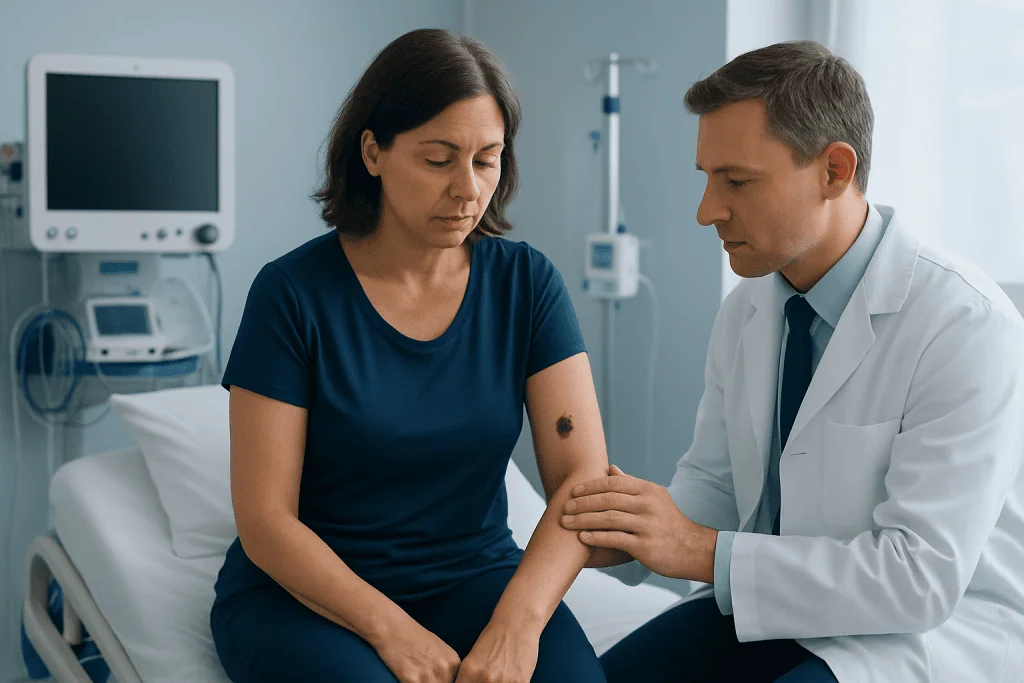
Nodular melanoma often presents differently from other melanomas. Instead of starting as a broad, flat area of irregular pigment, it may begin as a small but noticeable bump. This bump can enlarge relatively quickly and may feel firm to the touch.
Common warning signs include:
- A new raised spot on the skin
- Rapid growth over a short period
- Black, brown, blue, red, pink, or skin-colored appearance
- Bleeding, crusting, or oozing
- Tenderness, itching, or a sore that does not heal
- A lesion that looks different from surrounding moles or spots
Some clinicians also use the “EFG” clue for nodular melanoma: elevated, firm, and growing progressively for more than a month. This can be especially helpful because the lesion may be symmetrical and have regular borders, which can make it easier to overlook.
Nodular melanoma can occur anywhere on the body. It is often found on the trunk, legs, arms, scalp, or neck, but it can develop on sun-exposed and less-exposed skin alike. People should not ignore lesions simply because they are small or not very dark.
Causes and Risk Factors

Nodular melanoma develops when melanocytes acquire genetic changes that cause them to grow out of control. In many cases, ultraviolet radiation from sunlight or tanning devices contributes to this damage. However, not every case is linked to heavy sun exposure, and not every suspicious lesion forms from a pre-existing mole.
Several factors can raise risk. These include fair skin, light eyes, a tendency to burn easily, a history of severe sunburns, use of tanning beds, many moles, atypical moles, older age, and a personal or family history of melanoma. A weakened immune system may also make some skin cancers more likely.
Nodular melanoma may arise on previously normal-looking skin. That means people who do not have many moles can still develop it. Regular self-awareness of the skin is helpful because recognizing a new lesion early can lead to earlier diagnosis and simpler treatment.
Although prevention cannot eliminate all risk, reducing ultraviolet exposure remains important. Protective clothing, broad-spectrum sunscreen, shade, and avoiding indoor tanning can all help lower the chance of skin damage that may contribute to skin cancer over time.
How Nodular Melanoma Is Diagnosed
Diagnosis begins with a careful clinical evaluation. A doctor will ask when the lesion first appeared, whether it has changed, and whether symptoms such as bleeding or itching are present. The skin is examined closely, often with a dermatoscope, a handheld device that helps visualize structures beneath the surface.
If the lesion looks suspicious, a biopsy is needed to confirm the diagnosis. This is the only way to determine whether melanoma is present and to measure features that guide treatment, such as thickness and ulceration. Whenever feasible, the entire lesion is removed for examination, though the exact biopsy method depends on the size and location.
Once melanoma is confirmed, the pathology report helps estimate stage and next steps. In some patients, doctors may recommend imaging or additional tests if there is concern that the cancer has spread. For thicker tumors or certain high-risk features, lymph node assessment may also be discussed.
Because nodular melanoma can grow deeper quickly, prompt biopsy matters. Delaying assessment in the hope that a lesion will settle on its own is not advisable when a new raised or changing spot is present. In many centers, care may involve dermatology, pathology, surgical oncology, and medical oncology working together. If advanced evaluation is needed, clinicians may also consider PET-CT scanning or other imaging based on stage and symptoms.
Staging and What It Means
Staging describes how far melanoma has grown and whether it has spread. It is based on factors such as tumor thickness, ulceration, involvement of nearby lymph nodes, and spread to distant organs. In nodular melanoma, thickness at diagnosis is especially important because this subtype often grows downward early.
Early-stage disease is limited to the skin. More advanced stages may involve regional lymph nodes or distant sites such as the lungs, liver, brain, or other organs. Staging helps the care team recommend the most appropriate treatment and estimate the need for follow-up tests.
A procedure called sentinel lymph node biopsy may be recommended for some patients, particularly when the melanoma is above a certain thickness or has higher-risk features. This test checks the first lymph node or nodes most likely to receive drainage from the tumor area and can help determine whether microscopic spread has occurred.
Accurate staging also supports long-term planning. Follow-up frequency, skin checks, and discussions about additional therapy often depend on stage. Many patients find it reassuring to know that staging is not just about prognosis; it is also a practical tool for building a personalized treatment plan.
Treatment Options
Surgery is the main treatment for localized nodular melanoma. The goal is to remove the tumor completely along with a margin of normal-looking skin around it. The width of this margin depends on the melanoma’s thickness and other pathology findings.
If there is concern about spread to nearby lymph nodes, the doctor may advise sentinel lymph node biopsy at the time of surgery. In some cases, additional imaging or referral to oncology is needed after pathology results are reviewed. This is because treatment decisions depend not only on where the lesion is located, but also on how deep it has grown and whether there is evidence of spread.
For melanoma that is more advanced, treatment may include systemic therapy such as immunotherapy or targeted therapy, depending on the tumor’s molecular features. Some patients may also need radiation oncology treatment in selected situations, such as symptom control or management of specific spread patterns. If surgery is planned, that may involve skin cancer surgery by specialists experienced in melanoma care.
Treatment plans are individualized. Factors such as age, general health, tumor stage, lymph node findings, and genetic test results all help guide decisions. Near the end of the treatment pathway, some patients may seek care through centers such as Acibadem International, where multidisciplinary specialists in JCI-accredited hospitals diagnose and treat melanoma for international patients.
Prevention, Skin Checks, and Self-care
Prevention focuses mainly on reducing ultraviolet exposure and noticing skin changes early. Using broad-spectrum sunscreen, wearing hats and protective clothing, seeking shade, and avoiding tanning beds are practical ways to protect the skin. These steps are useful for everyone, including people who have never had skin cancer.
Regular self-examination can also help. A person can check the entire skin surface once a month using a mirror or with help from a family member, paying close attention to the scalp, back, soles of the feet, and nails. The goal is not to diagnose melanoma at home, but to identify anything new, changing, bleeding, or unusual.
It is helpful to learn what is normal for one’s own skin. Some people have many harmless moles, freckles, or age spots. The key is to watch for the “ugly duckling” sign: a lesion that stands out from the others or behaves differently.
After treatment for nodular melanoma, follow-up is essential. Doctors usually recommend regular skin examinations and, in some cases, imaging or lymph node checks depending on stage. Patients should also continue sun protection and let their care team know about any new symptoms or skin changes between appointments.
When to Seek Medical Care
Medical care should be sought promptly for any new raised skin lesion that is enlarging, firm, bleeding, crusting, or not healing. A spot that appears suddenly and changes over a few weeks deserves particular attention, even if it is small or not very dark.
People should also arrange an appointment if a mole or skin spot feels different, looks unlike the rest, or develops symptoms such as itching or tenderness. Those with a personal history of melanoma, a strong family history, or many atypical moles may benefit from regular dermatologist-led skin checks.
Urgent medical review is especially important if there are signs that could suggest more advanced disease, such as enlarged lymph nodes, unexplained weight loss, ongoing fatigue, or persistent symptoms affecting another part of the body. These symptoms can have many causes, but they should not be ignored in someone with a suspicious skin lesion or a history of melanoma.
Early evaluation does not always mean cancer is present, but it allows the right tests to be done without delay. When in doubt, a qualified doctor or dermatologist is the safest source of advice.
Frequently asked questions
What does nodular melanoma look like?
Nodular melanoma often looks like a new raised bump rather than a flat mole. It may be black, brown, blue, red, pink, or skin-colored, and it can grow, bleed, or crust over a short period.
Is nodular melanoma always dark in color?
No. Although some lesions are very dark, nodular melanoma can also be red, pink, purple, or close to normal skin color. That is one reason it may be mistaken for a harmless spot.
Why is nodular melanoma considered aggressive?
It is considered aggressive because it often grows downward into deeper skin layers earlier than some other melanoma types. Deeper growth can increase the chance of spread if diagnosis and treatment are delayed.
How is nodular melanoma diagnosed?
Doctors diagnose nodular melanoma with a skin examination and a biopsy. The biopsy allows a pathologist to confirm melanoma and measure features such as thickness, which help guide staging and treatment.
Can nodular melanoma be cured?
Many cases can be treated effectively, especially when found early and removed completely. The outlook depends on factors such as how thick the melanoma is, whether it has ulceration, and whether it has spread to lymph nodes or other organs.
What treatments are used for nodular melanoma?
Surgery is the main treatment for melanoma confined to the skin. Depending on stage, some patients may also need lymph node evaluation, immunotherapy, targeted therapy, radiation, or imaging as part of ongoing care.
When should someone worry about a skin spot?
A new or changing spot should be checked if it grows quickly, becomes raised and firm, bleeds, crusts, or does not heal. It is also wise to seek care if a lesion simply looks different from the rest of the skin.
References
- World Health Organization
- American Cancer Society
- National Cancer Institute
- American Academy of Dermatology
- National Comprehensive Cancer Network
This article is for general information only and is not a substitute for professional medical advice. Please consult a qualified doctor about your individual situation.
Melanoma in Turkey — costs, top hospitals & a free quote
JCI-accredited · board-certified surgeons · reply within 24h
Add us as a Preferred Source to see more of our trusted health content across Google Search, AI Overviews and Discover.

Medical Oncology Department
Medical treatment of cancer with chemotherapy, immunotherapy and targeted therapies under a multidisciplinary tumor board.
60 specialists in this unitMore from the Health Library



Related Specialists
Prof. Dr. Ali Bülent Antmen
Pediatrics
Assoc. Prof. Dr. Abdülhak Hamit Karayağız
General Surgery
Gülçin Selen Akgün
Physical Medicine & Rehabilitation
Dr. Gülay Beydilli Nacak
Gynecology & Obstetrics