

Non Stress Test for Pregnant: What Is Normal, What Is Not, and When to Seek Care

A non stress test measures the baby's heart rate and how it changes with movement. A normal result is usually called reactive, meaning the heart rate rises in a reassuring pattern.
Key Takeaways
- A non stress test measures the baby's heart rate and how it changes with movement.
- A normal result is usually called reactive, meaning the heart rate rises in a reassuring pattern.
- A nonreactive result is not a diagnosis and may happen if the baby is asleep, very early in gestation, or needs further evaluation.
- The test is painless, noninvasive, and often used in high-risk pregnancies or when fetal movement changes.
- Urgent medical advice is important for reduced fetal movement, bleeding, contractions, leaking fluid, or signs of high blood pressure.
A non stress test for pregnant people is a common way to check a baby's well-being in late pregnancy by tracking the baby's heart rate during movement. A normal test is usually called reactive, while a nonreactive result does not always mean a problem but often leads to more testing or closer monitoring.
Overview: what a non stress test means in pregnancy
A non stress test for pregnant people is a simple monitoring test used during pregnancy, usually in the third trimester, to assess how the baby is doing. It records the baby’s heart rate and looks at whether the heart rate rises normally when the baby moves. In most cases, a normal result is called reactive, which is generally reassuring.
The term “non stress” means the test does not place stress on the baby. Unlike tests that involve contractions or medication, this one simply observes the baby’s natural heart rate pattern over time. It is painless, does not use needles, and is usually done in a clinic, hospital, or maternity unit.
This test is often recommended when a pregnancy needs closer observation. That may include going past the due date, carrying twins, having diabetes or high blood pressure, noticing reduced fetal movements, or having a condition that could affect the placenta. It may also be part of evaluation for concerns such as preeclampsia or fetal growth problems.
How the test is done and what to expect
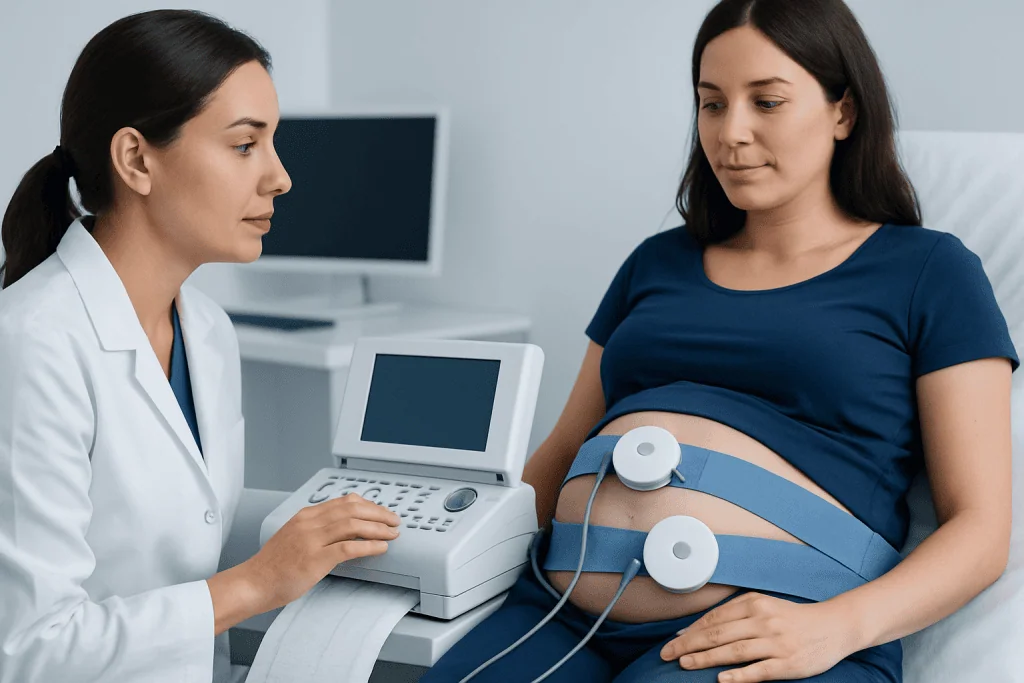
During the test, the pregnant person usually reclines in a chair or lies slightly tilted on an exam bed. Two sensors are placed on the abdomen with elastic belts. One sensor records the baby’s heart rate, and the other may detect uterine tightening or contractions. A button may also be given so the parent can mark when they feel the baby move.
Most tests last about 20 to 40 minutes, although they can take longer if the baby is sleeping. Sometimes the clinician may offer a cold drink, ask the parent to change position, or use a gentle sound device to encourage fetal movement. These steps help gather enough information without causing discomfort.
The test itself is safe and noninvasive. It does not diagnose every possible problem, but it gives useful real-time information about oxygenation and nervous system responsiveness. If the recording is difficult to interpret, the care team may combine it with an ultrasound-based assessment such as a biophysical profile or additional ultrasound evaluation.
What is normal, what is not, and how results are described
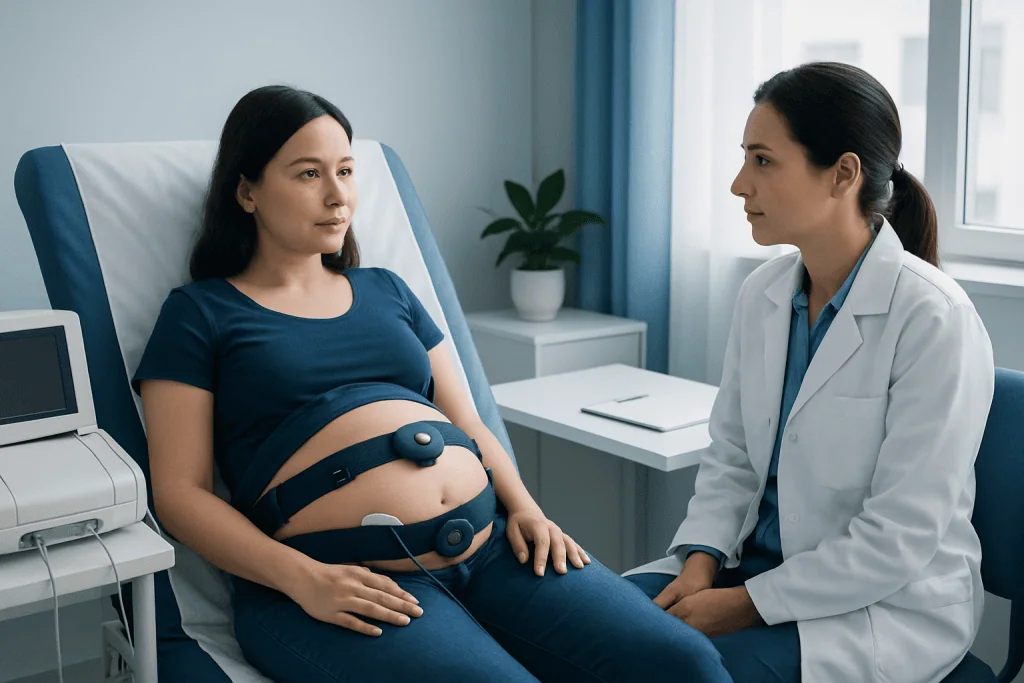
The most common reassuring result is a reactive non stress test. In general, this means the baby’s heart rate shows expected accelerations, or brief rises, associated with movement over a set period of time. These heart rate changes suggest the baby is receiving enough oxygen and responding normally at that moment.
A nonreactive result means the expected heart rate pattern was not seen during the test period. This does not automatically mean the baby is in danger. Babies may be asleep, less active at that time, affected by certain maternal medicines, or still too early in gestation for the usual pattern to appear clearly.
Clinicians interpret the tracing in context, including the stage of pregnancy, maternal health, fetal movement history, and whether contractions are present. Sometimes there may also be heart rate decelerations, reduced variability, or technical issues with the recording, which can change what the result means. For that reason, patients should avoid trying to interpret the monitor strip on their own and should ask their obstetric team to explain the result clearly.
- Reactive: usually reassuring and often no immediate further testing is needed.
- Nonreactive: often leads to longer monitoring, repeat testing, or an ultrasound-based assessment.
- Concerning patterns: may require prompt medical review and planning for further care.
Why a non stress test may be recommended
A non stress test is commonly used when a pregnancy needs extra monitoring, not only when there is a clear problem. A doctor or midwife may recommend it if the pregnancy goes beyond 40 weeks, if fetal movement seems reduced, or if there is concern about how well the placenta is supporting the baby.
It is also often used in pregnancies affected by medical conditions such as high blood pressure, chronic kidney disease, diabetes, or autoimmune disorders. In some cases, it is part of follow-up when the baby appears smaller than expected, when there is less amniotic fluid, or when there has been a previous pregnancy complication.
Twins or other multiple pregnancies may need closer fetal surveillance as well. Depending on the overall picture, the non stress test may be repeated regularly, sometimes once or twice a week. If more detail is needed, clinicians may combine it with perinatology care or other fetal assessment tools to guide timing of follow-up and delivery.
What happens if the result is nonreactive or unclear
If the result is nonreactive, the next step is usually more information rather than immediate alarm. The care team may continue monitoring for a longer period, especially if the baby may simply be asleep. They may also review recent symptoms, blood pressure, medications, and fetal movement patterns.
Another common step is a biophysical profile, which combines ultrasound with fetal heart rate information. This can look at movement, breathing motions, muscle tone, and amniotic fluid level. In some situations, the doctor may recommend Doppler studies or more formal assessment in a labor and delivery unit.
If the monitoring suggests ongoing concern, treatment depends on how far along the pregnancy is and what problem is suspected. The goal is to balance the benefits of keeping the baby in the womb with the benefits of delivery if the environment no longer seems optimal. That may involve closer observation, treatment of an underlying condition, or discussion of labor and delivery planning.
Limits of the test and common reasons for false alarms
A non stress test is useful, but it is only one part of prenatal care. It shows how the baby appears during the test window, not what will happen for the rest of the day or week. A reactive test is reassuring, yet it does not completely rule out every complication. A nonreactive test may also occur even when the baby is healthy.
One common reason for an unclear or nonreactive tracing is that the baby is asleep. Sleep cycles can last long enough to affect the recording. Earlier gestational age can matter too, because younger fetuses may not yet show the same mature heart rate patterns as full-term babies.
Maternal factors can also influence results. Smoking, dehydration, fever, some medications, and low blood sugar may affect fetal activity or the interpretation of the tracing. This is one reason doctors look at symptoms and the whole pregnancy picture rather than relying on a single number or label.
Self-care, fetal movement awareness, and when to seek medical care
There is no special preparation needed before a non stress test unless the care team gives specific instructions. Wearing comfortable clothing and arriving hydrated can make the visit easier. After the test, it helps to continue paying attention to usual fetal movement patterns and to keep all scheduled prenatal visits.
Many clinicians encourage awareness of the baby’s normal movement rhythm, especially in the third trimester. If movement feels clearly reduced, weaker than usual, or absent, it is important to contact a maternity provider the same day rather than waiting for the next appointment. Patients should not rely on home Doppler devices to decide whether everything is fine.
Medical care should be sought urgently for reduced or absent fetal movement, vaginal bleeding, leaking fluid, regular painful contractions before term, severe headache, vision changes, sudden swelling, chest pain, or shortness of breath. These symptoms may or may not be related to the non stress test itself, but they need prompt assessment. If specialized review is needed, Acibadem International’s multidisciplinary specialists at JCI-accredited hospitals diagnose and treat pregnancy-related conditions for international patients.
Frequently asked questions
At what stage of pregnancy is a non stress test usually done?
A non stress test is most often done in the third trimester, commonly after 28 weeks of pregnancy. It may be used earlier in selected cases, but interpretation can be more limited before the baby's heart rate pattern is more mature.
Does a nonreactive non stress test mean something is wrong with the baby?
Not necessarily. A nonreactive result simply means the expected heart rate accelerations were not seen during the test period. The baby may be asleep, less active, or need additional monitoring, so doctors usually interpret it together with symptoms and other tests.
Is a non stress test safe for the baby and the pregnant person?
Yes. The test is noninvasive and painless, and it does not expose the baby to radiation. It only records the baby's heart rate and, in many cases, uterine activity from the outside of the abdomen.
How long does a non stress test take?
Many non stress tests take about 20 to 40 minutes. If the baby is sleeping or not moving much, the test may last longer so the care team can collect enough information.
What is the difference between a non stress test and an ultrasound?
A non stress test measures the baby's heart rate response to movement over time. An ultrasound shows physical features such as movement, breathing motions, growth, and amniotic fluid. Doctors often use them together when more complete fetal assessment is needed.
What should someone do if the baby is moving less but the last non stress test was normal?
They should still contact their maternity provider promptly. A normal test reflects the baby's condition during that monitoring period, but reduced movement later on still needs medical review. It is safer to ask for advice the same day rather than wait.
References
- American College of Obstetricians and Gynecologists
- Society for Maternal-Fetal Medicine
- National Institute for Health and Care Excellence
- Mayo Clinic
- Merck Manual Consumer Version
This article is for general information only and is not a substitute for professional medical advice. Please consult a qualified doctor about your individual situation.
Heart care in Turkey — expert evaluation and treatment
JCI-accredited · board-certified surgeons · reply within 24h
Add us as a Preferred Source to see more of our trusted health content across Google Search, AI Overviews and Discover.
Check your numbers in seconds
BMI, calories, due date, blood pressure and 30+ more clinical calculators — free, instant, doctor-reviewed ranges.

More from the Health Library



Related Specialists

Prof. Dr. Sefa Müezzinoğlu
Orthopedic Surgery & Traumatology
Dr. Özgün Oktay
Ophthalmology
Assoc. Prof. Dr. Gökhan Ergene
Thoracic Surgery
Prof. Dr. Yüksel Ersoy
Physical Medicine & Rehabilitation