Nose Hair: An Evidence-Based Guide for Patients

Nose hair helps filter dust, pollen, and other larger particles from inhaled air. Visible nose hair is common and may become coarser or longer with age because of hormonal and follicle changes.
Key Takeaways
- Nose hair helps filter dust, pollen, and other larger particles from inhaled air.
- Visible nose hair is common and may become coarser or longer with age because of hormonal and follicle changes.
- Careful trimming is generally safer than plucking, waxing, or using depilatory creams inside the nose.
- Painful swelling, crusting, pus, recurrent nosebleeds, or a persistent one-sided nasal change should be assessed by a clinician.
- Good nasal hygiene and avoiding irritation can help protect the sensitive skin just inside the nostrils.
Nose hair is a normal and useful part of the body’s airway defenses, helping trap larger particles before they enter the nose and lungs. It may become more noticeable with age, but it usually needs only gentle trimming rather than complete removal.
What Is Nose Hair and Why Does It Matter?
Nose hair is normal hair that grows at the entrance of the nostrils. Its medical name is vibrissae. These hairs are part of the nose’s first line of defense: they help catch larger airborne particles, such as dust, pollen, fibers, and insects, before those materials move farther into the nasal passages.
Nose hair works alongside mucus and tiny moving structures called cilia deeper in the nose. Together, these systems help humidify, warm, and clean inhaled air. Nose hair does not block every germ or allergen, and it is not a substitute for measures such as hand hygiene or recommended protective equipment in dusty settings. Still, removing all of it may reduce a small but useful protective barrier.
For many people, the concern is cosmetic rather than medical. A few hairs may extend beyond the nostrils, particularly in bright light or as the hair becomes coarser over time. Managing visible hairs conservatively can improve comfort and appearance while preserving the hair’s natural function.
Why Nose Hair Can Become More Noticeable
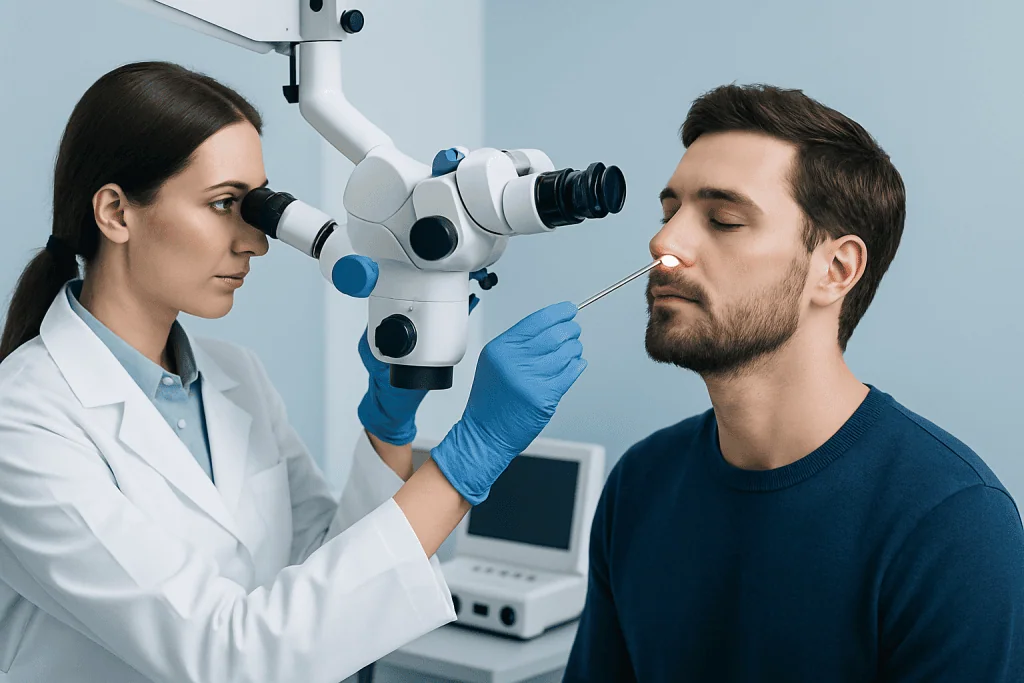
Like hair elsewhere on the body, nose hair grows from follicles and follows a cycle of growth, rest, and shedding. Growth patterns vary widely among individuals. Genetics, age, and hormone-related changes can influence how thick, dark, or long the hairs appear. In many adults, especially later in life, some follicles may produce coarser hairs that are more noticeable at the nostril opening.
This change is usually harmless. It does not automatically mean that hormone levels are abnormal or that an underlying disease is present. Hair color can also make a difference: darker hairs tend to be more visible against the skin, while lighter hairs may become noticeable because they are longer or wirier.
Occasionally, an apparent “hair” in the nose is accompanied by a sore, crust, tender bump, or blocked feeling. In that situation, the issue may not be ordinary hair growth. Inflammation, an ingrown hair, irritation, or infection of the skin near the nostril can cause symptoms and should not be treated simply by repeated hair removal.
The Safest Ways to Trim Nose Hair

For people who wish to manage visible nose hair, trimming only the hairs that extend beyond the nostril edge is usually the safest approach. A clean, purpose-designed electric nose-hair trimmer with a rounded guard can be used according to its instructions. Small, clean scissors with rounded tips may also be used carefully in good lighting and in front of a mirror.
The goal is to shorten prominent hairs, not to remove hair deep inside the nose. The trimmer or scissors should not be inserted far into the nostril. It is sensible to trim slowly, avoid rushing, and stop if there is pain or bleeding. Equipment should be cleaned before and after use to reduce the chance of introducing bacteria into small skin breaks.
A person should avoid sharing grooming tools. If there is an active cold sore, rash, painful nasal irritation, recent nose surgery, or a tendency to bleed easily, it is best to ask a doctor before trimming. People who use blood-thinning medicines may also need extra caution because even a minor cut can bleed more than expected.
- Trim only hairs visible at the entrance of the nostril.
- Use clean tools designed for facial grooming.
- Do not push tools deeply into the nose.
- Stop and seek advice if repeated bleeding, tenderness, or swelling occurs.
Why Plucking, Waxing and Creams Are Not Recommended
Plucking nose hair with tweezers removes the hair from its follicle and can leave a small opening in the skin. This may cause pain, bleeding, inflammation, or an ingrown hair. The front part of the nose contains many bacteria naturally, including bacteria that can sometimes cause skin infection when the protective surface is damaged.
Waxing has similar concerns and can remove multiple hairs at once, irritate delicate nasal tissue, and cause tiny skin injuries. Depilatory creams should not be used inside the nostrils unless a clinician specifically recommends a product for that purpose. These products can irritate or burn mucous membranes, and fumes may be uncomfortable to inhale.
An infection near the nostril opening is sometimes called nasal vestibulitis. It may cause redness, soreness, crusting, small pimples, or a tender swelling. Although many mild cases can be treated effectively, it is preferable to prevent irritation by avoiding aggressive hair removal. A clinician can determine whether symptoms are due to irritation, an infection, or another nasal condition.
Protecting the Nose Between Trims
The skin and lining inside the nose can become dry or irritated in cold weather, dry indoor air, dusty environments, or during respiratory infections and allergies. Gentle care can reduce discomfort and the urge to pick, rub, or repeatedly trim the nostrils. Staying well hydrated and using a clean saline nasal spray or saline rinse when appropriate may help moisturize and clear mucus and irritants.
If saline irrigation is used, it is important to follow product instructions and use sterile, distilled, or previously boiled and cooled water rather than untreated tap water. A humidifier may also improve comfort in dry rooms when it is kept clean. Avoid inserting cotton swabs, fingernails, or other objects into the nose, as this can cause minor injuries and nosebleeds.
Allergies can contribute to rubbing, sneezing, and nasal irritation. People with ongoing nasal congestion, itching, or sneezing may benefit from discussing allergy management with a healthcare professional. Treating the underlying irritation may be more helpful than focusing on nose hair itself.
When to Seek Medical Care
Most concerns about nose hair can be managed with cautious trimming and do not require medical treatment. Medical advice is appropriate if there is persistent pain, marked tenderness, redness that is spreading, swelling of the nostril or face, pus, fever, or recurrent crusting. These symptoms can suggest an infection or another condition requiring assessment.
A person should also arrange an evaluation for frequent or difficult-to-stop nosebleeds, a sore or lump that does not heal, persistent blockage on one side of the nose, unexplained loss of smell, or a noticeable change that lasts for several weeks. Urgent medical care is needed for severe facial swelling, trouble breathing, a high fever, confusion, vision changes, or uncontrolled bleeding.
People with diabetes, a weakened immune system, or medicines that affect bleeding should seek advice promptly for a painful or infected-looking nasal area. At Acibadem International, multidisciplinary specialists in JCI-accredited hospitals can assess nasal symptoms and provide appropriate care for international patients when needed.
A Practical Approach to Nose Hair Care
A balanced approach is usually best: keep nose hair that remains inside the nostrils, and trim only the strands that are visibly protruding or bothersome. Complete removal is unnecessary and may increase irritation. There is no health benefit to making the nostrils entirely hair-free.
Before trimming, check the nostrils for soreness, scabs, or active bleeding. If the skin looks healthy, use a clean guarded trimmer or rounded-tip scissors, remove only a small amount, and avoid very frequent grooming. If hair seems to grow quickly, regular light trimming is generally less irritating than plucking it out.
In short, nose hair is not a sign of poor hygiene. It is a normal feature with a protective role. Gentle grooming, attention to nasal comfort, and timely medical advice for concerning symptoms can help people manage it safely.
Frequently asked questions
What is the purpose of nose hair?
Nose hair helps trap larger particles such as dust, pollen, and fibers at the entrance to the nose. It works with nasal mucus and cilia deeper in the airways to help clean and condition inhaled air. It is therefore useful to keep most nose hair in place.
Is it normal for nose hair to get longer with age?
Yes. Nose hair may become more visible, coarser, or longer with age due to normal changes in hair follicles and hormone activity. This is usually a harmless cosmetic change rather than a sign of illness.
Is it safe to trim nose hair?
Careful trimming of only the hair that extends beyond the nostrils is generally considered safer than removing it from the root. Use a clean guarded nose-hair trimmer or small rounded-tip scissors, and avoid inserting tools deeply into the nose. Stop if trimming causes pain or bleeding.
Why should nose hair not be plucked?
Plucking can injure the follicle and surrounding skin, causing bleeding, irritation, ingrown hairs, or infection. The skin at the entrance of the nose is sensitive and naturally carries bacteria. Trimming is usually the lower-risk option for visible hairs.
Can waxing be used to remove nose hair?
Waxing inside the nose is not recommended because it may irritate delicate tissue and remove protective hairs all at once. It can also cause small skin injuries that increase the risk of inflammation or infection. A guarded trimmer is a more conservative choice.
When can a nose hair problem indicate an infection?
Painful redness, crusting, pus, a pimple-like bump, swelling, or tenderness near the nostril may indicate inflammation or infection rather than a simple grooming issue. A healthcare professional should assess symptoms that persist, worsen, or are accompanied by fever or facial swelling.
This article is for general information only and is not a substitute for professional medical advice. Please consult a qualified doctor about your individual situation.
Hair transplant in Turkey — costs, graft counts & a free assessment
JCI-accredited · board-certified surgeons · reply within 24h
Add us as a Preferred Source to see more of our trusted health content across Google Search, AI Overviews and Discover.

More from the Health Library

Frankincense: A Complete Medical Overview

Sparkling Water: An Evidence-Based Guide for Patients

Sulfites — Explained by Medical Evidence, Not Myths

Steri Strips: An Evidence-Based Guide for Patients

Alcohol Withdrawal: An Evidence-Based Guide for Patients