

Nose Hair Trimmer: A Complete Medical Overview

A nose hair trimmer is usually safer than plucking or waxing because it trims rather than removes hair from the root. Nasal hair helps filter dust and particles, so trimming only visible hairs is usually the best approach.
Key Takeaways
- A nose hair trimmer is usually safer than plucking or waxing because it trims rather than removes hair from the root.
- Nasal hair helps filter dust and particles, so trimming only visible hairs is usually the best approach.
- Over-trimming, deep insertion, or poor cleaning can lead to irritation, small cuts, or infection.
- Persistent bleeding, pain, swelling, crusting, or one-sided blockage should be checked by a doctor.
- People with diabetes, bleeding disorders, weakened immunity, or blood thinner use should be especially careful.
A nose hair trimmer is generally the safest tool for shortening visible nasal hair because it cuts the hair without removing it from the root. Used properly, it can improve comfort and grooming while helping protect the nose’s natural filtering function.
Overview: what a nose hair trimmer does
A nose hair trimmer is a personal grooming device designed to shorten visible hair inside the nostrils without pulling it out. For most people, this is the preferred method of nasal grooming because it reduces cosmetic concerns while preserving the protective role of nasal hair. The goal is not to remove all nasal hair, but to trim only the hairs that extend beyond the nostril opening.
Nasal hair is part of the body’s normal defense system. Together with mucus and the lining of the nose, it helps trap dust, allergens, and other small particles before they move deeper into the airways. Because of this function, complete hair removal is not recommended. A trimmer allows selective shortening while leaving enough hair in place to support normal filtering.
Compared with scissors, tweezers, or waxing, a nose hair trimmer is generally considered the safer option for routine use at home. Modern devices usually have rounded protective guards or enclosed cutting systems that help reduce the chance of direct skin injury. Even so, technique matters: rough use, poor hygiene, or inserting the device too deeply can still irritate the delicate lining of the nose.
Why nasal hair should not be removed completely
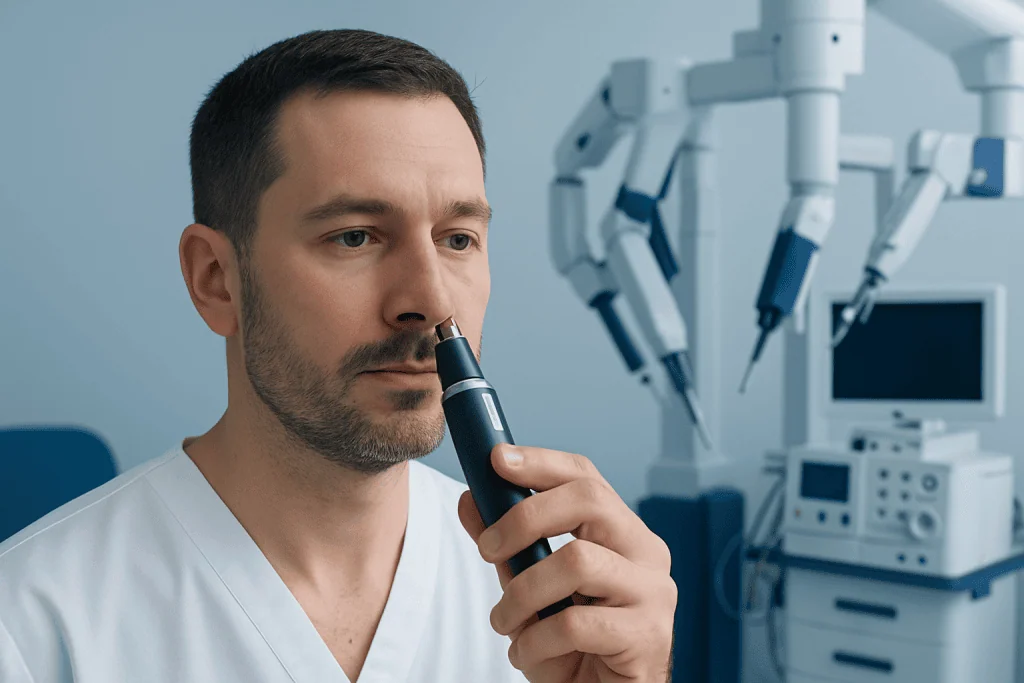
Visible nose hair can be bothersome, but nasal hair has an important biological purpose. It works with the nose’s natural moisture and tiny moving structures called cilia to trap debris from the air. This filtering action supports respiratory health and may reduce the amount of dust, pollen, and other irritants reaching the lower airways.
Complete removal, especially by plucking or waxing, may leave the nostril lining more exposed to friction and environmental particles. It can also create tiny openings in the skin or hair follicles. These small injuries may increase the risk of local irritation or infection. In some people, this can lead to painful folliculitis, crusting, or an inflamed bump from an ingrown hair.
For that reason, doctors usually advise trimming only the hairs that are clearly visible outside the nostril. A conservative approach respects the nose’s protective role while addressing appearance concerns. If a person feels they have excessive or rapidly changing hair growth, it may also be reasonable to discuss this with a clinician, as hormonal factors, aging, and certain medicines can influence hair growth patterns.
Safe ways to use a nose hair trimmer

The safest approach is to use a clean, well-maintained trimmer in a bright, well-lit room. Before trimming, the outside of the nose and the visible entrance of the nostril should be clean and dry. The device should be used only as directed by the manufacturer, with gentle movements and no force. A person should avoid inserting the trimmer deeply into the nose.
Only the visible hairs near the nostril opening usually need attention. Tilting the head back slightly and using a mirror may help. Instead of trying to remove every hair, it is better to make short, careful passes and stop once the longer hairs are no longer noticeable. If the skin feels sore or irritated, trimming should be paused until the area settles.
Basic safety points include:
- Trim, do not pluck, visible hairs.
- Use a trimmer with a rounded guard or enclosed blade system.
- Do not share the device with others.
- Clean the trimmer after each use.
- Replace worn or damaged heads according to product guidance.
- Avoid trimming if there is an active infection, sore, or recent nose injury.
Small grooming cuts inside the nose may look minor but can be uncomfortable because the area is sensitive and richly supplied with blood vessels. If bleeding starts, gentle pressure on the nostrils and a calm upright posture are often enough for small episodes. Repeated or hard-to-control nosebleeds may need medical review, especially in people who use blood thinners or have a history of nosebleeds.
Possible side effects, risks, and common mistakes
When used correctly, a nose hair trimmer is low risk. However, the inside of the nose is lined by delicate tissue that can become irritated easily. Common minor problems include dryness, temporary tenderness, sneezing, mild redness, or a small nick. These issues often improve with time and by avoiding further trimming until the area heals.
More significant problems can happen if a person trims too aggressively, inserts the trimmer too deeply, or uses a device that is not clean. Small cuts can become infected, particularly around the hair follicle. This may cause pain, swelling, crusting, yellow drainage, or a pimple-like bump. Infections of the vestibule, the front part of the nose, may need medical treatment.
Plucking is a common mistake. Pulling hairs from the root can damage the follicle and increase the risk of ingrown hairs and folliculitis. Waxing also removes multiple hairs at once and can irritate or burn the sensitive nostril lining. If the nose becomes persistently blocked, painful, or swollen after grooming, it is best to stop and seek advice. Some symptoms that seem related to grooming may actually reflect another problem, such as allergy-related irritation or a structural issue like deviated septum.
Who should take extra care
Some people have a higher chance of bleeding, delayed healing, or infection from even minor skin injury. This includes individuals with diabetes, those taking anticoagulant medicines, people with platelet or clotting disorders, and those with weakened immune systems. In these groups, careful technique and good hygiene are especially important, and a doctor should be consulted if there is any concern after trimming.
People with chronic nasal symptoms should also be cautious. If the inside of the nose is already inflamed from allergies, frequent infection, dryness, or sinus disease, grooming may worsen discomfort. Repeated crusting, pain, foul smell, or blocked breathing should not simply be attributed to hair trimming. Nasal symptoms can overlap with conditions affecting the sinuses, and some people may need assessment for related issues such as sinusitis.
Children and adolescents should not use nose hair trimmers without close supervision, if at all, because the narrow space and delicate tissue increase the chance of injury. Older adults may also need extra care if they have reduced vision or hand control. In these situations, simpler trimming by a healthcare professional or advice from an ear, nose, and throat specialist may be appropriate.
What to do if irritation or infection develops
If trimming causes mild irritation, the first step is to stop further grooming for several days. Avoid picking, rubbing, or inserting cotton swabs inside the nostrils. Gentle cleansing of the outer nose and allowing the area to rest is often enough for minor soreness to improve. If dryness is a recurring issue, a doctor or pharmacist can advise on suitable nasal moisturizing options.
Signs that suggest infection include increasing pain, swelling, warmth, redness, pus, bad odor, or a tender bump near a hair follicle. Fever or spreading swelling are more concerning symptoms. Because the nose contains many blood vessels and sensitive tissues, infections should not be squeezed or treated harshly at home. Medical review is sensible if symptoms do not improve quickly or appear to worsen.
Doctors may examine the nasal lining and look for contributing factors such as trauma, inflammation, or an underlying nasal condition. In some cases, treatment can include local care or medicines for infection or inflammation, depending on the cause. If a patient has broader nasal obstruction or sinus symptoms, an ENT evaluation may be helpful, and appropriate care can include ENT assessment and treatment or, when needed for persistent structural blockage, septoplasty.
Practical self-care and hygiene tips
Good trimmer hygiene is one of the simplest ways to lower risk. The device should be cleaned after each use according to its instructions, with the cutting head dried thoroughly before storage. Batteries should be checked regularly if relevant, and blunt or damaged parts should be replaced. A poorly functioning trimmer may tug at hairs or scrape the skin rather than cutting cleanly.
Trimming too often is usually unnecessary. Many people only need occasional maintenance when visible hairs become noticeable. Frequent grooming can increase friction and irritation, especially in dry environments or during allergy seasons when the nose is already sensitive. Keeping expectations realistic is helpful: the aim is neat trimming, not a perfectly hair-free nostril.
It is also sensible to avoid sharing grooming tools. Even if a device looks clean, shared personal items can transfer bacteria. Anyone with repeated discomfort after nose grooming should reconsider technique and the condition of the device. Near the end of the care pathway, if specialist evaluation is needed, Acibadem International’s multidisciplinary specialists at JCI-accredited hospitals diagnose and treat nasal and sinus conditions for international patients.
When to seek medical care
Medical care is appropriate if symptoms are more than mild or do not settle with simple measures. A person should contact a doctor if they develop ongoing pain, repeated bleeding, increasing swelling, pus, fever, or a painful lump after trimming. These features can suggest infection or a deeper injury that needs professional attention.
Evaluation is also important for symptoms that may not be caused by grooming alone. One-sided nasal blockage, recurrent crusting, a persistent bad smell, changes in breathing, or repeated sinus pressure deserve assessment. In selected cases, an ENT specialist may use nasal endoscopy or imaging to look more closely at the nasal passages and sinus openings. If a broader sinus problem is suspected, care may involve endoscopic sinus surgery for suitable patients after medical evaluation.
Anyone who has significant medical conditions, uses blood thinners, or has trouble controlling a nosebleed should not delay seeking help. Prompt assessment is also wise if symptoms develop after trauma or if there is concern about a foreign body, severe infection, or a rapidly worsening blockage. Early review is usually reassuring and helps guide safe next steps.
Frequently asked questions
Is a nose hair trimmer safer than plucking?
Yes, in most cases a nose hair trimmer is safer than plucking. It shortens the visible hair without removing it from the root, which helps lower the chance of follicle injury, ingrown hairs, and infection.
Should all nose hair be removed?
No. Nasal hair helps trap dust and small particles, so it plays a useful protective role. It is usually best to trim only the hairs that are visible outside the nostril.
Can trimming nose hair cause infection?
It can, but this is uncommon when the trimmer is used gently and kept clean. Infection becomes more likely if there are small cuts, deep trimming, plucking, or use of a device that is not properly cleaned.
What should a person do if the nose bleeds after trimming?
Most small bleeds stop with gentle pressure on the soft part of the nose while sitting upright and leaning slightly forward. If bleeding is heavy, keeps coming back, or does not stop, medical advice is important.
How often should nose hair be trimmed?
There is no fixed schedule. Most people only need occasional trimming when hairs become visible or bothersome, and trimming too often may increase irritation.
Can scissors be used instead of a nose hair trimmer?
Small rounded-tip scissors are sometimes used, but they generally require more care and precision. A dedicated nose hair trimmer is often easier and safer because its guard helps protect the delicate nasal lining.
References
- American Academy of Otolaryngology–Head and Neck Surgery
- National Health Service
- Mayo Clinic
- Merck Manual Consumer Version
This article is for general information only and is not a substitute for professional medical advice. Please consult a qualified doctor about your individual situation.
Hair transplant in Turkey — costs, graft counts & a free assessment
JCI-accredited · board-certified surgeons · reply within 24h
Add us as a Preferred Source to see more of our trusted health content across Google Search, AI Overviews and Discover.

More from the Health Library

Assisted Reproductive Technology: What Patients Need to Know

Fluoride Mouthwash — Explained by Medical Evidence, Not Myths

Tummy Tuck: A Complete Medical Overview

Sleep Bra: A Complete Medical Overview

Rabies Jab: A Complete Medical Overview

Organ: What Patients Need to Know
Related Specialists

Prof. Dr. Gamze Uğurluer Sümer
Radiation Oncology
Dr. Melis Erciyes Küçük
Internal Medicine
Prof. Dr. Zehra Serpil Ustalar
Anesthesiology
Fzt. Nergis Demiröz
Physical Medicine & Rehabilitation