Nuclear Medicine Injection Side Effects: What to Expect and How to Manage

Most diagnostic nuclear medicine injections cause no noticeable side effects beyond brief discomfort at the injection site. The type of radiotracer, scan, kidney function, breastfeeding status, and whether a stress medicine was used affect aftercare advice.
Key Takeaways
- Most diagnostic nuclear medicine injections cause no noticeable side effects beyond brief discomfort at the injection site.
- The type of radiotracer, scan, kidney function, breastfeeding status, and whether a stress medicine was used affect aftercare advice.
- Drinking fluids and urinating regularly can help many diagnostic tracers leave the body more quickly.
- Radiation exposure from diagnostic scans is generally low, but specific contact precautions may be advised after certain procedures.
- Chest pain, breathing difficulty, fainting, severe rash, or persistent symptoms after a nuclear stress test require prompt medical assessment.
Nuclear medicine injection side effects are uncommon and usually mild, because the radiotracers used for imaging are given in very small amounts and leave the body naturally over time. Most people can return to normal activities soon after their scan, with individualized instructions for hydration, hygiene, and radiation precautions when needed.
Overview: What Happens After a Nuclear Medicine Injection?
Nuclear medicine injection side effects are generally mild and temporary. A small amount of a radioactive substance, called a radiotracer or radiopharmaceutical, is injected into a vein so a special camera can show how an organ, tissue, or body system is functioning. Many people feel nothing different after the injection apart from a brief needle prick.
The radiotracer is selected for the type of examination being performed, such as a bone scan, thyroid scan, kidney scan, lung scan, PET scan, or heart imaging study. It gives off a small amount of radiation that can be detected by imaging equipment. The tracer then loses radioactivity over time and is also cleared from the body, usually through urine and sometimes through stool or other body fluids.
Side effects are more often related to the circumstances of the test than to the radiotracer itself. For example, a nuclear stress test may involve exercise or medicines that temporarily increase blood flow to the heart. These medicines can cause short-lived symptoms such as flushing, headache, dizziness, nausea, or a sensation of breathlessness.
How Nuclear Medicine Imaging Works and Who May Need It
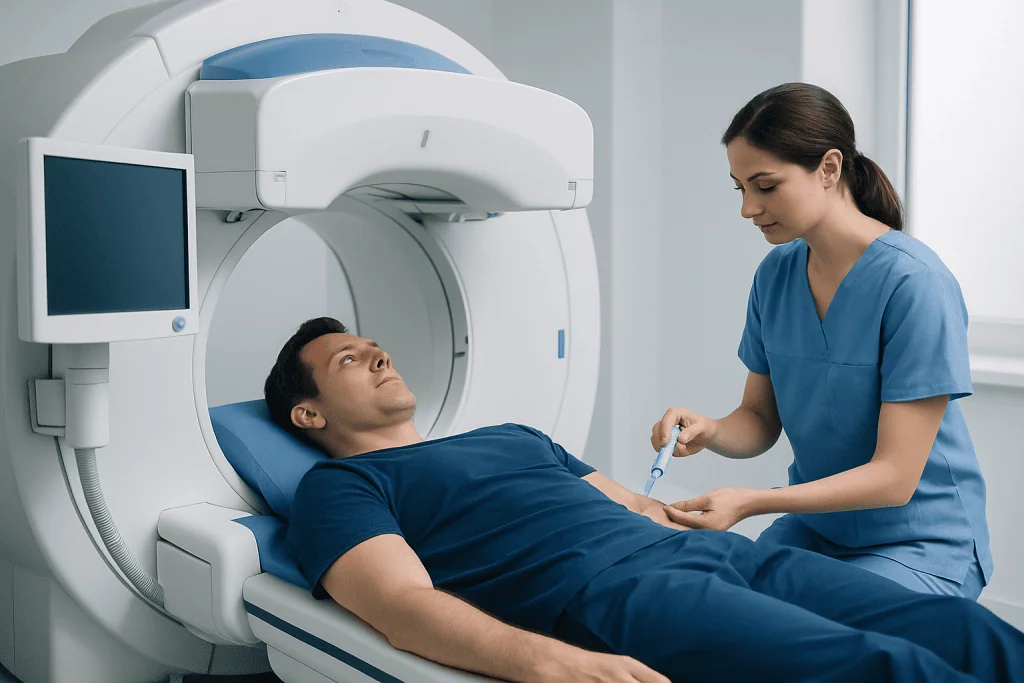
Nuclear medicine differs from standard X-rays, CT, or MRI because it focuses on function as well as structure. After injection, the radiotracer travels to the area being evaluated. A gamma camera, SPECT scanner, or PET scanner detects the energy released by the tracer and produces images that help clinicians assess blood flow, inflammation, bone activity, organ function, or possible abnormal tissue activity.
These studies may be recommended when symptoms, examination findings, or other imaging tests require further clarification. Common reasons include evaluating coronary blood flow, checking for bone changes, assessing thyroid activity, investigating kidney drainage, locating infection or inflammation, or helping stage and monitor certain cancers. The exact benefits and limitations depend on the test and the clinical question.
Most adults can have diagnostic nuclear medicine imaging safely. However, patients should tell the care team about pregnancy, a possible pregnancy, breastfeeding, kidney disease, current medicines, allergies, recent imaging tests, and prior reactions to injected agents. Nuclear medicine professionals can then select the safest approach or adjust the timing and aftercare plan.
What to Expect: Step by Step

Before the appointment, preparation depends on the examination. Some scans require fasting, avoiding caffeine, pausing selected medicines under medical guidance, drinking extra water, or following a low-iodine diet. The imaging department should provide clear instructions in advance. Patients should not stop prescription medicines unless the clinician directing the test tells them to do so.
At the appointment, a technologist or nurse confirms medical information, places a small intravenous needle, and administers the radiotracer. For some scans, images begin within minutes. For others, there is a waiting period while the tracer concentrates in the target tissue. During imaging, the patient usually lies still while the scanner takes pictures; the scan itself is painless.
A nuclear stress test includes an additional stage to assess heart blood flow during exercise or medication-induced stress. The patient may walk on a treadmill or receive a medicine that changes blood flow or heart workload temporarily. Heart rhythm, blood pressure, and symptoms are monitored throughout. This test may be part of a broader cardiac assessment, including coronary artery disease evaluation when clinically appropriate.
Following the scan, most patients leave the department on the same day. The team explains any test-specific safety measures, particularly if a higher-activity tracer or a therapeutic radioactive medicine has been used. Diagnostic imaging and radioactive treatment are different procedures and may require very different precautions.
Possible Side Effects, Risks, and Benefits
For diagnostic radiotracer injections, common experiences are usually limited to temporary soreness, bruising, or a small amount of bleeding where the needle entered the skin. Some people report a mild headache, tiredness, nausea, or an unusual taste, although these symptoms are not always caused by the tracer. True allergic reactions to radiotracers are rare but can occur.
When medications are used for a nuclear stress test, temporary flushing, warmth, headache, dizziness, nausea, chest pressure, shortness of breath, or a rapid heartbeat may occur. The monitoring team is present to recognize and manage symptoms. Symptoms typically improve shortly after exercise ends or after the medicine has worn off, and reversal medicines may be used when appropriate.
All imaging that uses radiation involves some exposure, but diagnostic nuclear medicine tests are designed to use the lowest activity needed to obtain useful images. The potential benefit is clinically important information that may help identify disease, guide treatment, or avoid unnecessary procedures. The referring clinician and nuclear medicine team consider whether the expected benefit outweighs the radiation risk for each individual.
Patients who are pregnant or breastfeeding need individualized advice because some tracers may reach a developing baby or pass into breast milk. Depending on the tracer, clinicians may advise postponing the scan, using an alternative test, or interrupting breastfeeding temporarily. This decision should always be made with the imaging team and the patient’s relevant specialist.
How Long Does It Take for Nuclear Medicine to Leave Your System?
The time a nuclear medicine tracer remains in the body varies by the specific radiotracer, the dose used, the organ being studied, and how quickly the person’s kidneys and digestive system clear it. Many commonly used diagnostic tracers decrease substantially within hours and are mostly eliminated within one to two days. Some tracers remain detectable longer in particular tissues, even as their radioactivity declines.
Two processes occur at the same time: physical decay, in which the radioactive signal naturally reduces, and biological elimination, in which the body removes the substance through urine, stool, sweat, or other routes. Drinking fluids, unless a clinician has advised limiting fluid intake, and emptying the bladder regularly can support elimination of many diagnostic tracers.
Patients should follow the instructions given for their exact scan rather than relying on a general timeframe. Radioactive iodine, certain PET tracers, and therapeutic nuclear medicine treatments can have different clearance patterns and safety requirements from routine diagnostic injections. People with reduced kidney function may also receive tailored advice.
What Should I Avoid After a Nuclear Medicine Scan?
After most routine diagnostic nuclear medicine scans, people can eat, drink, drive, work, and resume normal activities unless they received sedation or were given separate instructions. It is commonly helpful to drink extra water and urinate frequently for the rest of the day, if medically suitable. Good hand hygiene after using the toilet is also sensible while the tracer is clearing.
For a short time, patients may be asked to avoid prolonged very close contact with pregnant people, babies, and young children. This is not necessary after every diagnostic scan, and the duration depends on the tracer and activity administered. Brief everyday contact is often acceptable, but the imaging team’s instructions should take priority.
Patients should avoid sharing personal aftercare instructions with others, because the advice may differ for a bone scan, PET scan, cardiac scan, thyroid test, or therapeutic treatment. If a person is breastfeeding, they should ask specifically whether milk needs to be expressed and discarded for a period, and when breastfeeding can safely resume.
How Long Do Radiation Precautions Last After a Nuclear Medicine Injection?
For many standard diagnostic injections, any recommended radiation precautions are limited to the first several hours or the rest of the day. Instructions may include maintaining a little extra distance during extended close contact, sleeping separately from a small child for one night, flushing the toilet twice, and washing hands carefully. Not every patient needs all of these measures.
The exact length of precautions depends on the radiopharmaceutical, administered activity, reason for the scan, and personal circumstances. PET imaging, SPECT imaging, and routine bone or cardiac scans may have short aftercare recommendations, while radioactive iodine treatment can require more detailed precautions lasting days or longer. Therapeutic procedures must never be treated as equivalent to diagnostic imaging.
Before leaving, patients should receive practical written guidance from the nuclear medicine department. They should contact the department if instructions were not provided, if they are caring for an infant or pregnant person, or if they have questions about travel, work, shared bathrooms, or breastfeeding.
How Long Do Side Effects Last From a Nuclear Stress Test?
Most side effects from a nuclear stress test improve within minutes to a few hours. Symptoms related to exercise, such as fatigue or mild muscle soreness, may last until the next day. If a stress medicine was used, flushing, headache, nausea, dizziness, or a temporary feeling of breathlessness usually settles soon after the infusion ends or after medication is given to reverse its effects.
People are generally able to return to usual activities after the test, although the care team may recommend resting for the remainder of the day if symptoms occurred or if the patient feels tired. Caffeine restrictions may continue for a limited period only if the care team gives that instruction. Patients should continue prescribed heart medicines unless told otherwise.
Persistent or worsening chest pain, severe shortness of breath, fainting, sustained palpitations, or new neurological symptoms are not expected recovery symptoms and should be assessed urgently. Nuclear cardiology findings may help guide further care, including cardiology evaluation and treatment planning when needed.
When to Seek Medical Care
Most people do not develop serious problems after a diagnostic nuclear medicine injection. However, urgent medical care is appropriate for trouble breathing, swelling of the lips, tongue, or throat, widespread hives, severe chest pain, fainting, severe weakness, or a rapidly worsening condition. These symptoms may indicate a significant reaction or another medical problem that needs immediate assessment.
Patients should contact the imaging department or their doctor promptly for persistent vomiting, increasing redness or swelling at the injection site, fever, symptoms that do not improve as expected, or questions about pregnancy and breastfeeding after the scan. For symptoms after a nuclear stress test, the medical team should also be informed about ongoing palpitations, dizziness, or unusual breathlessness.
Acibadem International’s multidisciplinary specialists and JCI-accredited hospitals can assess patients who need nuclear medicine imaging or follow-up care, including international patients. The most useful next step is to discuss the particular tracer, test result, and personal medical history with a qualified clinician rather than applying generic advice to every procedure.
Frequently asked questions
Are nuclear medicine injection side effects common?
Most people have no significant side effects from a diagnostic nuclear medicine injection. The most common issue is mild, short-lived discomfort or bruising at the injection site. Serious allergic reactions are rare, but patients should seek urgent help for breathing difficulty, facial swelling, or widespread hives.
Is it safe to be around other people after a nuclear medicine scan?
For many diagnostic scans, normal contact with other people is acceptable. Some patients may be advised to limit prolonged close contact with pregnant people, infants, and young children for several hours or until the next day. The correct advice depends on the radiotracer and should come from the nuclear medicine department.
Can I drink water after a nuclear medicine injection?
Unless a clinician has told the patient to restrict fluids, drinking water is often encouraged after a diagnostic scan. Fluids and regular urination can help the body clear many radiotracers. People with heart failure, kidney disease, or fluid restrictions should follow their own care plan.
Can nuclear medicine injections cause long-term side effects?
Long-term side effects from standard diagnostic radiotracer injections are not expected. These tests use small amounts of radioactive material that decay and are cleared from the body. The medical team considers radiation exposure carefully and recommends the scan when its expected diagnostic value is greater than its potential risk.
Can I breastfeed after a nuclear medicine scan?
Breastfeeding advice varies substantially by the radiotracer used. Some tests may require no interruption, while others require temporary interruption and specific instructions for stored or expressed milk. A breastfeeding patient should tell the nuclear medicine team before the injection so individualized guidance can be provided.
Should I be worried if I feel tired after a nuclear medicine scan?
Mild tiredness can occur after a long appointment, fasting, travel, anxiety, exercise, or a stress-test medicine, and it often resolves with rest and fluids. It is less likely to be caused by the diagnostic tracer itself. Persistent fatigue with chest pain, breathlessness, fainting, or worsening symptoms should be assessed by a clinician.
References
- International Atomic Energy Agency
- Society of Nuclear Medicine and Molecular Imaging
- Radiological Society of North America
- American Heart Association
- U.S. Food and Drug Administration
This article is for general information only and is not a substitute for professional medical advice. Please consult a qualified doctor about your individual situation.
Explore treatments in Turkey — costs, top hospitals & a free quote
JCI-accredited · board-certified surgeons · reply within 24h
Add us as a Preferred Source to see more of our trusted health content across Google Search, AI Overviews and Discover.
Check your numbers in seconds
BMI, calories, due date, blood pressure and 30+ more clinical calculators — free, instant, doctor-reviewed ranges.

More from the Health Library



Related Specialists

Assoc. Prof. Dr. Tansel Türkoğlu
Cardiovascular Surgery
Asst. Prof. Dr. M. Erkan Ekicibaşı
Cardiology
Dt. Alara Naz Kenir
Oral & Dental Health
Dr. Mukhtar Shahgaldıyev
Physical Medicine & Rehabilitation