Nursemaid’s Elbow: A Complete Medical Overview

Nursemaid's elbow usually affects toddlers and preschool-aged children. It often happens when a child's arm is pulled suddenly, even during everyday activities.
Key Takeaways
- Nursemaid's elbow usually affects toddlers and preschool-aged children.
- It often happens when a child's arm is pulled suddenly, even during everyday activities.
- Children commonly hold the arm still and avoid using it rather than showing major swelling or bruising.
- A trained clinician can often correct it with a brief maneuver in the clinic or emergency setting.
- Prevention focuses on avoiding lifting, swinging, or pulling a young child by the hands or wrists.
Nursemaid's elbow is a common childhood elbow injury in which a ligament slips over the radial head, usually after a sudden pull on the arm. It can be painful, but it is typically diagnosed by history and examination and often improves quickly after a clinician gently returns the joint to its normal position.
Overview
Nursemaid’s elbow is a common injury in young children in which the radius, one of the forearm bones, partly slips out of its normal position at the elbow. Doctors also call this radial head subluxation or a pulled elbow. It usually happens when the annular ligament, which helps hold the radial head in place, shifts after a sudden tug on the arm.
This injury is most often seen in children under about 5 years of age because their ligaments are still relatively loose and the shape of the elbow joint is still developing. As children grow, the joint becomes more stable and nursemaid’s elbow becomes less common. The condition can be upsetting for both child and caregiver, but it is usually not dangerous and often responds quickly to proper treatment.
Unlike a major fracture or severe dislocation, nursemaid’s elbow may not cause obvious deformity. Instead, a child often suddenly refuses to use the arm and keeps it close to the body. Because the symptoms can overlap with other injuries, a medical assessment is important to confirm the diagnosis and guide safe care.
How It Happens
Nursemaid’s elbow usually occurs when a straightened arm is pulled suddenly. A small force can be enough in a young child. Common situations include a caregiver lifting a child by one hand, pulling a child away from danger, helping a child step up onto a curb, or a child twisting away while an adult is holding the hand.
It can also happen during play. For example, swinging a child by the arms may place traction on the elbow joint. In some cases, the event seems minor and may not be noticed at the time. Parents may only realize something is wrong when the child stops using the arm.
The mechanism is different from a direct blow or fall that causes a fracture. In nursemaid’s elbow, the problem is usually a ligament slipping around the radial head rather than a bone breaking. That is why swelling and bruising are often absent, although pain and limited movement can still be significant.
Symptoms and Typical Signs
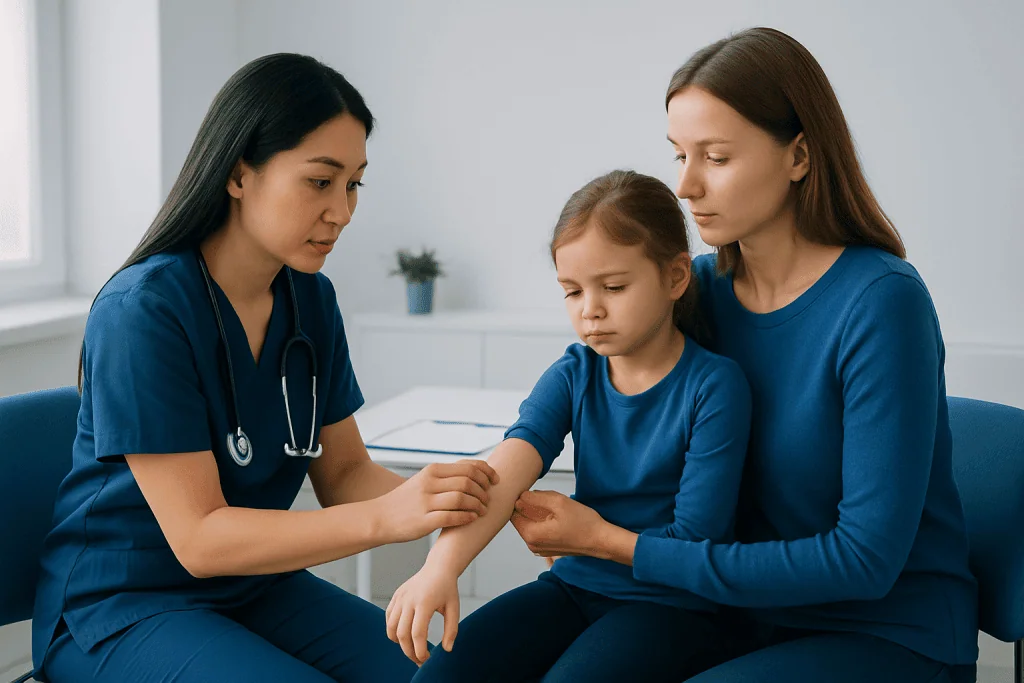
The most common sign of nursemaid’s elbow is that the child suddenly will not use one arm. The arm is often held slightly bent at the elbow and close to the body, with the palm facing down or inward. The child may resist attempts to turn the forearm or lift the arm.
Pain is usually present, but it may be mild to moderate rather than severe. Some children cry at first and then become calm while still protecting the arm. Others simply appear quiet and avoid moving it. The lack of obvious injury can make the condition easy to miss.
Typical features may include:
- Refusal to use the affected arm
- Holding the arm still against the body
- Discomfort when the forearm is rotated
- Little or no swelling
- No clear bruising or visible deformity in many cases
If there is marked swelling, obvious deformity, significant bruising, numbness, or severe ongoing pain, a different injury such as a fracture may be more likely. In that situation, urgent medical evaluation is especially important.
Causes and Risk Factors
The main cause of nursemaid’s elbow is traction on the lower arm. This means a pulling force is applied while the elbow is extended or partly extended. The movement allows the annular ligament to slip, leading to the partial displacement of the radial head. Although adults may use the phrase casually, this is a real joint injury that should be assessed by a professional.
Age is the most important risk factor. Children between about 1 and 4 years old are affected most often because the supporting structures of the elbow are not yet as strong or fully formed as they will be later. After age 5, the injury becomes less common, though it can still occur.
Other risk factors include a previous episode and situations where adults naturally hold children by the hands for balance or safety. Nursemaid’s elbow is usually accidental and common in everyday family life. It is not, by itself, a sign of poor care. However, clinicians may consider other causes if the history does not fit, if injuries are recurrent in an unusual pattern, or if other concerning signs are present. Broader evaluation may also be needed when another elbow problem such as elbow pain from a different condition is suspected in older children or adults, since nursemaid’s elbow is mainly a condition of early childhood.
Diagnosis
Diagnosis is usually based on the child’s age, the story of what happened, and the pattern of symptoms. A clinician will examine the arm, wrist, elbow, and shoulder to make sure there is no tenderness or injury elsewhere. The position of the arm and the child’s reluctance to rotate the forearm often provide important clues.
X-rays are not always necessary if the history and examination are typical for nursemaid’s elbow. However, imaging may be recommended if there was a fall, if the child has swelling or bruising, if there is concern for fracture, or if the child does not improve after treatment. In those cases, doctors may use X-ray imaging to look more closely at the bones and joint alignment.
Because several childhood injuries can look similar at first, a careful assessment matters. Conditions that may need to be ruled out include fractures around the elbow, wrist injuries, infection, or less common joint problems. If symptoms are unusual or the diagnosis is uncertain, referral to pediatric orthopedics may be appropriate for further evaluation.
Treatment Options
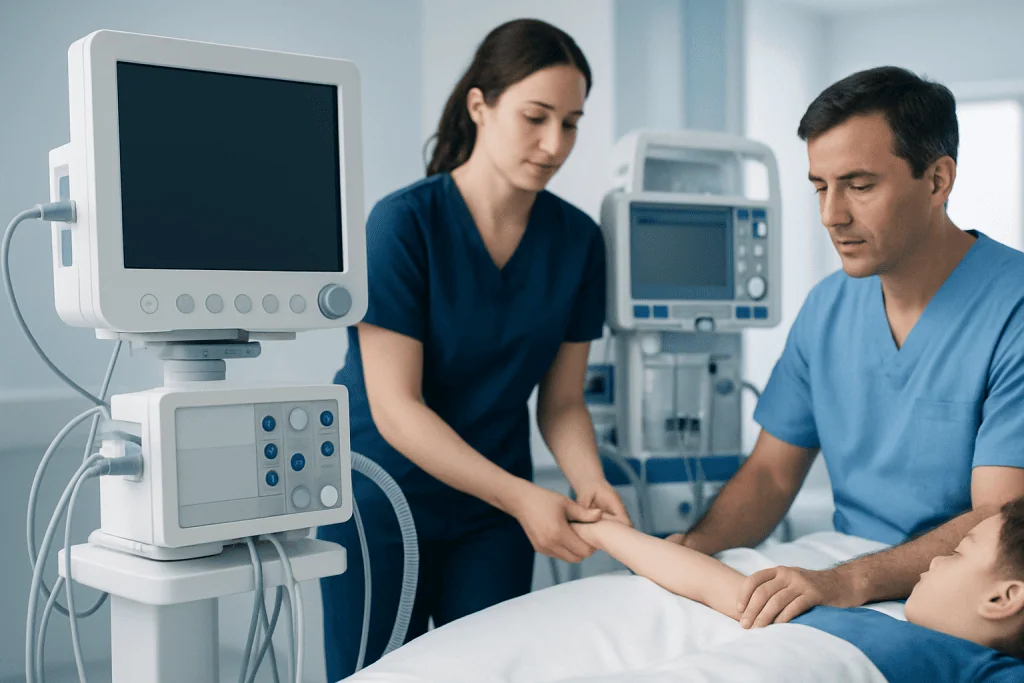
The standard treatment for nursemaid’s elbow is a gentle reduction maneuver performed by a trained clinician. This involves moving the child’s forearm in a specific way to guide the radial head and ligament back into their normal position. The maneuver is brief and is often done in a clinic, urgent care setting, or emergency department.
Many children begin using the arm again within minutes after successful reduction, although some may take a little longer. A short period of fussiness is common, especially because the child may be frightened by the injury and the examination. In typical cases, no cast or long-term immobilization is needed.
If the child does not start moving the arm, the clinician may repeat the maneuver, reassess the diagnosis, or order imaging. Ongoing refusal to use the arm raises the possibility of a fracture or another problem requiring a different plan. When diagnosis or recovery is less straightforward, care may involve orthopedic rehabilitation or specialist follow-up to restore normal movement safely, although this is not needed for most simple cases.
Caregivers should not try to reduce the elbow at home without medical training. A condition that looks like nursemaid’s elbow could instead be a broken bone, and forceful manipulation may worsen the injury.
Prevention and Self-care After Treatment
The best prevention is to avoid pulling, jerking, lifting, or swinging a young child by the hands, wrists, or forearms. Instead, adults can lift under the child’s arms or guide them by holding the upper arm or torso when possible. These simple changes can reduce the chance of recurrence.
After successful treatment, most children return to normal activities quickly. Caregivers can encourage gentle use of the arm and avoid rough play for a short time if the clinician advises it. If discomfort lingers, parents should follow professional guidance rather than assuming the problem has fully resolved.
Helpful prevention tips include:
- Do not swing children by their arms
- Avoid sudden pulls when crossing streets or stepping up
- Lift small children from under the armpits
- Teach family members and caregivers the safest way to hold and lift the child
- Seek reassessment if episodes happen repeatedly
Recurrent nursemaid’s elbow can happen in some children, especially while they are still young. Even then, the outlook is usually good. As the elbow matures, the risk generally decreases.
When to Seek Medical Care
Medical care should be sought promptly if a child suddenly stops using an arm after a pull, twist, or minor incident. Even when nursemaid’s elbow is likely, the child needs an examination to confirm the cause and receive safe treatment. Rapid assessment can also help relieve pain and restore movement sooner.
Urgent medical attention is especially important if there is swelling, visible deformity, severe pain, fever, numbness, skin color change, or the injury followed a significant fall or direct blow. These signs may point to a fracture, infection, or another condition that needs a different approach. Any child who does not begin using the arm again after treatment should be re-evaluated.
Families who need specialist assessment can benefit from coordinated pediatric care. Acibadem International’s multidisciplinary specialists and JCI-accredited hospitals diagnose and treat musculoskeletal injuries in international patients, including children who need imaging, specialist review, or follow-up after elbow injuries.
Frequently asked questions
What is nursemaid's elbow?
Nursemaid's elbow is a partial displacement of the radial head at the elbow joint, usually caused by a sudden pull on a young child's arm. It is also called radial head subluxation or pulled elbow. It is common in toddlers and usually responds well to treatment.
How can someone tell if a child has nursemaid's elbow?
A child with nursemaid's elbow often suddenly refuses to use one arm and holds it still by the side. There may be pain with movement, but swelling or bruising is often minimal or absent. A clinician should examine the child because fractures and other injuries can sometimes look similar.
Is nursemaid's elbow an emergency?
It is usually not a life-threatening emergency, but it should be assessed promptly by a medical professional. Quick evaluation helps confirm the diagnosis, rule out other injuries, and relieve discomfort. Urgent care is especially important if there is swelling, deformity, severe pain, or numbness.
Can nursemaid's elbow fix itself?
In some cases, the elbow may slip back into place on its own, but this cannot be relied on. Because the symptoms can also be caused by a fracture or another injury, medical assessment is still important. Caregivers should not force the arm or try home treatment without professional guidance.
Will a child need an X-ray for nursemaid's elbow?
Not always. If the child's history and examination are typical, a doctor may diagnose and treat nursemaid's elbow without imaging. An X-ray is more likely if there is swelling, bruising, a fall, unclear history, or no improvement after reduction.
Can nursemaid's elbow happen more than once?
Yes, recurrence can happen, especially in younger children who have had it before. The risk usually decreases as the child grows and the elbow becomes more stable. Avoiding pulling or lifting by the hands and wrists can help reduce the chance of another episode.
References
- American Academy of Pediatrics
- American Academy of Orthopaedic Surgeons
- National Institute of Arthritis and Musculoskeletal and Skin Diseases
- MedlinePlus
- Merck Manual
This article is for general information only and is not a substitute for professional medical advice. Please consult a qualified doctor about your individual situation.
Joint and spine care in Turkey — expert assessment & treatment
JCI-accredited · board-certified surgeons · reply within 24h
Add us as a Preferred Source to see more of our trusted health content across Google Search, AI Overviews and Discover.