

Nystagmus in Adults: Why the Eyes Move Involuntarily

Nystagmus is an involuntary, repetitive eye movement that may cause blurred vision, dizziness, or difficulty focusing. In adults, nystagmus can be congenital and persist into later life, or it can develop due to inner ear, neurological, medication-related, or other medical causes.
Key Takeaways
- Nystagmus is an involuntary, repetitive eye movement that may cause blurred vision, dizziness, or difficulty focusing.
- In adults, nystagmus can be congenital and persist into later life, or it can develop due to inner ear, neurological, medication-related, or other medical causes.
- Diagnosis usually includes an eye examination, a neurological assessment, and sometimes imaging or balance-related tests.
- Treatment depends on the cause and may include managing an underlying condition, medication review, vision support, or specialist care.
- New or sudden nystagmus in adults should be assessed promptly, especially if it occurs with weakness, severe dizziness, headache, or double vision.
Nystagmus in adults is a condition in which the eyes move involuntarily, often side to side, up and down, or in a circular pattern. It may affect vision, balance, and daily activities, and it can arise from eye, inner ear, or neurological causes.
Overview
Nystagmus in adults refers to involuntary, rhythmic eye movements that a person cannot control. The eyes may move side to side, up and down, or in a rotary pattern. Some people notice the movement itself, while others mainly notice its effects, such as blurred vision, trouble fixing their gaze, or a feeling that the environment is moving.
Nystagmus is not a disease on its own. Rather, it is a sign that can be linked to several different conditions affecting the eyes, the inner ear, or the brain and nervous system. In some adults, nystagmus has been present since infancy and continues into adult life. In others, it appears later and may require prompt evaluation to identify the cause.
The impact of nystagmus varies widely. Some adults have mild symptoms and adapt well, while others experience difficulties with reading, walking, driving, balance, or work tasks. Because the causes and effects can differ so much, assessment by an eye specialist or neuro-ophthalmology team is often an important first step.
Symptoms
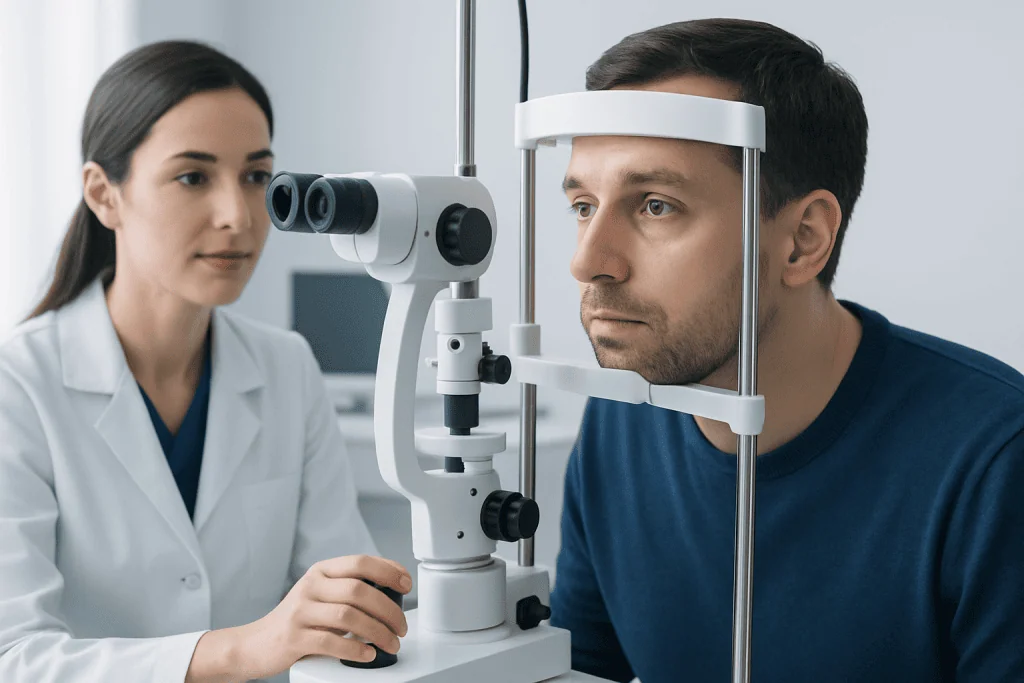
The most common feature of nystagmus is repeated, uncontrolled eye movement. Depending on the type, the movement may be fast in one direction and slower in the other, or it may be more even and pendular. Some people develop a head turn or head tilt that helps them see more clearly in a certain gaze position.
Symptoms may involve vision, balance, or both. Adults with nystagmus sometimes describe oscillopsia, which is the sensation that the world is moving or shaking. This symptom is more common in acquired nystagmus than in long-standing congenital forms, because the brain may have had less time to adapt.
- Blurred or unstable vision
- Difficulty focusing on objects
- Trouble reading or tracking moving objects
- Dizziness or vertigo
- Problems with balance or coordination
- Sensitivity to busy visual environments
- Head posture changes used to improve vision
Symptoms can be constant or intermittent. They may become more noticeable with fatigue, stress, illness, alcohol use, or certain head positions. If nystagmus begins suddenly, especially together with other neurological symptoms, it should be treated as a medical concern that needs timely evaluation.
Causes and Risk Factors

Adult nystagmus can be divided broadly into congenital or infantile nystagmus that persists into adulthood, and acquired nystagmus that starts later in life. Congenital forms are often associated with early visual pathway conditions or may occur without a clearly identified cause. Adults who have had it since childhood may already know their diagnosis and may not experience the sensation of the world moving.
Acquired nystagmus can result from problems in the inner ear balance system, the brainstem, the cerebellum, or the pathways that coordinate eye movements. Common examples include vestibular disorders, multiple sclerosis, stroke, head injury, migraine-related syndromes, and less commonly tumors or other neurological diseases. Some cases are related to medications, alcohol, or sedative substances that affect the nervous system.
Eye conditions that reduce visual input can also contribute to nystagmus, especially if they begin early in life. These may include retinal disease, optic nerve disorders, cataract present in infancy, or albinism. In adults, clinicians may also consider whether the eye movement is linked to a broader neurological condition such as multiple sclerosis or to a balance disorder involving the inner ear.
Risk factors depend on the underlying cause. They can include a history of neurological disease, recent infection affecting balance, head trauma, heavy alcohol use, exposure to certain medications, and pre-existing visual impairment. A careful medical history is important because the pattern of symptoms often helps guide the diagnosis.
How Nystagmus Is Diagnosed
Diagnosis begins with a detailed conversation about when the eye movements started, whether symptoms are constant or episodic, and whether there are associated problems such as vertigo, hearing changes, headache, double vision, numbness, or weakness. A doctor will also ask about past eye problems, neurological history, head injury, medications, and family history.
The examination usually includes testing visual acuity, eye alignment, and the way the eyes move in different directions. The clinician looks closely at the pattern of nystagmus, because its direction, speed, and triggers can suggest whether the cause is more likely to be vestibular, ocular, or neurological. In some patients, formal neuro-ophthalmic assessment is needed to distinguish between different types of involuntary eye movement.
Additional tests may be recommended depending on the findings. These can include imaging such as MRI scanning when a central nervous system cause is suspected, hearing and vestibular testing if an inner ear disorder is possible, and blood tests to evaluate metabolic, inflammatory, nutritional, or toxic causes. Some patients may also need a detailed retinal or optic nerve evaluation to look for an eye-related explanation.
The goal of diagnosis is not only to confirm that nystagmus is present, but also to determine why it is happening. Because acquired nystagmus can occasionally signal an urgent neurological problem, a structured evaluation helps identify people who need rapid treatment.
Treatment Options
Treatment for nystagmus in adults depends on the underlying cause, the severity of symptoms, and how much daily life is affected. There is no single treatment that works for every type. In some cases, symptoms improve when a triggering medication is adjusted, an inner ear problem settles, or an underlying neurological condition is treated.
When a specific cause is found, care focuses on that condition. For example, treating a vestibular disorder, managing inflammation, addressing a vitamin deficiency, or supporting recovery after head injury may reduce the eye movements or their impact. If nystagmus is related to a broader neurological issue, the person may need coordinated care through neurology services as well as ophthalmology or neuro-ophthalmology.
Supportive treatments can also help. Glasses or contact lenses may improve visual clarity in some patients, and low-vision support may be useful when reading or detailed tasks are difficult. Certain patients benefit from prisms, strategies that make use of a preferred head position, or vision rehabilitation. When dizziness or imbalance is prominent, physical therapy and rehabilitation may improve stability and confidence with movement.
In selected cases, medications or surgical approaches may be considered by specialists, particularly when symptoms are severe or long-standing. These decisions are individualized, based on the exact type of nystagmus and the person’s overall health. The most helpful plan is usually multidisciplinary, especially when the condition affects both vision and balance.
Prevention and Self-care
Nystagmus itself is not always preventable, because some forms are linked to inherited, developmental, or unavoidable neurological conditions. However, reducing risk factors for acquired nystagmus can be helpful. This includes using medications only as directed, limiting alcohol, protecting the head from injury, and seeking medical attention for new balance, vision, or neurological symptoms.
Self-care mainly focuses on reducing symptom burden and improving safety. Good lighting, larger print, screen adjustments, and taking visual breaks may make reading and computer work easier. Some adults find that symptoms worsen when they are tired, so prioritizing sleep and pacing visually demanding activities can be useful.
When dizziness or balance is present, simple home safety steps can lower the risk of falls. These may include clearing clutter, using handrails, and being cautious on stairs or uneven ground. Driving safety should be discussed with a doctor, since suitability depends on visual function, symptom severity, and local regulations.
If the condition is persistent or unexplained, regular follow-up is important. Near the end of the care pathway, some international patients may seek assessment at centers such as Acibadem International, where multidisciplinary specialists in JCI-accredited hospitals evaluate and treat neuro-ophthalmic and neurological conditions.
When to See a Doctor
Any new onset of involuntary eye movement in adulthood should be evaluated by a doctor. Although some causes are temporary or less serious, others need prompt treatment. Early assessment is especially important when symptoms interfere with vision, balance, reading, walking, or daily functioning.
Urgent medical attention is needed if nystagmus appears suddenly or is accompanied by symptoms that could suggest a neurological emergency. These include severe headache, new double vision, facial drooping, weakness, difficulty speaking, numbness, loss of coordination, fainting, or sudden hearing loss. In these situations, rapid evaluation can help rule out serious conditions such as stroke or acute brain or inner ear disorders.
People with long-standing nystagmus should also seek review if their symptoms change noticeably. Worsening blurred vision, new oscillopsia, frequent falls, increasing dizziness, or headaches may mean that the pattern has changed or that another problem has developed. Ongoing specialist care can help monitor function and adjust treatment when needed.
Frequently asked questions
What does nystagmus feel like in adults?
Some adults notice the eyes moving, but many mainly notice blurred or unstable vision. Others feel dizzy, off balance, or as though the environment is shaking or moving, a symptom called oscillopsia.
Is nystagmus in adults always a neurological problem?
No. Adult nystagmus can be related to neurological conditions, but it may also come from inner ear balance disorders, medication effects, alcohol, or long-standing eye conditions. A careful assessment helps identify the source.
Can nystagmus go away on its own?
Sometimes it can improve if the cause is temporary, such as a medication effect or a short-lived vestibular problem. In other cases it may persist and need ongoing management, especially if it is linked to a chronic eye or neurological condition.
Does nystagmus always affect vision?
Not always to the same degree. Some people have mild symptoms and function well, while others have significant trouble focusing, reading, or seeing clearly. The effect depends on the type of nystagmus and whether the brain has adapted to it over time.
How is nystagmus treated in adults?
Treatment focuses on the underlying cause whenever possible. Depending on the situation, this may involve adjusting medications, treating an inner ear or neurological disorder, improving visual support, or using rehabilitation strategies for balance and daily activities.
When is adult nystagmus an emergency?
Sudden nystagmus needs urgent evaluation if it comes with weakness, trouble speaking, severe headache, double vision, loss of coordination, fainting, or sudden hearing loss. These symptoms can point to a serious neurological or inner ear problem that should be assessed quickly.
References
- American Academy of Ophthalmology
- National Eye Institute
- National Institute of Neurological Disorders and Stroke
- MedlinePlus
- Mayo Clinic
This article is for general information only and is not a substitute for professional medical advice. Please consult a qualified doctor about your individual situation.
Explore treatments in Turkey — costs, top hospitals & a free quote
JCI-accredited · board-certified surgeons · reply within 24h
Add us as a Preferred Source to see more of our trusted health content across Google Search, AI Overviews and Discover.

More from the Health Library



Related Specialists

Dr. B.Belgin Aktaş
Pediatric Allergy
Prof. Dr. Aziz Kaya Alturfan
Orthopedic Surgery & Traumatology
Prof. Dr. Osman Bilgin Timuralp
Cardiology
Prof. Dr. Nigar Baykan
Anesthesiology