Ocular Herpes Simplex Pictures: An Evidence-Based Guide for Patients

Ocular herpes simplex is a herpes simplex virus infection that affects the eye, often the cornea. Pictures may suggest typical features, but an eye examination is needed to confirm the cause.
Key Takeaways
- Ocular herpes simplex is a herpes simplex virus infection that affects the eye, often the cornea.
- Pictures may suggest typical features, but an eye examination is needed to confirm the cause.
- Common symptoms include eye redness, pain, tearing, blurred vision, and sensitivity to light.
- Early treatment can reduce discomfort and lower the risk of corneal scarring or vision problems.
- Anyone with a painful red eye, worsening vision, or strong light sensitivity should seek medical care promptly.
Ocular herpes simplex pictures may show a red eye, watery discharge, light sensitivity, and cloudy or irritated areas on the cornea, but images alone cannot confirm the diagnosis. Because several eye problems can look similar, a prompt exam by an eye specialist is the safest way to identify ocular herpes simplex and protect vision.
Overview: What Ocular Herpes Simplex Pictures Can and Cannot Show
Ocular herpes simplex pictures are often searched by people who want to compare their symptoms with online images. These pictures may show a red eye, watering, eyelid swelling, a hazy cornea, or a small branching pattern on the corneal surface called a dendritic ulcer. While such images can be helpful for general awareness, they cannot reliably diagnose the condition.
Ocular herpes simplex is caused most often by herpes simplex virus type 1, the same virus that commonly causes cold sores. In the eye, it may affect the eyelids, the clear front window of the eye called the cornea, or deeper tissues. When the cornea is involved, the condition is often referred to as herpes simplex keratitis.
One reason online comparison is difficult is that many eye disorders can look alike in photographs. Conjunctivitis, corneal abrasions, dry eye disease, allergic eye irritation, and other infections can produce redness and discomfort that seem similar. An eye specialist uses magnification, special dyes, and a careful history to tell these conditions apart.
For patients, the most practical use of ocular herpes simplex pictures is educational rather than diagnostic. They can help a person recognize that a painful or light-sensitive red eye should not be ignored. If symptoms are present, especially if vision is blurred, a professional eye assessment is more important than self-diagnosis from images.
How Ocular Herpes Simplex May Look in Real Life
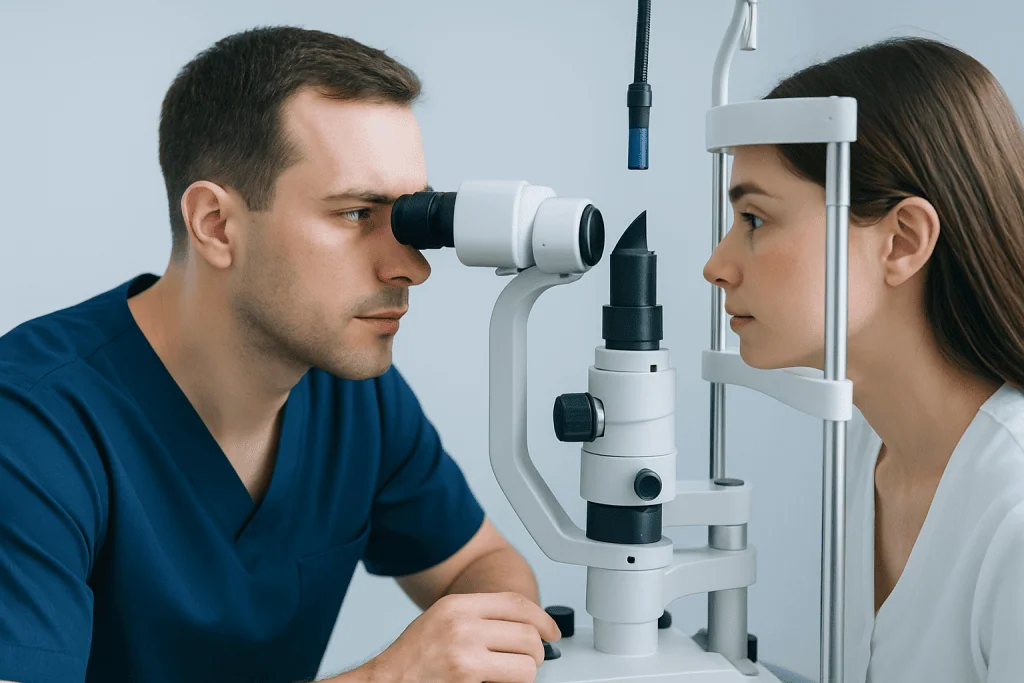
Pictures of ocular herpes simplex often focus on visible changes at the front of the eye. The white part of the eye may appear red, the eye may look watery, and the eyelids may seem mildly swollen. Some people notice that one eye is affected more than the other, which can be a useful clue, although both eyes are not impossible.
Close-up clinical images may show changes on the cornea itself. In some cases, the cornea looks cloudy or less clear than usual. During an eye exam, doctors may apply a fluorescent dye that highlights a branching lesion on the cornea; this is one of the better-known findings of herpes simplex keratitis, but it is not visible in every case and is usually best seen with specialized lighting.
What pictures usually do not capture well are symptoms the patient feels. Ocular herpes simplex can cause burning, stinging, a gritty sensation, eye pain, sensitivity to light, and blurred vision. These symptoms may be more important than the appearance in a photo because they help guide urgency and next steps.
It is also important to know that severe-looking redness does not always mean herpes, and mild-looking redness does not always mean the problem is minor. The degree of visible change in a picture may not match how inflamed the cornea is. That is why a symptom-based and exam-based evaluation is more reliable than appearance alone.
Symptoms, Causes, and Risk Factors

Symptoms of ocular herpes simplex can vary depending on which part of the eye is involved. Many people develop a red eye, tearing, pain, light sensitivity, blurred vision, and a feeling that something is in the eye. Some may also have eyelid blisters or a history of cold sores, though ocular herpes can occur without obvious lip lesions.
The infection usually develops when herpes simplex virus becomes active and affects the eye. In some people, this is a first infection. In others, it is a reactivation of a virus that has remained inactive in the body after an earlier exposure. Reactivation can happen without a clearly identifiable reason.
Possible risk factors include stress, fever, recent illness, eye injury, excessive sun exposure, and reduced immune function. Use of steroid eye drops without proper supervision can worsen certain forms of herpes eye disease, which is one reason self-treatment is not recommended.
- Common symptoms: redness, pain, tearing, light sensitivity, blurred vision
- Possible visible signs: eyelid sores, corneal haze, watery discharge
- Risk factors: prior herpes infection, eye trauma, illness, immune suppression
- Important note: symptoms can resemble conjunctivitis or other causes of red eye
How Doctors Diagnose It
Diagnosis starts with the symptoms and a focused eye examination. An ophthalmologist or other qualified eye doctor will ask when the symptoms began, whether there is a history of cold sores or prior eye infections, and whether contact lenses, injury, or eye medications may be involved. This history helps narrow the possibilities.
The eye exam typically includes checking vision, examining the eyelids and cornea under magnification, and looking for signs of inflammation. Special dye may be placed on the eye to highlight corneal surface damage. This can reveal the characteristic branching pattern associated with herpes simplex keratitis.
Sometimes additional tests are considered if the diagnosis is unclear or if deeper layers of the eye may be involved. The main goal is not only to confirm herpes simplex, but also to judge how much of the eye is affected and whether scarring risk is present. That information helps guide treatment safely.
Because a painful red eye has many possible causes, the diagnostic process is just as important as the treatment itself. Conditions such as bacterial keratitis, corneal abrasions, uveitis, and severe dry eye may require different care. In many cases, a general red-eye photo online cannot distinguish among them.
Treatment Options and Why Early Care Matters
Treatment depends on the part of the eye involved and whether the infection is active on the corneal surface or deeper within the eye. Doctors often use antiviral medicines to reduce viral activity. In some situations, lubricating drops and careful follow-up are also part of care. Treatment should be individualized because not every case is managed the same way.
If inflammation affects deeper eye tissues, an eye specialist may prescribe additional medication and monitor the response closely. Steroid eye drops are sometimes used in selected cases, but only under specialist supervision because they can worsen some forms of infection if used incorrectly. This is why over-the-counter redness relievers or leftover eye drops are not a substitute for proper care.
Early treatment matters because repeated or severe episodes may lead to corneal scarring, thinning, or lasting vision changes. People with recurring disease may need longer-term management and regular eye follow-up. When evaluation suggests structural corneal damage or more advanced eye disease, further eye care planning may be needed, including corneal treatment options in selected cases.
For patients with persistent surface discomfort or dryness after healing, supportive eye care can also be important. In broader eye-care settings, management may overlap with services used for vision-related eye procedures or specialist corneal assessment, although herpes treatment itself focuses first on controlling infection and inflammation.
Prevention, Recurrence, and Self-Care
Because herpes simplex can reactivate, prevention focuses on reducing triggers where possible and protecting the eye. It may help to avoid touching the eyes with unwashed hands, stop contact lens wear during any active eye irritation unless a doctor advises otherwise, and protect the eyes from excessive sunlight with appropriate eyewear. General health habits such as rest and managing stress may also support overall well-being.
People who have had ocular herpes before should be particularly cautious about self-prescribing eye drops. Steroid drops can be helpful in certain specialist-managed situations, but they can also make some forms of herpes eye disease worse. Any recurrence of redness, pain, or light sensitivity should be assessed rather than treated at home without guidance.
Self-care measures are supportive, not curative. A person may feel more comfortable using a clean cool compress over closed eyelids and limiting bright light exposure if photophobia is present. However, home remedies should never replace professional evaluation when vision is blurred or pain is significant.
Recurrent episodes are one reason long-term follow-up may be advised. Doctors may discuss recurrence prevention strategies and monitor for corneal changes over time. If another diagnosis is suspected, the care plan may shift toward conditions such as other corneal disorders or non-herpetic inflammatory eye disease.
When to Seek Medical Care
A painful red eye should be evaluated promptly, especially when symptoms include blurred vision, sensitivity to light, increasing tearing, or the sensation of a foreign body in the eye. These features can occur with ocular herpes simplex, but they can also signal other urgent eye conditions. Waiting for symptoms to settle on their own may increase the risk of complications.
Same-day or urgent assessment is especially important if the person wears contact lenses, has had a previous herpes eye infection, recently used steroid eye drops, or has a weakened immune system. New eyelid blisters or a recent cold sore may add to suspicion, but their absence does not rule out ocular herpes.
Emergency care may be needed if there is sudden vision loss, severe pain, major light sensitivity, or a visible injury to the eye. Children, older adults, and anyone unable to describe symptoms clearly should also be assessed carefully. If specialist input is needed, Acibadem International’s multidisciplinary eye specialists in JCI-accredited hospitals diagnose and treat eye infections and corneal disease for international patients.
In some cases, a broader evaluation may be recommended if symptoms overlap with other eye disorders. Depending on findings, doctors may consider advanced eye examination services or specialist management similar to care used for other vision-threatening eye conditions when the diagnosis is uncertain.
Frequently asked questions
Can ocular herpes simplex pictures diagnose an eye infection?
No. Pictures can show patterns that raise suspicion, but they cannot confirm ocular herpes simplex because several eye conditions look similar. An eye examination is needed to identify the cause and decide on safe treatment.
What does ocular herpes simplex usually look like?
It may appear as a red, watery eye with irritation, light sensitivity, and sometimes a cloudy-looking cornea. In clinical exams, doctors may see a branching corneal lesion after using special dye, but this is not always visible in ordinary photos.
Is ocular herpes simplex the same as pink eye?
No. Ocular herpes simplex is caused by herpes simplex virus affecting the eye, often the cornea, while pink eye usually refers to conjunctivitis from viral, bacterial, or allergic causes. They can look alike at first, which is why a doctor’s exam is important.
Can ocular herpes simplex go away on its own?
Some symptoms may improve, but the condition should not be left to self-diagnosis or self-treatment. Without proper care, herpes infection of the cornea can lead to scarring or vision problems in some cases.
When should someone worry about a red eye?
A red eye needs prompt medical attention if it is painful, sensitive to light, associated with blurred vision, or getting worse. Contact lens wearers and people with prior herpes eye disease should be especially cautious.
Can ocular herpes simplex come back?
Yes. Herpes simplex virus can reactivate after the first infection, so some people have recurrent episodes. Follow-up care can help manage recurrences and monitor the cornea for long-term changes.
This article is for general information only and is not a substitute for professional medical advice. Please consult a qualified doctor about your individual situation.
Explore treatments in Turkey — costs, top hospitals & a free quote
JCI-accredited · board-certified surgeons · reply within 24h
Add us as a Preferred Source to see more of our trusted health content across Google Search, AI Overviews and Discover.

More from the Health Library

Hebephrenic Schizophrenia — Explained by Medical Evidence, Not Myths

Acute Decompensated Heart Failure: What Patients Need to Know

Neutropenia — Explained by Medical Evidence, Not Myths

Gerontologist — Explained by Medical Evidence, Not Myths

Guselkumab: What Patients Need to Know