Older People Tattoos — Explained by Medical Evidence, Not Myths

Age alone does not prevent a person from getting a tattoo, but skin quality and medical history matter. Older skin may be thinner, drier and more fragile, which can make tattooing and healing more challenging.
Key Takeaways
- Age alone does not prevent a person from getting a tattoo, but skin quality and medical history matter.
- Older skin may be thinner, drier and more fragile, which can make tattooing and healing more challenging.
- Diabetes, poor circulation, immune suppression and blood-thinning medicines may increase risks and warrant medical advice first.
- Professional infection-control practices and careful aftercare are central to reducing avoidable complications.
- A new or changing skin lesion should be assessed by a clinician rather than covered with a tattoo.
Older people tattoos are not automatically unsafe: many older adults can be tattooed safely when their general health is stable, their skin is assessed carefully, and a licensed hygienic studio is chosen. Age-related skin changes, certain medical conditions and medicines can affect healing and should guide individual decisions.
Overview: What medical evidence says about tattoos in later life
Older people tattoos are increasingly common, and medical evidence does not identify chronological age by itself as a reason a person cannot have a tattoo. The more relevant questions are whether the person’s skin is healthy enough to heal, whether long-term health conditions are well managed, and whether the tattoo is performed in a setting with appropriate hygiene and infection-control standards. A thoughtful assessment before tattooing can help an older adult make a safe, informed choice.
A tattoo works by placing pigment in the dermis, a deeper layer of skin. This creates a controlled skin injury, followed by inflammation and healing. The body’s healing response changes with age, but the extent varies widely between people. Someone in later life who is generally well, has intact skin and follows aftercare advice may heal normally, while someone younger with uncontrolled diabetes or a weakened immune system may have greater risks.
It is also useful to separate facts from common myths. Tattoos do not inherently “poison” the body, cause cancer, or prevent routine medical scans. However, tattoo pigments can occasionally cause skin reactions, and they can sometimes create image artifacts during magnetic resonance imaging. Health professionals should be told about tattoos when relevant, particularly before procedures or imaging.
How aging skin can affect tattooing and healing
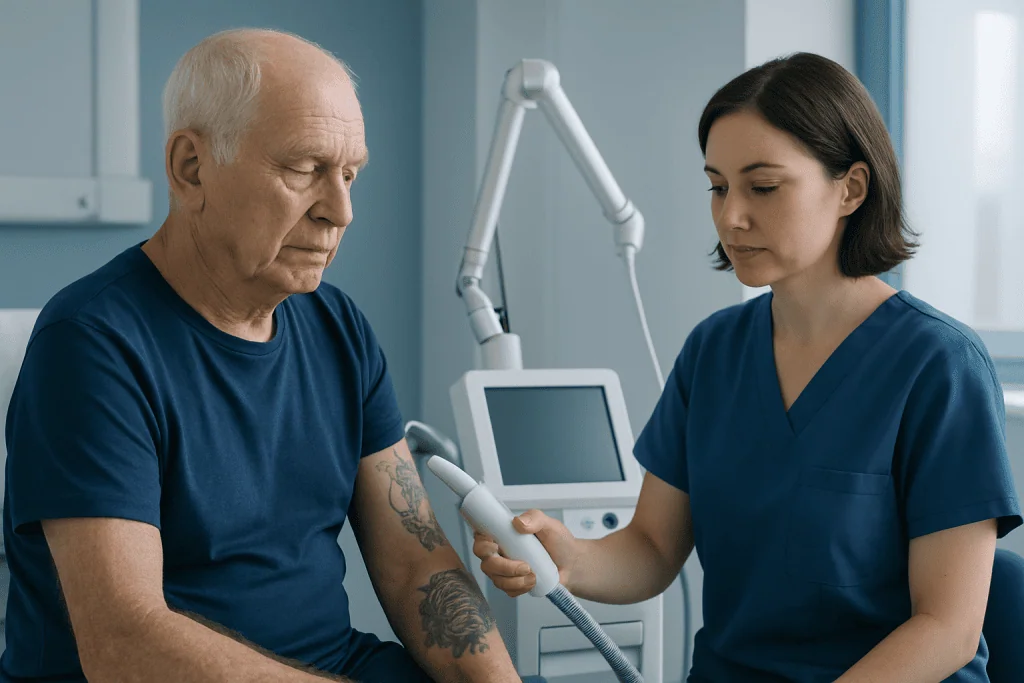
With age, the skin often becomes thinner, drier and less elastic. The supporting collagen and elastin network changes, and small blood vessels may become more delicate. These changes can make skin easier to bruise or tear and may affect how clearly fine lines or very detailed designs appear. A skilled tattoo professional may recommend a simpler design, appropriate placement and enough spacing between sessions.
Healing can take longer in some older adults, especially when circulation is reduced or nutrition is poor. Skin on the lower legs, ankles and feet may heal less reliably than skin on areas with better blood supply, such as the upper arm or upper back. This does not mean these areas can never be tattooed, but it is a reason to discuss placement carefully and to be especially attentive to aftercare.
Sun-related skin changes are also important. Skin that has had substantial sun exposure may have uneven pigment, fragility or rough, scaly areas. Tattoo pigment can make future examination of the skin more difficult if it covers a mole or persistent patch. Before choosing a design, an older adult should check the area for any new, changing, bleeding or non-healing lesion and arrange a medical assessment if there is uncertainty.
Tattoos also change visually over time. As skin loses elasticity or body shape changes, designs may soften, stretch or become less sharply defined. This is usually a cosmetic consideration rather than a health concern, but realistic expectations can help people select a design and location they will remain comfortable with.
Health conditions and medicines to consider first

A medical review is sensible before tattooing for anyone with a significant health condition, recent illness or a history of slow wound healing. Diabetes deserves particular attention because persistently high blood glucose can affect immune function, circulation and wound repair. A person whose diabetes is not well controlled, or who has reduced sensation or circulation in the legs and feet, should seek advice from their treating clinician before proceeding.
Conditions that affect circulation can also matter. Peripheral artery disease, chronic venous problems and severe swelling may increase the chance of delayed healing, particularly on the lower limbs. People with immune suppression due to illness or medicines, including some treatments for cancer, inflammatory disease or organ transplantation, may be more vulnerable to infection. Their medical team can advise whether tattooing should be postponed or avoided.
Blood-thinning medicines, including prescription anticoagulants and antiplatelet medicines, can increase bleeding and bruising during tattooing. A person should never stop, reduce or alter these medicines in order to get a tattoo without explicit guidance from the clinician who prescribed them. Similar caution applies to medicines that affect immune function, steroid treatment and medicines that can make skin more sensitive to sunlight.
A history of eczema, psoriasis, keloid scarring or pigment allergy should be discussed with a dermatologist or doctor. Tattooing may trigger an inflammatory skin condition in the injured area in some people, a response sometimes called the Koebner phenomenon. A past reaction to hair dye, temporary black henna tattoo products or cosmetics may also indicate a need for additional caution about pigment reactions.
Infection, allergy and other realistic tattoo risks
Infection is one of the main preventable risks of tattooing. It can occur when equipment, ink or water is contaminated, when sterile single-use needles are not used, or when aftercare is poor. Reputable studios use sterile equipment, disposable needles and gloves, clean work surfaces, and inks intended for tattooing. The person receiving the tattoo should be able to ask clear questions about hygiene practices and feel comfortable leaving if standards appear inadequate.
Normal early healing can include mild redness, tenderness, small amounts of clear fluid and itching. These symptoms should gradually improve. Infection may cause increasing pain, spreading redness, warmth, swelling, pus, fever or red streaks moving away from the tattoo. Serious infections are uncommon when hygiene is appropriate, but they need prompt medical assessment because early treatment is important.
Allergic reactions to tattoo pigment are less predictable. Red pigments are more often associated with delayed reactions, although any color may cause irritation or allergy. Reactions may arise soon after tattooing or months to years later and can include persistent itching, raised bumps, swelling or scaly skin limited to one color. A patch test cannot reliably rule out every future reaction, so a history of allergy should be discussed with a qualified clinician.
Rarely, tattoos may form raised scar tissue or granulomatous inflammation. Tattooed skin should still be checked routinely. A tattoo should not be used to camouflage a mole, scar with an unexplained change, or area already affected by a rash. Keeping clear photographs of moles before tattooing can also support future skin monitoring.
Making a safer decision before the appointment
Preparation begins with timing. It is generally wise to postpone tattooing during an acute illness, active skin infection, flare of a chronic skin disease, or a period of recovery from surgery or hospitalization. A person should arrive well rested, hydrated and having eaten a normal meal unless their medical team has given different dietary advice. Alcohol and recreational drugs can impair judgment and may increase bleeding, so they should be avoided before the appointment.
Choosing the studio is a health decision as well as an artistic one. The artist should use fresh, single-use needles, new gloves when needed, clean disposable barriers and sterile ink handling. The studio should provide written aftercare guidance and should not pressure a client to proceed when skin looks irritated, bruised or unsuitable. Older adults may benefit from booking a consultation first, rather than making a decision on the same day.
It can help to bring a current medicines list and to tell the artist about relevant conditions, without feeling obliged to disclose unnecessary personal information. Medical clearance may be appropriate for people with diabetes, circulatory disease, immune suppression, bleeding disorders or a history of major skin reactions. The aim is not to deny a person a tattoo, but to identify whether the plan, timing or location needs to change.
Large tattoos can require lengthy sessions and place more demand on the skin. Dividing a design into shorter sessions may be more comfortable and may allow the skin to recover between visits. The artist should avoid tattooing over varicose veins, areas with very thin skin, fragile bruising, open wounds, active rash or suspicious lesions.
Aftercare that supports healthy healing
Aftercare instructions from the tattoo professional should be followed closely, as methods may vary depending on the covering used and the location of the tattoo. In general, hands should be washed before touching the area. The tattoo should be cleaned gently as advised, patted dry with a clean towel or paper product, and protected with only the recommended amount of fragrance-free moisturizer or healing product.
Picking scabs, scratching, soaking the tattoo in baths, swimming pools, hot tubs or natural water, and exposing it to direct sunlight can interfere with healing. Loose, clean clothing can reduce friction. Once the tattoo is fully healed, regular broad-spectrum sun protection can help reduce fading and protect the surrounding skin from ultraviolet damage.
People with reduced mobility, impaired vision, arthritis in the hands or memory concerns may need practical support with aftercare. A family member or caregiver can help read instructions, observe the area and arrange care if warning signs arise. This is especially useful when the tattoo is in a location the person cannot easily inspect.
If a clinician prescribes treatment for a suspected tattoo complication, the person should tell them when the tattoo was done, which colors were used if known, and what products have been applied. Keeping the studio’s contact details and aftercare sheet may be useful. At Acibadem International, multidisciplinary specialists and JCI-accredited hospitals can assess skin, wound-healing and medical concerns for international patients when specialist advice is needed.
When to seek medical care
Medical care should be sought promptly for increasing rather than improving redness, severe pain, expanding swelling, warmth, pus, fever, chills, red streaks, or feeling generally unwell after tattooing. These signs can indicate an infection that needs professional assessment. Urgent help is also appropriate for trouble breathing, facial or throat swelling, widespread hives, faintness or other signs of a severe allergic reaction.
A non-urgent medical appointment is appropriate for persistent itching, bumps, a rash that lasts beyond initial healing, raised scarring, a wound that does not appear to close, or a reaction concentrated in one ink color. People with diabetes, immune suppression, circulation problems or blood-thinning treatment should have a lower threshold for contacting their clinician if healing does not progress as expected.
Any mole or skin mark that changes in size, shape, color or sensation, bleeds, crusts repeatedly or fails to heal should be evaluated by a healthcare professional. This is important whether or not the area is tattooed. Rather than covering a concerning mark with tattoo ink, assessment should come first so that appropriate examination and monitoring remain possible.
Frequently asked questions
Are tattoos safe for older people?
Tattoos can be safe for older people when overall health is stable, the skin is intact, and the procedure is performed in a hygienic professional setting. Age alone is not usually a medical contraindication. Individual risks are higher when there is poor circulation, uncontrolled diabetes, immune suppression or use of certain medicines.
Do tattoos heal more slowly in older adults?
Some older adults may heal more slowly because skin can become thinner, drier and less elastic with age. Healing may also be affected by circulation, diabetes, nutrition, smoking and medicines. A person who notices delayed healing or worsening redness should contact a healthcare professional.
Can a person taking blood thinners get a tattoo?
Blood-thinning medicines can increase bleeding and bruising during tattooing. The person should discuss the plan with the clinician who prescribes the medicine before booking. They should not stop or change prescribed anticoagulant or antiplatelet treatment without medical instruction.
Which tattoo locations may be less suitable for older skin?
Areas with fragile, sun-damaged or poorly circulating skin may be more difficult to tattoo and heal. The lower legs, ankles and feet deserve extra caution in people with diabetes, swelling or vascular disease. A qualified tattoo professional and, when needed, a clinician can help assess the proposed location.
Can tattoos hide signs of skin cancer?
Tattoo pigment can make it harder to notice subtle changes in moles and other skin lesions, especially if the design is dark or dense. A tattoo should not be placed over a mole or unexplained skin change. New, changing, bleeding or non-healing marks should be checked by a clinician.
How long should an older adult wait before swimming after a tattoo?
Swimming and soaking are usually avoided until the tattoo has fully healed, because prolonged water exposure may raise the risk of irritation or infection. Healing time differs by person, tattoo size and location. The tattoo professional’s aftercare guidance and a clinician’s advice should be followed if healing is slow or complicated.
This article is for general information only and is not a substitute for professional medical advice. Please consult a qualified doctor about your individual situation.
Explore treatments in Turkey — costs, top hospitals & a free quote
JCI-accredited · board-certified surgeons · reply within 24h
Add us as a Preferred Source to see more of our trusted health content across Google Search, AI Overviews and Discover.

More from the Health Library

Magnesium L-threonate: A Complete Medical Overview

Unsaturated Fats: An Evidence-Based Guide for Patients

Sumo Squat: An Evidence-Based Guide for Patients

HSV Testing — Explained by Medical Evidence, Not Myths

Palmoplantar Psoriasis: An Evidence-Based Guide for Patients