One Eye Bigger Than the Other: A Complete Medical Overview

Mild eye asymmetry is common and often normal. The difference may come from the eyelids or surrounding tissues, not the eye itself.
Key Takeaways
- Mild eye asymmetry is common and often normal.
- The difference may come from the eyelids or surrounding tissues, not the eye itself.
- Sudden changes, pain, double vision, or vision loss need prompt medical attention.
- Causes range from allergies and infections to thyroid eye disease, trauma, or orbital conditions.
- Evaluation may include an eye exam, eyelid measurements, and imaging such as CT or MRI.
One eye bigger than the other is commonly related to natural facial asymmetry, eyelid position, or differences in the tissues around the eye rather than the eyeball itself. However, a new, noticeable, or rapidly changing difference can sometimes signal an eye, nerve, thyroid, sinus, or orbital problem that needs medical evaluation.
Overview: What It Means When One Eye Looks Bigger
When a person notices one eye bigger than the other, the explanation is often less dramatic than it seems. In many cases, the eyes themselves are similar in size, but differences in the eyelids, eyebrows, facial muscles, or tissues around the eye create the appearance of asymmetry. Small side-to-side differences are very common and may simply reflect natural facial variation.
That said, a visibly larger-looking eye can also happen when one eyelid droops, one eye protrudes more than the other, or swelling changes the contour around the eye. The medical term for a protruding eye is proptosis, while a sunken appearance is called enophthalmos. Either can make one eye look disproportionately large or small.
The most useful question is not only how different the eyes look, but whether the change is new. Long-standing asymmetry seen in old photos is more likely to be normal anatomy. A recent change, especially with pain, redness, bulging, double vision, or reduced vision, deserves a professional eye assessment.
Common Signs That Help Explain the Difference
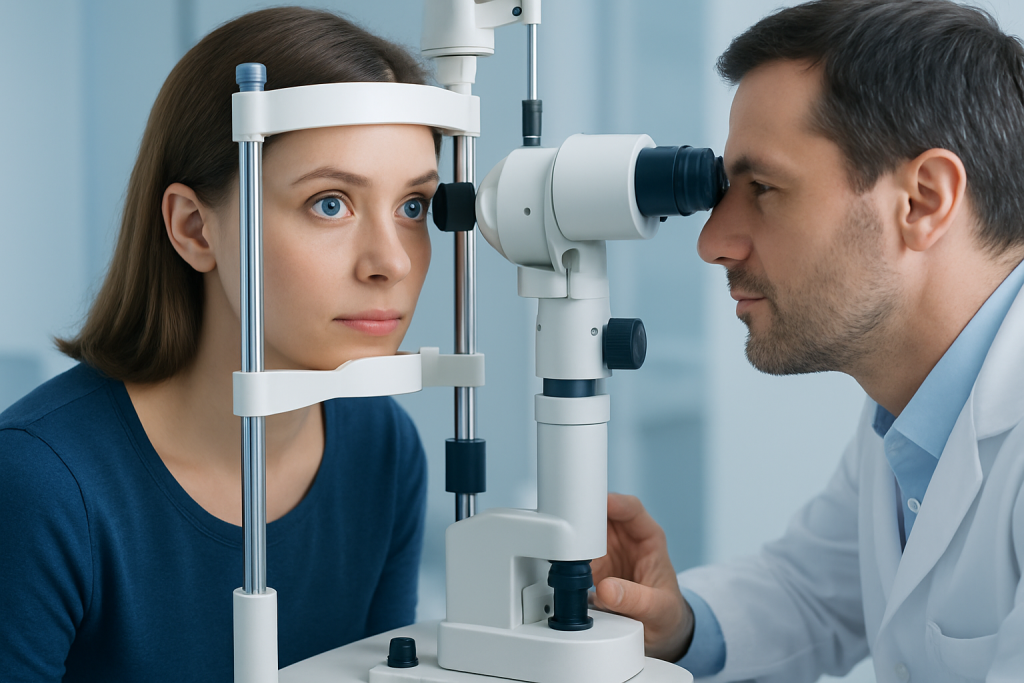
People may describe the problem in different ways: one eye looks more open, one eyelid seems lower, one eye appears to bulge, or one side of the face looks swollen. These details matter because they point to different possible causes. For example, a drooping eyelid may suggest ptosis, while true forward displacement may point to an orbital or thyroid-related issue.
Symptoms that may occur along with uneven-looking eyes include dryness, tearing, a gritty sensation, blurred vision, eye redness, headaches, facial pressure, or trouble fully closing the eyelid. Some people also notice that photographs show the difference more clearly than the mirror, especially if the asymmetry is mild.
A clinician often looks for patterns such as:
- One upper eyelid sitting lower or higher than the other
- One eye appearing more prominent or more deeply set
- Swelling of the eyelids or tissues around the eye
- Eye movement problems or double vision
- Changes in pupil size or facial muscle movement
These clues help distinguish a cosmetic concern from a medical one. They also help determine whether the issue is coming from the eye, the eyelid, the orbit, or the nerves and muscles that control eye position.
Possible Causes and Risk Factors

Natural asymmetry is one of the most common explanations for uneven eyes. Human faces are not perfectly symmetrical, and even small differences in bone structure, eyelid crease height, or eyebrow position can make one eye look bigger. Aging can also increase asymmetry as skin elasticity changes and tissues around the eyes shift over time.
Another common cause is a difference in eyelid position. A drooping lid, known as ptosis, can make one eye look smaller, causing the other eye to appear larger by comparison. Eyelid swelling from allergies, irritation, styes, or infection can have the same effect. In some people, facial nerve weakness or prior eyelid surgery may also alter eyelid shape.
True forward bulging of one eye may happen with thyroid eye disease, inflammation of the orbit, bleeding after trauma, tumors, vascular conditions, or sinus-related problems that affect the tissues behind the eye. Thyroid eye disease is a well-known cause of a prominent or staring appearance and may occur with or without obvious thyroid symptoms. In some cases, the appearance overlaps with problems evaluated in exophthalmos.
Risk factors depend on the underlying cause but may include recent injury, sinus infection, autoimmune thyroid disease, previous eye or facial surgery, contact lens irritation, neurological disease, and a family history of eyelid or thyroid disorders. Children and adults can both develop eye asymmetry, but the reasons may differ by age, so the context is important.
How Doctors Evaluate One Eye That Looks Bigger
Diagnosis begins with a careful history. A doctor usually asks when the difference was first noticed, whether it has changed over time, and whether symptoms such as pain, double vision, vision changes, headaches, or recent trauma are present. Looking at older photos can be surprisingly helpful in deciding if the asymmetry is new or long-standing.
The physical examination may include checking vision, eye movements, pupil reactions, eyelid height, and the position of each eye within the orbit. An eye specialist may use measurements to see whether one eye truly protrudes more or whether the main issue is eyelid asymmetry. The doctor may also examine the face, thyroid area, and neurological function if needed.
Additional tests depend on the suspected cause. Blood tests may be used if thyroid disease or inflammation is suspected. Imaging such as a CT scan or MRI may be recommended if there is concern about the orbit, sinuses, trauma, masses, or nerve-related problems. If specialist input is needed, assessment by a neuro-ophthalmology team or an oculoplastic specialist may be appropriate.
The goal of testing is not only to confirm why one eye looks different, but also to make sure there is no threat to vision, eye movement, or the health of structures around the eye.
Treatment Options Depend on the Cause
There is no single treatment for one eye appearing bigger than the other because management depends on the reason behind the change. If the asymmetry is mild, stable, and due to normal anatomy, no medical treatment may be needed. In such cases, reassurance and monitoring are often enough.
When eyelid swelling is the problem, treatment may focus on the trigger. Allergies, irritation, or mild infection may improve with appropriate medical care, eyelid hygiene, and management of inflammation. If an eyelid droop is affecting vision or causing significant asymmetry, evaluation for oculoplastic surgery may be considered after the cause has been identified.
For thyroid-related orbital changes, treatment may involve control of thyroid disease, lubrication for dryness, and specialist-led care for eye movement or pressure problems. Orbital infections, trauma, or tumors require urgent or specialized treatment. In selected situations, care may include imaging-guided diagnosis, medication, surgery, or multidisciplinary review involving ophthalmology, endocrinology, ENT, or neurology.
For patients whose appearance change is linked to orbital crowding or pressure behind the eye, advanced treatment plans may occasionally include orbital decompression surgery. Any decision about treatment should be based on a full examination, because the safest and most effective approach depends on the exact diagnosis.
Self-Care, Monitoring, and Prevention
Self-care cannot correct every cause of eye asymmetry, but it can help protect the eyes and reduce discomfort while medical advice is being arranged. Avoid rubbing the eyes, especially if there is swelling or irritation. Using prescribed or doctor-recommended lubricating drops may help if dryness makes one eye feel more exposed or uncomfortable.
It can also be useful to monitor changes carefully. Taking clear photographs in similar lighting over time may help document whether the difference is stable or worsening. This is particularly helpful if the change is subtle, comes and goes, or seems related to allergies, fatigue, or facial swelling.
Prevention depends on the underlying condition. Good contact lens hygiene, prompt treatment of sinus or eyelid infections, careful control of thyroid disease, and eye protection during sports or risky activities may reduce the chance of some causes. In general, it is best not to self-diagnose a new bulging or drooping eye based only on online images, because different conditions can look similar.
If asymmetry is persistent, or if it is causing worry even without other symptoms, an eye examination can provide reassurance and establish whether the appearance is within normal variation.
When to Seek Medical Care
A person should seek medical care if one eye becomes noticeably bigger or more prominent without a clear explanation, especially if the change is recent. A routine but timely appointment is reasonable for persistent asymmetry, eyelid drooping, recurrent swelling, or cosmetic changes that were not present before.
Prompt or urgent assessment is important if the difference is accompanied by eye pain, redness, fever, bulging, double vision, reduced vision, severe headache, or difficulty moving the eye. These features can suggest infection, bleeding, nerve involvement, or increased pressure in the orbit and should not be ignored.
Emergency care is especially important after facial or eye trauma, or if there is sudden vision loss, a fixed bulging eye, or rapidly worsening swelling. Children with new eye asymmetry should also be assessed, because some pediatric causes need early treatment to protect vision and eye development.
Near the end of the evaluation pathway, some people may need coordinated care across specialties. Acibadem International’s multidisciplinary specialists in JCI-accredited hospitals diagnose and treat eye, orbital, thyroid-related, and neurological causes of facial and eye asymmetry for international patients.
Frequently asked questions
Is it normal to have one eye bigger than the other?
Yes. Mild facial and eyelid asymmetry is very common, and many people naturally have one eye that appears slightly more open than the other. If the difference has been stable for years and there are no symptoms, it is often normal anatomy.
Can one eye look bigger even if the eyeball is normal?
Yes. Often the apparent size difference comes from the eyelids, eyebrows, or tissues around the eye rather than the eyeball itself. A drooping lid on one side can make the opposite eye look larger by comparison.
What conditions can cause one eye to suddenly look bigger?
A sudden change can be caused by swelling, trauma, infection, thyroid eye disease, bleeding behind the eye, or problems affecting the nerves or muscles around the eye. Because some of these conditions can threaten vision, sudden asymmetry should be assessed promptly.
How do doctors tell whether it is the eyelid or the eye itself?
Doctors examine eyelid height, eye position, pupil responses, and eye movements. They may also compare measurements of how far each eye sits forward in the orbit and order imaging if the cause is not clear.
Can allergies make one eye look bigger than the other?
Yes. Allergies can cause swelling of one or both eyelids, making one eye look larger or more closed depending on the pattern of swelling. Allergy-related changes are often accompanied by itching, tearing, or redness.
Will treatment always require surgery?
No. Treatment depends on the cause, and many cases do not require surgery. Some people only need observation, medications, treatment of allergies or thyroid disease, or reassurance after a normal examination.
References
- American Academy of Ophthalmology
- National Eye Institute
- Mayo Clinic
- Merck Manual Professional Edition
This article is for general information only and is not a substitute for professional medical advice. Please consult a qualified doctor about your individual situation.
Explore treatments in Turkey — costs, top hospitals & a free quote
JCI-accredited · board-certified surgeons · reply within 24h
Add us as a Preferred Source to see more of our trusted health content across Google Search, AI Overviews and Discover.

More from the Health Library

Histamine Intolerance — Explained by Medical Evidence, Not Myths

Phenylephrine Hcl: An Evidence-Based Guide for Patients

Ventriculostomy: A Complete Medical Overview
Hypoallergenic Dog Breeds: An Evidence-Based Guide for Patients

Hers Weight Loss Reviews: An Evidence-Based Guide for Patients