Ora Cataract Surgery: Procedure, Recovery and Results

The ORA System is a measurement tool used during cataract surgery; it does not remove the cataract by itself. It may help guide lens power selection and toric lens alignment in selected patients.
Key Takeaways
- The ORA System is a measurement tool used during cataract surgery; it does not remove the cataract by itself.
- It may help guide lens power selection and toric lens alignment in selected patients.
- Most cataract procedures are outpatient operations, with no routine bed rest required afterward.
- Vision commonly improves over days to weeks, although complete healing and prescription stabilization can take longer.
- All cataract surgery carries risks, so lens choices and the role of ORA should be discussed with an ophthalmologist.
ORA cataract surgery refers to cataract surgery performed with the ORA System, an intraoperative aberrometry tool that takes real-time eye measurements during the operation. These measurements can help the surgeon confirm or refine intraocular lens selection and alignment, particularly when correcting astigmatism or planning premium lens options.
Overview: What Is ORA Cataract Surgery?
ORA cataract surgery is cataract surgery performed with intraoperative wavefront aberrometry, most commonly the ORA System. During the operation, the system measures how light travels through the eye after the cloudy natural lens has been removed. The surgeon can use this information to support decisions about the power and positioning of the artificial lens, called an intraocular lens (IOL).
The cataract itself is usually removed using phacoemulsification, a standard technique in which ultrasound energy breaks up the cloudy lens through a very small incision. The ORA System does not replace the surgeon, laser cataract surgery, or the cataract-removal procedure. It is an additional source of real-time information that may be useful when planning refractive outcomes.
Cataracts are a common cause of gradual blurred vision, glare and reduced contrast sensitivity. When vision changes begin to affect reading, driving, work or other daily activities, an ophthalmologist can assess whether cataract treatment is appropriate and discuss the available lens options.
How ORA Works and Who May Be a Candidate
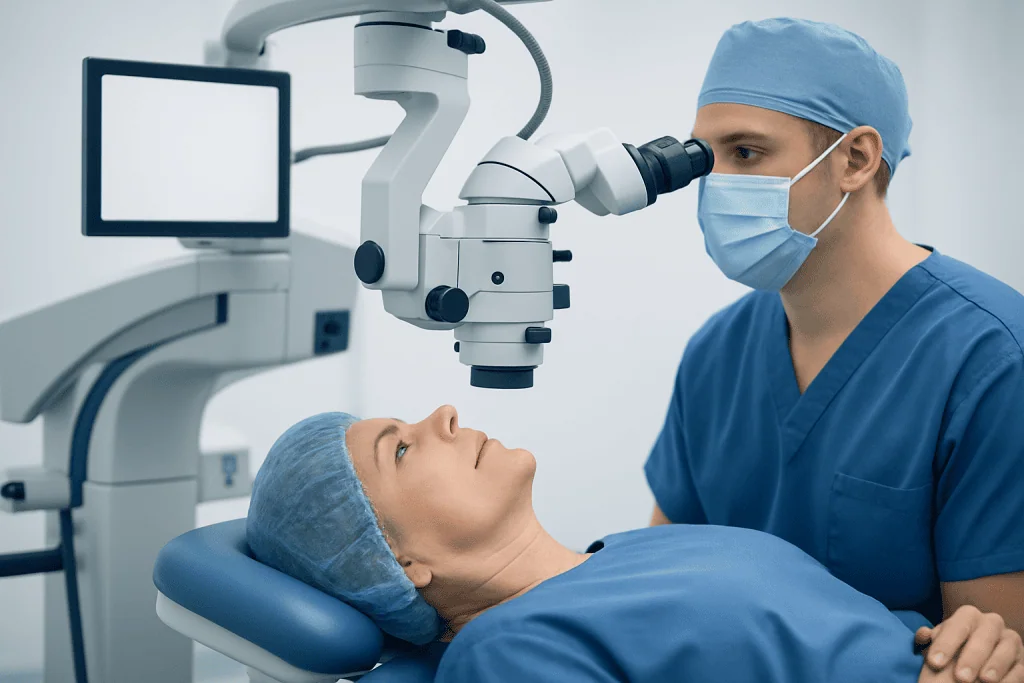
Before cataract surgery, clinicians calculate IOL power using eye measurements such as corneal curvature and eye length. These preoperative calculations are highly useful, but certain factors can make achieving a planned refractive result less predictable. ORA adds an intraoperative measurement after the cataract has been removed, when the eye is in a controlled surgical setting.
The surgeon briefly obtains a measurement while the patient is lying still and looking toward a fixation light. The results may help confirm the planned lens power, suggest an alternative power, or help optimize the orientation of a toric IOL designed to correct corneal astigmatism. It may be considered for people receiving toric, multifocal or extended-depth-of-focus lenses, as well as some people who have previously had laser vision correction.
Not every person needs or benefits from intraoperative aberrometry. Dense corneal scars, marked dryness, unstable corneal surface disease, difficulty maintaining fixation, or certain eye conditions can limit the quality or usefulness of measurements. The ophthalmologist considers the overall health of the eye, visual goals, prior operations and the reliability of preoperative testing when recommending an approach.
People interested in reducing dependence on glasses may also discuss smart lens surgery options with their eye specialist. The most suitable IOL depends on eye anatomy, lifestyle needs and willingness to accept possible visual trade-offs, such as halos around lights with some lens designs.
ORA Procedure for Cataract Surgery: Step by Step

On the day of surgery, the eye is dilated and numbed with anesthetic eye drops; some patients also receive medication to help them relax. Cataract surgery is typically performed as an outpatient procedure. The person remains awake but should not feel pain, although they may notice lights, movement or gentle pressure.
The surgeon makes tiny incisions in the cornea, opens the thin capsule surrounding the lens and uses phacoemulsification to remove the cloudy lens material. Once the cataract has been removed, the eye is filled with a clear fluid. At this point, intraoperative aberrometry can be performed to assess the eye and support IOL selection.
The chosen IOL is then placed inside the lens capsule. If a toric IOL is used, the surgeon aligns it on the appropriate axis to address astigmatism; ORA measurements may be used to help verify that alignment. The small incisions usually seal without stitches. The procedure often takes a short time, but preparation and recovery-room observation make the overall visit longer.
People should arrange for an adult to take them home and follow the individual instructions provided by their surgical team. Cataract surgery can also be paired with other carefully selected eye-care approaches, including laser eye surgery in appropriate situations, although these are separate procedures with different indications.
Benefits, Limitations and Risks
The main benefit of ORA cataract surgery is that it gives the surgeon an additional measurement at a key point during surgery. This may be especially helpful for refining lens power choices and astigmatism correction in selected eyes. The intended outcome is clearer vision after cataract removal, with the degree of glasses independence depending largely on the chosen IOL and the health of the rest of the eye.
ORA is not a guarantee of perfect vision or complete freedom from glasses. Vision can still be affected by dry eye, corneal irregularity, macular disease, glaucoma, retinal conditions or the normal healing response. Even with careful planning, some people may need glasses for particular activities or may later consider an adjustment procedure if a clinically meaningful refractive error remains.
Potential risks are generally those of cataract surgery itself. They include inflammation, infection, bleeding, pressure changes in the eye, corneal swelling, retinal detachment, lens-position changes and a need for additional treatment. Serious complications are uncommon, but prompt assessment is important if concerning symptoms occur.
Online ORA cataract surgery reviews can describe individual experiences, but they cannot predict a particular person’s outcome. A balanced discussion with an ophthalmologist should focus on the eye examination, expected benefit, lens alternatives, possible limitations and the individual’s visual priorities.
Recovery Timeline and Everyday Activities
Most people go home on the day of surgery. Mild scratchiness, watering, light sensitivity, blurred vision or a feeling that something is in the eye can occur early on and usually improves. Prescribed eye drops help control inflammation and reduce infection risk; they should be used exactly as directed.
There is no standard requirement for bed rest after cataract surgery. Resting on the day of the procedure is sensible, but gentle walking and ordinary light activity are commonly allowed. Patients are usually asked to avoid rubbing or pressing on the eye, heavy lifting, strenuous exercise, swimming and dusty or unclean water exposure for the period advised by their surgeon.
Vision may seem clearer within a day or several days, but it can fluctuate during healing. Many people return to routine tasks relatively quickly, while final visual stabilization may take several weeks. Follow-up visits allow the surgeon to monitor healing, eye pressure and the position of the implanted lens.
After 3 days of cataract surgery, watching television is usually acceptable if it feels comfortable. Television does not damage the healing eye, but taking breaks, using lubricating drops if recommended and avoiding eye strain can improve comfort. Driving should wait until vision is clear enough and the surgeon confirms that it is safe.
Questions About Bending, Bed Rest and Screen Use
How long is bed rest after cataract surgery? Routine bed rest is not usually necessary after uncomplicated cataract surgery. Most patients rest at home on the day of surgery and then gradually resume light activities, following their ophthalmologist’s specific guidance. Recovery instructions may differ if there were complications or another eye procedure was performed at the same time.
What happens if I accidentally bend over after cataract surgery? Brief accidental bending is unlikely to cause harm in most uncomplicated recoveries. However, repeated deep bending, straining and heavy lifting may temporarily increase pressure in the eye, which is why surgeons often advise avoiding these activities early in recovery. If bending is followed by pain, sudden vision loss, new flashes, many floaters, increasing redness or discharge, the surgical team should be contacted promptly.
Can I watch TV after 3 days of cataract surgery? In most cases, yes. Watching TV does not interfere with healing, provided the patient is comfortable and follows drop schedules and activity restrictions. If vision is blurry or bright screens cause discomfort, shorter viewing periods and lower screen brightness may be more comfortable.
Patients should always prioritize the instructions given by their own surgeon, as advice can vary according to the eye condition, the type of lens used and the person’s recovery progress.
Costs, Coding and When to Seek Medical Care
ORA cataract surgery cost varies according to the healthcare system, hospital, surgeon, insurance coverage, lens type and whether refractive services are included. An ORA cataract surgery CPT code may not be a straightforward single item for patients to interpret, because billing can depend on local coding rules and whether the measurement is considered part of a surgical or refractive package. A clinic’s billing team can explain anticipated charges and coverage before treatment.
Is ORA worth it for cataract surgery? ORA may be worth considering for patients whose surgeon believes real-time intraoperative measurements could meaningfully improve lens planning, particularly with astigmatism-correcting or premium IOLs and in some post-refractive-surgery eyes. It may offer little additional value for others with straightforward measurements and standard lens goals. The decision should be based on clinical suitability rather than advertising claims or reviews alone.
When to seek medical care: Contact the eye surgeon urgently after cataract surgery for worsening or severe pain, rapidly declining vision, a curtain-like shadow, new flashes or a sudden shower of floaters, marked redness, nausea with eye pain, or pus-like discharge. These symptoms do not always indicate a serious problem, but they need timely assessment.
Acibadem International’s multidisciplinary ophthalmology specialists at JCI-accredited hospitals diagnose and treat cataracts for international patients, with care plans based on individual eye findings and visual needs.
Frequently asked questions
What does ORA mean in cataract surgery?
ORA refers to intraoperative wavefront aberrometry, a method of measuring the eye during cataract surgery. The information can help the surgeon confirm or refine intraocular lens power and, in some cases, toric lens alignment.
Is ORA cataract surgery different from laser cataract surgery?
Yes. ORA is a measurement technology used during surgery, while laser cataract surgery uses a femtosecond laser for selected surgical steps. Either approach may be combined with standard cataract surgery planning, depending on the patient and the surgeon’s recommendation.
Will ORA cataract surgery eliminate the need for glasses?
It may support more precise lens planning, but it cannot guarantee freedom from glasses. Whether glasses are needed afterward depends on the implanted lens, healing, residual refractive error and other eye conditions.
How soon can vision improve after ORA cataract surgery?
Some people notice clearer vision within the first few days, while others improve more gradually. Vision can fluctuate during the early healing period, and the final prescription may take several weeks to stabilize.
Does accidentally bending over ruin cataract surgery?
A single brief episode of bending over is usually unlikely to ruin an uncomplicated cataract surgery result. Patients should avoid repeated straining and contact their surgeon if they develop pain, worsening vision, marked redness or other new symptoms.
Can a patient read or watch television after cataract surgery?
Reading and television are usually safe when they feel comfortable, including several days after surgery. Short sessions, rest breaks and the prescribed eye drops can help if the eye feels dry or sensitive to light.
References
- American Academy of Ophthalmology
- National Eye Institute
- U.S. Food and Drug Administration
- Royal College of Ophthalmologists
This article is for general information only and is not a substitute for professional medical advice. Please consult a qualified doctor about your individual situation.
Cataract Surgery in Turkey — costs, top hospitals & a free quote
JCI-accredited · board-certified surgeons · reply within 24h
Add us as a Preferred Source to see more of our trusted health content across Google Search, AI Overviews and Discover.

Ophthalmology
Comprehensive eye care from laser vision correction to retina, cornea and cataract surgery.
75 specialists in this unit