Orthopedic Doctor Near Me: How to Choose the Right Specialist

An orthopedic specialist treats problems of the bones, joints, muscles, ligaments, tendons, and spine. The best choice depends on the specific condition, such as sports injury, arthritis, fracture, or back pain.
Key Takeaways
- An orthopedic specialist treats problems of the bones, joints, muscles, ligaments, tendons, and spine.
- The best choice depends on the specific condition, such as sports injury, arthritis, fracture, or back pain.
- Credentials, subspecialty training, and experience with the needed procedure are important factors to check.
- A good doctor explains the diagnosis, discusses non-surgical and surgical options, and answers questions clearly.
- Second opinions can be helpful when the diagnosis is unclear or surgery is being considered.
Searching for an orthopedic doctor near me is often the first step when pain, stiffness, or an injury starts to affect daily life. The right specialist is one who fits the patient’s condition, offers clear communication, and uses a treatment plan tailored to the person’s goals.
Overview
When someone searches for an orthopedic doctor near me, they are usually looking for help with pain, reduced movement, or an injury that is not improving on its own. Orthopedic doctors specialize in the musculoskeletal system, which includes bones, joints, muscles, ligaments, tendons, and the spine.
Not every orthopedic problem needs surgery. Many patients do best with a combination of rest, activity changes, physical therapy, medication, bracing, or image-guided procedures. The key is finding a specialist who understands the specific problem and can recommend the most appropriate next step.
Choosing the right doctor is not only about proximity. It is also about matching the doctor’s expertise to the condition, feeling comfortable asking questions, and having confidence in the care plan.
Common Reasons to See an Orthopedic Doctor
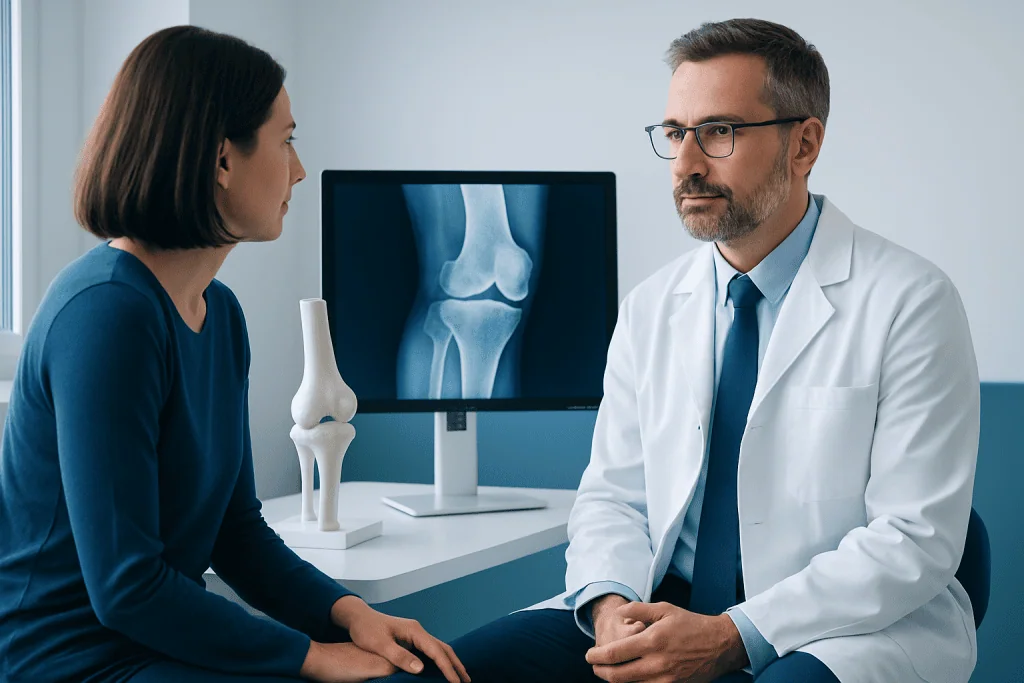
People often visit an orthopedic specialist for persistent joint pain, swelling, stiffness, limited motion, or pain that worsens with activity. Common concerns include arthritis, back or neck pain, sports injuries, tendon problems, herniated discs, fractures, and shoulder, knee, hip, or hand conditions.
Orthopedic care may also be needed after an accident, a fall, or a repetitive strain injury. Some people are referred after imaging or other tests show a problem that may benefit from specialist evaluation.
In children and adolescents, orthopedic assessment may be needed for walking concerns, scoliosis, growth-related issues, or injuries in active young athletes. In older adults, pain and mobility changes are often related to wear-and-tear conditions or bone health.
How to Choose the Right Specialist

The best orthopedic doctor for one person may not be the best fit for another. A patient with a complex knee injury may want a sports medicine orthopedist, while someone with chronic back pain may need a spine specialist. Matching the doctor’s subspecialty to the problem can improve the usefulness of the visit.
It is also helpful to look at training, board certification, and experience with the condition or procedure being considered. For example, patients considering joint replacement may want a surgeon who frequently performs that operation, while someone with a hand injury may benefit from a hand and upper-extremity specialist.
Communication matters just as much as credentials. A good doctor explains findings in plain language, discusses alternatives, and respects the patient’s preferences and concerns. Patients often feel more supported when the clinic team is organized, responsive, and able to coordinate tests, therapy, and follow-up care.
- Check whether the doctor has a relevant subspecialty.
- Ask how often the doctor treats the same condition.
- Look for clear explanations and shared decision-making.
- Consider access to imaging, physical therapy, and rehabilitation support.
What to Ask Before the Appointment
Before scheduling, it helps to prepare a few practical questions. Patients may want to ask whether the doctor treats their specific condition, whether they provide both non-surgical and surgical care, and how follow-up visits are usually handled.
During the first visit, it is reasonable to ask what may be causing the symptoms, what tests are needed, and what the likely treatment options are. A thoughtful orthopedic doctor should explain the diagnosis, expected recovery, and when to return if symptoms change.
Patients can also ask whether the doctor works with physical therapists, imaging specialists, pain management teams, or other professionals. In many cases, musculoskeletal care works best when it is coordinated across specialties.
Diagnosis: What an Orthopedic Evaluation May Include
An orthopedic evaluation usually begins with a detailed history of the symptoms, including when they started, what makes them better or worse, and whether there was an injury. The doctor may ask about work demands, sports, previous treatment, and other medical conditions.
The physical examination checks movement, strength, swelling, alignment, tenderness, stability, and nerve function. Depending on the problem, the doctor may order X-rays, MRI, CT, ultrasound, or blood tests to better understand the cause of symptoms.
In some situations, a doctor may recommend a referral to physical therapy or another specialist before deciding on surgery. For certain conditions, diagnostic injections or other procedures may help confirm the source of pain.
Treatment Options
Orthopedic treatment is often stepwise, beginning with the least invasive option that is likely to help. Common approaches include activity modification, rest, ice or heat, braces or splints, physical therapy, and medications recommended by the doctor.
When symptoms do not improve, procedures may be considered. These can include injections for inflammation or pain, fracture treatment, arthroscopy, ligament or tendon repair, spinal procedures, or joint replacement in selected cases. The best option depends on the diagnosis, severity, age, overall health, and personal goals.
It is important that patients understand both the benefits and the recovery process for any procedure. For those exploring specialized care, an orthopedic team may recommend options such as joint replacement surgery or arthroscopic surgery when appropriate, but only after a careful evaluation and discussion of alternatives.
Prevention & Self-care
Many musculoskeletal problems can be reduced or managed with healthy daily habits. Regular movement, strengthening exercises, balanced posture, safe lifting techniques, and maintaining a healthy body weight can all support joint and spine health.
For people who play sports or do repetitive work, proper warm-up, rest between activities, and using supportive equipment may lower injury risk. Good footwear and ergonomics can also make a difference, especially for the knees, back, and feet.
Self-care should be matched to the condition. Some injuries improve with gentle movement and guided rehabilitation, while others need protection and rest. Patients should follow the treatment plan given by their doctor rather than trying to push through pain.
At Acibadem International, multidisciplinary specialists and JCI-accredited hospitals diagnose and treat orthopedic conditions for international patients in a coordinated setting.
When to See a Doctor
It is reasonable to see an orthopedic doctor when pain lasts more than a few days, keeps returning, limits normal activities, or follows a fall or sports injury. Persistent swelling, instability, numbness, weakness, or deformity also deserves medical evaluation.
Urgent assessment is appropriate if a patient cannot bear weight, has severe pain after an injury, notices a visible deformity, or develops sudden loss of movement or sensation. In these situations, prompt evaluation helps determine whether immediate treatment is needed.
Even when symptoms are not urgent, early assessment may prevent a problem from becoming harder to treat. A well-chosen orthopedic specialist can help clarify the diagnosis and guide recovery in a practical, patient-centered way.
Frequently asked questions
What does an orthopedic doctor treat?
An orthopedic doctor treats conditions affecting the bones, joints, muscles, tendons, ligaments, and spine. This includes injuries, arthritis, fractures, back pain, and many overuse problems. Some orthopedic doctors also focus on a specific area such as sports medicine, hand surgery, or spine care.
How is an orthopedic specialist different from a general doctor?
A general doctor can evaluate many common musculoskeletal complaints and may start treatment. An orthopedic specialist has advanced training in diagnosing and treating problems of the musculoskeletal system. They are often the right choice when pain is persistent, the diagnosis is uncertain, or a procedure may be needed.
Do all orthopedic problems need surgery?
No. In many cases, the first treatment is non-surgical and may include physical therapy, activity changes, bracing, or medication. Surgery is usually considered only when it is likely to offer a clear benefit and other treatments have not been enough.
Should the doctor be a general orthopedist or a subspecialist?
That depends on the problem. For a simple fracture or common joint pain, a general orthopedist may be enough. For a complex hand, sports, spine, or joint replacement issue, a subspecialist may be a better match.
What should a patient bring to the first appointment?
It helps to bring prior imaging, test results, medication lists, and a summary of symptoms, including when they began and what makes them worse. Comfortable clothing that allows the doctor to examine the affected area is also useful. A list of questions can make the visit more productive.
When is a second opinion helpful?
A second opinion can be useful when surgery is being considered, symptoms are not improving, or the diagnosis is unclear. It may help the patient feel more confident about the treatment plan. This is a common and reasonable step in orthopedic care.
References
- American Academy of Orthopaedic Surgeons
- National Institute of Arthritis and Musculoskeletal and Skin Diseases
- Mayo Clinic
- NHS
This article is for general information only and is not a substitute for professional medical advice. Please consult a qualified doctor about your individual situation.
Joint and spine care in Turkey — expert assessment & treatment
JCI-accredited · board-certified surgeons · reply within 24h
Add us as a Preferred Source to see more of our trusted health content across Google Search, AI Overviews and Discover.