Over the Counter Eye Drops for Pink Eye: An Evidence-Based Guide for Patients

Pink eye is a symptom pattern, not a single disease, so treatment depends on the cause. Lubricating artificial tears are often the safest over-the-counter starting option for mild irritation.
Key Takeaways
- Pink eye is a symptom pattern, not a single disease, so treatment depends on the cause.
- Lubricating artificial tears are often the safest over-the-counter starting option for mild irritation.
- Antihistamine or antihistamine-mast cell stabilizer drops can help allergic pink eye.
- Redness-relief drops may reduce redness briefly but are not the best routine choice for many people.
- Pain, light sensitivity, blurred vision, or contact lens use are reasons to seek medical care promptly.
Over the counter eye drops for pink eye can help with comfort, especially for allergic or irritative conjunctivitis, but they do not treat every cause. The safest option depends on whether the pink eye is viral, bacterial, allergic, or caused by dryness or irritation.
Overview: Which over-the-counter eye drops can help?
Over the counter eye drops for pink eye can relieve burning, watering, itching, and general irritation, but they are not one-size-fits-all. In most cases, preservative-free artificial tears are the safest first option for temporary comfort because they dilute irritants and soothe the eye surface. If symptoms seem allergy-related, antihistamine eye drops may be more helpful than simple lubricants.
What matters most is the cause of the pink eye. “Pink eye” usually refers to conjunctivitis, which can be viral, bacterial, allergic, or irritative. Viral and allergic conjunctivitis are very common, while bacterial conjunctivitis is less common in many adults than people assume. That is why an evidence-based approach begins with symptom pattern, not just the color of the eye.
Over-the-counter drops can improve comfort, but they do not replace an eye examination when warning signs are present. Significant pain, sensitivity to light, reduced vision, thick pus-like discharge, eye injury, or symptoms in a contact lens wearer should not be managed with self-care alone. For background information on the condition itself, patients may read about conjunctivitis.
Understanding pink eye and its common causes
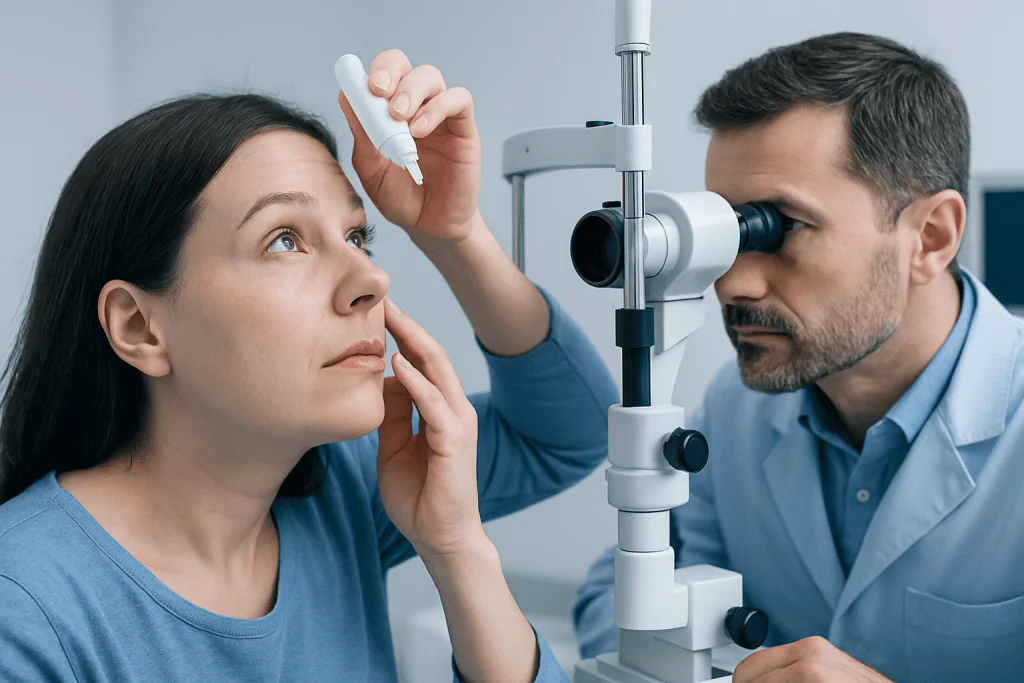
The conjunctiva is the thin, clear tissue that covers the white part of the eye and lines the inside of the eyelids. When it becomes inflamed, the eye may look pink or red and feel irritated. This inflammation can happen for several different reasons, and each cause can behave differently.
Viral conjunctivitis often begins in one eye and may spread to the other. It commonly causes watery discharge, a gritty feeling, and redness, and may happen along with a cold or sore throat. Antibiotic eye drops do not treat viruses, so care usually focuses on comfort and hygiene while the infection runs its course.
Allergic conjunctivitis more often affects both eyes and causes intense itching, tearing, and puffiness. It may occur seasonally or after exposure to dust, pollen, pet dander, or other triggers. Irritative conjunctivitis can follow smoke, chlorine, cosmetics, dry air, or foreign material in the eye. Bacterial conjunctivitis may cause more mucus or pus-like discharge and eyelids that stick together, especially on waking, but these symptoms can overlap with other causes. Other conditions such as dry eye can also mimic pink eye and cause redness and burning.
Types of over-the-counter eye drops and when they are used

Artificial tears are usually the most broadly useful nonprescription drops for pink eye symptoms. They help rinse away irritants, moisten the eye surface, and reduce the gritty or burning sensation. Preservative-free versions may be especially helpful for people who need frequent use or who have sensitive eyes.
Antihistamine eye drops, sometimes combined with a mast cell stabilizer, are designed for allergic symptoms such as itching, tearing, and swelling. These are often more effective than plain lubricating drops when allergies are the main trigger. They are not meant to treat bacterial infections, but they can be very helpful when symptoms clearly fit an allergic pattern.
Decongestant or “redness-relief” drops shrink superficial blood vessels to make the eye look less red for a short time. While they can improve appearance temporarily, they do not address the underlying cause and may lead to rebound redness with repeated use in some people. For this reason, many clinicians recommend using them sparingly, if at all, and favoring lubricants or allergy drops instead.
Some products combine antihistamines, lubricants, or decongestants. Reading the label matters because two bottles marketed for “red eyes” may work in very different ways. Patients who are unsure which type best fits their symptoms may benefit from professional guidance, especially if symptoms continue beyond a few days.
How to choose the right drop for symptoms
A practical way to choose over the counter eye drops for pink eye is to match the product to the most likely cause. If the main symptoms are itching in both eyes, watery discharge, and allergy triggers, an antihistamine eye drop is often the most targeted option. If the problem is burning, grit, mild redness, or irritation from screen use, wind, or dryness, artificial tears are often a reasonable first step.
If symptoms started with a cold and include watery eyes, mild crusting, and a sand-like sensation, viral conjunctivitis is possible. In that situation, lubricating drops and cool compresses may help, but improvement can take time. If there is thick discharge, worsening redness, or one eyelid is stuck shut repeatedly, a clinician may need to evaluate whether prescription treatment is necessary.
Contact lens wearers should be more cautious. Redness in a lens wearer can sometimes signal a more serious corneal problem rather than simple conjunctivitis. Contact lenses should usually be removed until the eyes are fully comfortable and a doctor has advised when it is safe to wear them again.
- Best first-line comfort option for many mild cases: preservative-free artificial tears
- Best option for clear allergy symptoms: antihistamine or antihistamine-mast cell stabilizer drops
- Use caution with: redness-relief drops used repeatedly for cosmetic whitening
- Do not self-treat alone if there is pain, blurred vision, or marked light sensitivity
What eye drops cannot do: limits, precautions, and common mistakes
Over-the-counter eye drops can soothe symptoms, but they cannot diagnose the reason for a red eye. This matters because not every red eye is pink eye. Corneal abrasions, corneal infections, uveitis, glaucoma, blepharitis, and other conditions can also cause redness and may need urgent treatment.
Another common mistake is using leftover antibiotic drops from a previous illness or from another family member. This is not recommended. The medication may not fit the current problem, the bottle may no longer be safe to use, and sharing eye drops can spread infection.
It is also important to avoid touching the bottle tip to the eye or eyelashes. Doing so can contaminate the bottle and potentially worsen irritation or spread germs. Contact lenses should not be worn while the eye is inflamed unless an eye specialist says it is safe.
If symptoms persist, formal evaluation may include a slit-lamp exam and a closer assessment of the cornea and eyelids. In some cases, treatment may involve corneal surface evaluation or specialized ophthalmic care, particularly if symptoms suggest that the problem is more than routine conjunctivitis.
Supportive care at home and practical prevention tips
Home care can improve comfort while the eye recovers. Cool compresses may ease swelling and irritation, especially in allergic or viral conjunctivitis. Warm compresses are sometimes used when crusting along the eyelids is more prominent, but they should be clean and not shared.
Hand hygiene remains one of the most important prevention steps. Viral and bacterial conjunctivitis can spread by direct contact, towels, pillowcases, makeup, or eye products. Washing hands often, avoiding eye rubbing, and not sharing personal items can reduce transmission.
Eye makeup and disposable contact lenses used around the time symptoms began may need to be discarded. Reusable lenses and storage cases should be cleaned or replaced according to a clinician’s advice. If allergies are the main trigger, reducing exposure to pollen, pet dander, dust, or smoke can make eye drops more effective.
People with recurring irritation may need evaluation for an underlying issue such as allergies, eyelid inflammation, or chronic ocular surface dryness. In selected cases, management may overlap with broader ophthalmology care if an eye specialist identifies another contributing condition, though routine pink eye itself is usually treated without procedures.
When to seek medical care
Most mild cases of irritative or allergic pink eye improve with supportive care, but some symptoms should prompt prompt medical attention. These include moderate to severe eye pain, sensitivity to light, blurred or reduced vision, a feeling that something is stuck in the eye, or symptoms after eye injury or chemical exposure. New redness in someone who wears contact lenses should also be assessed quickly because corneal infection is possible.
Medical review is also wise if symptoms do not improve after a few days of self-care, if discharge becomes thick or heavy, if one eye becomes very swollen, or if the person has a weakened immune system. Infants, people with recent eye surgery, and those with significant underlying eye disease should not rely on over-the-counter treatment alone.
An eye doctor may look for signs that the cornea is involved or that another diagnosis is more likely than conjunctivitis. Depending on findings, treatment can range from prescription drops to more advanced assessment within ophthalmology services. Acibadem International’s multidisciplinary specialists and JCI-accredited hospitals diagnose and treat eye conditions for international patients when specialist evaluation is needed.
Frequently asked questions
What is the best over-the-counter eye drop for pink eye?
There is not one best product for every case because pink eye has different causes. Preservative-free artificial tears are often the safest first choice for general irritation, while antihistamine drops are usually better when itching and allergies are the main symptoms.
Do over-the-counter eye drops cure pink eye?
They can relieve symptoms, but they do not cure every type of pink eye. Viral conjunctivitis usually improves with time and supportive care, allergic conjunctivitis responds to allergy-focused drops, and some bacterial cases may require prescription treatment.
Are redness-relief drops a good idea for pink eye?
They may make the eye look whiter temporarily, but they do not treat the underlying cause. With frequent use, some people develop rebound redness, so lubricating or allergy-specific drops are often preferred.
Can a person use eye drops if they wear contact lenses?
Contact lens wearers should be cautious with any red or painful eye. Lenses should usually be removed until symptoms fully resolve and a clinician confirms it is safe to wear them again, especially if there is pain, discharge, or blurred vision.
How long should someone try self-care before seeing a doctor?
If symptoms are mild and clearly fit irritation or allergies, short-term self-care may be reasonable. A doctor should be contacted sooner if symptoms worsen, vision changes, pain develops, or there is no improvement after a few days.
Can pink eye go away without antibiotics?
Yes. Many cases, especially viral and allergic conjunctivitis, do not need antibiotics and improve with time, hygiene, and symptom relief. Because not all red eyes are conjunctivitis, persistent or concerning symptoms should still be assessed by a qualified clinician.
References
- American Academy of Ophthalmology
- Centers for Disease Control and Prevention
- National Eye Institute
- American Optometric Association
This article is for general information only and is not a substitute for professional medical advice. Please consult a qualified doctor about your individual situation.
Explore treatments in Turkey — costs, top hospitals & a free quote
JCI-accredited · board-certified surgeons · reply within 24h
Add us as a Preferred Source to see more of our trusted health content across Google Search, AI Overviews and Discover.

More from the Health Library

Thorax — Explained by Medical Evidence, Not Myths

Ulcer: A Complete Medical Guide for Patients

Wrist Flexion: A Complete Medical Overview

Inotropic: An Evidence-Based Guide for Patients

Lock Toe: A Complete Medical Overview