Overflow Incontinence: An Evidence-Based Guide for Patients

Overflow incontinence usually involves frequent dribbling, a weak urine stream, and a feeling that the bladder is never fully empty. It is different from stress or urge incontinence because leakage happens when the bladder overfills.
Key Takeaways
- Overflow incontinence usually involves frequent dribbling, a weak urine stream, and a feeling that the bladder is never fully empty.
- It is different from stress or urge incontinence because leakage happens when the bladder overfills.
- Common causes include prostate enlargement, pelvic organ prolapse, nerve disorders, diabetes-related nerve damage, constipation, and some medications.
- Diagnosis may include a history, physical exam, urine tests, bladder scans, and other urology tests to measure bladder emptying.
- Treatment may involve changing medications, relieving a blockage, bladder drainage, pelvic floor support, or treatment of an underlying nerve or urinary problem.
Overflow incontinence is urine leakage that happens when the bladder does not empty completely and becomes overly full. It is often linked to a blockage, weak bladder muscle, nerve problems, or certain medicines, and treatment depends on finding the cause.
Overview: what overflow incontinence means
Overflow incontinence is a type of urinary leakage that happens when the bladder cannot empty well and becomes too full. When pressure builds up, small amounts of urine may leak out, often as dribbling or unexpected wetness. The problem is not always that the bladder makes too much urine; more often, it is that urine remains trapped and the bladder overfills.
Many people with overflow incontinence notice a weak urine stream, hesitancy, straining, or the feeling that they still need to pass urine right after using the toilet. Others leak mainly at night or have frequent small trips to the bathroom with little relief. Because symptoms can overlap with other bladder conditions, proper evaluation matters.
This condition can affect men and women, although the causes often differ. In men, prostate enlargement is a common reason. In women, pelvic organ prolapse, prior pelvic surgery, or nerve-related bladder dysfunction may play a role. Overflow incontinence can also appear alongside other urinary problems, including urinary incontinence more broadly.
How overflow incontinence feels in daily life
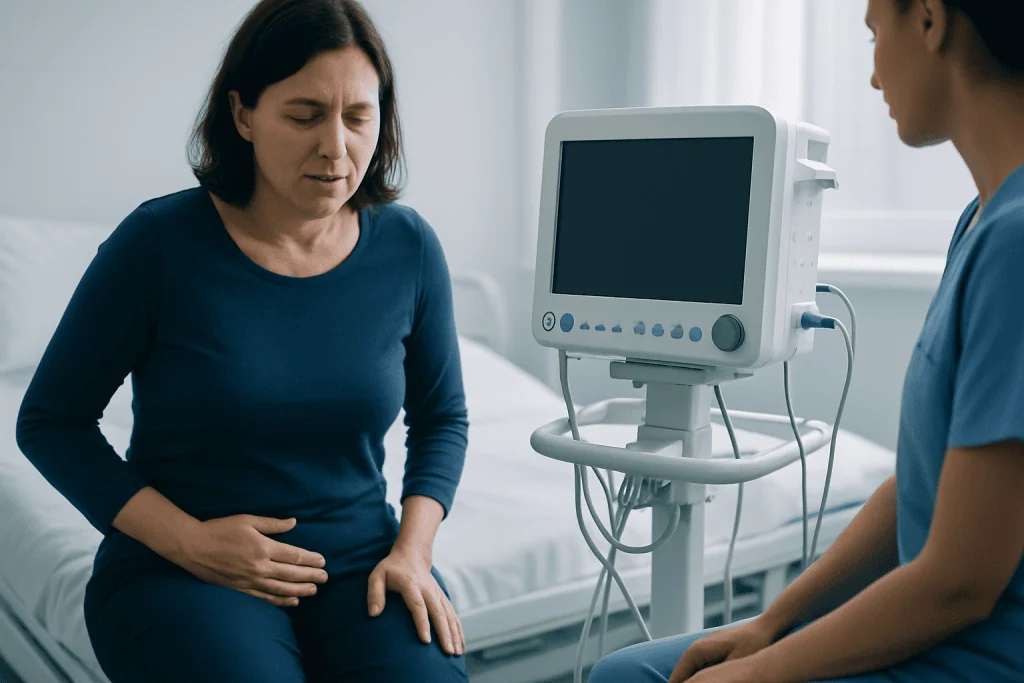
The symptoms of overflow incontinence are often subtle at first. Instead of a sudden strong urge, a person may notice constant or frequent dribbling, damp underwear, a weak stream, or difficulty starting urination. Some people describe a bladder that feels full all the time, even after going to the bathroom.
Other common features include urinating often in small amounts, waking at night to pass urine, lower abdominal discomfort, or needing to strain to empty the bladder. In some cases, there may be episodes of complete urinary retention, when urine cannot be passed despite a strong feeling of fullness. That situation needs prompt medical attention.
Symptoms may be confused with overactive bladder, but the mechanism is different. Overactive bladder is driven by urgency and bladder muscle overactivity, while overflow incontinence is linked to poor emptying and bladder overfilling. Some people can have more than one bladder problem at the same time, which is why testing can be helpful.
- Frequent dribbling of urine
- Weak or interrupted urine stream
- Difficulty starting urination
- Feeling that the bladder is not empty
- Frequent urination in small amounts
- Waking at night to urinate
Why it happens: common causes and risk factors

Overflow incontinence develops when urine outflow is blocked or when the bladder muscle cannot squeeze effectively. A blockage may come from an enlarged prostate, urethral narrowing, severe constipation, bladder stones, or pelvic organ prolapse. In these situations, urine remains in the bladder after urination and leakage can occur as the bladder fills beyond its comfortable capacity.
Bladder underactivity can also cause overflow incontinence. This may happen with nerve-related conditions such as diabetes-related neuropathy, spinal cord disorders, multiple sclerosis, Parkinson disease, stroke, or after certain pelvic or spinal surgeries. Some medications may reduce bladder contraction or make it harder to empty, including medicines with anticholinergic effects, some antidepressants, sedatives, and opioids.
Age is a risk factor because both bladder muscle function and the likelihood of prostate, pelvic floor, or nerve problems change over time. Limited mobility, cognitive problems, and long-standing constipation may make the condition worse. In men, doctors often assess for benign prostatic hyperplasia, a common cause of bladder outlet obstruction. In women, pelvic floor changes after childbirth or menopause may contribute in some cases.
How doctors diagnose overflow incontinence
Diagnosis starts with a careful history. A clinician will ask about leakage patterns, voiding symptoms, fluid intake, medications, constipation, pelvic symptoms, prior surgeries, and medical conditions that affect the nerves or urinary tract. A bladder diary can be very useful because it shows how often a person urinates, leaks, and drinks fluids over several days.
The physical exam may include abdominal, pelvic, rectal, and neurologic assessment depending on the person and symptoms. Urinalysis is commonly used to look for infection, blood, glucose, or other clues. One of the most important tests is checking the post-void residual, which measures how much urine remains in the bladder after urination. This is often done with a bladder ultrasound scan or occasionally a catheter.
Additional tests may be needed when the cause is unclear or symptoms are significant. These can include kidney and bladder imaging, flow rate testing, cystoscopy to look inside the urethra and bladder, or urodynamic studies to understand bladder storage and emptying. When imaging is helpful, a doctor may recommend MRI or other scans to assess a nerve or structural problem if clinically indicated.
The main goal of diagnosis is not just to confirm leakage, but to identify why the bladder is not emptying properly. That step guides treatment and helps prevent complications such as repeated infections, bladder damage, or kidney problems in severe untreated cases.
Treatment options and what recovery may involve
Treatment for overflow incontinence depends on the underlying cause. If a medicine is contributing, a doctor may adjust or replace it. If constipation is worsening bladder emptying, bowel management may improve symptoms. When there is a blockage, the priority is to relieve it. In men with prostate-related obstruction, treatment may include medication or a procedure. In women, prolapse management may help if it is affecting urine flow.
Some people need bladder drainage, especially if they are retaining large amounts of urine. This may be done with a catheter temporarily or, in selected cases, with clean intermittent self-catheterization. Although the idea can feel daunting at first, many people learn it safely and find that it reduces leakage, discomfort, and infection risk when recommended by their clinical team.
Other options may include pelvic floor rehabilitation, timed voiding, and treatment of the underlying neurologic condition. When a structural cause needs surgical correction, care may involve urology specialists, and selected patients may benefit from procedures related to robotic surgery when appropriate for the diagnosis and the surgeon’s plan. The best approach varies widely from person to person, so treatment should be individualized.
If nerve dysfunction is involved, the treatment plan may include broader neurologic or rehabilitation support. The goal is not only to reduce leakage but also to protect the bladder and kidneys, improve comfort, and restore confidence in everyday activities.
Self-care, bladder habits, and prevention
Self-care cannot fix every cause of overflow incontinence, but it can support treatment and reduce symptom burden. Helpful steps include not delaying urination for very long periods, reviewing medicines with a doctor or pharmacist, managing constipation, and keeping track of fluid intake. Some people find a schedule for toilet visits useful, especially if they have reduced bladder sensation.
It is usually wise to avoid dramatically cutting fluids unless a doctor advises it. Dehydration can irritate the bladder and increase the risk of urinary infection. Instead, regular hydration, moderated evening fluids if nighttime symptoms are a problem, and limiting excess alcohol may help. Caffeine may worsen urinary symptoms in some individuals, though it is not the main cause of overflow incontinence.
Pelvic floor exercises are often discussed for bladder symptoms, but they are not the primary treatment for true overflow caused by retention. They may still have a role when mixed incontinence or pelvic floor weakness is also present. People should also seek help early for repeated urinary tract infections, severe constipation, or progressive difficulty urinating, because treating these issues may prevent complications.
When to seek medical care
Medical review is important if urinary leakage is persistent, if the urine stream becomes weaker, or if there is a frequent feeling of incomplete emptying. These symptoms can be manageable, but they should not be ignored because ongoing urinary retention can harm bladder function over time. A doctor can identify whether the problem is overflow incontinence or another urinary condition.
Urgent care is needed if a person cannot pass urine at all, has severe lower abdominal pain, fever with urinary symptoms, visible blood in the urine, new leg weakness, numbness around the groin, or sudden bladder problems after back injury. These symptoms can point to infection, significant obstruction, or a neurologic emergency.
Near the end of the diagnostic pathway, some patients may benefit from multidisciplinary care. Acibadem International’s multidisciplinary specialists in JCI-accredited hospitals diagnose and treat urinary conditions for international patients when further evaluation is needed.
Frequently asked questions
Is overflow incontinence the same as overactive bladder?
No. Overflow incontinence happens when the bladder does not empty well and becomes too full, causing leakage. Overactive bladder is more often linked to sudden urgency and frequent urination caused by involuntary bladder muscle activity.
Can overflow incontinence go away?
It can improve significantly when the cause is identified and treated. For example, relieving a blockage, changing a medication, managing constipation, or treating a nerve-related bladder problem may reduce or stop leakage.
Who is more likely to develop overflow incontinence?
Older adults are at higher risk because bladder emptying problems become more common with age. People with enlarged prostate, diabetes, neurologic conditions, pelvic organ prolapse, constipation, or certain medications may also be more likely to develop it.
How is overflow incontinence tested?
Doctors usually begin with a symptom history, physical exam, urine testing, and measurement of urine left in the bladder after urination. If needed, they may add imaging, cystoscopy, urine flow studies, or urodynamic testing.
Is surgery always needed for overflow incontinence?
No. Many people are treated without surgery, depending on the cause. Treatment may include medication changes, bladder drainage, constipation treatment, pelvic support measures, or treatment of an underlying medical condition.
What should a person do if they cannot urinate at all?
They should seek urgent medical care right away. Complete inability to pass urine can mean acute urinary retention, which may require prompt bladder drainage and assessment for obstruction, infection, or a neurologic problem.
References
- National Institute of Diabetes and Digestive and Kidney Diseases
- American Urological Association
- National Health Service
- Mayo Clinic
- European Association of Urology
This article is for general information only and is not a substitute for professional medical advice. Please consult a qualified doctor about your individual situation.
Explore treatments in Turkey — costs, top hospitals & a free quote
JCI-accredited · board-certified surgeons · reply within 24h
Add us as a Preferred Source to see more of our trusted health content across Google Search, AI Overviews and Discover.