Paradoxical Breathing: An Evidence-Based Guide for Patients

Paradoxical breathing means the chest and abdomen move opposite to the usual pattern during breathing. It can happen with chest injury, diaphragm weakness, airway blockage, sleep-related breathing disorders, or severe respiratory strain.
Key Takeaways
- Paradoxical breathing means the chest and abdomen move opposite to the usual pattern during breathing.
- It can happen with chest injury, diaphragm weakness, airway blockage, sleep-related breathing disorders, or severe respiratory strain.
- Sudden paradoxical breathing, blue lips, confusion, severe shortness of breath, or chest trauma need urgent medical care.
- Diagnosis focuses on the underlying cause and may include physical examination, imaging, blood oxygen testing, and lung or nerve-related tests.
- Treatment depends on the cause and can range from oxygen and breathing support to treating injury, infection, or diaphragm dysfunction.
Paradoxical breathing is an abnormal breathing pattern in which the chest and abdomen move in opposite directions instead of working together. It is not a disease itself, but a sign that breathing mechanics may be impaired and should be medically evaluated, especially if it appears suddenly or is paired with shortness of breath.
What paradoxical breathing means
Paradoxical breathing is a breathing pattern in which the chest and abdomen move opposite to what is normally expected. During healthy breathing, the chest and belly usually expand together as air moves into the lungs. With paradoxical breathing, the chest may sink inward while the abdomen rises, or the abdomen may pull inward when the chest expands.
This pattern is a clinical sign rather than a diagnosis on its own. It suggests that the normal mechanics of breathing are being disrupted. That disruption may involve the diaphragm, the rib cage, the nerves that control breathing muscles, the upper airway, or the lungs themselves.
Paradoxical breathing can appear in adults, children, or infants. In some newborns and young infants, mild chest wall movement abnormalities may be seen because the chest wall is more flexible, but clear or persistent paradoxical movement still needs medical attention. In older children and adults, it is more likely to reflect a significant breathing problem.
Because breathing problems can worsen quickly, it is important not to ignore this sign. A clinician will usually focus less on the movement pattern itself and more on finding and treating the cause behind it.
How normal breathing differs from paradoxical breathing
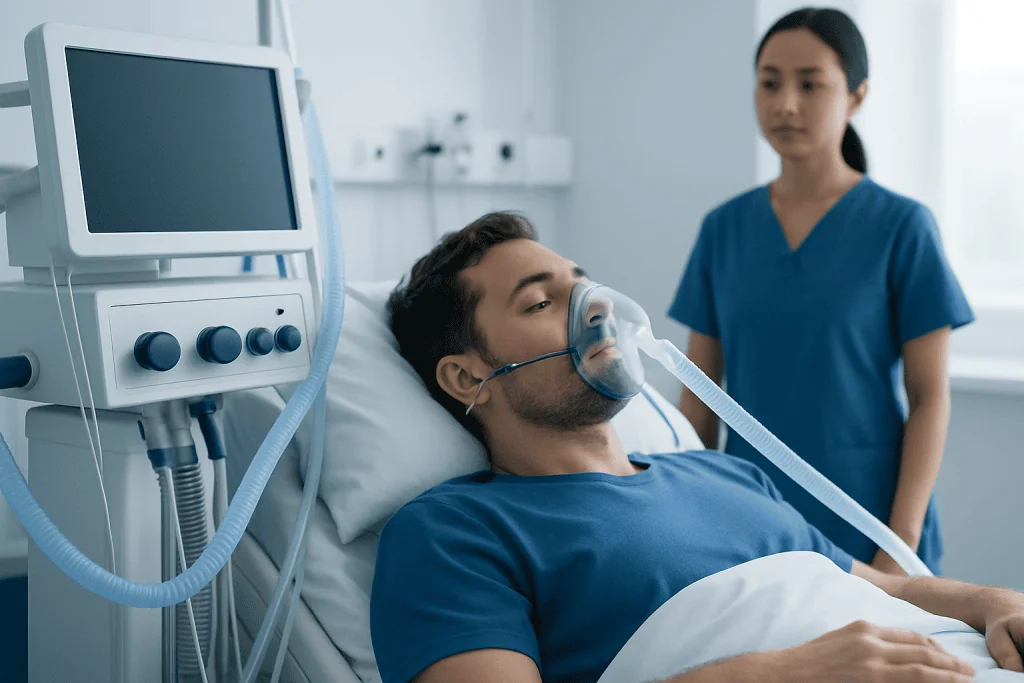
To understand paradoxical breathing, it helps to know how normal breathing works. The diaphragm is the main breathing muscle. When it contracts, it moves downward, allowing the lungs to expand. At the same time, the chest wall moves outward and the abdomen often rises slightly.
In paradoxical breathing, this coordination is lost. If the diaphragm is weak, fatigued, or injured, the abdomen may move inward during inhalation instead of outward. If the chest wall has been destabilized by trauma, part of the chest may move inward during inhalation and outward during exhalation.
This change often indicates that breathing is becoming less effective. The body may need to work harder to move air in and out, which can lead to visible effort, fatigue, and lower oxygen levels if the problem is severe or prolonged.
Paradoxical breathing may occur on its own or together with other signs of respiratory distress. These include fast breathing, flared nostrils, use of neck muscles to breathe, difficulty speaking in full sentences, or a feeling of air hunger.
Common symptoms and warning signs

The most noticeable feature is abnormal movement of the chest and abdomen during breathing. A person or family member may observe the belly pulling inward when inhaling, or a section of the chest moving inward instead of outward. This can be easier to see when the person is lying down or breathing more deeply.
Other symptoms depend on the underlying cause and how hard the body is working to breathe. Some people feel only mild shortness of breath at first, while others develop clear respiratory distress. Symptoms may come on suddenly after an injury or gradually with muscle weakness or chronic illness.
- Shortness of breath or rapid breathing
- Chest pain, especially after trauma
- Feeling unable to take a full breath
- Wheezing, noisy breathing, or stridor
- Fatigue, weakness, or poor exercise tolerance
- Bluish lips or fingertips in severe cases
- Confusion, sleepiness, or agitation if oxygen levels fall
When paradoxical breathing happens during sleep, symptoms may be less obvious. The person may instead have loud snoring, pauses in breathing, restless sleep, morning headaches, or daytime tiredness. In some cases, evaluation for sleep apnea or other sleep-related breathing disorders becomes important.
Causes and risk factors
Paradoxical breathing has several possible causes. One well-known cause is chest trauma, especially when multiple rib fractures create a loose segment of the chest wall, sometimes called flail chest. In that situation, the injured section moves in the opposite direction from the rest of the chest during breathing.
Another major cause is diaphragm dysfunction. The diaphragm may become weak or paralyzed because of nerve injury, neurological disease, surgery, spinal cord problems, or severe muscle fatigue. When the diaphragm cannot contract normally, the abdomen and chest may move in an abnormal pattern. Some lung and airway conditions can also lead to respiratory muscle overload, making paradoxical breathing more visible during episodes of distress.
Upper airway obstruction is another important consideration. Swelling, infection, inhaled foreign material, severe asthma, or structural airway problems can make it difficult to move air, causing exaggerated or abnormal chest movements. In children, airway narrowing may be especially noticeable. Chronic respiratory conditions such as COPD can also place extra strain on breathing muscles.
- Chest injury or rib fractures
- Diaphragm weakness, paralysis, or fatigue
- Nerve disorders affecting breathing muscles
- Upper airway blockage or severe airway inflammation
- Severe lung disease or respiratory failure
- Sleep-related breathing disorders
- Recent surgery involving the chest, neck, or upper abdomen
How doctors diagnose the cause
Diagnosis begins with careful observation and a physical examination. A doctor watches how the chest and abdomen move, checks breathing rate and effort, and looks for signs such as low oxygen levels, bluish skin color, or use of accessory breathing muscles. The medical history is also important, including recent injuries, surgery, infections, chronic lung disease, and nerve or muscle conditions.
Testing is chosen based on the clinical situation. Pulse oximetry measures oxygen saturation, and arterial blood gas testing may be used in more severe cases. A chest X-ray can help identify rib fractures, lung collapse, infection, or other structural problems. Ultrasound or fluoroscopic evaluation may help assess diaphragm motion, and CT imaging may be needed after trauma or when more detailed information is required.
When doctors suspect a chronic or neurologic cause, pulmonary function tests and nerve or muscle studies may be useful. If symptoms are worse at night or during sleep, a sleep assessment may be recommended. In some patients, further imaging or consultation with a lung specialist, neurologist, or thoracic surgeon is appropriate.
The key point is that treatment should target the reason for paradoxical breathing. Accurate diagnosis helps distinguish emergencies from chronic but manageable conditions and guides the safest next step.
Treatment options and supportive care
Treatment depends entirely on the underlying cause and how severe the breathing problem is. In urgent situations, the first priority is to support breathing and oxygenation. This may include supplemental oxygen, close monitoring, and in some cases assisted ventilation. If the problem is caused by trauma, the care team also focuses on pain control, chest stabilization, and management of associated injuries.
When airway narrowing is contributing, treatment may include medications to reduce inflammation, open the airways, or treat infection if present. Patients with severe breathing difficulty may need hospital care. In selected cases, evaluation by specialists in pulmonology care helps clarify complex lung or airway causes.
If diaphragm weakness or paralysis is suspected, management may include breathing support, rehabilitation, and treatment of the underlying nerve or muscle condition. Some people benefit from respiratory physiotherapy or further assessment in a specialized setting. Sleep-related breathing problems may improve with targeted treatment such as sleep evaluation and monitoring and appropriate nighttime breathing support.
For trauma, surgery is occasionally considered when chest wall instability is significant. In more complex situations, advanced imaging such as thoracic CT imaging may help define the anatomy and guide care. Near the end of the treatment pathway, coordinated follow-up is important to assess recovery, breathing function, and the need for rehabilitation or long-term support.
Self-care, prevention, and when to seek medical care
There is no single way to prevent paradoxical breathing because it reflects many different medical problems. Still, some steps lower risk: using seat belts, following workplace safety measures, treating chronic lung disease, avoiding smoking, and seeking early care for breathing infections or worsening shortness of breath. People with known neuromuscular or lung disease should keep regular follow-up appointments and discuss any change in breathing pattern promptly.
At home, a person should not try to self-diagnose the cause of paradoxical breathing. If unusual chest or belly movement is noticed, it is reasonable to stop exertion, sit upright, and monitor for other symptoms while arranging medical advice. A healthcare professional can determine whether the pattern is mild, chronic, or a sign of urgent respiratory compromise.
Urgent medical care is needed if paradoxical breathing starts suddenly, follows chest or neck injury, or is accompanied by severe shortness of breath, blue lips, fainting, confusion, high fever, or inability to speak normally. Infants and young children with labored breathing, chest retractions, poor feeding, or lethargy should be assessed without delay.
For ongoing or unexplained cases, specialist evaluation may be helpful. Acibadem International’s multidisciplinary specialists and JCI-accredited hospitals diagnose and treat respiratory and chest-related conditions for international patients, including assessment through chest diseases services when clinically appropriate.
Frequently asked questions
Is paradoxical breathing always an emergency?
Not always, but it should be taken seriously. Sudden paradoxical breathing, especially after trauma or with severe shortness of breath, can be an emergency. Even when symptoms seem mild, a medical evaluation is important because the underlying cause may still need treatment.
What causes paradoxical breathing in adults?
In adults, common causes include chest trauma, rib fractures, diaphragm weakness or paralysis, severe airway obstruction, and advanced lung disease. It may also occur when breathing muscles are extremely fatigued. Doctors focus on identifying which of these mechanisms is responsible.
Can anxiety cause paradoxical breathing?
Anxiety can change breathing patterns and make a person feel short of breath, but true paradoxical breathing usually suggests a mechanical or medical problem with breathing. Because the pattern can be difficult to interpret without an exam, it should not be assumed to be anxiety alone. A clinician can distinguish anxiety-related overbreathing from more concerning causes.
How is paradoxical breathing diagnosed?
Doctors diagnose it by observing the chest and abdominal movements and then investigating the cause. Tests may include oxygen measurement, chest imaging, blood gas tests, lung function testing, or studies of diaphragm movement. The exact workup depends on whether the problem is sudden, chronic, traumatic, or sleep-related.
Can paradoxical breathing happen during sleep?
Yes. Some people show abnormal breathing effort during sleep because of airway obstruction or sleep-related breathing disorders. In these cases, symptoms may include snoring, pauses in breathing, restless sleep, or daytime fatigue rather than obvious daytime distress.
What is the treatment for paradoxical breathing?
Treatment is aimed at the cause rather than the movement pattern itself. It may involve oxygen, airway treatment, pain control after trauma, breathing support, treatment of infection, or care for diaphragm and nerve problems. A doctor can recommend the safest approach based on severity and diagnosis.
References
- American Thoracic Society
- National Heart, Lung, and Blood Institute
- Mayo Clinic
- Merck Manual Professional Edition
- MedlinePlus
This article is for general information only and is not a substitute for professional medical advice. Please consult a qualified doctor about your individual situation.
Explore treatments in Turkey — costs, top hospitals & a free quote
JCI-accredited · board-certified surgeons · reply within 24h
Add us as a Preferred Source to see more of our trusted health content across Google Search, AI Overviews and Discover.

More from the Health Library

Polyunsaturated Fat: What Patients Need to Know

How Mucolytic Drugs Help Clear Airway Mucus

Proactive — Explained by Medical Evidence, Not Myths

Tanner Stages — Explained by Medical Evidence, Not Myths

Tea and BP: A Complete Medical Overview

Early Satiety: What Patients Need to Know
Pulmonary Medicine Specialists at Acibadem

Prof. Dr. Reha Baran
Pulmonary Medicine
Prof. Dr. Salih Serdar Erturan
Pulmonary Medicine
Sena Ezgi Şahin
Treatment of Respiratory
Prof. Dr. Serhat Çelikel
Pulmonary Medicine