Pcr Test — Explained by Medical Evidence, Not Myths

A pcr test detects genetic material rather than the body's immune response. It is often used to diagnose active infections, including viral illnesses.
Key Takeaways
- A pcr test detects genetic material rather than the body's immune response.
- It is often used to diagnose active infections, including viral illnesses.
- PCR is highly sensitive, but results must still be interpreted alongside symptoms and exposure history.
- A positive result usually means target genetic material was found in the sample tested.
- A negative result lowers the chance of the tested condition but does not always rule it out completely.
- Correct sample collection and timing are important for accurate results.
A pcr test is a molecular test that looks for genetic material from a virus, bacterium, or other organism in a sample such as a nasal swab, throat swab, blood, or tissue. It is widely used because it can detect very small amounts of DNA or RNA and help confirm an active infection or support other medical diagnoses.
Overview: what a PCR test actually does
A pcr test, short for polymerase chain reaction test, is a laboratory method used to detect tiny amounts of genetic material. Depending on the test, this may be DNA directly or RNA that is first converted into DNA. In practical terms, it helps doctors identify whether a virus, bacterium, or another organism is present in the sample that was collected.
This is different from tests that look for antibodies, which reflect the body’s immune response over time. A pcr test is usually designed to answer a more immediate question: is the target organism’s genetic material present right now? That is why PCR is often used when a clinician needs evidence of a current infection rather than a past one.
PCR is not limited to one disease. Many people associate it with COVID-19, but the same core technology is also used for influenza, respiratory viruses, some sexually transmitted infections, tuberculosis, and certain blood-borne or tissue-based conditions. It also has uses outside infectious disease, including genetics and some areas of cancer testing.
The strength of PCR is amplification. If only a very small amount of target genetic material is present, the laboratory process makes millions of copies so that it can be detected. This high sensitivity is one reason PCR has become a standard tool in modern diagnostics.
How PCR works and why it is considered sensitive
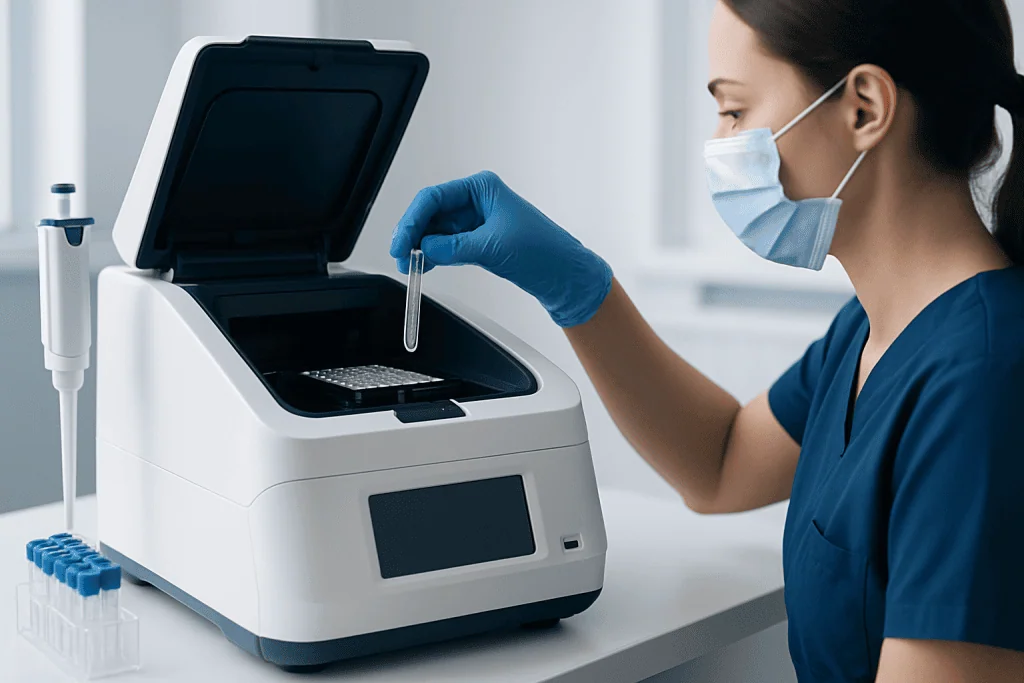
In simple terms, PCR works by copying a specific genetic sequence again and again until it can be measured. The laboratory first extracts genetic material from the sample. Then, using carefully selected primers and enzymes, the machine amplifies only the sequence linked to the organism or condition being tested.
Some PCR tests are described as RT-PCR, especially when they detect RNA viruses. In this context, “RT” usually means reverse transcription, a step that converts RNA into DNA before amplification begins. This does not make it a different family of test so much as a variation used for RNA-based targets.
PCR is considered highly sensitive because it can detect very small amounts of target material. That sensitivity is helpful early in some infections or when the amount of organism in the body is low. However, sensitivity does not mean perfection. A result can still be affected by sample quality, the stage of illness, transport conditions, and the exact test method used by the laboratory.
Because PCR is so sensitive, it may sometimes detect genetic material even when a person is recovering and no longer has the same level of contagiousness. For that reason, results are most useful when interpreted together with symptoms, exposure history, physical examination, and, when needed, other tests.
When a PCR test is used
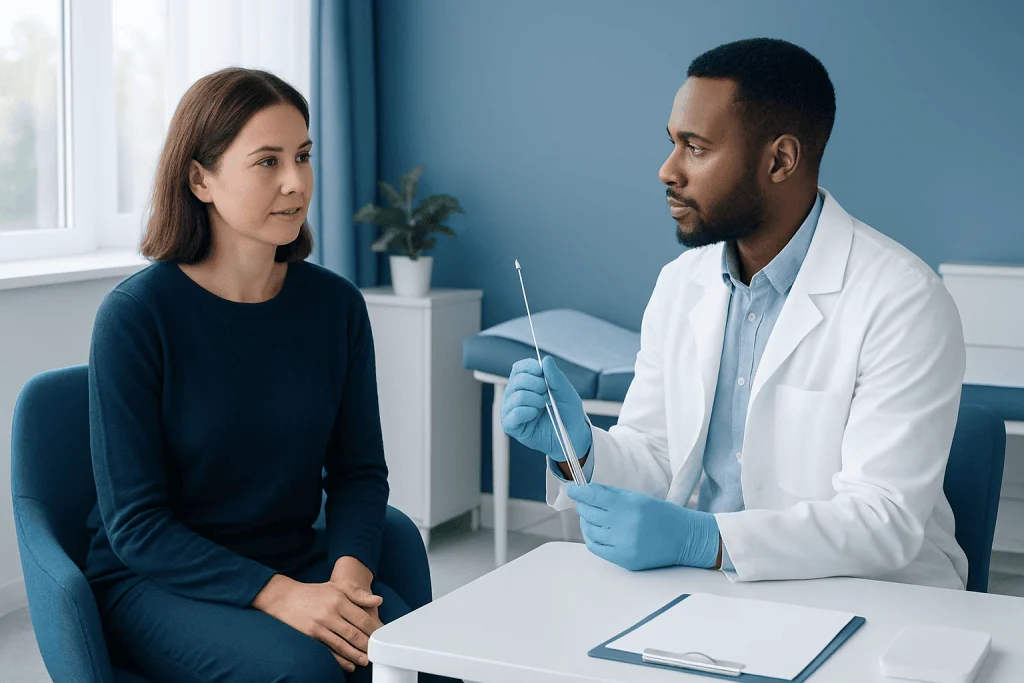
Doctors may request a pcr test when they need to confirm or rule out a suspected infection. Common reasons include fever, cough, sore throat, shortness of breath, diarrhea, painful urination, unusual discharge, or other symptoms that could be caused by a specific organism. It may also be used after a known exposure, before a procedure, or during an outbreak investigation.
Respiratory infections are one of the most familiar uses. A clinician may order PCR to help distinguish among illnesses with similar symptoms, such as influenza, COVID-19, or other viral infections. This can help guide isolation advice, treatment decisions, and monitoring, especially in older adults, children, pregnant people, or those with chronic medical conditions.
PCR is also used for conditions beyond the respiratory tract. Depending on the sample type, it may help diagnose some gastrointestinal infections, sexually transmitted infections, meningitis-related pathogens, blood-borne infections, or organisms found in tissue and body fluids. In other settings, molecular techniques support targeted assessments such as genetic testing when inherited conditions are being investigated.
The exact sample depends on the clinical question. Nasal or throat swabs are common for respiratory viruses, while urine, blood, saliva, stool, or tissue samples may be used in other cases. The person having the test does not need to understand all the laboratory details, but it helps to know that the usefulness of PCR depends on matching the right test to the right sample at the right time.
What the test involves and how to prepare
Many PCR tests are straightforward for the patient. For a respiratory pcr test, a healthcare professional may take a swab from the nose, throat, or both. Some tests use saliva. Other PCR tests may require blood, urine, stool, or a sample collected during another procedure.
Preparation is often minimal, but instructions vary. For some nasal or throat swabs, patients may be asked to avoid eating, drinking, smoking, or using certain nasal products for a short period before the sample is taken. For urine or stool samples, the laboratory may provide specific collection instructions to reduce contamination and improve reliability.
Sample collection technique matters. A well-collected sample increases the chance that the test will detect the target if it is present. This is one reason people may be advised to have testing performed in an appropriate medical setting, especially when symptoms are significant or when an accurate result is particularly important.
After collection, the sample is sent to a laboratory where it is processed and analyzed. Turnaround time varies by facility, the type of test, and whether it is being run urgently or in routine batches. Patients should ask when to expect results and whom to contact if symptoms worsen before those results are available.
Understanding PCR test results
A positive pcr test usually means the laboratory found the target genetic material in the sample. In the case of an infection, this strongly supports that the organism tested for is present. What it means for symptoms, contagiousness, or severity depends on the condition, the timing of the test, and the person’s overall health.
A negative result means the target genetic material was not detected in that sample. This reduces the likelihood of the tested condition, but it does not always rule it out completely. If the sample was taken too early, too late, or from the wrong site, there may not have been enough detectable material at the time of collection.
Some laboratories report additional technical details, such as cycle threshold-related information, but these values are not always directly useful for patients outside the proper clinical context. They should not be used alone to judge how sick someone is or whether they are infectious. Treating clinicians interpret these findings in light of symptoms and current guidance.
If a result does not fit the clinical picture, the doctor may repeat the test, order a different test, or evaluate for another cause. For example, respiratory symptoms may still need assessment with examination or a clinical check-up if PCR is negative but concerns remain. The goal is not just to get a result, but to understand what that result means for care.
Accuracy, limitations, and common myths
PCR is often described as very accurate, but no test is flawless. Accuracy includes both sensitivity, which relates to detecting true cases, and specificity, which relates to avoiding false positives. In well-designed laboratory settings, PCR generally performs strongly, but real-world results still depend on factors such as collection quality, timing, transport, and the exact assay used.
One common myth is that a pcr test can diagnose every illness a person might have. In reality, each PCR test looks for specific targets. A test for one virus does not automatically detect another. Another myth is that a negative result guarantees a person is not infected. It lowers the likelihood, but clinical judgment remains important, especially if symptoms or exposure risk are significant.
It is also a misconception that PCR always shows whether someone is contagious. PCR detects genetic material, not necessarily live, active organisms capable of transmission. For some infections, additional factors such as symptoms, time since onset, and public health guidance matter when assessing isolation or return-to-work decisions.
Finally, PCR does not replace medical evaluation. It is one part of diagnosis, alongside history, physical examination, and sometimes imaging or other laboratory studies. In certain situations, a doctor may combine PCR with tests such as blood testing or other investigations to build a fuller picture of the patient’s condition.
When to seek medical care
A person should seek medical advice if they have symptoms that may need testing or treatment, especially fever that persists, shortness of breath, chest pain, dehydration, severe sore throat, confusion, or symptoms that are rapidly worsening. Medical review is also important for infants, older adults, pregnant people, and those with weakened immune systems or chronic illnesses.
Care should not be delayed simply because test results are pending or because an initial pcr test is negative. A doctor may need to assess other possible causes, repeat testing, or start supportive care based on symptoms and examination findings. If symptoms are severe or an emergency warning sign is present, urgent medical attention is appropriate.
People may also need medical advice after a known exposure, before visiting vulnerable family members, or if they are unsure how to interpret a result. Guidance can vary based on the suspected illness, local public health recommendations, and personal risk factors.
Near the end of the care pathway, specialist support may be helpful when the diagnosis is complex or symptoms continue. Acibadem International’s multidisciplinary specialists in JCI-accredited hospitals evaluate and treat international patients when PCR-based diagnosis forms part of a broader medical assessment.
Frequently asked questions
What does a PCR test detect?
A PCR test detects genetic material from a specific organism or target being tested for. In infections, this usually means DNA or RNA from a virus or bacterium present in the sample.
Is a PCR test better than an antigen test?
They serve different purposes. PCR is generally more sensitive and can detect smaller amounts of genetic material, while antigen tests are often faster and may be useful in certain practical settings. A doctor can advise which test is more appropriate for the situation.
Can a PCR test be wrong?
Yes, although it is generally reliable when properly performed. False-negative or false-positive results can occur because of timing, sample collection issues, laboratory factors, or testing in a situation where the result is not straightforward to interpret.
How long does it take to get PCR test results?
The timing depends on the laboratory, the type of sample, and whether the test is urgent. Some results are available the same day, while others may take longer if they are processed in batches or require transport to a specialized lab.
Does a positive PCR test always mean someone is contagious?
Not always. A positive result shows that target genetic material was detected, but it does not by itself prove how infectious a person is at that moment. Doctors interpret the result together with symptoms, timing, and the illness involved.
What happens if the PCR test is negative but symptoms continue?
Persistent symptoms should still be discussed with a doctor. The test may need to be repeated, another type of test may be needed, or the symptoms may have a different cause that requires medical evaluation.
This article is for general information only and is not a substitute for professional medical advice. Please consult a qualified doctor about your individual situation.
Explore treatments in Turkey — costs, top hospitals & a free quote
JCI-accredited · board-certified surgeons · reply within 24h
Add us as a Preferred Source to see more of our trusted health content across Google Search, AI Overviews and Discover.

More from the Health Library

Heavy Cream: An Evidence-Based Guide for Patients

Human Body Temp Lowering: A Complete Medical Overview

Garcinia Cambogia: An Evidence-Based Guide for Patients

Antibacterial Soap for Belly Button: A Complete Medical Overview

High Lft Liver — Explained by Medical Evidence, Not Myths