Pediatric Radiation Oncology: How It Works, Results and What to Expect
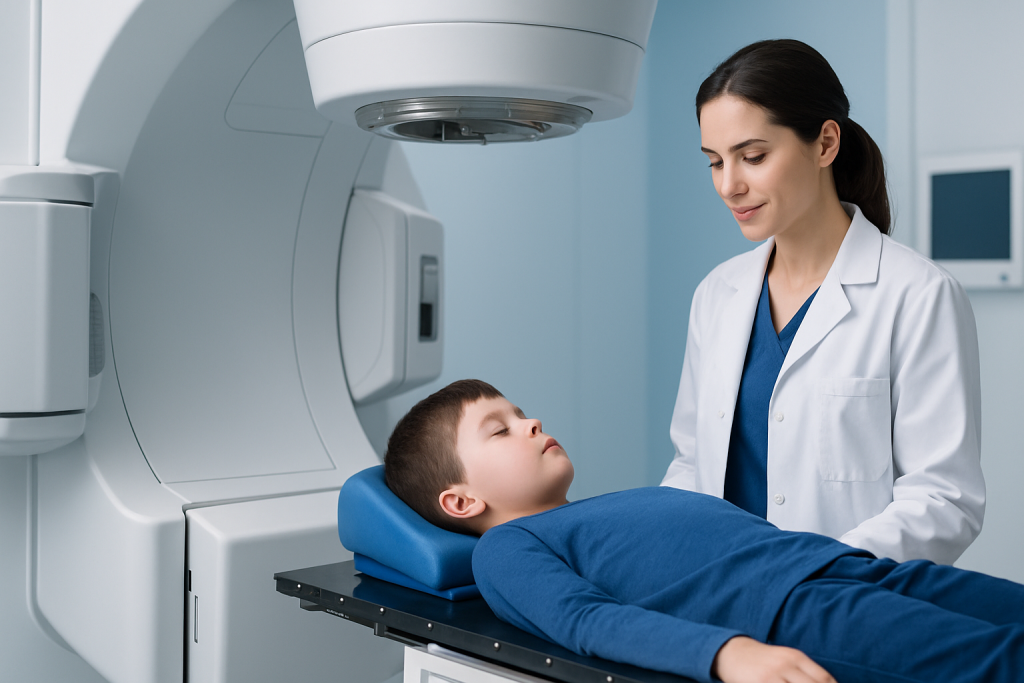
Radiation therapy uses high-energy beams to damage cancer cells so they cannot keep growing or dividing. Children receive individualized planning because their organs, bones and nervous system are still developing.
Key Takeaways
- Radiation therapy uses high-energy beams to damage cancer cells so they cannot keep growing or dividing.
- Children receive individualized planning because their organs, bones and nervous system are still developing.
- Treatment is usually delivered in small daily sessions over several weeks, although schedules vary by diagnosis.
- Some young children need anesthesia or sedation to remain safely still during treatment sessions.
- Side effects depend mainly on the body area treated, total dose and other treatments such as surgery or chemotherapy.
- Long-term follow-up is an important part of pediatric radiation oncology care.
Pediatric radiation oncology is the specialist area that uses radiation therapy to treat cancer and selected noncancerous tumors in children and adolescents. Care is individually planned by a multidisciplinary team to target abnormal cells accurately while limiting radiation exposure to nearby healthy, developing tissues.
Overview: how pediatric radiation oncology works
Pediatric radiation oncology is the medical specialty that plans and delivers radiation therapy for children and teenagers with cancer. Radiation uses precisely directed high-energy beams, most often X-rays, to damage the DNA inside tumor cells. Over time, treated cells lose their ability to divide and the body clears them away.
Radiation may be used alone in selected situations, but it is commonly one part of a broader treatment plan that can include surgery, chemotherapy, targeted therapy, immunotherapy or stem cell transplantation. The purpose may be to cure a cancer, reduce the chance that it returns, shrink a tumor before another treatment, or relieve symptoms when cure is not possible.
Children are not treated with a one-size-fits-all approach. Pediatric radiation oncologists work closely with pediatric oncologists, surgeons, radiologists, pathologists, anesthesiologists, nurses, physicists and rehabilitation professionals. Planning aims to deliver an effective dose to the tumor while protecting healthy tissues, particularly organs that are still growing.
What does pediatrics mean?
Pediatrics is the branch of medicine focused on the health of infants, children and adolescents. It includes prevention, diagnosis, treatment and long-term support for physical, emotional and developmental health needs from birth through the teenage years.
In cancer care, pediatrics means that treatment decisions account for a child’s age, size, development, family circumstances and future health. Pediatric cancer teams also use supportive services such as nutrition, psychology, school support, physiotherapy and social work to help children and families through treatment.
A pediatric radiation oncology team therefore combines radiation expertise with detailed knowledge of childhood cancers and the ways radiation can affect developing tissues.
What is the difference between paediatric and pediatric?
Paediatric and pediatric have the same meaning. “Pediatric” is the spelling most commonly used in American English, while “paediatric” is commonly used in British English and in many other English-speaking countries.
The same spelling difference applies to related terms, including pediatrician and paediatrician, pediatric oncology and paediatric oncology. The medical specialty, standards of care and purpose of treatment are the same regardless of which spelling is used.
Families may see both terms in international medical records, hospital documents and scientific literature. They refer to care designed specifically for children and adolescents.
Is it pediatrician or pediatric?
A pediatrician is a doctor who specializes in caring for children. Pediatric is an adjective that describes something related to children or child healthcare, such as pediatric oncology, pediatric surgery or pediatric nursing.
For example, a child may see a pediatrician for general health needs and a pediatric oncologist for cancer care. A pediatric radiation oncologist is a physician with expertise in using radiation therapy as part of cancer treatment for children.
Each professional has a different role, and they communicate with one another to coordinate care. Families should feel comfortable asking who each team member is and how that person contributes to the treatment plan.
What does the word pediatric mean?
The word pediatric means relating to the medical care of children. It comes from Greek roots referring to a child and healing or medical treatment.
In practical use, the term identifies services adapted to children’s needs. This can include age-appropriate communication, child-friendly imaging and treatment environments, specialized anesthesia support, and plans that consider growth, development and schooling.
Pediatric radiation oncology applies these principles to radiation treatment. The team seeks to make each stage understandable and manageable for the child while supporting parents or caregivers in decision-making.
Who may be a candidate for pediatric radiation therapy?
Radiation therapy may be considered for many childhood cancers, including certain brain and spinal cord tumors, lymphomas, sarcomas, neuroblastoma, Wilms tumor and some head and neck tumors. It can also be used for selected benign tumors or vascular conditions when specialists consider the expected benefits to outweigh potential risks.
Whether radiation is appropriate depends on the exact diagnosis, tumor location and size, whether cancer has spread, the child’s age, molecular test results, previous treatment and overall health. Very young children require particularly careful consideration because radiation can affect developing organs and brain function.
The team reviews imaging, biopsy findings when available and recommendations from a multidisciplinary tumor board. Families are encouraged to ask about the aim of radiation, alternatives, likely benefits, possible late effects and how radiation fits with other planned treatments.
For some children, advanced techniques may help shape radiation more closely around the target. The most suitable technique is chosen based on clinical need rather than technology alone.
Step by step: planning and receiving treatment
Radiation treatment begins with a consultation. The radiation oncologist explains the diagnosis, treatment goal, likely schedule and potential side effects. A planning appointment, often called simulation, follows. This usually includes a CT scan in the exact position the child will use for treatment; MRI or PET images may also be combined with the planning scan.
A customized device may help the child stay in the same position each day. Depending on the treatment area, this may be a molded mask, vacuum cushion or other support. These devices do not cause pain. Children who are unable to remain still may receive anesthesia or sedation under the supervision of appropriately trained specialists.
Physicians, medical physicists and dosimetrists then create and check a detailed treatment plan. During each session, the child lies on the treatment table while the machine moves around them and delivers radiation. The child does not feel the radiation itself, and treatment delivery commonly takes only minutes, although positioning and safety checks take longer.
Most external-beam treatments are outpatient appointments on weekdays. Parents can usually stay with their child until treatment begins and communicate with the team throughout the course. Pediatric radiation oncology treatment may also include regular reviews to monitor symptoms, nutrition, comfort and emotional wellbeing.
Benefits, risks, recovery and when to seek medical care
The potential benefit of radiation therapy is effective local control of a tumor, which may improve the chance of cure or reduce symptoms. Benefits and risks are considered carefully because radiation can also affect nearby healthy tissue. Short-term effects can include tiredness, skin redness or sensitivity in the treatment field, temporary hair loss in the treated area, nausea, reduced appetite, mouth soreness or bowel changes, depending on the body part treated.
Most short-term effects develop gradually during treatment and begin improving in the weeks after it ends. There is no single recovery timeline: it depends on the treatment area, total treatment course, the child’s age and other therapies. Follow-up visits assess recovery, response to treatment and any need for rehabilitation or supportive care.
Possible late effects can occur months or years later and vary by the radiation field. These may involve growth, hormone function, fertility, learning or memory, hearing, heart or lung health, or the risk of a second cancer. These risks do not affect every child, and the care team uses planning methods and long-term surveillance to reduce and identify them early.
Families should contact the treatment team promptly for fever, persistent vomiting, dehydration, severe pain, new confusion, worsening weakness, breathing difficulty, unusual bleeding, a rapidly worsening rash, or any symptom that feels urgent. Acibadem International’s multidisciplinary specialists and JCI-accredited hospitals diagnose and treat childhood cancers for international patients, with coordinated support throughout treatment and follow-up.
Frequently asked questions
Is radiation therapy painful for children?
Radiation delivery itself is not painful and cannot be felt while the machine is on. Some children may find it difficult to stay still or may feel anxious in the treatment room, so the team uses preparation, comfort measures and, when necessary, sedation or anesthesia.
How long does pediatric radiation therapy take?
A treatment session often takes a short time for radiation delivery, but positioning and imaging checks add to the appointment. The overall course may range from a few treatments to several weeks, depending on the diagnosis, treatment goal and radiation plan.
Will a child be radioactive after external radiation therapy?
No. External-beam radiation does not make a child radioactive. It is safe for the child to be around family members, siblings and friends after each session unless the clinical team gives different advice for another treatment type.
Can parents stay with their child during radiation treatment?
Parents can usually accompany their child to the treatment area and remain nearby throughout the visit. For safety, staff and family members leave the treatment room during beam delivery, but the team can see and hear the child at all times.
Why might anesthesia be needed for radiation therapy?
Radiation treatment requires the child to stay very still in the same position each day so the planned area can be treated accurately. Young children and some children with developmental, sensory or anxiety-related needs may benefit from anesthesia or sedation to make this safe and consistent.
What follow-up is needed after pediatric radiation oncology treatment?
Follow-up commonly includes physical examinations, imaging and assessments related to the area treated. Children may also need monitoring of growth, hormones, learning, hearing, heart health, fertility or other functions, depending on their individual treatment history.
References
- National Cancer Institute
- American Cancer Society
- Children's Oncology Group
- International Atomic Energy Agency
- American Society for Radiation Oncology
This article is for general information only and is not a substitute for professional medical advice. Please consult a qualified doctor about your individual situation.
Oncology care in Turkey — second opinion and treatment plan
JCI-accredited · board-certified surgeons · reply within 24h
Add us as a Preferred Source to see more of our trusted health content across Google Search, AI Overviews and Discover.

More from the Health Library

Related Specialists

Assoc. Prof. Dr. Cüneyt Göçmez
Neurosurgery
Dr. Nazmî Uğur Ünlü
Neurosurgery
Dr. Aysun Soylu
Clinical Laboratory
Dr. Ertuğrul Yaltı
General Surgery