

Pediatric Scoliosis: Spine Curvature Signs, Monitoring, and Bracing Options
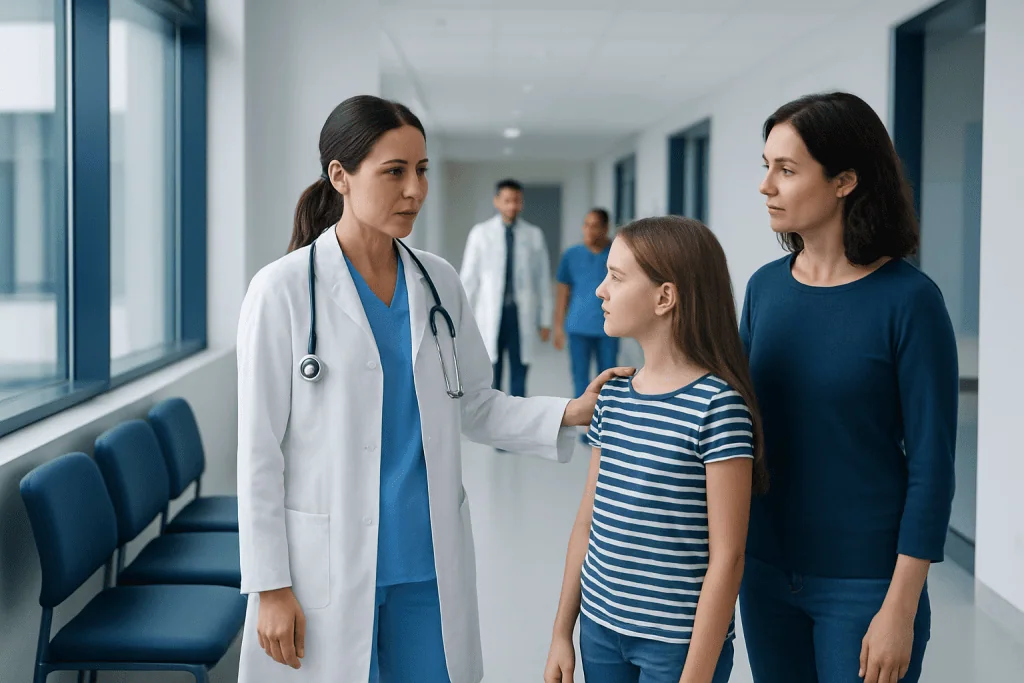
Pediatric scoliosis means an abnormal side-to-side curve of the spine in a growing child. Common early signs include uneven shoulders, a prominent shoulder blade, or the trunk leaning slightly to one side.
Key Takeaways
- Pediatric scoliosis means an abnormal side-to-side curve of the spine in a growing child.
- Common early signs include uneven shoulders, a prominent shoulder blade, or the trunk leaning slightly to one side.
- Treatment depends on the child’s age, growth remaining, and how large or progressive the curve is.
- Bracing does not usually straighten the spine permanently, but it can help prevent worsening during growth.
- Regular follow-up is important because curves can change as a child grows.
Pediatric scoliosis is a sideways curvature of the spine that develops in children and adolescents. Many cases are mild and simply monitored, while others may need bracing or, less often, surgery to help guide healthy spinal growth.
Overview of Pediatric Scoliosis
Pediatric scoliosis is a condition in which a child’s spine curves sideways and may also rotate. Instead of appearing straight when viewed from behind, the spine forms a curve that can look like a “C” or an “S.” Scoliosis can appear at different ages, from infancy through adolescence, and the approach to care depends partly on when it begins.
In many children, scoliosis is mild and causes no pain or disability. It is often first noticed by a parent, school screening program, or doctor during a routine physical examination. Because children continue to grow, even a mild curve may need regular observation to see whether it changes over time.
Doctors often group pediatric scoliosis by age and cause. Idiopathic scoliosis, which means there is no single clearly identified cause, is the most common type in older children and teenagers. Other forms may be related to congenital spine differences present at birth or to neuromuscular conditions that affect muscles and nerves.
The main goals of care are to identify the curve accurately, monitor growth, and choose the least invasive treatment that can help protect long-term spinal alignment and function. This may include observation alone, scoliosis bracing, physical support measures, or surgery in selected cases.
Signs and Symptoms to Watch For
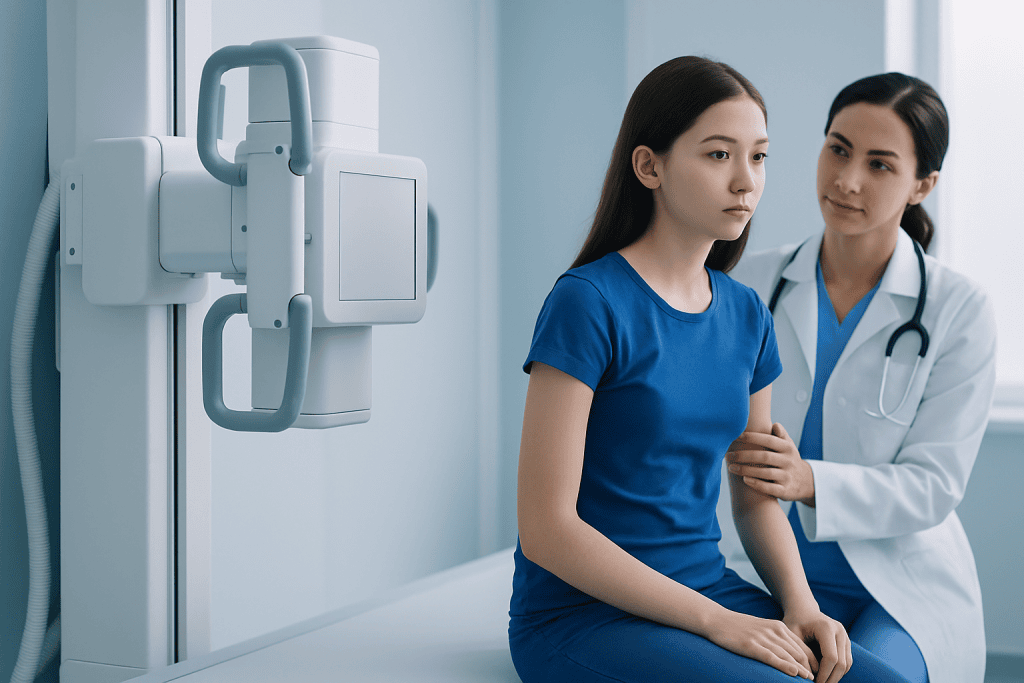
Pediatric scoliosis often develops gradually, so the child may not notice any symptoms. In fact, many children feel well and stay active. The earliest signs are usually changes in posture or body symmetry rather than pain.
Parents and caregivers may notice that one shoulder sits higher than the other, one shoulder blade sticks out more, or the waist appears uneven. Clothes may hang unevenly, and pant legs or shirt hems may seem off-center. Some children lean slightly to one side or appear to have one hip higher than the other.
A simple forward bend can sometimes make the asymmetry easier to see. When the child bends at the waist with arms relaxed, one side of the rib cage or lower back may look more prominent because the spine is rotating as well as curving.
- Uneven shoulders
- A more prominent shoulder blade
- Uneven waistline or hips
- Trunk shift to one side
- Rib prominence during forward bending
- Clothing that no longer fits evenly
Back pain is not usually the main symptom of typical adolescent idiopathic scoliosis, especially in milder cases. If a child has significant pain, numbness, weakness, bowel or bladder changes, or rapid worsening of posture, the doctor may look for other causes in addition to scoliosis.
Causes and Risk Factors
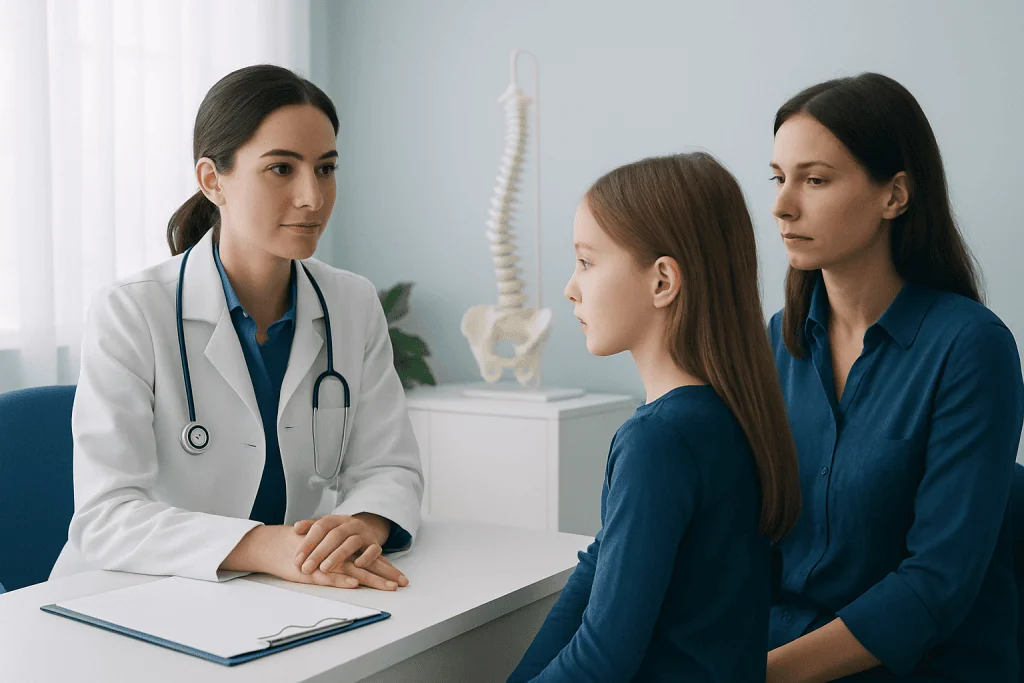
The cause of pediatric scoliosis depends on the type. Idiopathic scoliosis is the most common form in school-aged children and adolescents. Although its exact cause is not fully understood, it may involve genetic and growth-related factors, and it can sometimes run in families.
Congenital scoliosis happens when the spine does not form typically before birth. In this type, one or more vertebrae may be shaped differently or may not separate normally. These structural differences can affect how the spine grows over time.
Neuromuscular scoliosis can develop in children who have conditions affecting muscle control or nerve function. Examples include cerebral palsy, muscular dystrophy, or spinal cord disorders. In these situations, the muscles that support the spine may not keep it balanced as the child grows.
Risk factors for curve progression include younger age at diagnosis, significant growth remaining, and larger curves at the time scoliosis is first found. Puberty is an especially important period because rapid growth can make curves more likely to worsen. This is one reason regular monitoring is central to pediatric scoliosis care.
How Pediatric Scoliosis Is Diagnosed and Monitored
Diagnosis usually begins with a medical history and physical examination. The doctor looks at posture, shoulder and hip alignment, spine balance, and the appearance of the back during forward bending. The child’s age, growth stage, family history, and any symptoms such as pain or weakness also help guide evaluation.
If scoliosis is suspected, spinal X-rays are commonly used to confirm the diagnosis and measure the degree of curvature. Doctors often describe curve size using the Cobb angle, which helps determine whether the child needs observation, bracing, or surgical evaluation. Imaging can also show whether the curve pattern suggests a typical idiopathic form or another underlying issue.
Some children need additional tests. An MRI may be recommended if the curve appears unusual, if neurological symptoms are present, or if scoliosis begins at a very young age. These tests help the care team rule out problems involving the spinal cord or surrounding structures.
Monitoring is a key part of treatment planning. A child with a small curve and substantial growth remaining may need repeat examinations and periodic imaging every few months or at intervals chosen by the doctor. The purpose is not simply to label the condition, but to identify curve progression early enough to act when needed.
Treatment Options: Observation, Bracing, and Surgery
Treatment for pediatric scoliosis is individualized. Doctors consider the child’s age, the type of scoliosis, the amount of growth remaining, and the size and location of the curve. Mild curves often need only observation, especially if they are stable and the child is near the end of growth.
Bracing is commonly recommended for some growing children whose curves are large enough to have a meaningful risk of progression but may still be managed without surgery. A brace is designed to apply gentle corrective pressure and support the spine during growth. It is important for families to understand that bracing usually aims to keep the curve from getting worse rather than to fully straighten the spine.
Different brace designs may be used depending on the curve pattern and the child’s needs. Success depends on careful fitting, regular follow-up, and wearing the brace as advised by the treating specialist. Many children can continue school, sports, and daily routines while using a brace, though there may be an adjustment period.
Surgery is generally considered when curves are severe, continue to worsen despite bracing, or are associated with certain underlying conditions. In selected cases, doctors may discuss scoliosis surgery to correct and stabilize the spine. Younger children with early-onset scoliosis may sometimes need specialized growth-friendly approaches, while older adolescents with severe curves may be candidates for spinal fusion.
Living With Scoliosis: Self-care, Activity, and Family Support
Most children with pediatric scoliosis can continue normal daily activities. In many cases, exercise, school participation, and recreational sports remain safe and beneficial unless the doctor advises otherwise. Staying active can support general health, strength, mood, and confidence.
Families often have practical questions about posture, backpacks, sleeping position, or whether exercises can cure the curve. Good posture and physical activity are helpful for comfort and overall fitness, but they do not replace medical follow-up. Specific exercise programs may be suggested in some cases as part of supportive care, although the main treatment decisions are based on curve size and growth.
Wearing a brace can be emotionally challenging, especially for preteens and teenagers. Open communication, school support, and realistic expectations can make adjustment easier. Encouragement from parents and a clear explanation from the medical team often help children understand why consistent brace wear matters.
Follow-up appointments are just as important as the initial diagnosis. The spine can change as a child grows, so ongoing evaluation allows the treatment plan to be updated at the right time. For children who need broader spine care, a specialist may also evaluate related concerns such as kyphosis or other alignment differences.
When to See a Doctor
A child should be evaluated if a parent, teacher, coach, or doctor notices uneven shoulders, a leaning posture, or a rib hump during forward bending. Even when the child feels well, a professional assessment is worthwhile because scoliosis can progress silently during growth.
Prompt medical review is especially important if the curve seems to be changing quickly, if the child is entering a rapid growth phase, or if there is a family history of scoliosis. Early assessment gives the care team more opportunity to monitor the curve and consider bracing before it becomes more advanced.
Parents should also seek care if the child has back pain that is persistent or severe, weakness, numbness, difficulty walking, or changes in bladder or bowel control. These symptoms are not typical of straightforward idiopathic scoliosis and may require additional investigation.
At experienced centers, pediatric orthopedics, spine specialists, radiology, rehabilitation, and when needed pediatric orthopedic care work together to support children with scoliosis. Acibadem International’s multidisciplinary specialists and JCI-accredited hospitals diagnose and treat this condition for international patients when expert evaluation is needed.
Frequently asked questions
What is pediatric scoliosis?
Pediatric scoliosis is a sideways curvature of the spine that occurs in children or adolescents. The spine may also rotate, which can make one side of the back or ribs appear more prominent.
How is scoliosis in children usually found?
It is often noticed during a routine physical exam or when a parent sees uneven shoulders, hips, or waistline. Many children do not have pain, so posture changes may be the first clue.
Does a brace fix scoliosis permanently?
A brace usually does not permanently straighten the spine. Its main purpose is to reduce the chance that the curve will worsen while the child is still growing.
Can children with scoliosis play sports?
In many cases, yes. Most children with scoliosis can stay active and participate in sports and school activities unless their doctor recommends specific limits.
Will every child with scoliosis need surgery?
No. Many children have mild curves that only need monitoring, and some growing children benefit from bracing. Surgery is generally reserved for curves that are severe or continue to progress.
Is scoliosis painful for children?
Typical adolescent idiopathic scoliosis often causes little or no pain, especially when the curve is mild. If a child has significant or persistent pain, the doctor may check for other causes as well.
References
- World Health Organization
- American Academy of Orthopaedic Surgeons
- Scoliosis Research Society
- American Academy of Pediatrics
- National Institute of Arthritis and Musculoskeletal and Skin Diseases
This article is for general information only and is not a substitute for professional medical advice. Please consult a qualified doctor about your individual situation.
Joint and spine care in Turkey — expert assessment & treatment
JCI-accredited · board-certified surgeons · reply within 24h
Add us as a Preferred Source to see more of our trusted health content across Google Search, AI Overviews and Discover.

Pediatrics
Complete healthcare for infants, children and adolescents across all sub-specialties.
232 specialists in this unit




