Pediatric Spine Specialist: An Evidence-Based Patient Guide
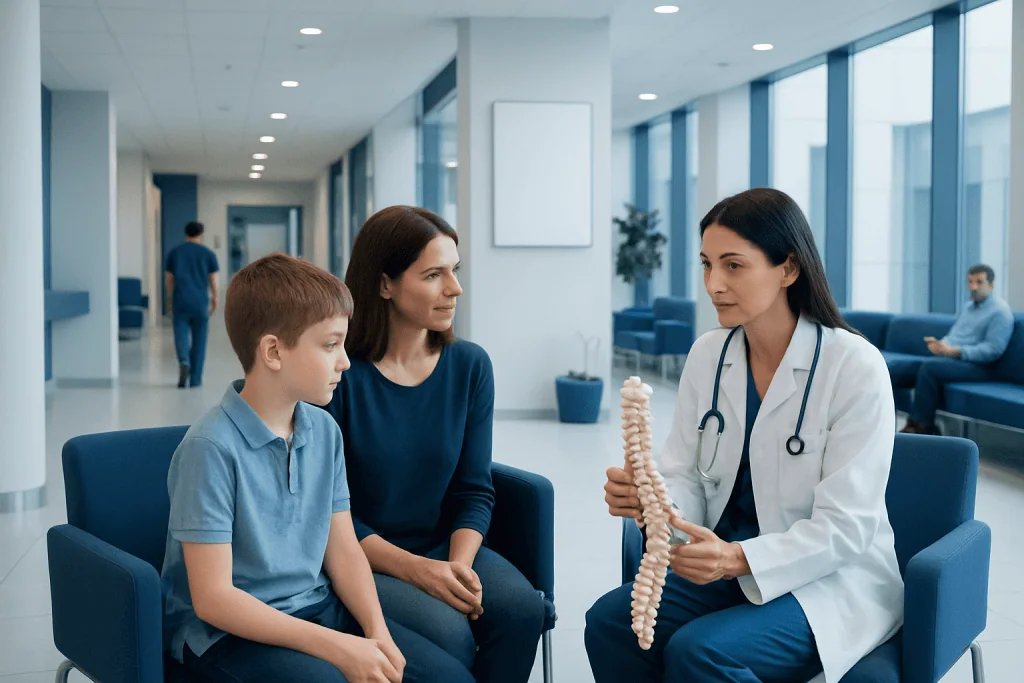
Pediatric spine specialists assess the growing spine, not only the curve or symptom seen on an image. Many childhood spinal conditions can be monitored or managed without surgery.
Key Takeaways
- Pediatric spine specialists assess the growing spine, not only the curve or symptom seen on an image.
- Many childhood spinal conditions can be monitored or managed without surgery.
- Surgery is usually considered when a spinal problem is severe, progressive, painful, affecting function, or threatening nerve or lung health.
- Care commonly involves orthopedic surgeons, neurosurgeons, pediatricians, physiotherapists, anesthesiologists, and rehabilitation professionals.
- New weakness, loss of bladder or bowel control, severe pain, fever with back pain, or trouble walking needs prompt medical assessment.
A pediatric spine specialist is a doctor with focused expertise in diagnosing and managing spinal conditions in infants, children, and adolescents. They help families understand whether a child needs observation, nonsurgical care, or a carefully planned procedure such as scoliosis surgery.
What does a pediatric spine specialist do?
A pediatric spine specialist is a physician with advanced experience in conditions affecting the spine of babies, children, and teenagers. Depending on the condition and local care model, this may be a pediatric orthopedic surgeon, pediatric neurosurgeon, or another specialist working within a dedicated pediatric spine team. Their role is to identify the cause of a spinal concern and create a plan that supports the child’s growth, movement, comfort, and overall health.
Children are not simply smaller adults. Their bones, muscles, nervous system, and lungs continue to develop, and a spinal curve or structural difference may change as a child grows. A pediatric spine specialist therefore considers the child’s age, growth potential, physical development, symptoms, daily activities, and imaging findings together rather than making decisions from an X-ray alone.
Referral may be appropriate for concerns such as scoliosis, kyphosis, congenital vertebral differences, spondylolisthesis, persistent back pain, spinal injury, or nerve-related symptoms. The specialist can explain whether the finding requires reassurance and follow-up, rehabilitation, bracing, further testing, or discussion of surgery.
Conditions a pediatric spine specialist may assess
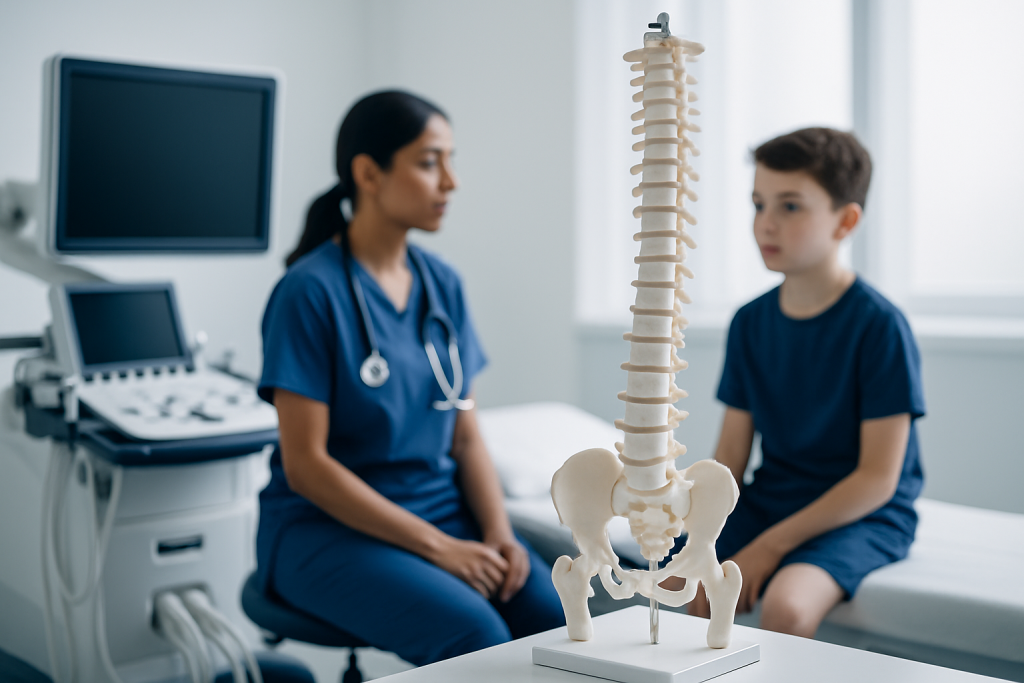
One of the most common reasons for referral is scoliosis, a sideways curvature of the spine that may also include rotation of the vertebrae. Mild curves often cause no pain and may be monitored during periods of rapid growth. Some curves progress and may benefit from bracing or, less commonly, surgery. Families can learn more about scoliosis and the importance of individualized assessment.
Specialists also evaluate kyphosis, an increased forward rounding of the upper back; congenital scoliosis caused by differences in spinal development before birth; and spondylolisthesis, where one vertebra shifts relative to another. Some children are referred for back pain associated with sports, including stress injuries such as spondylolysis. Most back pain is not caused by a dangerous problem, but persistent or unusual pain deserves careful evaluation.
Other reasons for specialist care include spine changes linked with neuromuscular conditions, infection, tumors, inflammatory disorders, trauma, or abnormalities affecting the spinal cord. The assessment is designed to clarify whether the spine issue is isolated or part of a wider health condition that needs coordinated care.
How the assessment and diagnosis work
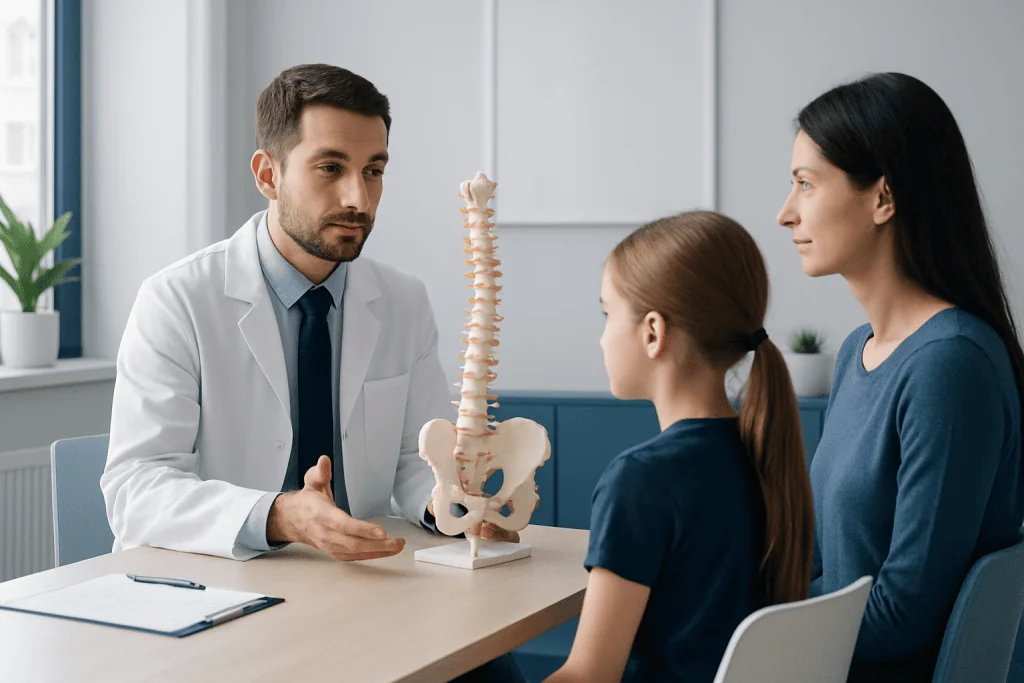
The first appointment usually begins with a detailed history. The specialist asks when the concern was first noticed, whether it is changing, and whether the child has pain, fatigue, weakness, numbness, balance problems, changes in walking, or limits in school, play, or sports. Family history, growth history, previous illnesses, medications, and prior imaging are also relevant.
A physical examination may include observing posture, shoulder and hip height, spinal alignment, leg length, walking pattern, flexibility, muscle strength, reflexes, and sensation. For possible scoliosis, the clinician may use a forward-bend examination to look for rib or back prominence. The examination is adapted to the child’s age and comfort.
Standing spine X-rays are often used to measure a curve and compare it over time. MRI may be recommended when there are neurological symptoms, unusual pain, a congenital difference, or features that need closer examination of the spinal cord and soft tissues. CT is used selectively because it involves radiation, while low-dose imaging approaches are preferred whenever appropriate. Blood tests are not routinely required but may help investigate suspected infection, inflammation, or another underlying condition.
A diagnosis is not always made during one visit. Monitoring growth and repeating measurements can be important, especially when a curve is mild or its rate of change is uncertain. Families should feel comfortable asking what the images show, what changes are being watched for, and when the next review is needed.
Nonsurgical treatment and monitoring options
Many children seen by a pediatric spine specialist do not need an operation. Observation with planned follow-up is appropriate for some mild, stable curves and for children without concerning symptoms. Follow-up timing depends on the diagnosis, curve size, growth stage, and the likelihood of progression.
Physiotherapy may help improve strength, flexibility, movement confidence, and function. It may be especially useful for back pain, recovery after injury, and preparation for or recovery from surgery. Exercises do not straighten every structural spinal curve, but a therapist can tailor activity advice to the child’s needs and help them remain safely active.
For selected growing children with scoliosis, a brace may be recommended to reduce the chance that a curve will worsen. Bracing is a treatment plan rather than a punishment or sign of failure; its success depends on the type of curve, growth remaining, fit, and consistent use as advised. The spine team reviews comfort, skin care, emotional wellbeing, and brace fit over time.
Pain treatment may include activity modification, heat or cold measures, physiotherapy, and medicines recommended by the child’s clinician. Persistent pain should not be managed only with repeated pain medicine without identifying its cause. The goal is to support normal participation while protecting the child’s health.
When surgery may be considered
Spine surgery is considered only after a thorough discussion of the likely benefits, limitations, and alternatives. It may be recommended when a curve is severe or progressing despite appropriate nonsurgical care, when spinal alignment significantly affects function, or when a condition creates pressure on nerves or the spinal cord. The decision also considers growth, lung development, pain, mobility, and the child’s individual diagnosis.
The procedure varies widely. In spinal fusion, the surgeon corrects and stabilizes part of the spine using implants such as screws and rods, while bone graft material supports fusion over time. For younger children who still have substantial growth remaining, growth-friendly techniques may sometimes be considered. Some carefully selected adolescents may be candidates for motion-preserving approaches, but suitability depends on the curve pattern and many clinical factors.
Before surgery, the team reviews imaging, general health, anesthesia needs, blood management planning, and rehabilitation. A child may also meet physiotherapists, nurses, pediatric anesthesiologists, and other specialists. When an operation is advised, families can discuss scoliosis surgery in detail, including the goals of correction and what recovery may involve.
The potential benefits of surgery can include preventing further progression, improving spinal balance, protecting neurological function in certain conditions, and improving comfort or daily function. Surgery cannot promise a perfectly straight spine, eliminate all back pain, or provide the same result for every child. A clear conversation about realistic expectations is an essential part of informed decision-making.
What happens during surgery and recovery?
On the day of surgery, the child is admitted to hospital and prepared by the surgical and anesthesia teams. During the operation, the surgeon uses imaging and, in many cases, nerve-monitoring technology to help guide the procedure and protect spinal cord function. The exact incision, technique, and length of surgery depend on the diagnosis and planned treatment.
After surgery, the child is monitored closely for pain control, breathing, circulation, movement, and neurological function. Early care may include IV fluids, medication for pain and nausea, wound checks, and support to begin sitting, standing, and walking when it is safe. Parents or caregivers receive guidance on how to help with comfort, mobility, and emotional reassurance.
Recovery timelines differ. Hospital stays can range from a short stay to longer care for complex procedures or medical needs. Returning to school, sports, lifting, and other activities happens gradually and is guided by follow-up examinations and imaging. Physiotherapy and home exercises may be part of recovery, and follow-up visits monitor healing, alignment, and overall wellbeing.
Possible risks include bleeding, infection, blood clots, wound problems, implant-related issues, persistent pain, need for additional procedures, and rare injury to nerves or the spinal cord. Anesthesia also carries risks. The surgical team explains the risks relevant to the specific child and the steps used to reduce them, allowing the family to make a well-informed choice.
Supporting a child before and after spine care
A spinal diagnosis can raise practical and emotional questions for both children and caregivers. Honest, age-appropriate explanations can help a child understand why appointments, imaging, a brace, or treatment are needed. It can be helpful to encourage questions, involve the child in manageable decisions, and let school staff know about temporary activity or seating needs when appropriate.
In most cases, children should remain active within the limits advised by their clinical team. Healthy sleep, balanced nutrition, regular movement, and avoiding tobacco exposure support general bone and overall health. However, lifestyle changes alone cannot correct every structural spinal condition, and unproven devices or intensive exercise programs should not replace specialist evaluation.
Families may benefit from keeping a record of symptoms, growth changes, imaging reports, medicines, and questions for appointments. This is particularly useful when care involves several specialties. Acibadem International’s multidisciplinary specialists and JCI-accredited hospitals provide assessment and treatment planning for international pediatric patients with spinal conditions.
When to seek medical care
A routine appointment with a pediatrician or pediatric spine specialist is sensible if a caregiver notices uneven shoulders, a prominent shoulder blade, an uneven waist, one hip appearing higher, a persistent rounded back, changes in walking, or a spinal curve that seems to be increasing. Ongoing back pain, pain that limits activity, or pain that repeatedly wakes a child should also be assessed.
Prompt medical assessment is important for back pain accompanied by fever, unexplained weight loss, significant night pain, recent major injury, or a child who appears unwell. Urgent evaluation is needed for new or worsening weakness, numbness around the groin, difficulty walking, or loss of bladder or bowel control, as these may indicate nerve involvement.
Early review does not mean that a serious condition is likely. It helps ensure that a child receives appropriate examination, imaging only when needed, and timely support. A pediatric spine specialist can also provide reassurance when a finding is benign or unlikely to progress.
Frequently asked questions
When should a child see a pediatric spine specialist?
A child may benefit from specialist evaluation if a spinal curve, uneven shoulders or hips, rounded back, persistent back pain, walking changes, weakness, or numbness is noticed. Referral is also appropriate when a pediatrician identifies a concern during a routine examination. Many referrals lead to monitoring or reassurance rather than surgery.
What is the difference between a pediatric spine specialist and a general orthopedic doctor?
A general orthopedic doctor treats a broad range of bone, joint, and muscle concerns. A pediatric spine specialist has focused expertise in spinal conditions during growth, including how curves can change with development and how treatment may affect the growing child. They often work with a pediatric multidisciplinary team.
Does scoliosis always require surgery?
No. Many scoliosis curves are mild and are monitored over time, particularly when they are not progressing. Some growing children may benefit from bracing, while surgery is generally reserved for selected curves that are severe, progressing, or causing important health or functional concerns.
Can poor posture cause scoliosis?
Poor posture does not cause the common form of adolescent idiopathic scoliosis. A curve can look more noticeable with certain posture habits, but structural scoliosis has a different underlying mechanism. Good posture and physical activity may support comfort and function, but they should not replace clinical assessment of a suspected curve.
Will a child need an MRI for a spinal curve?
Not every child with a spinal curve needs an MRI. X-rays are commonly used to measure scoliosis and monitor changes. MRI may be recommended when symptoms, examination findings, age, curve pattern, or congenital features suggest that the spinal cord or surrounding tissues need closer evaluation.
How long does recovery take after pediatric spine surgery?
Recovery depends on the operation, the child’s health, and the condition being treated. Walking and basic daily activities usually begin gradually under the care team’s guidance, while return to school and sports takes place over a longer period. The surgeon provides an individualized timeline and follow-up plan.
References
- American Academy of Orthopaedic Surgeons
- Scoliosis Research Society
- American Academy of Pediatrics
- National Institute of Arthritis and Musculoskeletal and Skin Diseases
- National Health Service
This article is for general information only and is not a substitute for professional medical advice. Please consult a qualified doctor about your individual situation.
Joint and spine care in Turkey — expert assessment & treatment
JCI-accredited · board-certified surgeons · reply within 24h
Add us as a Preferred Source to see more of our trusted health content across Google Search, AI Overviews and Discover.

More from the Health Library


Related Specialists

Dr. Mahmut Özyılmaz
Aesthetic Plastic & Reconstructive Surgery
Prof. Dr. Alpay Turan Sezgin
Cardiology
Dr. Serdar Baştan
Emergency Service
Dr. Umut Özbebit (m)
Aesthetic Plastic & Reconstructive Surgery