Periungual Wart: An Evidence-Based Guide for Patients

Periungual warts grow around the nails and are caused by HPV entering small breaks in the skin. They may start as rough, small bumps and can gradually affect the nail fold or nail plate.
Key Takeaways
- Periungual warts grow around the nails and are caused by HPV entering small breaks in the skin.
- They may start as rough, small bumps and can gradually affect the nail fold or nail plate.
- Treatment often requires patience because warts near the nail can be stubborn and may recur.
- Picking, biting nails, and cutting cuticles can increase the risk of developing or spreading periungual warts.
- Medical evaluation is important if the growth is painful, changes the nail, bleeds, or does not improve.
A periungual wart is a common wart that grows around a fingernail or toenail, usually because of infection with certain types of human papillomavirus (HPV). These warts are often harmless but can be painful, affect nail growth, and become difficult to treat without proper care.
Overview
A periungual wart is a wart that develops around the fingernail or toenail. It is caused by infection with human papillomavirus, or HPV, which enters through tiny breaks in the skin. These warts are common, especially in children, teenagers, and adults who bite their nails, pick at the skin around the nails, or have frequent hand exposure to moisture or friction.
Compared with warts on other parts of the body, periungual warts can be more troublesome because they sit close to the nail matrix and nail folds. As they grow, they may distort the nail, create tenderness, or make everyday tasks uncomfortable. They are usually benign, but their location makes them more likely to interfere with nail health and hand function.
Many people first notice a small rough bump at the edge of the nail. Over time, the area may thicken, become cauliflower-like, or spread under or around the nail. Because other nail conditions can sometimes look similar, persistent nail-area growths should be assessed by a qualified clinician rather than treated repeatedly without a diagnosis.
Symptoms and what a periungual wart looks like
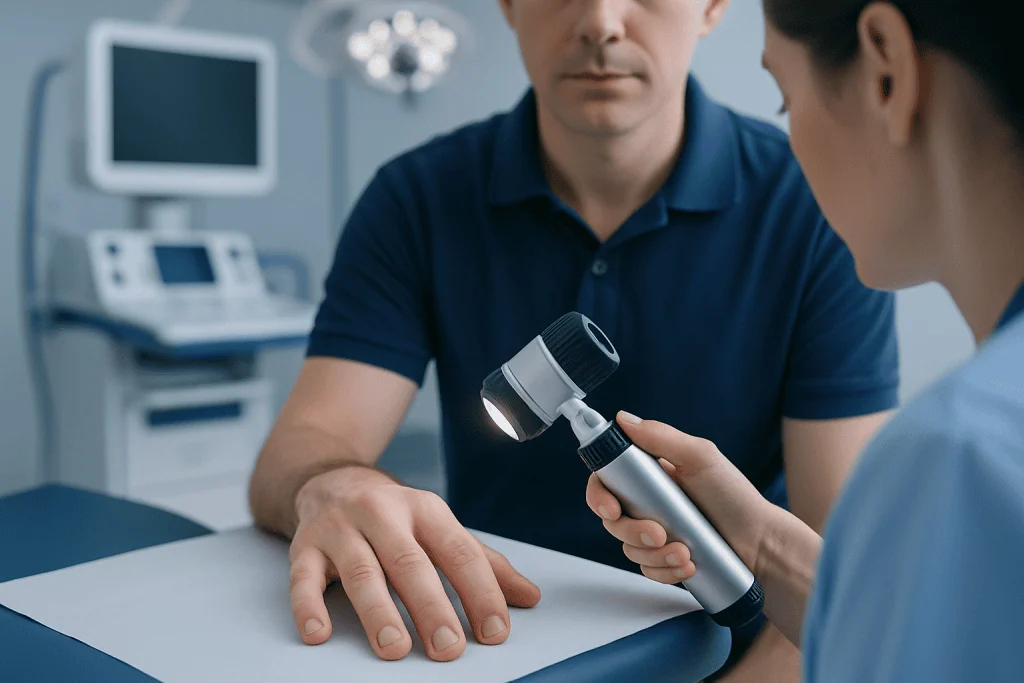
Periungual warts often begin as tiny, firm, flesh-colored or slightly gray bumps around the nail. Early lesions can look smooth, but they usually become rougher and more irregular over time. Some remain small, while others merge into larger clusters around the cuticle or side of the nail.
Symptoms vary depending on size and location. Some people have no pain at all, while others feel pressure, soreness, or tenderness, especially when using their hands, trimming nails, typing, or wearing shoes if a toenail is affected. When the wart extends under the nail or presses on surrounding tissue, discomfort may increase.
Common features may include:
- Rough or thickened skin around the nail
- A raised bump with an uneven surface
- Disruption of the cuticle
- Changes in nail shape or nail growth
- Small black dots, which may represent tiny clotted blood vessels
- Bleeding after picking or trauma
A periungual wart can sometimes be confused with other conditions such as skin cancer, chronic paronychia, a callus, or other nail disorders. If a lesion is dark, rapidly changing, ulcerated, or repeatedly bleeding, a doctor may recommend closer examination to rule out other causes.
Causes and risk factors
Periungual warts are caused by specific strains of HPV that infect the top layer of the skin. The virus usually enters through tiny cuts, hangnails, cracked skin, or trauma from biting, picking, or aggressive manicuring. Once inside the skin, HPV can trigger excess cell growth, leading to a wart.
These warts can spread by direct skin contact or by self-inoculation, which means moving the virus from one area of the body to another. A person who already has common warts elsewhere may unintentionally spread them to the nail area by scratching or touching the lesions. Shared nail tools and moist public environments may also contribute, although not every exposure leads to infection.
Factors that can increase risk include:
- Nail biting or picking at the cuticles
- Frequent hand washing or wet work that irritates skin
- Manicures that injure the cuticle or nail fold
- Existing eczema or skin barrier damage
- A weakened immune system
- Close contact with someone who has warts
It is important to know that having a periungual wart does not mean a person is unclean. HPV is common, and these warts can occur in anyone. The key issue is skin barrier disruption, which gives the virus a chance to enter and persist.
How doctors diagnose periungual warts
Diagnosis is usually made through a clinical examination. A doctor looks at the wart’s location, texture, and effect on the nail and surrounding skin. In many cases, the appearance is typical enough that no special testing is needed.
Sometimes a dermatologist may gently pare the surface or use dermoscopy, a handheld magnifying device, to see characteristic features such as interruption of normal skin lines and tiny pinpoint blood vessels. This can help distinguish a wart from a corn, callus, fungal issue, or inflammatory nail problem.
If the lesion has unusual features, does not respond to standard treatment, or raises concern for another diagnosis, the doctor may recommend a biopsy. This is especially important when there is persistent bleeding, significant pigment change, ulceration, severe nail destruction, or uncertainty about whether the growth is a wart or another condition. In some situations, clinicians may also assess broader skin health if there are associated issues such as eczema affecting the hands.
Treatment options
Periungual wart treatment often takes time because the skin around the nail is sensitive and the virus can be persistent. Some warts go away on their own, but treatment may be advised when the wart is painful, growing, spreading, changing the nail, or causing cosmetic or functional concerns. The best approach depends on the person’s age, the wart’s size and depth, and whether earlier treatments have failed.
Doctors commonly start with topical therapies such as salicylic acid, often used carefully over weeks to gradually remove wart tissue. Cryotherapy, which freezes the wart, is another common option, but it must be performed thoughtfully near the nail to reduce the risk of nail damage. For more resistant warts, clinicians may consider procedures such as cantharidin-based therapy where available, immunotherapy, electrosurgery, curettage, laser treatment, or other dermatologist-directed methods. When procedural care is needed, a specialist may discuss options such as dermatology evaluation or selected laser treatment.
Not every treatment works immediately, and recurrence can happen even after a wart appears to clear. Repeated or overly aggressive self-treatment near the nail can injure the nail matrix and surrounding skin, so it is wise to seek guidance if home care is not helping. In children or people with multiple recurrences, the doctor may choose the least painful evidence-based approach and monitor progress over time.
If a wart is causing marked nail distortion or is difficult to distinguish from another nail condition, referral to a specialist is often appropriate. In selected cases, support from services involved in skin assessment may help clarify diagnosis and treatment planning.
Self-care and prevention
Good self-care can reduce irritation, limit spread, and support treatment. The most useful habits focus on protecting the skin barrier around the nails. This means avoiding nail biting, picking, trimming cuticles, and trying to cut or scrape the wart at home. Covering the wart if it is repeatedly rubbed may also help reduce trauma.
Hands and feet should be kept clean and dry, but harsh over-washing or strong chemicals can worsen skin cracks. Moisturizing the hands regularly, especially after washing, may help protect the skin. People who work in wet environments may benefit from protective gloves when appropriate.
Prevention steps include:
- Do not share nail clippers, files, or cuticle tools
- Avoid picking at warts to reduce self-spread
- Keep cuticles intact rather than trimming them aggressively
- Use personal footwear in communal wet areas
- Follow treatment instructions consistently if a doctor prescribes therapy
Home treatments sold for common warts may not always be suitable around the nail, especially in children, people with diabetes, poor circulation, nerve problems, or uncertain diagnosis. If there is any doubt, medical advice is safer than repeated trial-and-error treatment.
When to seek medical care
Medical care is a good idea if a periungual wart is painful, rapidly growing, recurrent, or interfering with daily activities. Evaluation is also important if the wart changes the shape of the nail, spreads to multiple nails, or persists despite appropriate home treatment. These situations do not necessarily mean something serious, but they do mean the lesion deserves a closer look.
A person should also seek care if the area becomes red, swollen, warm, draining, or increasingly tender, since this may suggest a secondary infection. Growths that bleed easily, look dark or irregular, or do not clearly resemble a wart should be assessed to rule out other nail or skin conditions. People with weakened immune systems, diabetes, or circulation problems should be especially cautious about self-treatment around the nails.
For international patients who need evaluation of persistent nail-area lesions, Acibadem International’s multidisciplinary specialists and JCI-accredited hospitals diagnose and treat skin and nail conditions with individualized care planning. If there is concern about broader skin disease or an uncertain lesion, doctors may also consider whether assessment related to psoriasis or other skin disorders is relevant based on the examination.
Frequently asked questions
Is a periungual wart contagious?
Yes, a periungual wart can spread because it is caused by HPV. The virus may pass through direct contact or through tiny breaks in the skin, especially if the wart is picked or the surrounding skin is damaged.
Can a periungual wart go away on its own?
Yes, some periungual warts do clear without treatment as the immune system responds to the virus. However, they may last for months or longer, and warts near the nail are often more stubborn than warts in other locations.
Why are warts near the nail harder to treat?
The skin around the nail is delicate, and the wart may extend into areas that are difficult to reach safely. Treatment must balance effectiveness with protecting the nail matrix and nearby tissue, which can make progress slower.
Should a periungual wart be cut off or picked at home?
No. Cutting, scraping, or picking at a wart can cause bleeding, pain, infection, and spread of the virus to nearby skin. It can also damage the nail and make future treatment more difficult.
Are periungual warts the same as a fungal nail infection?
No, they are different conditions. A periungual wart is caused by HPV in the skin around the nail, while a fungal nail infection affects the nail itself and is caused by fungi, although the two can sometimes appear similar to patients.
When should a child with a periungual wart see a doctor?
A child should be seen if the wart is painful, growing quickly, bleeding, affecting the nail, or not improving with careful treatment. Medical advice is also helpful when the diagnosis is uncertain or the child tends to pick at the area.
References
- American Academy of Dermatology
- Centers for Disease Control and Prevention
- National Health Service
- DermNet
- Mayo Clinic
This article is for general information only and is not a substitute for professional medical advice. Please consult a qualified doctor about your individual situation.
Explore treatments in Turkey — costs, top hospitals & a free quote
JCI-accredited · board-certified surgeons · reply within 24h
Add us as a Preferred Source to see more of our trusted health content across Google Search, AI Overviews and Discover.

More from the Health Library
Aching Jaw and Ear: A Complete Medical Overview

Insulin Pump: A Complete Medical Overview

Water Retention: A Complete Medical Overview
Flail Chest — Explained by Medical Evidence, Not Myths

Replens vaginal moisturizer: Symptoms, Causes, and Treatment — Complete Patient Guide