

Pictures of Mohs Surgery on Lower Leg: Procedure, Recovery and Results
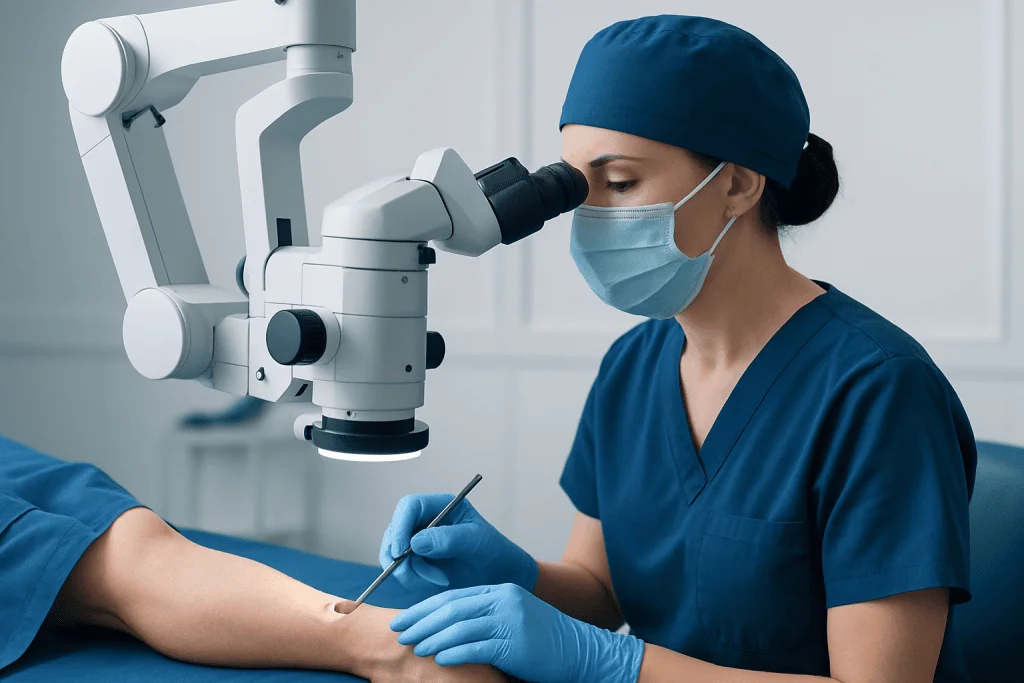
Mohs surgery removes skin cancer in stages while examining each layer under a microscope. A lower-leg Mohs wound may be left to heal naturally, closed with stitches, or repaired with a graft or flap.
Key Takeaways
- Mohs surgery removes skin cancer in stages while examining each layer under a microscope.
- A lower-leg Mohs wound may be left to heal naturally, closed with stitches, or repaired with a graft or flap.
- Swelling, tenderness, mild bleeding and redness near the wound are common early changes, but worsening symptoms need medical review.
- Many people can walk after surgery, although prolonged standing, strenuous activity and pressure on the area may need to be limited.
- Lower-leg healing often takes several weeks and may take longer when the wound is large or circulation is reduced.
Pictures of Mohs surgery on the lower leg can help patients understand that the wound may initially look larger than expected, red, swollen, bruised, or moist under a dressing. Healing is often slower below the knee than on other areas because swelling and circulation can affect the lower leg, but careful aftercare and follow-up support recovery.
Pictures of Mohs Surgery on Lower Leg: What They Can Show
Pictures of Mohs surgery on the lower leg usually show the appearance of the surgical site at different stages: immediately after cancer removal, while it is covered with a dressing, after a repair such as stitches or a skin graft, and during healing. The wound can look larger than the original visible spot because the surgeon removes a safety margin and continues removing thin layers until no cancer cells are seen at the edges.
In the first days, images may show redness, mild swelling, bruising, dried blood or clear-yellow drainage on the bandage. These changes can be part of normal wound healing. The exact appearance varies according to the cancer type, its size and location, how many layers are needed, and whether the area is closed or allowed to heal from the base upward.
Photos are useful for setting expectations, but they cannot determine whether an individual wound is healing normally. Lighting, skin tone, dressings and the timing of the image can all affect appearance. A person should follow the instructions from their dermatologic surgeon and contact the clinical team if they are concerned about a change in the wound.
How Mohs Surgery Works and Who May Benefit
Mohs micrographic surgery is a specialized technique most often used to treat certain types of skin cancer, particularly basal cell carcinoma and squamous cell carcinoma. The surgeon removes a thin layer of visible tumor and examines its edges under a microscope. If cancer cells remain at one edge, only the matching area is removed next. This process aims to clear the cancer while preserving as much healthy skin as possible.
The procedure may be considered for cancers with a higher chance of recurrence, poorly defined borders, a location where preserving tissue is important, or tumors that have returned after earlier treatment. It may also be used for selected skin cancers on the lower leg when the treating team considers it appropriate. Learn more about skin cancer and the role of specialist assessment.
Not every lower-leg lesion requires Mohs surgery. The best treatment depends on the pathology result, cancer subtype, size, depth, location, overall health, circulation, medicines and prior treatment history. A dermatologist or dermatologic surgeon can explain why Mohs surgery, standard excision, topical treatment, radiation therapy or another approach is recommended.
Step-by-Step: What Happens During Mohs Surgery on the Leg
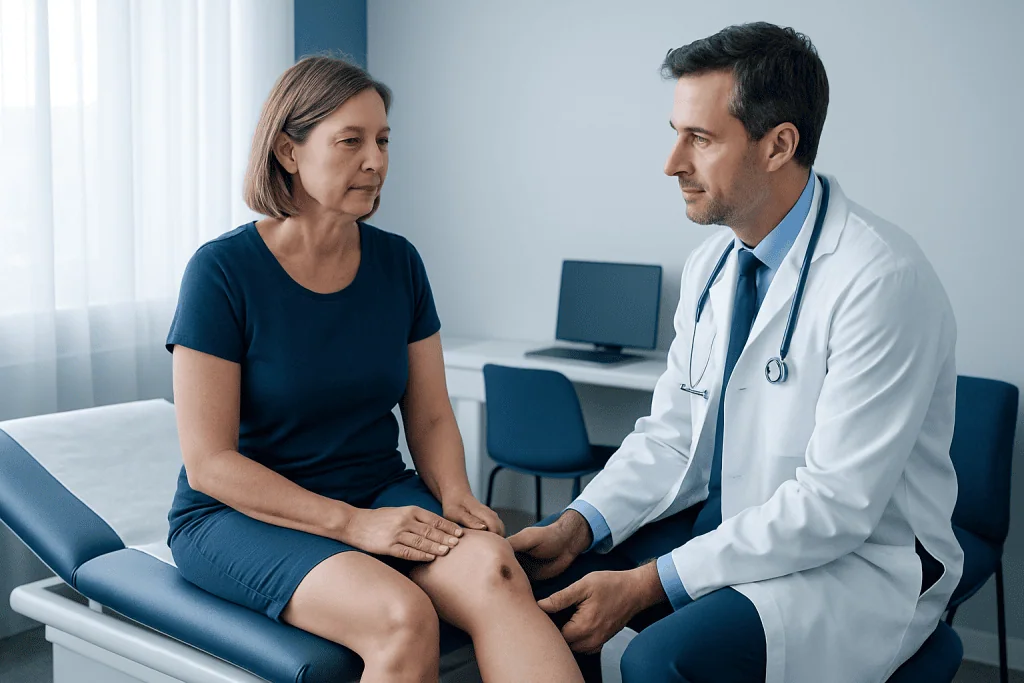
Mohs surgery is usually performed as an outpatient procedure with local anesthetic. The patient remains awake, but the area is numbed. The surgeon marks the treatment site, removes the visible tumor and a thin layer of surrounding tissue, then applies a temporary dressing while the tissue is processed and examined.
If microscopic examination shows cancer at any margin, the surgeon maps its location and removes another thin layer only from that area. This sequence may be repeated until the margins are clear. The total visit can vary because it depends on the number of stages and laboratory processing time; patients should plan for several hours and arrange transport if advised.
Once the cancer is cleared, the wound is assessed for repair. Some lower-leg wounds heal well by secondary intention, meaning the body gradually fills in and closes the wound. Other wounds may need stitches, a skin graft, or a flap repair. Mohs surgery planning includes discussing the likely repair options, wound-care needs and activity restrictions.
Because the lower leg can swell after surgery, clinicians may advise elevation, compression when appropriate, and reduced activity in the early recovery period. These recommendations are individualized, especially for people with diabetes, peripheral artery disease, vein problems or a history of poor wound healing.
What Does a Wound Look Like After Mohs Surgery?
Immediately after Mohs surgery, the wound may be an open round or oval area, a straight incision with stitches, or a graft covered by a protective dressing. It is common for the area to look red, pink, bruised or mildly swollen. Small amounts of blood-stained fluid on the dressing may occur during the first day or two.
Over the next several days, the wound may develop a thin crust or a pale yellow, moist surface as new tissue forms. A healing wound does not always look neat at first. On the lower leg, gravity can contribute to swelling and make the surrounding skin look temporarily tight or discolored.
Images taken later in recovery may show the redness gradually softening and a scar becoming flatter or lighter over time. Scars commonly continue to mature for months. A graft can initially appear darker, lighter or differently textured than nearby skin, and its appearance may change as it heals.
Concerning changes include bleeding that does not stop with steady pressure, rapidly spreading redness, increasing warmth, worsening pain, thick pus-like drainage, fever, a bad odor, or darkening of a graft. These do not always mean a serious problem, but they should be assessed promptly by the surgical team.
How Long Does It Take to Recover From Mohs Surgery on the Lower Leg?
Initial recovery from Mohs surgery on the lower leg often takes about two to four weeks, but complete healing may take longer. The lower leg is an area where wounds can heal more slowly because dependent swelling, reduced circulation and movement can place stress on the repair. Larger wounds, grafts and wounds left open to heal naturally may require several weeks to months of ongoing care.
During the first 24 to 48 hours, rest, elevation and keeping the dressing dry as instructed are commonly recommended. Swelling and tenderness are often most noticeable during the first few days. If stitches are used, the clinician usually removes them at a follow-up visit based on the repair location and tension on the wound.
By the following weeks, many patients can gradually resume normal routines, although the timing depends on wound closure, occupation and activity level. High-impact exercise, swimming, cycling, heavy lifting and activities that pull on the wound may need to wait until the surgeon confirms that healing is secure.
People with diabetes, smoking exposure, immune suppression, leg swelling, vascular disease or medicines that affect bleeding may need closer monitoring. The care team can give the most reliable recovery estimate after examining the defect and repair.
Can You Walk After Mohs Surgery on Your Leg?
Many people can walk after Mohs surgery on the leg, but walking should be limited at first and increased gradually according to the surgeon’s instructions. Short, necessary walks around the home are often reasonable, while long walks, prolonged standing, climbing, running and strenuous exercise can increase swelling, bleeding or tension on the wound.
For the first few days, elevating the leg above heart level when resting may help reduce swelling. A clinician may recommend a compression wrap or stocking for selected patients, but compression should not be started or changed without medical advice, particularly for people with circulation conditions.
Walking restrictions are especially important after a flap, graft or repair under tension. The surgeon may advise crutches, a walking boot, reduced weight-bearing or time away from work depending on the wound site and repair. Pain, new bleeding, separation of stitches or increased swelling after activity are reasons to stop and contact the care team.
How Painful Is Mohs Surgery on the Shin?
During Mohs surgery, the local anesthetic should prevent sharp pain, although a brief sting or burning sensation can occur when the numbing medicine is injected. Patients may feel pressure, pulling or movement during the procedure, but they should tell the team if they feel pain so additional anesthetic can be given.
After surgery, soreness, throbbing or tightness on the shin can occur as the anesthetic wears off. The shin has relatively little soft tissue over bone, and lower-leg swelling can make a wound feel more sensitive. Discomfort is often manageable with the pain-relief plan recommended by the treating clinician.
Pain should generally improve rather than steadily worsen. Severe pain, pain that increases after an initial improvement, numbness beyond expected local effects, or pain accompanied by spreading redness, drainage or fever should be reported to the surgeon. Patients should ask before using any medicine that could increase bleeding risk.
Benefits, Risks and When to Seek Medical Care
A key benefit of Mohs surgery is complete microscopic margin assessment during the procedure, which can provide strong cancer control while conserving healthy skin. This tissue-sparing approach can be valuable where a larger excision could create a more difficult wound. However, every procedure has potential downsides, including bleeding, infection, delayed healing, scarring, altered sensation, wound separation and complications related to a graft or flap.
Lower-leg wounds deserve careful attention because swelling and circulation issues may affect healing. Patients should follow dressing instructions, avoid smoking, attend scheduled reviews and protect the scar from sun exposure after it has healed. Keeping regular dermatology follow-up appointments is also important, since a history of one skin cancer can increase the likelihood of developing another.
When to seek medical care: Contact the treating team urgently for bleeding that continues after firm direct pressure, rapidly increasing redness or swelling, fever, foul-smelling or pus-like drainage, a wound that opens, blackening of a graft, or new severe pain. Emergency assessment is appropriate for severe uncontrolled bleeding, chest pain, breathing difficulty or signs of a serious allergic reaction.
Acibadem International’s multidisciplinary specialists and JCI-accredited hospitals assess and treat skin cancer for international patients, including coordinated surgical and follow-up care when appropriate. A dermatology consultation can help a patient understand the diagnosis, repair choices and recovery plan for a lower-leg Mohs procedure.
Frequently asked questions
Do pictures of Mohs surgery on the lower leg show the final result?
Usually not. Early photographs often show swelling, redness, stitches, dressings or an open healing wound, which are not the final scar appearance. Scars and grafts can continue to change for months as healing progresses.
Why can the Mohs wound look bigger than the original skin cancer?
The visible skin cancer may extend beneath the surface or have microscopic cells at its edges. Mohs surgery removes tissue layer by layer until the examined margins are clear, which can leave a wound larger than the original spot. The final size also depends on the repair method.
Should a lower-leg Mohs wound be kept covered?
The answer depends on the type of repair and the surgeon's instructions. Many wounds need a protective dressing during early healing, while others may later be managed with specific cleansing and ointment routines. Patients should not change wound care based only on online images.
Can lower-leg swelling affect Mohs surgery recovery?
Yes. Swelling can increase discomfort and place tension on stitches, grafts or healing tissue. Elevation, appropriate activity limits and any clinician-recommended compression can help, but the plan should be tailored to the patient's circulation and overall health.
When can a person shower after Mohs surgery on the shin?
This varies by the dressing and repair. Many patients are asked to keep the area dry for an initial period, then may be allowed to shower gently without soaking or rubbing the wound. The operating team's written instructions should take priority.
Will Mohs surgery on the lower leg leave a scar?
Any surgery that removes skin will leave some degree of scar. The scar's size and appearance depend on the wound size, closure method, skin type, healing conditions and aftercare. Scar appearance often improves gradually over time, and the clinician can discuss scar-management options once the wound has healed.
References
- American Academy of Dermatology Association
- American College of Mohs Surgery
- National Cancer Institute
- NHS
- Skin Cancer Foundation
This article is for general information only and is not a substitute for professional medical advice. Please consult a qualified doctor about your individual situation.
Joint and spine care in Turkey — expert assessment & treatment
JCI-accredited · board-certified surgeons · reply within 24h
Add us as a Preferred Source to see more of our trusted health content across Google Search, AI Overviews and Discover.

More from the Health Library

Related Specialists

Dr. Oya Uğurlubilek
Inpatient Clinic Physicians Clinical Service
Dr. Kamil Kayayurt
Emergency Service
Dr. Ali Elibol
Radiology
Assoc. Prof. Dr. Kemal Öncü
Gastroenterology