Pilates Benefits: An Evidence-Based Guide for Patients
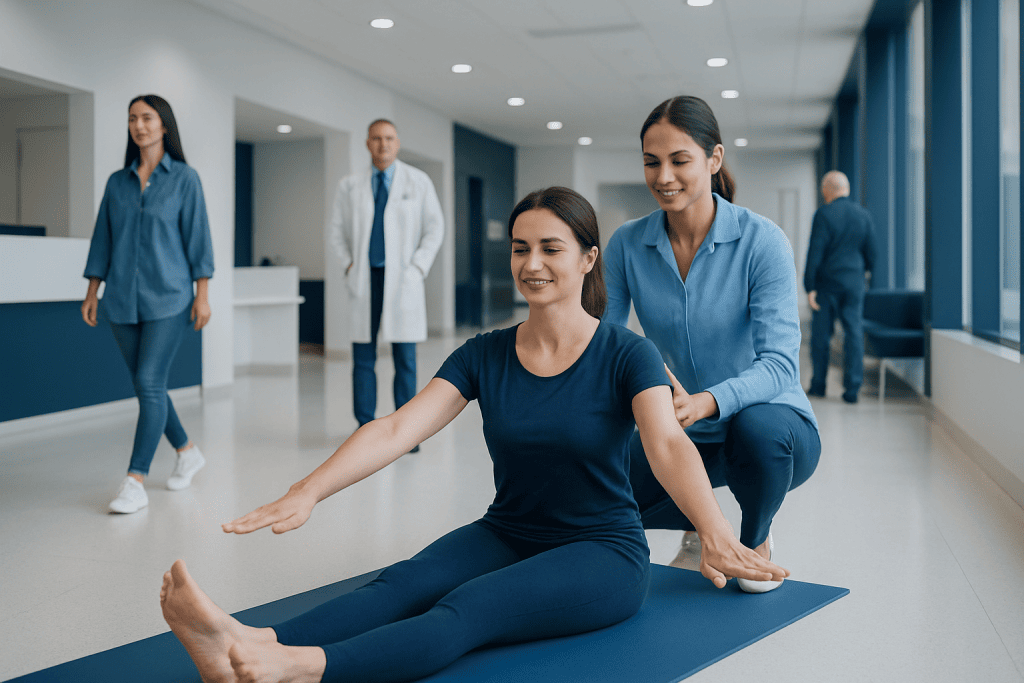
Pilates is a low-impact exercise method focused on controlled movement, breathing, alignment, and core stability. Evidence suggests Pilates can improve strength, flexibility, balance, posture, and functional movement.
Key Takeaways
- Pilates is a low-impact exercise method focused on controlled movement, breathing, alignment, and core stability.
- Evidence suggests Pilates can improve strength, flexibility, balance, posture, and functional movement.
- Some people with mild, non-specific low back pain may benefit from Pilates as part of a broader care plan.
- Benefits depend on proper instruction, consistent practice, and exercises matched to the person’s health status.
- People with injuries, severe pain, pregnancy-related concerns, or chronic medical conditions should seek professional guidance before starting.
Pilates benefits include improved core strength, posture, flexibility, balance, and body awareness. For many people, it is a low-impact form of exercise that can support general fitness and may help with some types of musculoskeletal discomfort when practiced correctly.
Overview: What are the main Pilates benefits?
Pilates benefits are most often seen in core strength, posture, flexibility, balance, coordination, and body awareness. It is a structured exercise method that emphasizes controlled movement rather than speed or heavy loading, which is one reason many people find it approachable. When taught well and practiced regularly, Pilates can support everyday function, such as standing, lifting, walking, and sitting with better alignment.
Unlike exercise programs built mainly around cardiovascular training or muscle bulk, Pilates focuses on quality of movement. Sessions usually combine breathing, trunk control, pelvic and spinal alignment, and precise limb movements. This can make it useful for people who want to improve movement efficiency, return to exercise gradually, or complement sports and strength training.
Research on Pilates is broad but not identical across all populations. The strongest support is generally for improvements in flexibility, core endurance, balance, and some aspects of physical function. There is also evidence that Pilates may help certain people with non-specific low back pain, especially when exercises are supervised and adapted to individual needs.
Pilates is not a cure-all, and it does not replace medical evaluation for significant pain or neurological symptoms. Still, as a low-impact form of movement, it can be a valuable part of a healthy lifestyle for beginners, older adults, office workers, and many people recovering general mobility and confidence.
How Pilates works in the body
Pilates works by training the body to move with control and alignment. Many exercises target the deep abdominal muscles, back extensors, pelvic floor, hips, and shoulder stabilizers. These muscle groups help support the spine and joints during daily activity, which is why Pilates is often associated with better posture and steadier movement.
Breathing is another key part of the method. Coordinating breath with movement may improve concentration, rib mobility, and awareness of how the trunk stabilizes during effort. Although Pilates is not primarily a breathing therapy, this breath-movement link can help people slow down, focus, and reduce unnecessary tension.
The nervous system also plays a role. Repeating precise patterns may improve proprioception, which is the sense of where the body is in space. Better proprioception can support balance and smoother movement transitions, particularly in people who feel stiff, deconditioned, or less confident with exercise.
Pilates can be done on a mat or with specialized equipment. Mat-based Pilates uses body weight and gravity for resistance, while equipment may add springs or support. Both approaches can be effective when exercises are appropriate for the person’s goals, ability, and any medical limitations.
Evidence-based benefits of Pilates
One of the best-supported Pilates benefits is improved core strength and muscular endurance. This does not simply mean stronger abdominal muscles. It also includes better coordination among the trunk, pelvis, hips, and back muscles that help maintain stability during movement. People may notice this as easier standing, less fatigue with sitting, or better control during exercise.
Flexibility and mobility also commonly improve. Pilates uses repeated, controlled ranges of motion through the spine, hips, shoulders, and legs. Over time, this may help reduce stiffness and improve movement quality, especially in people who spend long hours sitting or who are returning to activity after inactivity.
Balance and posture are other important areas. By encouraging symmetrical movement and awareness of alignment, Pilates may help people stand and move with more control. This can be helpful for older adults, people with sedentary lifestyles, and those who feel generally unsteady, although balance concerns should still be assessed medically when they are new or pronounced.
Some studies suggest Pilates may reduce pain and improve function in people with non-specific low back pain. This does not mean every type of back pain should be treated with exercise alone. Back pain may have many causes, and symptoms linked to conditions such as a herniated disc or spinal nerve compression need professional evaluation before starting a program.
- Commonly reported benefits: stronger core support, improved posture, increased flexibility, better balance, and greater body awareness
- Potential quality-of-life benefits: more confidence with movement, easier daily activity, and a structured return to exercise
- Best results usually come from regular practice and qualified instruction rather than occasional unsupervised sessions
Who may benefit most from Pilates?
Pilates can be a good option for beginners because it is scalable. Exercises can often be modified to reduce strain, shorten range of motion, or add support. This makes it suitable for many adults who want low-impact exercise without jumping, heavy lifting, or fast directional changes.
People who sit for long periods may benefit from Pilates because prolonged sitting can be linked with trunk weakness, hip tightness, and postural strain. A carefully planned program can help restore movement variety and reinforce healthier mechanics during work and leisure. Those who have physically demanding jobs may also use Pilates to improve control and movement efficiency.
Older adults may find Pilates helpful for mobility, coordination, and balance, particularly when supervised by an experienced instructor or rehabilitation professional. Some athletes also use Pilates as a complementary practice to support technique, flexibility, and recovery. In rehabilitation settings, clinicians may incorporate Pilates-based exercises into broader plans that include strengthening, education, and manual therapy.
Pilates is sometimes discussed for joint or soft tissue discomfort, but the right approach depends on the diagnosis. For example, symptoms related to scoliosis or chronic spinal pain may need individual assessment. In some cases, a doctor may suggest physical therapy and rehabilitation before or alongside Pilates to ensure exercises are safe and effective.
Limits, risks, and who should be cautious
Although Pilates is generally considered low impact, it is not risk-free. Poor technique, overly advanced exercises, or ignoring pain can lead to muscle strain or aggravate an existing problem. This is especially true for people with acute back pain, recent surgery, joint instability, osteoporosis, vertigo, or significant deconditioning.
Not every Pilates exercise is suitable for every body. Certain spinal flexion, rotation, or weight-bearing positions may need to be limited in people with disc problems, neck pain, wrist pain, or some pregnancy-related changes. People with chronic conditions should ask their doctor or rehabilitation specialist which movements are appropriate and whether modifications are needed.
Pain during Pilates should not be treated as a normal sign of progress. Mild muscular effort and stretching sensations can be expected, but sharp pain, radiating pain, numbness, dizziness, chest symptoms, or loss of balance are warning signs. If symptoms are severe or persistent, exercise should stop and medical advice should be sought.
For people recovering from surgery or dealing with complex musculoskeletal conditions, structured supervision matters. Some patients may benefit from specialist evaluation and, when needed, broader interventions such as orthopedic rehabilitation or spine-focused assessment before beginning independent Pilates practice.
How to start Pilates safely and get the most benefit
Beginners often do best with a basic class or one-to-one instruction that teaches breathing, alignment, and gentle core activation. Starting slowly helps build technique and confidence. A short, consistent routine is usually more useful than doing difficult sessions occasionally.
Choosing a qualified instructor is important, especially for people with pain, past injury, or chronic health concerns. The instructor should ask about medical history, adapt movements as needed, and encourage controlled progression rather than pushing through discomfort. Clear instruction is especially valuable when learning how to position the spine, ribs, pelvis, and shoulders.
A balanced routine may include mat Pilates two or three times a week along with walking, general strengthening, and flexibility work. Pilates is helpful, but overall health still depends on broader habits such as regular movement, sleep, nutrition, and stress management. People seeking support for posture or back symptoms often benefit from combining exercise with ergonomic changes at work and home.
If pain or mobility problems limit participation, formal assessment may be useful. In some cases, doctors may recommend rehabilitation programs or image-guided evaluation of persistent symptoms. Acibadem International’s multidisciplinary specialists in JCI-accredited hospitals diagnose and treat musculoskeletal conditions for international patients and can advise when supervised exercise, spine surgery, or other treatments are appropriate.
When to seek medical care
Medical care is important if pain begins suddenly, becomes severe, or does not improve with rest and activity modification. New neurological symptoms such as numbness, tingling, weakness, or pain that travels down an arm or leg should not be ignored. These signs may suggest nerve involvement and need professional assessment.
Urgent evaluation is especially important for back or neck pain linked with fever, unexplained weight loss, recent trauma, bowel or bladder changes, or difficulty walking. Chest pain, shortness of breath, fainting, or severe dizziness during exercise also require prompt medical attention. Pilates should be stopped until a clinician advises it is safe to continue.
People who are pregnant, recently postpartum, recovering from surgery, or living with osteoporosis, inflammatory joint disease, or a known spinal disorder should ask a qualified clinician before starting a new program. A tailored plan may still allow safe participation, but exercises often need modification.
When symptoms persist, assessment can help identify whether the issue is simple deconditioning or a specific condition requiring targeted treatment. Early guidance often makes it easier to return to safe activity and avoid unnecessary setbacks.
Frequently asked questions
What are the main Pilates benefits for beginners?
For beginners, Pilates benefits often include better core control, posture, flexibility, and awareness of movement. Because it is low impact and highly adaptable, many people can start gently and progress over time with proper instruction.
Can Pilates help with back pain?
Pilates may help some people with mild, non-specific low back pain by improving trunk strength, movement control, and function. However, not all back pain has the same cause, so persistent, severe, or radiating pain should be assessed by a doctor before beginning or continuing exercise.
Is Pilates better than yoga?
Pilates and yoga have different emphases, and one is not universally better than the other. Pilates usually focuses more on core stability, alignment, and controlled strengthening, while yoga often places greater emphasis on flexibility, breath, and mind-body practice.
How often should someone do Pilates to see benefits?
Many people notice benefits when they practice consistently two to three times per week. Progress depends on the person’s starting fitness, technique, and whether the exercises are appropriate for their goals and health status.
Can older adults do Pilates safely?
Yes, many older adults can do Pilates safely when the program is adapted to their balance, strength, and mobility. Supervision is especially helpful for anyone with osteoporosis, falls risk, joint pain, or other medical conditions.
Does Pilates help with weight loss?
Pilates can support an active lifestyle, improve strength, and make movement feel easier, but it is not primarily a weight-loss treatment. Weight changes are usually influenced by overall activity levels, nutrition, sleep, and medical factors.
References
- World Health Organization
- Centers for Disease Control and Prevention
- National Institute of Arthritis and Musculoskeletal and Skin Diseases
- American College of Sports Medicine
- National Center for Complementary and Integrative Health
This article is for general information only and is not a substitute for professional medical advice. Please consult a qualified doctor about your individual situation.
Joint and spine care in Turkey — expert assessment & treatment
JCI-accredited · board-certified surgeons · reply within 24h
Add us as a Preferred Source to see more of our trusted health content across Google Search, AI Overviews and Discover.