Pimple on Finger: Common Causes and Warning Signs

True acne is uncommon on the fingers because fingers have few oil glands compared with the face, chest, and back. Common explanations include friction blisters, dyshidrotic eczema, contact dermatitis, warts, insect bites, and local bacterial infections.
Key Takeaways
- True acne is uncommon on the fingers because fingers have few oil glands compared with the face, chest, and back.
- Common explanations include friction blisters, dyshidrotic eczema, contact dermatitis, warts, insect bites, and local bacterial infections.
- Do not squeeze, puncture, or cut a finger bump, as this can worsen irritation or introduce infection.
- Painful clusters of clear blisters can be herpetic whitlow and should be assessed by a clinician rather than treated by popping.
- Urgent medical advice is appropriate for spreading redness, severe pain, pus, fever, numbness, difficulty moving the finger, or a worsening wound.
A pimple on finger is often not acne. It may be a small blister, blocked or irritated skin structure, wart, contact reaction, or minor infection; the appearance, pain level, and location can help indicate the likely cause. Most isolated bumps improve with gentle skin care, but some—especially painful fluid-filled blisters or bumps with spreading redness—need prompt medical assessment.
What Does a Pimple on a Finger Usually Mean?
A pimple on finger is a common description for a small raised bump, but it is rarely a typical acne spot. Acne develops when hair follicles and oil-producing glands become blocked and inflamed. Although fingers have hair follicles, they have far fewer oil glands than acne-prone areas, so another skin condition is often the explanation.
Many finger bumps are minor and settle without lasting problems. For example, a clear blister after gripping a tool may result from friction, while a rough, firm bump may be a wart. A bump that is itchy and accompanied by tiny blisters may be eczema. Looking at when it appeared, whether it itches or hurts, and whether there was a recent injury or exposure can provide useful clues.
It is not possible to diagnose every bump from appearance alone. A clinician can examine the skin, ask about symptoms and exposures, and determine whether treatment is needed. This is particularly important when a bump is very painful, contains pus, recurs, or is close to the nail.
Common Types of Finger Bumps and Their Clues

A friction blister is one of the most frequent causes of a new finger bump. Repeated rubbing from exercise equipment, tools, sports, musical instruments, or poorly fitting gloves can separate layers of skin and create a fluid-filled area. It may feel sore or tender and is often located where pressure or rubbing occurred.
Dyshidrotic eczema can cause groups of very small, deeply seated, intensely itchy blisters on the sides of the fingers, palms, or soles. The skin may later become dry, flaky, cracked, or tender. Contact dermatitis is another possibility; it occurs when the skin reacts to an irritant or allergen, such as cleaning products, solvents, metals, fragrances, or certain gloves. Redness, itching, dryness, and scaling may occur alongside bumps.
Warts are caused by certain types of human papillomavirus and commonly appear on the hands and fingers. They are usually rough, skin-colored, and firm rather than pus-filled. Small dark dots may sometimes be visible within a wart. Insect bites and minor splinters can also cause a localized raised, itchy, or sore area.
A small bacterial infection may create a painful red bump, sometimes with a yellow-white center or drainage. Infections around the nail fold are often called paronychia. A painful lump near a joint may occasionally be related to a cyst or another noninfectious condition, which is why persistent or unexplained bumps should be reviewed by a healthcare professional.
Could It Be Herpetic Whitlow?
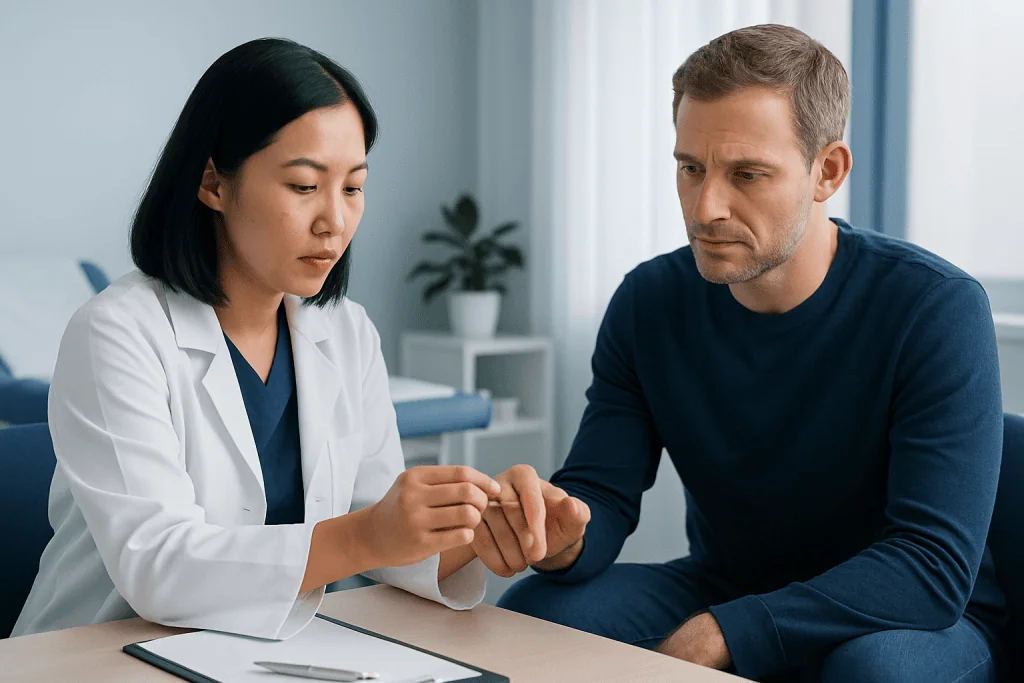
Herpetic whitlow is an infection of a finger caused by the herpes simplex virus. It may develop after contact with a cold sore, genital herpes lesion, or infected secretions. Healthcare workers, dental workers, young children who suck their thumbs, and people with frequent direct contact with saliva may have opportunities for exposure, but anyone can develop it.
Typical symptoms include burning, tingling, swelling, and significant pain, followed by one or more clusters of small clear blisters. The affected skin may become red or swollen, and some people feel unwell or notice swollen lymph nodes. The blisters can resemble a bacterial infection, but they should not be lanced or squeezed.
This condition needs clinical assessment because its management differs from that of a bacterial abscess. Incision and drainage are generally avoided, as opening the blisters may spread the virus or lead to a secondary bacterial infection. Antiviral treatment may be considered in selected situations, especially when symptoms are recognized early or are severe. Keeping the area covered and practicing careful hand hygiene can reduce transmission to other people and to other body sites.
Why a Bump May Develop: Causes and Risk Factors
Daily hand use exposes fingers to friction, moisture, irritants, minor injuries, and germs. Frequent handwashing, wet work, cleaning products, and repeated contact with chemicals can weaken the protective skin barrier. Once the barrier is irritated or cracked, eczema and bacterial infection become more likely.
Small cuts, hangnails, nail biting, picking at the cuticle, and attempts to remove a splinter can allow bacteria into the skin. Diabetes, reduced circulation, immune-suppressing medicines, and conditions that affect immune function may increase the risk of infections becoming more severe or taking longer to heal. These factors do not mean that every bump is serious, but they lower the threshold for seeking medical advice.
Warts can spread through direct skin contact or through tiny breaks in the skin, especially when hands are frequently wet or the skin is picked. Herpetic whitlow can spread through direct contact with herpes virus from a lesion or body fluid. A person with a history of cold sores who touches an active sore and then broken skin on a finger may be at risk, although not every exposure causes infection.
How a Finger Bump Is Diagnosed
Most straightforward finger bumps can be assessed through a clinical history and visual examination. A clinician may ask when the bump started, whether it itches, burns, or throbs, whether fluid or pus is present, and whether there has been friction, a cut, new skin product, nail trauma, or contact with someone who has a herpes lesion.
The location and pattern are useful. A single blister in an area of rubbing supports friction injury, while several tiny itchy blisters on the finger sides may suggest eczema. A rough persistent growth may suggest a wart. Redness, warmth, tenderness, and pus can point to a bacterial infection, while grouped painful clear blisters raise concern for herpetic whitlow.
Tests are not always necessary. If infection is suspected, a clinician may collect fluid or a swab for laboratory testing. This can help distinguish viral and bacterial causes when the diagnosis is uncertain. Persistent, recurring, unusually colored, bleeding, or changing growths may require evaluation by a dermatologist or another appropriate specialist.
Safe Home Care and Medical Treatment Options
For a small uncomplicated bump, gentle care is usually appropriate. The area can be washed with mild soap and water, patted dry, and protected from friction with a clean bandage if needed. A cool compress may ease itching or discomfort. Avoid harsh antiseptics, unnecessary antibiotics, and strongly scented products, which can further irritate already sensitive skin.
It is best not to pop a blister, squeeze a bump, cut into it, or pick at the surrounding skin. The intact surface of a blister helps protect the tissue underneath. If a blister opens on its own, it should be kept clean, covered with a nonstick dressing, and monitored for increasing redness, pain, warmth, or drainage.
Treatment depends on the underlying cause. Eczema and contact dermatitis may improve with avoidance of triggers, regular moisturising, protective gloves for wet work, and clinician-recommended anti-inflammatory treatment. Warts may be managed with over-the-counter products or office-based therapies when appropriate. Bacterial infections may need prescription treatment or a procedure if an abscess is present. Herpetic whitlow may be treated with antiviral medicine in some cases, but drainage is generally not appropriate.
People who have diabetes, impaired immunity, poor circulation, or a history of recurrent severe skin infections should speak with a healthcare professional early rather than relying only on home care. A clinician can also advise when it is safe to return to activities that involve close skin contact, food preparation, or healthcare work.
Prevention and Everyday Hand Protection
Reducing friction and protecting the skin barrier can prevent many common finger problems. Wearing well-fitting gloves for cleaning, gardening, manual work, or activities involving repeated rubbing may help. Gloves should be changed if they become wet inside, as prolonged moisture can aggravate eczema and soften the skin.
Regular use of a fragrance-free moisturiser after handwashing can help prevent dryness and cracking. Mild soap and lukewarm water are often less irritating than hot water and heavily fragranced cleansers. Anyone who notices that a particular product, metal, glove material, or chemical consistently triggers symptoms should avoid it when possible and discuss testing for allergies with a clinician if reactions continue.
Keeping nails trimmed, avoiding nail biting and cuticle picking, and promptly cleaning minor cuts can lower infection risk. Do not share nail tools, razors, or personal items that may touch broken skin. If a person has an active cold sore or suspected herpetic whitlow, they should avoid touching the lesions, wash hands carefully, and avoid sharing towels until the area has healed.
When to Seek Medical Care
Medical assessment is recommended if a finger bump becomes increasingly painful, red, warm, swollen, or filled with pus. Care is also important if redness spreads up the finger or hand, red streaks appear, fever develops, or the person feels generally unwell. These signs can indicate an infection that may need timely treatment.
A prompt appointment is advisable for grouped painful blisters, especially if there is tingling or burning beforehand, because herpetic whitlow is possible. A clinician should also review a bump near the nail that causes throbbing pain, any wound after an animal or human bite, a bump that limits finger movement, or a lesion that does not improve within a reasonable period.
People with diabetes, reduced immune function, circulation problems, or ongoing treatment that affects immunity should seek advice sooner for new finger wounds or suspected infections. Acibadem International’s multidisciplinary specialists and JCI-accredited hospitals can assess skin conditions and hand infections for international patients when specialist care is needed.
Frequently asked questions
Can acne form on a finger?
True acne can occur wherever there are hair follicles and oil glands, but it is uncommon on the fingers. A bump described as a pimple on finger is more often a blister, wart, eczema flare, irritant reaction, or small infection. A clinician can help identify the cause if it is painful, persistent, or recurrent.
Should a pimple-like bump on a finger be popped?
No. Popping or cutting a finger bump can damage the skin barrier, increase the chance of infection, and delay healing. This is especially important for clear painful blisters, which could be herpetic whitlow and should not be drained at home.
How can a person tell the difference between a blister and herpetic whitlow?
A friction blister usually follows rubbing or pressure and often appears as one larger fluid-filled area at the contact point. Herpetic whitlow commonly causes burning or tingling followed by a painful cluster of small blisters, sometimes with swelling. These patterns can overlap, so a healthcare professional should assess uncertain or very painful cases.
Is a hard bump on a finger usually a wart?
A wart is one possible cause of a hard finger bump, particularly if it has a rough surface and remains present for weeks or months. However, cysts, calluses, retained splinters, and other skin conditions can look similar. Persistent growths or lesions that change, bleed, or hurt should be examined.
What should be done if there is pus around the fingernail?
Pus, throbbing pain, swelling, or warmth around the nail may indicate paronychia, a nail-fold infection. The area should not be squeezed or cut at home. Medical care is recommended, particularly if pain is worsening, the redness is spreading, or the person has diabetes or reduced immunity.
How long does a minor finger blister take to heal?
Many uncomplicated friction blisters improve over several days and heal within about one to two weeks when protected from further rubbing. Healing can take longer if the blister repeatedly opens or the area remains exposed to friction or moisture. Increasing pain, redness, drainage, or failure to improve should prompt medical advice.
References
- American Academy of Dermatology Association
- Centers for Disease Control and Prevention
- National Health Service
- Merck Manual Consumer Version
- Mayo Clinic
This article is for general information only and is not a substitute for professional medical advice. Please consult a qualified doctor about your individual situation.
Hair transplant in Turkey — costs, graft counts & a free assessment
JCI-accredited · board-certified surgeons · reply within 24h
Add us as a Preferred Source to see more of our trusted health content across Google Search, AI Overviews and Discover.

More from the Health Library



Related Specialists

Dr. Resül Altınayak
Clinical Laboratory
Assoc. Prof. Dr. Nejdet Karşıyakalı
Urology
Dr. Tahsin Erdal Kabadere
Ophthalmology
Assoc. Prof. Dr. Gülcan Seymen
Pediatric Endocrinology