Plaque Psoriasis: A Complete Medical Overview

Plaque psoriasis is a chronic inflammatory skin disease, not an infection, and it is not contagious. Typical plaques are well-defined, scaly patches that often affect the elbows, knees, scalp, lower back, and trunk.
Key Takeaways
- Plaque psoriasis is a chronic inflammatory skin disease, not an infection, and it is not contagious.
- Typical plaques are well-defined, scaly patches that often affect the elbows, knees, scalp, lower back, and trunk.
- Symptoms may flare because of triggers such as stress, skin injury, infections, smoking, alcohol, or certain medicines.
- Diagnosis is usually based on a skin examination, but sometimes a skin biopsy is needed to confirm it.
- Treatment ranges from moisturizers and medicated creams to light therapy and systemic medicines for more extensive disease.
- Medical review is important if symptoms are severe, widespread, painful, affecting the joints, or not improving with treatment.
Plaque psoriasis is the most common form of psoriasis, a long-term inflammatory condition that causes raised, red or darker-colored patches covered with silvery or white scale. It is not contagious, and although it often comes and goes, many people can control symptoms well with a combination of medical treatment, daily skin care, and trigger management.
Overview
Plaque psoriasis is a chronic immune-mediated skin condition that causes areas of thickened, inflamed skin covered by scale. These areas, called plaques, develop because skin cells are produced and shed faster than usual, leading to buildup on the surface. The condition can affect people of different ages and skin tones, and its appearance may vary from person to person.
This is the most common type of psoriasis. In lighter skin, plaques often look pink or red with silvery scale. In darker skin, they may appear violet, brown, or gray with noticeable scaling. The condition tends to follow a pattern of flares and quieter periods, and symptoms can range from mild to severe.
Plaque psoriasis is not contagious and cannot be passed from one person to another through touch. It is best understood as a whole-body inflammatory condition with skin signs, rather than only a surface rash. For some people, psoriasis also affects the nails, scalp, or joints, and this wider impact is one reason proper assessment matters.
How plaque psoriasis looks and feels
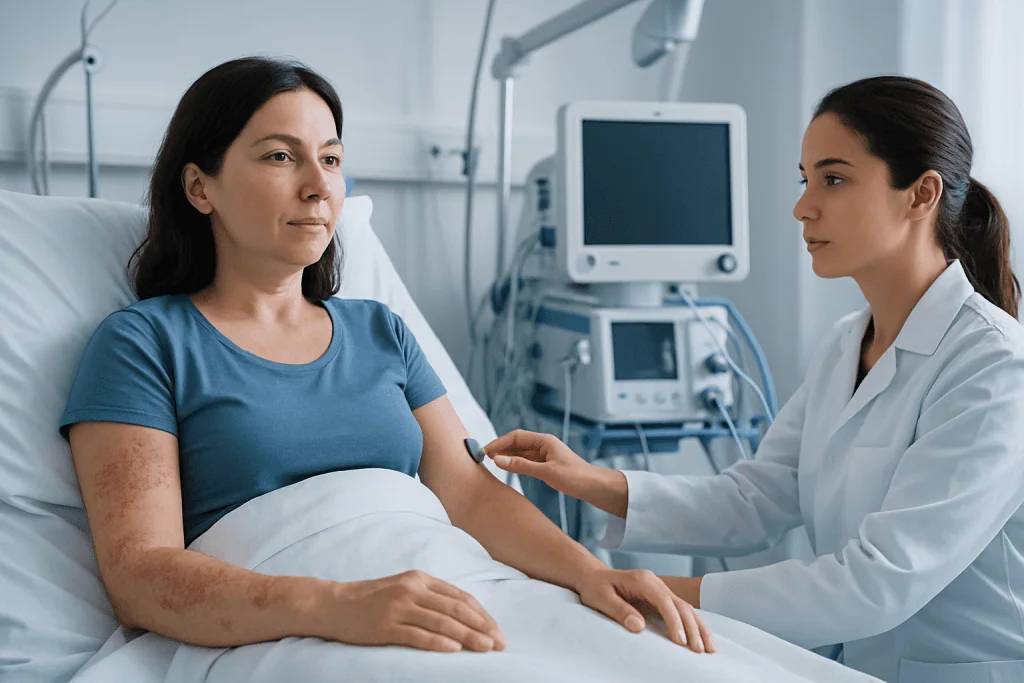
The classic symptom is a sharply defined patch of thick skin with scale on top. Plaques commonly appear on the elbows, knees, scalp, lower back, and trunk, but they can develop almost anywhere. Some people have just a few small areas, while others have widespread involvement.
Symptoms are not limited to appearance. Plaques may itch, sting, burn, crack, or feel sore. Dryness can make the skin uncomfortable, and deeper fissures may occasionally bleed. On the scalp, scale may resemble severe dandruff but is often thicker and more persistent.
Nail changes can also occur, including pitting, thickening, crumbling, or separation of the nail from the nail bed. Some people notice that plaques become more noticeable in cold weather or after stress. During flares, sleep, concentration, confidence, and daily comfort may all be affected.
- Well-defined raised patches with white or silvery scale
- Itching, burning, tenderness, or dryness
- Cracks or bleeding in thicker plaques
- Scalp involvement with persistent flaking
- Nail changes such as pitting or thickening
Why it happens: causes and risk factors
The exact cause of plaque psoriasis is not fully understood, but it involves a combination of genetic tendency and immune system activity. In psoriasis, immune signals speed up the life cycle of skin cells, causing them to build up before the body can shed them normally. This leads to inflammation, scaling, and the formation of plaques.
Family history is an important risk factor, although not everyone with a genetic tendency develops the condition. Environmental triggers often play a role in starting psoriasis or making it worse. Common triggers include emotional stress, skin injury, throat infections, smoking, heavy alcohol use, and some medications.
Other factors can influence the course of disease. Excess body weight may make psoriasis harder to control, and friction in skin folds can worsen symptoms in some areas. Because plaque psoriasis is part of a broader inflammatory process, doctors may also consider related issues such as metabolic health and the possibility of joint involvement, including psoriatic arthritis.
Diagnosis and what doctors assess
Diagnosis usually begins with a medical history and a close skin examination. A doctor looks at the shape, location, scale, and distribution of plaques, and asks about itching, pain, flares, family history, and possible triggers. In many cases, the appearance is typical enough that no special test is needed.
Sometimes other conditions can look similar, such as eczema, fungal infections, seborrheic dermatitis, lichen planus, or pityriasis rosea. If the diagnosis is uncertain, a small skin sample may be taken for biopsy. This allows the skin tissue to be examined under a microscope to help confirm the diagnosis and rule out other causes.
Doctors also assess severity, not just by how much skin is involved, but by how symptoms affect quality of life. Plaques on the face, hands, feet, genitals, or scalp may need more active treatment even if the total area is limited. Questions about joint pain, morning stiffness, or swollen fingers are important because they may suggest associated joint disease that needs timely care.
Treatment options
Treatment depends on how extensive the plaques are, where they are located, how bothersome symptoms are, and whether nails or joints are affected. The goals are to reduce inflammation, slow excess skin cell growth, improve comfort, and support longer periods of control. Most people benefit from a personalized plan that may change over time.
For mild disease, treatment often starts with regular moisturizers and topical medicines. These may include corticosteroids, vitamin D analogs, calcineurin inhibitors for sensitive areas, or other prescription creams and ointments. Consistent skin care can soften scale, reduce itching, and improve how well medicated products work. In selected cases, specialist-guided phototherapy may help by calming skin inflammation with carefully controlled light exposure.
Moderate to severe plaque psoriasis may require medicines that work throughout the body. These include traditional systemic drugs and biologic therapies that target specific parts of the immune response. If plaques are difficult to control, a dermatologist may discuss advanced dermatology treatment options and ongoing follow-up to monitor response and safety. When joint symptoms are present, coordinated care may involve rheumatology evaluation and treatment as well.
Treatment plans should be guided by a qualified clinician, because the best choice depends on age, overall health, pregnancy considerations, other medications, and previous treatment response. At the end of the care pathway, some international patients choose centers such as Acibadem International, where multidisciplinary specialists in JCI-accredited hospitals diagnose and treat plaque psoriasis and related conditions.
Living with plaque psoriasis: prevention and self-care
Although plaque psoriasis cannot always be prevented, daily habits can help reduce flares and protect the skin barrier. Gentle skin care is important. Short lukewarm showers, fragrance-free cleansers, and regular use of thick moisturizers can reduce dryness and scaling. Avoiding harsh scrubbing helps prevent irritation.
Trigger management is another key part of self-care. People often benefit from noticing whether stress, illness, alcohol, smoking, or skin injury seem to worsen their plaques. Keeping the skin protected from cuts, sunburn, and friction may help lower the chance of new lesions in sensitive individuals.
Healthy lifestyle measures may support overall disease control. These include maintaining a healthy weight, staying physically active, sleeping well, and managing stress in practical ways. Because treatment response varies, it is wise to discuss over-the-counter products, herbal remedies, and internet advice with a doctor before use, especially on sensitive skin or during pregnancy.
- Moisturize daily, especially after bathing
- Use gentle, fragrance-free skin products
- Avoid picking or forcefully removing scale
- Stop smoking and limit alcohol if relevant
- Seek early treatment for infections and discuss medication triggers with a clinician
When to seek medical care
Medical review is important if a rash is new, spreading, painful, or not improving with basic skin care. A person should also seek assessment if itching is severe, sleep is affected, cracks are bleeding, or plaques involve sensitive areas such as the face, genitals, hands, or feet. Prompt evaluation can help confirm the diagnosis and prevent unnecessary discomfort.
Joint symptoms deserve particular attention. Pain, swelling, stiffness in the morning, heel pain, or sausage-like swelling of fingers or toes may point to psoriatic arthritis. Early treatment may help protect joint function and improve long-term outcomes.
Urgent advice may be needed if skin becomes very red and inflamed over large areas, if there are signs of infection such as warmth, pus, or fever, or if a person feels unwell while taking immune-modifying treatment. People should also speak to a doctor before stopping prescribed medicines or starting new treatments on their own.
Frequently asked questions
Is plaque psoriasis contagious?
No. Plaque psoriasis is not contagious and cannot be spread by touch, sharing towels, or close contact. It is an inflammatory condition related to immune system activity and genetics, not an infection.
What is the difference between plaque psoriasis and eczema?
Both can cause itchy, inflamed skin, but they often look and behave differently. Plaque psoriasis usually forms sharply defined, thicker patches with more noticeable scale, while eczema often causes less defined, very itchy, dry skin and may be linked more strongly with allergies or skin barrier problems.
Can plaque psoriasis be cured permanently?
There is no permanent cure at present, but many people achieve good symptom control. Treatment can reduce plaques, ease discomfort, and help prevent flares, sometimes for long periods.
What triggers plaque psoriasis flares?
Common triggers include stress, skin injury, infections, smoking, alcohol, and some medications. Triggers vary from person to person, so noticing patterns and discussing them with a clinician can be helpful.
Can plaque psoriasis affect parts of the body other than the skin?
Yes. It may affect the scalp and nails, and some people develop joint inflammation known as psoriatic arthritis. Because psoriasis is a systemic inflammatory condition, doctors may also consider related aspects of general health during evaluation.
When should someone with plaque psoriasis see a doctor?
A doctor should be consulted if plaques are widespread, painful, cracking, bleeding, or affecting sleep and daily life. Medical care is also important if there are joint symptoms, nail changes, or if over-the-counter measures are not helping.
References
- American Academy of Dermatology
- National Institute of Arthritis and Musculoskeletal and Skin Diseases
- National Psoriasis Foundation
- Mayo Clinic
- National Health Service
This article is for general information only and is not a substitute for professional medical advice. Please consult a qualified doctor about your individual situation.
Psoriasis: in Turkey — costs, top hospitals & a free quote
JCI-accredited · board-certified surgeons · reply within 24h
Add us as a Preferred Source to see more of our trusted health content across Google Search, AI Overviews and Discover.