Pmeg Procedure: An Evidence-Based Patient Guide

PMEG stands for physician-modified endovascular graft, a customized form of endovascular aortic repair. It may be considered for selected people with complex abdominal or thoracoabdominal aortic aneurysms.
Key Takeaways
- PMEG stands for physician-modified endovascular graft, a customized form of endovascular aortic repair.
- It may be considered for selected people with complex abdominal or thoracoabdominal aortic aneurysms.
- The procedure is planned using detailed CT imaging and performed by an experienced multidisciplinary aortic team.
- Recovery is often shorter than with open aortic surgery, but lifelong imaging follow-up is essential.
- Potential risks include endoleak, kidney injury, stroke, spinal cord injury, graft complications, and need for further procedures.
The PMEG procedure is an advanced, minimally invasive method for repairing certain complex aortic aneurysms. It uses a physician-modified endovascular graft designed to maintain blood flow to important branch arteries while sealing the weakened part of the aorta.
PMEG procedure: what it means
The PMEG procedure is an endovascular treatment used for selected complex aortic aneurysms. PMEG is the pmeg medical abbreviation for physician-modified endovascular graft. It refers to a stent graft that has been carefully modified by a treating physician before implantation so that it can fit a patient’s aortic anatomy and preserve blood flow to critical arteries.
The aorta is the body’s largest artery. An aneurysm occurs when part of its wall weakens and widens. If an aneurysm grows or ruptures, it can become life-threatening. Standard endovascular aneurysm repair works well for many aneurysms, but it may not be suitable when an aneurysm is close to arteries supplying the kidneys, intestines, liver, or spinal cord.
A PMEG medical procedure is not a routine solution for every aneurysm. It is a specialized approach generally offered at experienced aortic centers, often when an urgently needed repair cannot wait for a custom-manufactured graft or when anatomy makes standard devices unsuitable. The decision is individualized and depends on anatomy, overall health, available devices, and the team’s expertise.
How a physician-modified graft works
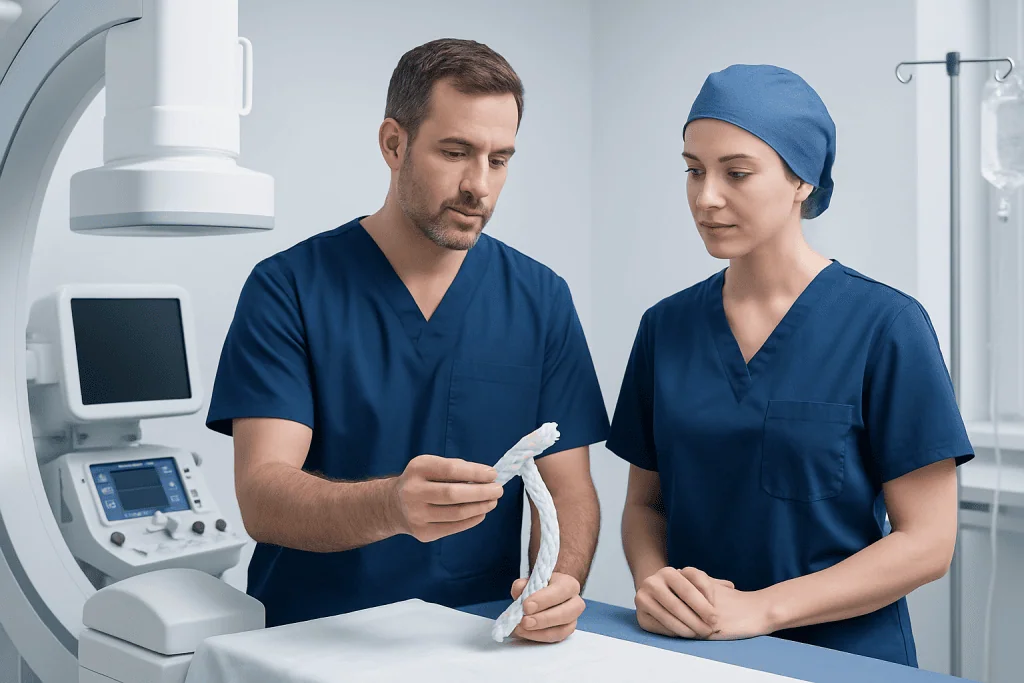
Endovascular repair treats an aneurysm from inside the blood vessel. The physician inserts a fabric-covered metal stent, called a stent graft, through arteries in the groin or occasionally through another access site. Once positioned, the graft creates a new pathway for blood flow and reduces pressure on the weakened aneurysm wall.
In a pmeg physician modified graft, precisely planned openings, often called fenestrations, may be created in the graft before the procedure. These openings are aligned with branch arteries that must remain open. Small bridging stents can then connect the main graft to these arteries, helping maintain blood supply to organs such as the kidneys and intestines.
Detailed CT angiography is central to planning. The aortic team evaluates vessel diameter, shape, calcification, branch-vessel location, access routes, and the extent of the aneurysm. Because accuracy is essential, PMEG treatment requires careful preparation, high-quality imaging, specialized equipment, and coordinated expertise from vascular, endovascular, anesthesia, imaging, and critical-care professionals.
Who may be a candidate for PMEG?

PMEG may be considered for people with a complex abdominal, juxtarenal, pararenal, or thoracoabdominal aortic aneurysm. These aneurysms involve or lie near important aortic branches, leaving too little healthy aorta for a conventional stent graft to seal safely. A PMEG can sometimes provide an endovascular alternative to open reconstruction in appropriately selected patients.
Candidacy is based on more than aneurysm size. Doctors consider symptoms, aneurysm growth, rupture risk, kidney function, heart and lung health, prior aortic operations, infection risk, medications, and whether the arteries used for access can safely accommodate the delivery system. A person’s ability to attend regular follow-up imaging is also important.
Not everyone is suitable for this option. Some people may benefit more from open surgery, an approved off-the-shelf branched or fenestrated device, a custom-manufactured graft, medical monitoring, or another endovascular strategy. A consultation with an aortic specialist helps compare these options, including aortic aneurysm surveillance and repair approaches, in the context of the individual’s health goals.
What happens during the PMEG procedure?
Before treatment, patients typically have blood tests, heart and kidney assessment when needed, and detailed CT imaging. The care team reviews medications, including blood thinners and diabetes medicines, and provides instructions about eating, drinking, and hospital arrival. The procedure is usually performed in an operating room or hybrid suite with advanced X-ray imaging.
Most PMEG procedures are performed under general anesthesia, although the anesthesia plan is individualized. The physician gains access to the arteries, commonly through small incisions or punctures in the groin. The modified graft is advanced through the arteries to the planned location in the aorta and released under imaging guidance.
The team aligns the graft’s fenestrations with the target branch vessels and places bridging stents when required. Imaging is used throughout to assess blood flow, graft position, and whether blood is excluded from the aneurysm sac. The access sites are then closed, and the patient is transferred to a monitored recovery area. Procedure duration varies substantially with aortic anatomy and the number of branch vessels involved.
Patients should ask their team which repair is recommended and why. For selected aneurysms, endovascular aneurysm repair may include different types of grafts and planning methods; the most suitable approach is determined after imaging review.
Benefits, limits, and possible risks
A potential benefit of PMEG is that it may allow treatment through blood vessels rather than through a large abdominal or chest incision. For some suitable patients, this can mean less surgical trauma, a shorter initial hospital stay, and a faster return to basic daily activities than open surgery. It can also preserve flow to branch arteries while creating an effective seal around a complex aneurysm.
However, PMEG is technically demanding and has important limitations. It is a physician-modified use of a graft rather than a one-size-fits-all treatment. Outcomes depend on careful patient selection, accurate planning, device construction, procedural skill, and consistent follow-up. The evidence base continues to develop, with much of the published experience coming from specialized centers.
Risks may include bleeding, infection, blood clots, access-artery injury, contrast-related kidney problems, heart or lung complications, graft movement, blockage of a branch vessel, and an endoleak, meaning continued blood flow outside the graft and into the aneurysm sac. Depending on the treated portion of the aorta, rare but serious complications can include stroke, bowel ischemia, spinal cord injury, paralysis, aneurysm rupture, or death.
Some complications may require another catheter-based procedure or open surgery. The treating team discusses expected benefits and risks in relation to the person’s anatomy and general health, as well as alternatives such as open aortic aneurysm repair.
Recovery and long-term follow-up
After a PMEG procedure, patients are monitored closely for blood pressure, urine output, kidney function, circulation in the legs, neurologic changes, and signs of bleeding. Some people spend time in an intensive or high-dependency care unit, particularly after extensive aortic repair. Hospital stay varies according to the complexity of the procedure and the person’s recovery.
In the first days and weeks, fatigue, mild discomfort at access sites, and reduced stamina are common. The care team gives tailored advice on walking, wound care, lifting, driving, returning to work, and restarting usual medicines. Light activity is often encouraged as recovery permits, while strenuous activity may need to wait until the clinician confirms it is safe.
Long-term surveillance is an essential part of endovascular treatment. CT scans, ultrasound, or other imaging tests are scheduled to check graft position, branch-stent patency, aneurysm sac size, and endoleaks. Follow-up schedules differ, but monitoring is lifelong because changes can occur months or years after repair.
At Acibadem International, multidisciplinary specialists in JCI-accredited hospitals evaluate complex aortic disease and provide coordinated care for international patients, including imaging review, endovascular treatment planning, and follow-up support.
When to seek medical care
Anyone with a known aortic aneurysm should keep scheduled surveillance appointments and contact their doctor promptly if they develop new or worsening symptoms. After a PMEG procedure, it is important to report fever, increasing redness or drainage at an access site, worsening abdominal or back pain, leg pain or color changes, reduced urine output, or any concern about the recovery plan.
Emergency medical care is needed for sudden severe chest, back, abdominal, or flank pain; fainting; severe shortness of breath; new weakness or numbness; trouble speaking; loss of bowel or bladder control; or a cold, pale, painful leg. These symptoms can have several causes, but they require urgent assessment, especially in someone with an aortic aneurysm or a recent aortic procedure.
People should not stop antiplatelet medicines, blood pressure medicines, or other prescribed treatments without speaking with their clinician. Controlling blood pressure, avoiding tobacco, managing cholesterol and diabetes when applicable, and attending follow-up visits support long-term vascular health.
Frequently asked questions
What does PMEG stand for?
PMEG stands for physician-modified endovascular graft. It describes a stent graft that has been modified by a physician to accommodate important branch arteries in selected complex aortic aneurysm repairs.
Is the PMEG procedure the same as standard EVAR?
Both PMEG and standard EVAR repair an aneurysm from inside the blood vessel using a stent graft. PMEG is more customized because it may include planned openings and bridging stents for arteries that would otherwise be covered by the graft.
How long does recovery take after a PMEG procedure?
Initial recovery varies with the extent of aortic repair, other health conditions, and whether complications occur. Many patients gradually resume basic activities over the following weeks, but the treating team should provide individualized timelines for work, exercise, and driving.
Does a PMEG procedure cure an aortic aneurysm?
The procedure is designed to exclude the aneurysm from blood flow and lower the risk associated with continued pressure on the aortic wall. It does not eliminate the need for lifelong imaging because endoleaks, graft changes, or new aneurysms can develop over time.
What is an endoleak after PMEG?
An endoleak is persistent blood flow outside the stent graft but within the aneurysm sac. Some endoleaks can be monitored, while others may need additional treatment if they increase pressure in the sac or allow it to enlarge.
Can everyone with a complex aneurysm have PMEG?
No. Suitability depends on detailed anatomy, the arteries involved, access through the groin or other vessels, kidney function, overall fitness for treatment, and the availability of experienced specialists. A vascular or endovascular aortic team can explain whether PMEG, another endovascular option, open surgery, or surveillance is most appropriate.
References
- Society for Vascular Surgery
- European Society for Vascular Surgery
- U.S. Food and Drug Administration
- American Heart Association
- National Institute for Health and Care Excellence
This article is for general information only and is not a substitute for professional medical advice. Please consult a qualified doctor about your individual situation.
Heart care in Turkey — expert evaluation and treatment
JCI-accredited · board-certified surgeons · reply within 24h
Add us as a Preferred Source to see more of our trusted health content across Google Search, AI Overviews and Discover.