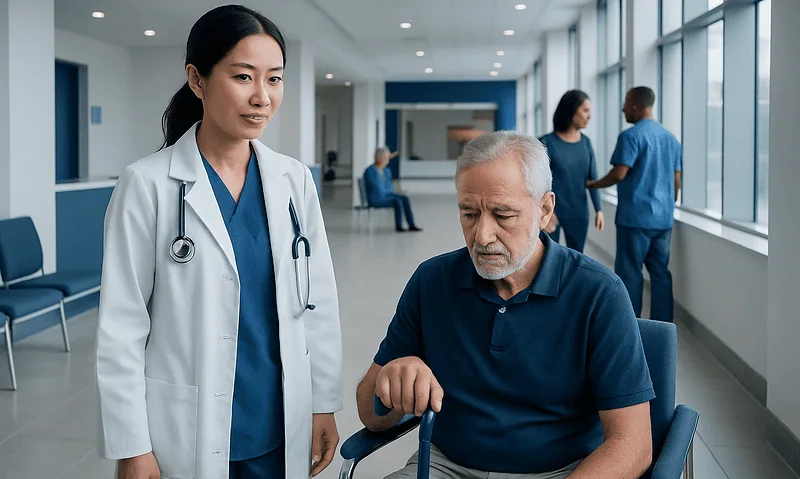
Post-Viral Nerve Weakness: How Neuromuscular Disorders Are Diagnosed

Post-viral nerve weakness can affect peripheral nerves, muscles, or the connection between nerves and muscles. Diagnosis usually begins with a detailed history and neurological examination.
Key Takeaways
- Post-viral nerve weakness can affect peripheral nerves, muscles, or the connection between nerves and muscles.
- Diagnosis usually begins with a detailed history and neurological examination.
- Tests may include blood work, MRI, EMG, nerve conduction studies, lumbar puncture, or muscle and nerve biopsy in selected cases.
- Some causes are temporary and improve gradually, while others need urgent treatment.
- Early medical assessment is important if weakness is progressive, affects breathing, or interferes with walking or swallowing.
Post-viral nerve weakness describes weakness, numbness, or fatigue that can appear after a viral illness affects nerves, muscles, or the immune system. Careful diagnosis helps doctors identify the cause, rule out emergencies, and choose the most appropriate treatment and rehabilitation plan.
Overview
Post-viral nerve weakness is a general term used when weakness develops after a viral infection and appears related to the nerves, muscles, or the immune system’s response to that infection. A person may notice trouble lifting the feet, climbing stairs, gripping objects, or keeping up with normal daily activity. Some people also develop numbness, tingling, muscle pain, cramps, or unusual fatigue.
Viruses do not affect everyone in the same way. In some cases, the virus itself can irritate nerve tissue. In others, the body’s immune response continues after the infection and mistakenly targets parts of the peripheral nervous system or muscle. This is why the same symptom pattern can have several different explanations, ranging from mild nerve irritation to a more specific neuromuscular disorder.
The term does not refer to a single disease. Instead, it describes a symptom pattern that requires structured evaluation. Doctors look at when the weakness began, which body parts are affected, whether sensation is involved, and whether symptoms are stable, improving, or progressing.
Because weakness can have many causes, accurate diagnosis is essential. The goal is to identify whether the problem is mainly in the muscle, the nerve, the nerve root, the spinal cord, or the junction where nerve signals reach the muscle. That distinction guides treatment and helps predict recovery.
Symptoms and warning signs
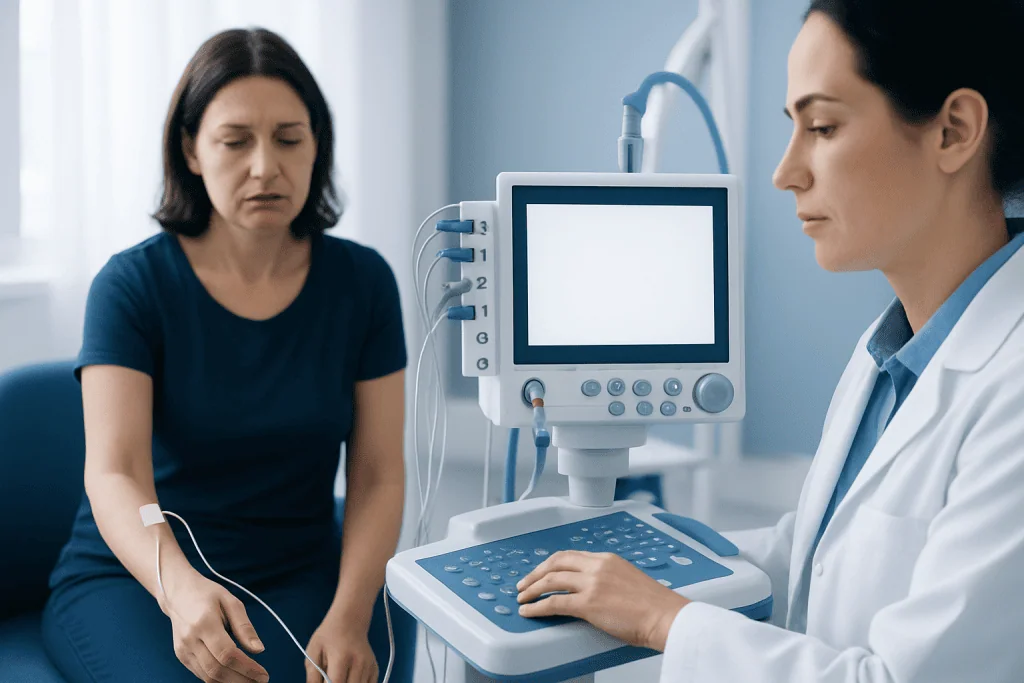
The symptoms of post-viral nerve weakness vary depending on which part of the neuromuscular system is affected. Weakness may be mild and limited to one area, or it may involve both sides of the body. Some people notice symptoms suddenly over days, while others feel gradual weakness over several weeks after recovering from a viral illness.
Common symptoms include difficulty rising from a chair, climbing stairs, lifting the arms, holding objects, or walking normally. Tingling, burning pain, reduced reflexes, muscle twitching, or a heavy feeling in the limbs may also occur. Fatigue is common, but doctors try to separate ordinary post-illness tiredness from true muscle or nerve weakness.
- Weakness in the legs, arms, face, or neck
- Numbness or tingling in the hands or feet
- Muscle aches, cramps, or twitching
- Problems with balance or coordination
- Drooping eyelids, double vision, or swallowing difficulty in some neuromuscular conditions
- Shortness of breath if breathing muscles are involved
Urgent warning signs include rapidly worsening weakness, trouble breathing, choking, severe back pain with weakness, inability to walk, or changes in bladder or bowel control. These symptoms need prompt medical care because some neuromuscular problems can worsen quickly and may require hospital monitoring.
Causes and risk factors

After a viral illness, weakness can arise for several reasons. A virus may directly affect nerves or muscles, but often the more important mechanism is an immune reaction that continues after the infection has improved. This can lead to inflammation of peripheral nerves, nerve roots, or muscle tissue. Examples include post-infectious neuropathies and inflammatory muscle disorders.
One important condition doctors think about is Guillain-Barré syndrome, in which the immune system attacks peripheral nerves, often after an infection. Another possibility is a viral or post-viral myositis, where muscle inflammation leads to pain and weakness. Some viral illnesses can also unmask a previously silent neuromuscular condition, such as an inherited neuropathy or a disorder of the neuromuscular junction.
Not every case of weakness after infection is caused by the infection itself. Dehydration, poor nutrition, medication side effects, electrolyte imbalance, thyroid disease, vitamin deficiencies, prolonged bed rest, or spinal problems can all contribute. That is why evaluation must stay broad rather than assume a single explanation too early.
Risk factors for more serious post-viral weakness may include older age, pre-existing autoimmune disease, diabetes, chronic nerve disease, severe recent infection, or symptoms that progress quickly. However, people without any obvious risk factors can also develop neuromuscular complications, so persistent weakness deserves medical attention regardless of age or health history.
How neuromuscular disorders are diagnosed
Diagnosis begins with a careful history. Doctors ask about the timing of the viral illness, when weakness started, whether symptoms are getting better or worse, and whether pain, numbness, fever, rash, swallowing difficulty, or breathing problems are present. They also ask about medications, recent vaccines, travel, family history, and any prior episodes of weakness.
The neurological examination is a key first step. A specialist checks muscle strength in different parts of the body, reflexes, sensation, coordination, muscle tone, and walking pattern. The pattern can offer important clues. For example, weakness that starts in the feet and moves upward may suggest a peripheral nerve process, while weakness mainly in the shoulders and hips may point more toward muscle disease.
Electrodiagnostic testing is often central to the workup. EMG and electromyography testing and nerve conduction studies help show whether symptoms are coming from the nerve, the muscle, or the connection between them. These tests can identify nerve damage, demyelination, muscle inflammation, or ongoing denervation, and they are especially useful when the physical exam alone is not enough to define the problem.
Additional testing depends on the suspected cause. Blood tests may look for inflammation, muscle enzyme levels, thyroid function, vitamin deficiency, autoimmune markers, or infection-related clues. MRI may be used to assess the brain, spine, or muscles if a structural or inflammatory cause is suspected. In selected cases, doctors may recommend lumbar puncture to analyze spinal fluid, or a muscle or nerve biopsy if the diagnosis remains uncertain after standard testing.
What test results can show
Test results help doctors localize the source of weakness. If nerve conduction studies show slowed signal transmission, the problem may involve the insulating covering of the nerves, called myelin. If the signals are reduced in strength, this may suggest axonal nerve injury. EMG can show whether muscles are receiving normal input from nerves and whether there are signs of muscle inflammation or damage.
Blood tests can support the diagnosis but rarely tell the whole story on their own. Elevated creatine kinase may suggest muscle injury or myositis, while inflammatory markers or autoimmune antibodies can point toward an immune-mediated process. Normal blood tests do not always rule out a neuromuscular disorder, which is why they are interpreted alongside symptoms and exam findings.
MRI can identify spinal cord compression, nerve root inflammation, or changes within muscle tissue. Cerebrospinal fluid from a lumbar puncture may show patterns that support certain inflammatory neuropathies. If a biopsy is needed, the sample can reveal inflammation, muscle fiber injury, vasculitis, or other structural changes that clarify diagnosis.
Doctors often combine several pieces of information rather than rely on a single test. In some cases, the diagnosis becomes clear quickly. In others, repeat examination or follow-up testing is needed because changes in nerves or muscles may become easier to detect over time.
Treatment options and recovery
Treatment depends on the cause of the weakness rather than the viral trigger alone. If symptoms are related to a self-limited post-viral syndrome, care may focus on rest, nutrition, gradual activity, pain management, and follow-up monitoring. If the evaluation suggests an immune-mediated neuropathy or inflammatory muscle disorder, more specific treatment may be needed under specialist supervision.
For certain inflammatory neuropathies, doctors may consider hospital-based therapies such as intravenous immunoglobulin or plasma exchange. In muscle inflammation or autoimmune neuromuscular disease, corticosteroids or other immune-modifying medicines may be used when appropriate. If swallowing or breathing muscles are affected, monitoring and supportive care become especially important.
Rehabilitation is often a major part of recovery. Physical therapy and rehabilitation can help improve strength, balance, endurance, and safe movement. Occupational therapy may support hand function and daily activities, while speech and swallowing assessment may help if facial, throat, or bulbar muscles are involved.
Recovery time varies widely. Some people improve within weeks, while others need months of rehabilitation and follow-up. Acibadem International’s multidisciplinary specialists in JCI-accredited hospitals diagnose and treat neuromuscular conditions for international patients, including coordinated neurological assessment and recovery planning when needed.
Self-care, prevention, and follow-up
There is no guaranteed way to prevent every post-viral neuromuscular complication, but general infection prevention and overall health measures can help reduce risk. Hand hygiene, adequate rest during and after illness, staying hydrated, and seeking medical advice for unusually prolonged symptoms are sensible steps. Vaccination may also lower the risk of some infections that can trigger neurological complications, based on an individual’s health needs and a doctor’s advice.
At home, people with weakness should avoid overexertion while remaining as active as safely possible. Short, paced activity is often better than pushing through exhaustion. Using supportive footwear, removing fall hazards, and asking for help with stairs or heavy lifting can reduce injury risk while recovery is still in progress.
Good follow-up matters because symptoms can change over time. A doctor may repeat strength testing, reflex checks, or electrodiagnostic studies to track recovery. If the weakness is part of a broader condition such as peripheral neuropathy, long-term management may include treatment of pain, monitoring of nerve function, and rehabilitation to preserve mobility.
People should also keep a simple record of their symptoms, such as which movements are difficult, whether numbness is spreading, and how walking or fatigue changes from week to week. This information can help the clinical team judge whether the condition is improving naturally or needs a change in treatment.
When to see a doctor
Any new weakness that appears after a viral illness and lasts more than a few days should be assessed by a qualified doctor, especially if it affects walking, hand use, swallowing, or work and daily life. A neurological evaluation is particularly important when weakness is clearly different from ordinary tiredness and is accompanied by numbness, loss of reflexes, or muscle pain.
Urgent care is needed if weakness is rapidly progressing, spreading upward, affecting both sides of the body, or causing falls. Trouble breathing, choking, weak cough, facial weakness, severe back pain, or sudden inability to stand are signs that should not be ignored. These symptoms may indicate a serious neuromuscular disorder that benefits from prompt diagnosis and monitoring.
People with diabetes, autoimmune disease, known nerve disease, or recent hospitalization should seek early evaluation because several medical issues can overlap and mimic post-viral weakness. Children, older adults, and anyone who has been bedridden for a prolonged period may also need careful assessment to separate nerve or muscle problems from generalized deconditioning.
Even when symptoms are mild, early assessment can be helpful. It provides reassurance when the cause is benign, and it reduces delays if specific treatment is needed. A structured diagnostic approach is the best way to understand post-viral nerve weakness and plan a safe recovery.
Frequently asked questions
Can a viral infection really cause nerve weakness?
Yes. A viral infection can sometimes affect nerves or muscles directly, or it can trigger an immune response that leads to weakness after the infection has started to improve. This is why weakness after a virus should be evaluated rather than dismissed as simple fatigue.
How is post-viral nerve weakness different from normal tiredness after being sick?
Normal post-illness fatigue usually causes low energy but does not produce clear loss of strength on examination. True nerve or muscle weakness makes certain movements harder, such as climbing stairs, lifting the arms, gripping objects, or walking steadily. A doctor can help distinguish the two.
What tests are most commonly used to diagnose neuromuscular disorders?
Doctors often begin with a neurological examination, blood tests, and electrodiagnostic studies such as EMG and nerve conduction testing. Depending on the symptoms, MRI, lumbar puncture, or muscle and nerve biopsy may also be used. The exact test plan depends on the suspected cause.
Is post-viral nerve weakness always serious?
Not always. Some cases are mild and improve gradually with time, rest, and rehabilitation. However, rapidly progressive weakness, breathing problems, or swallowing difficulty can be serious and need urgent medical attention.
How long does recovery usually take?
Recovery can vary a lot depending on the cause and severity. Some people improve over a few weeks, while others need several months of treatment and rehabilitation. Regular follow-up helps doctors monitor progress and adjust the care plan.
When should someone go to the emergency department?
Emergency care is important if weakness is worsening quickly, affecting breathing, causing choking, or making it impossible to walk or stand safely. Sudden facial weakness, severe back pain with weakness, or loss of bladder or bowel control also need immediate assessment.
This article is for general information only and is not a substitute for professional medical advice. Please consult a qualified doctor about your individual situation.
Explore treatments in Turkey — costs, top hospitals & a free quote
JCI-accredited · board-certified surgeons · reply within 24h
Add us as a Preferred Source to see more of our trusted health content across Google Search, AI Overviews and Discover.

More from the Health Library
Muscle Wasting and Weakness: How Motor Neuron Disease Is Diagnosed

Early Symptoms of Neuromuscular Disease: Weakness, Falls, Cramps, and Fatigue
CIDP, GBS, and Other Neuromuscular Diseases: Key Differences Patients Should Know
Neuromuscular Disease Causes: Genetic, Autoimmune, and Acquired Triggers
Neuromuscular Disease Diagnosis: Why EMG Alone May Not Be the Whole Answer