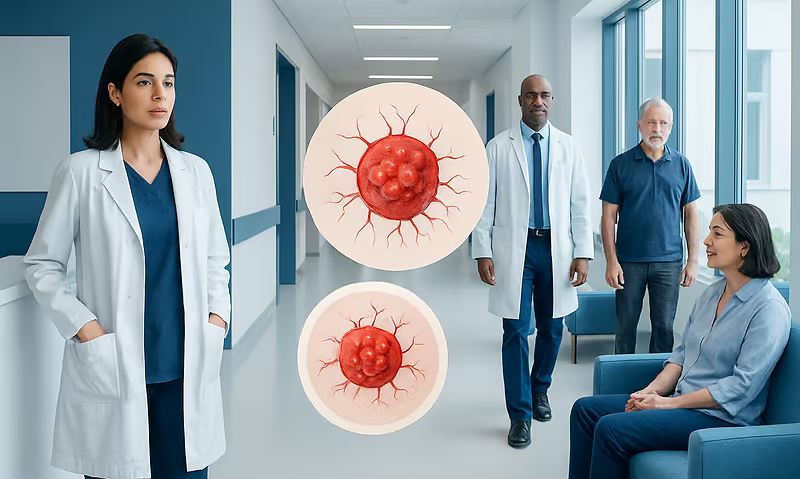
Precision Oncology Explained: How Treatment Is Matched to Tumors

Precision oncology uses biomarker, genetic, and molecular information from a tumor to guide treatment decisions. It can help identify who may benefit from targeted therapy, immunotherapy, or standard treatments used in a more tailored way.
Key Takeaways
- Precision oncology uses biomarker, genetic, and molecular information from a tumor to guide treatment decisions.
- It can help identify who may benefit from targeted therapy, immunotherapy, or standard treatments used in a more tailored way.
- Not every cancer has an actionable marker, but testing can still provide useful information for diagnosis, prognosis, or clinical trial options.
- Tumor testing may involve tissue biopsy, blood-based liquid biopsy, and specialized laboratory analysis.
- Treatment decisions are best made by a multidisciplinary cancer team that considers both test results and the person’s overall health.
Precision oncology is an approach to cancer care that uses a tumor’s genetic, molecular, and cellular features to help choose treatment. Rather than relying only on where a cancer started, it adds detailed testing to identify therapies that may be more effective or better suited to the individual.
Overview
Precision oncology is a modern cancer care approach that aims to match treatment to the unique biology of a person’s tumor. In traditional oncology, treatment decisions are often based mainly on the cancer type and stage, such as breast, lung, or colon cancer. Precision oncology adds another layer of information by studying biomarkers, gene changes, proteins, and other molecular features that may influence how a tumor grows and how it responds to treatment.
This does not mean every person receives a completely different medicine. Instead, it means the care team uses more detailed information to guide choices among targeted therapy, immunotherapy, chemotherapy, hormone therapy, radiation therapy, surgery, or combinations of these. In some cases, the results help avoid treatments that are less likely to work.
Precision oncology is sometimes called personalized cancer treatment or biomarker-driven care. While the term sounds highly individualized, the goal is practical: to use the best available evidence to select treatments that fit the tumor’s profile and the patient’s needs. It is now part of care for many cancers and continues to expand as testing and therapies evolve.
How Tumors Are Matched to Treatment
Cancers develop when cells acquire changes that allow them to grow out of control. Some of these changes, often called mutations or alterations, can drive cancer growth. Others may not directly cause the cancer but still provide clues about how it behaves. Precision oncology looks for these features to understand whether a tumor has a target that a specific therapy can act on.
For example, a lab may analyze tumor tissue to look for biomarkers such as gene mutations, gene fusions, protein overexpression, microsatellite instability, or other molecular signatures. If testing identifies an actionable alteration, the oncology team may consider a targeted treatment designed for that pathway. If the results suggest the immune system is more likely to recognize the tumor, immunotherapy may be an option.
Importantly, treatment matching is not based on test results alone. Doctors also consider the cancer’s location, stage, how quickly it is growing, prior treatments, the person’s age, symptoms, general health, and preferences. Precision oncology works best as part of a broader care plan rather than as a stand-alone test result.
- Biomarker testing: looks for measurable features linked to treatment response.
- Genomic profiling: examines DNA changes in the tumor.
- Protein testing: evaluates proteins that may affect treatment choices.
- Immune markers: helps assess whether immunotherapy may be useful.
Who May Benefit From Precision Oncology

Precision oncology can be helpful across many cancer types, but its role varies. It is especially relevant in cancers where certain biomarkers clearly affect treatment, including some lung, breast, colorectal, melanoma, ovarian, and blood cancers. It may also be used in advanced or metastatic cancer, when standard treatment has not worked as expected, or when the diagnosis needs further clarification.
Some people have testing at the time of diagnosis, while others have it later if the cancer returns or changes after treatment. This is because tumors can evolve over time. A repeat biopsy or liquid biopsy may reveal new molecular features that open the door to different therapies or clinical trials.
Even when a test does not reveal an immediately actionable finding, the information may still be useful. It can help confirm the type of tumor, estimate prognosis, support monitoring, or guide research-based options. In that sense, precision oncology does not always guarantee a new treatment, but it often adds valuable detail to the decision-making process.
Testing Methods Used in Precision Oncology
The most common starting point is a tissue sample taken during a biopsy or surgery. Pathologists examine the sample under a microscope and may perform molecular tests to identify biomarkers. Depending on the cancer type, these tests may focus on one specific marker or use broader panels that assess many genes at once.
Another option is a liquid biopsy, which uses a blood sample to look for tumor DNA circulating in the bloodstream. Liquid biopsy can be useful when tissue is hard to obtain, when doctors want to monitor how a tumor changes, or when a less invasive approach is preferred. However, it does not replace tissue testing in every case, and the best method depends on the clinical situation.
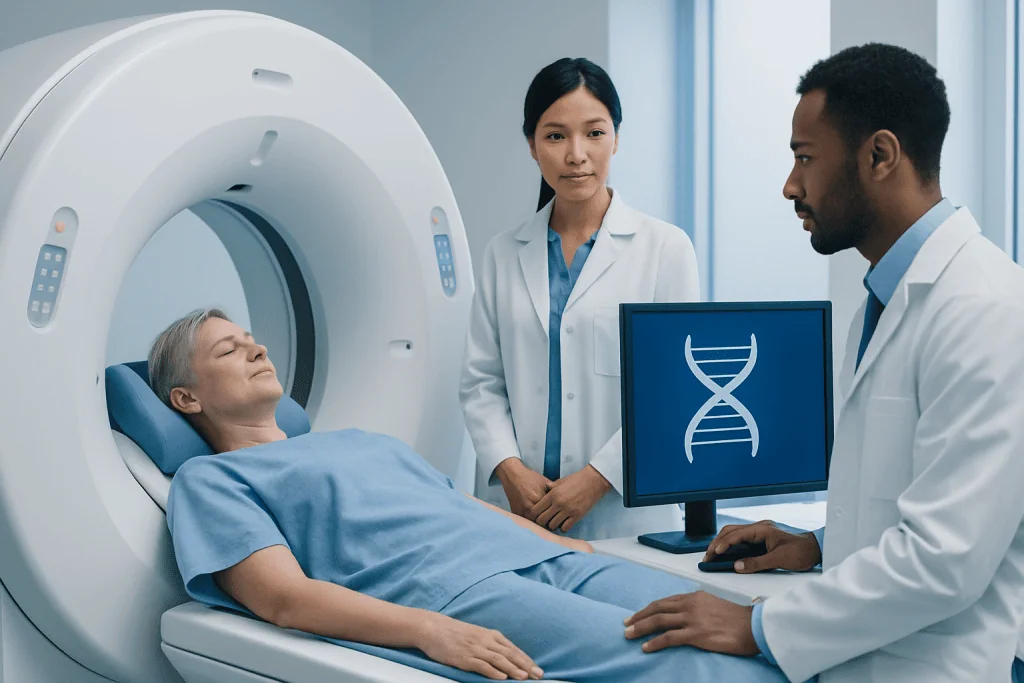
Doctors may also use advanced imaging and pathology tools alongside molecular testing to get a fuller picture of the disease. If there is concern about spread to other parts of the body, imaging studies and PET-CT imaging may help stage the cancer and evaluate response to therapy. In selected situations, a new tissue sample may be obtained through biopsy so the laboratory can reassess the tumor’s current features.
Because these tests can be complex, results are often reviewed in a multidisciplinary setting. Oncologists, pathologists, radiologists, genetic specialists, surgeons, and other clinicians may discuss the findings together before recommending a plan.
Treatment Options Guided by Tumor Biology
When a meaningful biomarker is found, treatment may be chosen more precisely. One major example is targeted therapy, which acts on a specific molecular pathway that helps the cancer grow. These medicines are not suitable for every tumor, but in the right setting they can be an important part of care. They may be used alone or together with other treatments.
Another area is immunotherapy, which helps the body’s immune system recognize and attack cancer cells. Certain biomarkers can suggest when immunotherapy is more likely to help, although responses still vary from person to person. Standard treatments such as chemotherapy, surgery, radiation therapy, and hormone therapy also remain very important and may still be the best choice even within a precision oncology plan.
In practice, precision oncology often means combining several forms of information rather than replacing established cancer treatment. For example, a person with lung cancer or breast cancer may receive standard staging and pathology, followed by molecular testing that helps narrow the most appropriate systemic therapy. The result is a more informed and individualized treatment strategy, not a one-size-fits-all approach.
Doctors also consider potential side effects, quality of life, convenience, and the person’s treatment goals. A therapy may be biologically matched to a tumor, but it still needs to be appropriate for the whole patient.
Benefits and Limitations
The main benefit of precision oncology is that it may improve treatment selection. It can help identify therapies that are more likely to work, reduce exposure to less useful options, and connect patients to clinical trials studying promising new treatments. For some cancers, biomarker-based treatment has become a standard part of care because it provides information that can meaningfully affect outcomes.
At the same time, precision oncology has limitations. Not all tumors have targetable changes, and not every detected alteration leads to an approved treatment. Some test results can be difficult to interpret, and cancer cells may develop resistance over time. In addition, a tumor may contain different cell populations, meaning one sample does not always capture every feature of the disease.
These limitations are why realistic expectations matter. Precision oncology is a powerful tool, but it is not a guarantee of a cure or a perfect match. It is best understood as one part of evidence-based cancer care that helps doctors make more informed choices.
Questions to Ask and When to Seek Specialist Advice
People diagnosed with cancer may wish to ask whether biomarker or molecular testing is recommended for their specific tumor type. Useful questions include what tests are being ordered, what the results may show, whether the findings could change treatment, and whether repeat testing might be needed later. It can also help to ask if clinical trials are available when standard options are limited.
Specialist advice is especially important when the diagnosis is newly made, the cancer is advanced, treatment has stopped working, or test results are complex. A second opinion or multidisciplinary review can be valuable in these situations. Genetic counseling may also be recommended if there is a concern that an inherited mutation could affect cancer risk for the patient or family members.
Patients should seek prompt medical attention if they have new or worsening symptoms such as uncontrolled pain, shortness of breath, rapid weight loss, fever during treatment, bleeding, or significant weakness. These issues do not always relate to molecular findings, but they do need timely assessment.
For people seeking care across borders, Acibadem International’s multidisciplinary specialists and JCI-accredited hospitals diagnose and treat cancer using modern imaging, pathology, and personalized treatment planning for international patients.
Frequently asked questions
What is precision oncology in simple terms?
Precision oncology is a way of choosing cancer treatment based on the specific features of a person’s tumor. It uses tests that look at genes, proteins, and other biomarkers to help doctors select the most suitable therapy.
Is precision oncology the same as genetic testing?
Not exactly. Precision oncology may include genetic testing of the tumor itself, but it can also involve protein tests, immune markers, and other laboratory methods. In some cases, doctors also recommend inherited genetic testing to see whether a person was born with a mutation that affects cancer risk.
Does every cancer patient need molecular or biomarker testing?
Not every patient needs the same type of testing. The decision depends on the cancer type, stage, treatment options, and whether results are likely to change care. In many cancers, biomarker testing is now standard, while in others it is used more selectively.
Can precision oncology replace chemotherapy or surgery?
No, not always. Precision oncology helps guide treatment, but standard treatments such as surgery, chemotherapy, and radiation may still be the best or most necessary options. Often, personalized treatment planning combines targeted approaches with established therapies.
What happens if testing does not find a targetable mutation?
A result without a targetable mutation does not mean testing was useless. It may still help confirm the diagnosis, provide prognostic information, or point to clinical trial options. Doctors can also continue to use standard evidence-based treatments and may consider repeat testing later if the cancer changes.
What is a liquid biopsy?
A liquid biopsy is a blood test that looks for fragments of tumor DNA circulating in the bloodstream. It can sometimes provide molecular information without needing a traditional tissue sample, although it does not replace tissue biopsy in every situation.
References
- National Cancer Institute
- World Health Organization
- American Society of Clinical Oncology
- European Society for Medical Oncology
- National Comprehensive Cancer Network
This article is for general information only and is not a substitute for professional medical advice. Please consult a qualified doctor about your individual situation.
Persistent digestive symptoms? Get evaluated in Turkey
JCI-accredited · board-certified surgeons · reply within 24h
Add us as a Preferred Source to see more of our trusted health content across Google Search, AI Overviews and Discover.

Medical Oncology Department
Medical treatment of cancer with chemotherapy, immunotherapy and targeted therapies under a multidisciplinary tumor board.
60 specialists in this unit