Precision Oncology: What It Is and Who May Benefit

Precision oncology aims to match treatment to the biology of a person’s cancer. Testing may include tumor tissue analysis, blood-based liquid biopsy, and biomarker studies.
Key Takeaways
- Precision oncology aims to match treatment to the biology of a person’s cancer.
- Testing may include tumor tissue analysis, blood-based liquid biopsy, and biomarker studies.
- It is not suitable for every cancer or every patient, and results do not always lead to a targeted treatment.
- Benefits can include more tailored treatment choices, identifying clinical trial options, and avoiding less effective therapies.
- Care is usually planned by a multidisciplinary team that includes medical oncologists, pathologists, genetic experts, and other specialists.
Precision oncology is an approach to cancer care that uses information about a tumor’s genes, proteins, and other features to help guide treatment decisions. It may benefit people with certain cancers, advanced disease, uncommon tumors, or cancers that have not responded as expected to standard treatment.
Overview
Precision oncology is a modern approach to cancer care that looks closely at the unique characteristics of a person’s cancer. Instead of relying only on where the cancer started in the body, doctors also study molecular details such as gene mutations, protein markers, and other biological signals. This information can help explain how the cancer behaves and which treatments may be more likely to work.
The term is sometimes used alongside personalized cancer treatment or precision medicine. In practice, it often involves testing a tumor sample, and sometimes a blood sample, to look for specific changes in cancer cells. These findings can guide decisions about targeted therapy, immunotherapy, standard chemotherapy, radiation, surgery, or clinical trial options.
Precision oncology does not replace traditional cancer care. Rather, it adds another layer of information to support more individualized decisions. For many patients, this means treatment planning that is more closely aligned with the biology of the disease as well as the person’s overall health, preferences, and treatment goals.
How Precision Oncology Works
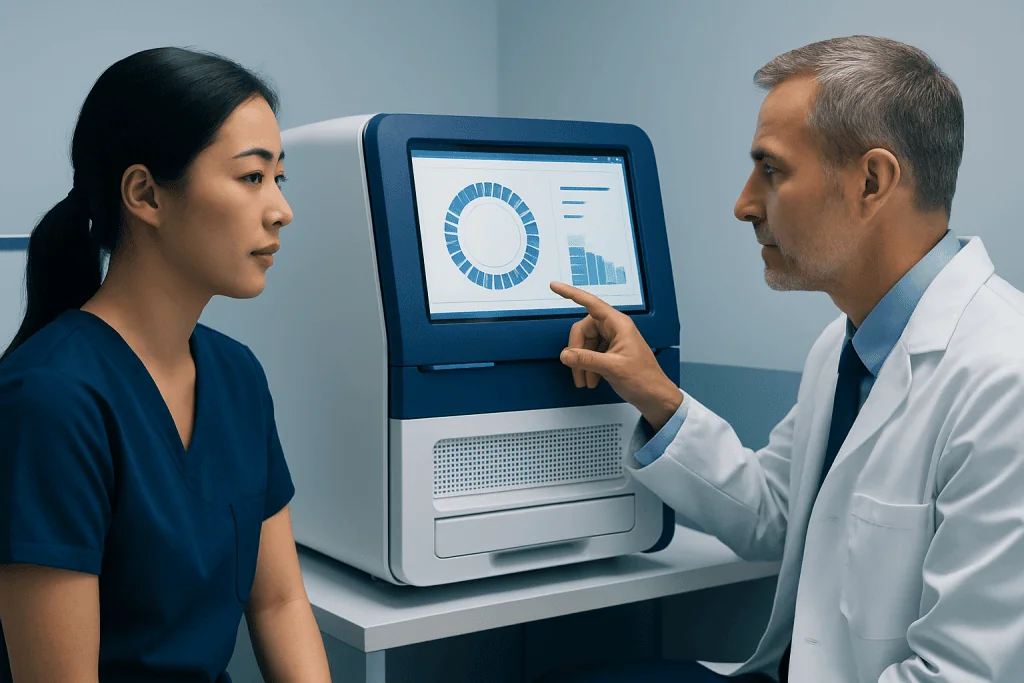
Cancer develops when cells acquire changes that allow them to grow out of control. Some of these changes, called biomarkers or molecular alterations, can be used to guide treatment. Precision oncology focuses on identifying these features and understanding whether they are linked to a treatment that targets a specific pathway or whether they may predict response to immunotherapy.
Testing may be done on tissue taken during a biopsy or surgery. In some cases, doctors can also analyze tumor DNA circulating in the blood through a liquid biopsy. This can be helpful when tissue is limited or when the care team wants to monitor how a cancer changes over time. However, liquid biopsy does not replace all tissue-based testing, and the best approach depends on the clinical situation.
After testing, results are interpreted in context. Not every mutation is important, and not every finding has an available treatment. A multidisciplinary tumor board may review the results to decide whether the findings are actionable, meaning they can help guide care. Depending on the cancer type, options may include targeted therapy, immunotherapy, standard treatment, or referral for research studies.
Who May Benefit

Precision oncology may be especially useful for people with advanced or metastatic cancer, cancers that have returned after treatment, rare cancers, or tumors with unusual behavior. It is also commonly considered in cancer types where biomarker testing is already part of standard care, such as some lung, breast, colorectal, ovarian, melanoma, and blood cancers. In these settings, molecular results can directly influence treatment choices.
People whose cancer has not responded as expected to first-line treatment may also benefit from further testing. In some cases, new genetic changes appear over time and can explain resistance to a treatment. Identifying these changes may open the door to another therapy or a clinical trial that better fits the current biology of the tumor.
Some patients may benefit from inherited genetic testing as well. This is different from testing the tumor itself. Germline testing looks for inherited changes that can raise cancer risk or influence treatment and family counseling. The decision to do this testing usually depends on the cancer type, age at diagnosis, and family history, and may involve genetic counseling.
Types of Testing Used in Precision Oncology
Several tests may be used, depending on the type of cancer and the question doctors need to answer. Molecular profiling can look for mutations, gene fusions, amplifications, or other changes in the tumor. Other tests evaluate proteins or immune-related markers, such as hormone receptors or markers linked to response to immunotherapy. The right test is chosen based on the clinical context and established guidelines.
Common approaches include:
- Single-gene tests for well-known, treatment-relevant mutations
- Next-generation sequencing panels that assess many genes at once
- Immunohistochemistry to detect certain proteins in tumor tissue
- Fluorescence in situ hybridization for selected chromosomal changes
- Liquid biopsy to assess tumor DNA in the bloodstream
Testing can help diagnose certain cancers more accurately, refine prognosis, and guide treatment selection. For example, biomarker information may help doctors decide whether a patient is more likely to benefit from chemotherapy, a targeted drug, or a more specialized strategy. Even when no actionable result is found, testing may still provide useful information about the disease.
Benefits and Limitations
The main benefit of precision oncology is that it can make treatment selection more specific. If a tumor carries a targetable change, doctors may choose a therapy designed for that alteration rather than a less tailored approach. This can sometimes improve the chance of benefit and reduce exposure to treatments that are less likely to help. It may also help identify suitable clinical trials, especially when standard options are limited.
Precision oncology can also support more informed conversations about prognosis, treatment goals, and next steps. In some cancers, repeated testing over time helps track how the tumor evolves and whether resistance mechanisms have developed. This can be useful in planning later lines of therapy.
At the same time, precision oncology has limitations. Not all tumors have actionable biomarkers, and some findings are still being studied. Test results can be complex, and the presence of a mutation does not guarantee that a targeted treatment will work. Access to drugs or trials may also vary. For these reasons, testing is most valuable when results are interpreted by experienced specialists as part of a complete cancer care plan.
Treatment Planning After Test Results
Once molecular or biomarker results are available, the oncology team combines them with other important information, including the cancer stage, location, previous treatments, symptoms, and overall health. A result may point directly to a targeted drug, support use of immunotherapy, or confirm that standard treatment remains the best option. Sometimes, the most useful outcome of testing is identifying that a certain treatment is unlikely to help.
For many patients, treatment still includes established therapies such as surgery, radiation therapy, or systemic medicines. Precision oncology is often one part of a broader plan rather than a stand-alone solution. For example, a person with lung cancer or breast cancer may have biomarker testing alongside imaging, pathology review, and standard staging to guide a balanced treatment strategy.
Shared decision-making is important. Patients may want to ask what the test is looking for, whether it could change treatment, what the possible benefits and limitations are, and whether family members should consider genetic counseling. Near the end of the care pathway, some people may seek evaluation at specialized centers; Acibadem International’s multidisciplinary specialists and JCI-accredited hospitals diagnose and treat cancer for international patients using guideline-based, individualized care.
Questions to Ask and When to Discuss Precision Oncology
Patients do not need to know all the technical details to take part in decisions about precision oncology. A helpful starting point is to ask whether biomarker testing is recommended for the specific cancer type and stage. It is also reasonable to ask whether tissue is available for testing, whether a liquid biopsy might be useful, and how long results usually take.
Other useful questions include:
- Could these test results change the treatment plan now?
- Is the goal to guide standard treatment, find a targeted option, or look for a clinical trial?
- Should inherited genetic testing be considered based on personal or family history?
- If no actionable result is found, what are the next best treatment choices?
- Will repeat testing be helpful if the cancer changes or progresses?
It is especially important to discuss precision oncology at the time of a new diagnosis of certain cancers, before starting a new line of treatment, when disease recurs, or when standard treatment has not worked as expected. Timely discussion can help ensure that any needed testing is done before key treatment decisions are made.
Frequently asked questions
Is precision oncology the same as personalized medicine?
The terms are often used in similar ways. In cancer care, precision oncology usually refers to using molecular and biomarker information about a tumor to help choose or adjust treatment. It is one form of personalized medicine, but treatment decisions still also depend on the cancer stage, symptoms, and the patient’s overall health.
Does everyone with cancer need molecular testing?
Not always. Molecular testing is standard for some cancers and less useful for others, depending on whether the results are likely to change treatment. An oncologist can explain whether testing is recommended for a specific diagnosis and point in treatment.
Can precision oncology cure cancer?
Precision oncology is a way to guide treatment, not a cure by itself. In some cases it can identify highly effective therapies, but results vary widely by cancer type and by the specific biomarker found. The main aim is to improve treatment selection and support more individualized care.
What is the difference between tumor testing and inherited genetic testing?
Tumor testing looks for changes in cancer cells that may help guide treatment. Inherited genetic testing looks for changes passed down in families that can affect cancer risk and sometimes treatment choices. Some patients may need one type of test, while others may benefit from both.
What if testing does not find an actionable mutation?
That does not mean the testing was useless. The results may still help clarify the biology of the cancer or confirm that standard treatment is the best next step. In some situations, repeat testing later may be considered if the cancer progresses or changes.
Is a liquid biopsy enough on its own?
Sometimes it is helpful, especially when tissue is hard to obtain or when doctors want to monitor disease over time. However, a liquid biopsy may not detect every relevant change, so tissue testing is still important in many cases. The best choice depends on the cancer type and the clinical question.
References
- World Health Organization
- National Cancer Institute
- American Society of Clinical Oncology
- European Society for Medical Oncology
- National Comprehensive Cancer Network
This article is for general information only and is not a substitute for professional medical advice. Please consult a qualified doctor about your individual situation.
Oncology care in Turkey — second opinion and treatment plan
JCI-accredited · board-certified surgeons · reply within 24h
Add us as a Preferred Source to see more of our trusted health content across Google Search, AI Overviews and Discover.

Medical Oncology Department
Medical treatment of cancer with chemotherapy, immunotherapy and targeted therapies under a multidisciplinary tumor board.
60 specialists in this unitMore from the Health Library



Related Specialists

Prof. Dr. Elif Eroğlu Büyüköner
Cardiology
Prof. Dr. Güldin Bingöl
Pediatric Allergy
Dr. Fatmanur Yildirim
Physical Medicine & Rehabilitation
Prof. Dr. Selim Aksöyek
Pediatric Surgery